

Where to buy toddler bike
Buy a toddler bike from a retailer that offers an in-person fit check, clear size choices, the exact product manual and access to qualified assembly help.
Where to shop
A local bicycle shop is often the most practical first stop because your child can sit on several bikes and you can compare stand-over clearance, reach and brake control before paying. A specialist online store can also work when it provides exact wheel-size options, a clear return policy and enough product information to arrange a proper fit at home.
Do not choose a seller on price or age labels alone. Confirm the selected wheel size, ask what assembly remains, and find out how a poor-fitting bike can be returned or exchanged. For assembly steps, maintenance, load limits, compatibility and torque settings, follow the exact product manual or use a qualified bicycle mechanic.
Measure your child before browsing
Measure the rider’s height without shoes, then measure the inseam from the floor to the crotch. Record both measurements rather than relying on a remembered clothing size or birthday. Height narrows the search; the inseam helps you assess stand-over clearance and whether the child can get on and off comfortably.
XBikes uses these starting points for the wheel sizes most likely to appear in this search:
| Wheel size | Starting age | Rider height |
|---|---|---|
| 12 Inch | 3–4 | 34–40 in / 86–102 cm |
| 14 Inch | 3–6 | 37–45 in / 94–114 cm |
| 16 Inch | 4–7 | 40–48 in / 102–122 cm |
These ranges are starting points, not proof of fit. “Toddler” is not a wheel size, and children of the same age can need different setups. Prioritize measured height, inseam, reach, brake control and current confidence over age alone.
What to check during a test fit
Have the child try the actual bicycle whenever possible. The American Academy of Pediatrics advises against buying an oversized bike merely for future growth. A bike that is too large can make mounting, stopping and steering harder now.
- Stand-over: Check that the child can straddle the bicycle with usable clearance and remain balanced.
- Reach: The rider should hold the controls without an uncomfortable stretch or locked posture.
- Brake control: If the bicycle has hand controls, confirm the child can reach and operate them. Do not infer the brake arrangement from appearance or category wording.
- Confidence: Ask the child to mount, start, steer, stop and dismount in a controlled area. Hesitation or loss of control is a reason to reassess the fit.
If you cannot verify these points before ordering, preserve the packaging and perform the fit check before the first ride. Use the seller’s stated return terms rather than assuming an exchange will be available.
How the supplied XBikes option helps
The catalog option relevant to this search is the XJD Girls BMX Bike 12/14/16 Inch with Training Wheels – Pink Blue, categorized under Kids’ BMX Bikes. Its supplied SKU labels—12 Inch, 14 Inch and 16 Inch—let you compare three wheel-size starting points against the rider’s measurements. The title also identifies training wheels and pink/blue wording, but it does not establish fit, brake type, construction, weight, stock or suitability for a particular child.
These catalog choices help answer where to buy a toddler bike because they provide selectable sizes to investigate after measuring, rather than presenting one unspecified “toddler” size.
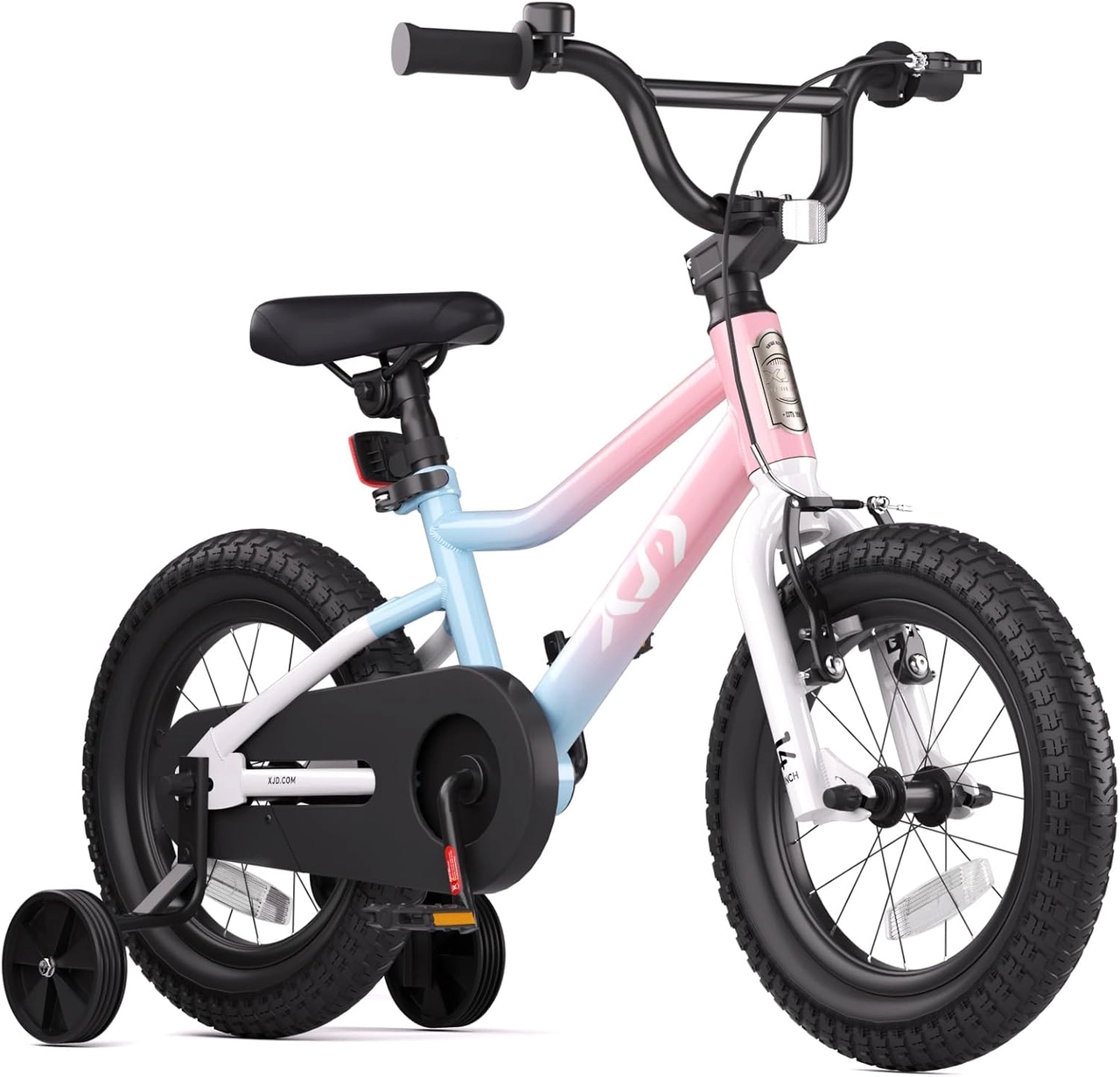
Use the 12 Inch, 14 Inch and 16 Inch labels as separate options; do not treat them as interchangeable. If the child falls outside the stated height range, or cannot comfortably control the bike during a fit check, this product may not be relevant. Age wording in a product name or listing is only a catalog label and must not override the individual assessment.
Questions to settle before purchase
- Does the exact SKU label match the size you intend to assess?
- Can the child try the bike, or can you return it after a careful indoor fit check?
- Can the rider stand over it, reach the controls and demonstrate controlled braking?
- Is the exact product manual included or available for assembly and maintenance guidance?
- Will a qualified bicycle mechanic check the work if you are uncertain about assembly?
Also obtain a bicycle helmet that fits properly. U.S. Consumer Product Safety Commission guidance calls for the helmet to sit level and for its straps to be used according to the manufacturer’s instructions. A helmet does not correct a poorly fitting bicycle.
Make the final decision
Start with a shop or online seller that supports an actual fit check, then compare the measured rider with the 12-, 14- or 16-inch starting range. Buy only the specific size the child can presently straddle and control; if that cannot be confirmed, postpone the order or arrange an in-person fitting instead of sizing up for growth.
Bikes for your next adventure
-

Kids Bike Helmet by XJD for Boys & Girls – Black, Blue, Green, Pink, Purple
The XJD Kids Bike Helmet covers a wide 2-to-8-year age range thanks to two head-…$59.99
-

Blue XJD Kids Bike Helmet for Boys & Girls
The Blue XJD Kids Bike Helmet is a lightweight, adjustable multi-sport helmet fo…$59.99
$99 -

XJD Girls BMX Bike 12/14/16 Inch with Training Wheels – Pink Blue
The XJD Girls BMX Bike in Pink/Blue is built as a first pedal bike for kids roug…$99.99
$119.99