

Where to teach kids to ride a bike
Teach a child to ride on a flat, smooth, traffic-free paved area with plenty of open space. An empty court, quiet playground pad or closed parking area with permission is usually a better starting place than a road, sidewalk or driveway.
Choose the first practice area
Look for a location where the child can concentrate on balance, steering and stopping without avoiding cars or pedestrians. Walk the whole practice line before riding and check for loose gravel, potholes, drains, curbs, parked vehicles, wet patches and other obstacles.
- Surface: Choose firm, even pavement. Grass may feel less intimidating, but it adds rolling resistance and can hide holes.
- Slope: Begin on genuinely level ground. Save a very gentle, clear incline for controlled coasting only after the child can steer and stop.
- Space: Allow a long, wide run with room for imperfect turns and a clear stopping zone.
- Activity: Go when the area is quiet. A normally suitable park can become unsuitable when crowded.
- Boundaries: Prefer a place physically separated from moving traffic, not merely a quiet street that could become busy.
Compare common places before choosing
| Place | Useful when | Reason to avoid it |
|---|---|---|
| Empty paved court | It is level, open and available for riding | Games, fences or surface debris reduce clear space |
| Closed parking area | Vehicle access is genuinely prevented and permission is granted | Any car movement, blind entrance or parking stop remains |
| Quiet park path | The child already steers and stops reliably | Walkers, dogs, bends or crossings create conflicts |
| Driveway or sidewalk | Only if it has ample level space and no vehicle conflict | Road crossings, slopes, curbs and reversing cars make errors consequential |
If you cannot describe how vehicle access is prevented, where the child will stop and what lies beyond the practice line, choose another location.
Check the child and bicycle at the site
Measure the rider’s height and inseam before selecting a bicycle, then have the child try the exact bike. Age is only a starting point. Check that the child can stand over it, reach the controls comfortably, turn the handlebar without stretching and operate the brakes with control. Do not buy an oversized bicycle simply for future growth.
XBikes wheel-size starting points are: 12 Inch for 34–40 in / 86–102 cm; 14 Inch for 37–45 in / 94–114 cm; and 16 Inch for 40–48 in / 102–122 cm. The corresponding age starting points are 3–4, 3–6 and 4–7. Overlapping ranges make the individual fit check essential; measured height, inseam, reach, brake control and current confidence take priority.
Before every session, use a properly fitting bicycle helmet. It should sit level, with straps adjusted according to the helmet manufacturer’s instructions. For bicycle assembly, adjustments, maintenance, compatibility or torque, follow the exact product manual or ask a qualified bicycle mechanic.
Run a short first lesson
- Show the child the practice line, stopping zone and boundaries before movement begins.
- Let the child become comfortable mounting, looking ahead and using the brakes while you remain close.
- Practise straight starts and controlled stops before adding turns.
- Add wide turns only when the child can stop on request without leaving the clear area.
- End while attention and confidence are still steady. Return to the same predictable location for the next session.
Move to a quiet shared path only after the child repeatedly starts, steers, slows and stops under control. Roads, junctions, crowded paths and steep slopes are not suitable places for first attempts.
When the supplied bicycles are relevant
The three catalog options are relevant when a fitted 12, 14 or 16 Inch training-wheel bicycle suits the rider and the family wants to compare color and catalog labeling within that type. Training wheels can support early pedaling and steering practice, but they do not remove the need for a traffic-free location, individual fit check or later balance practice.
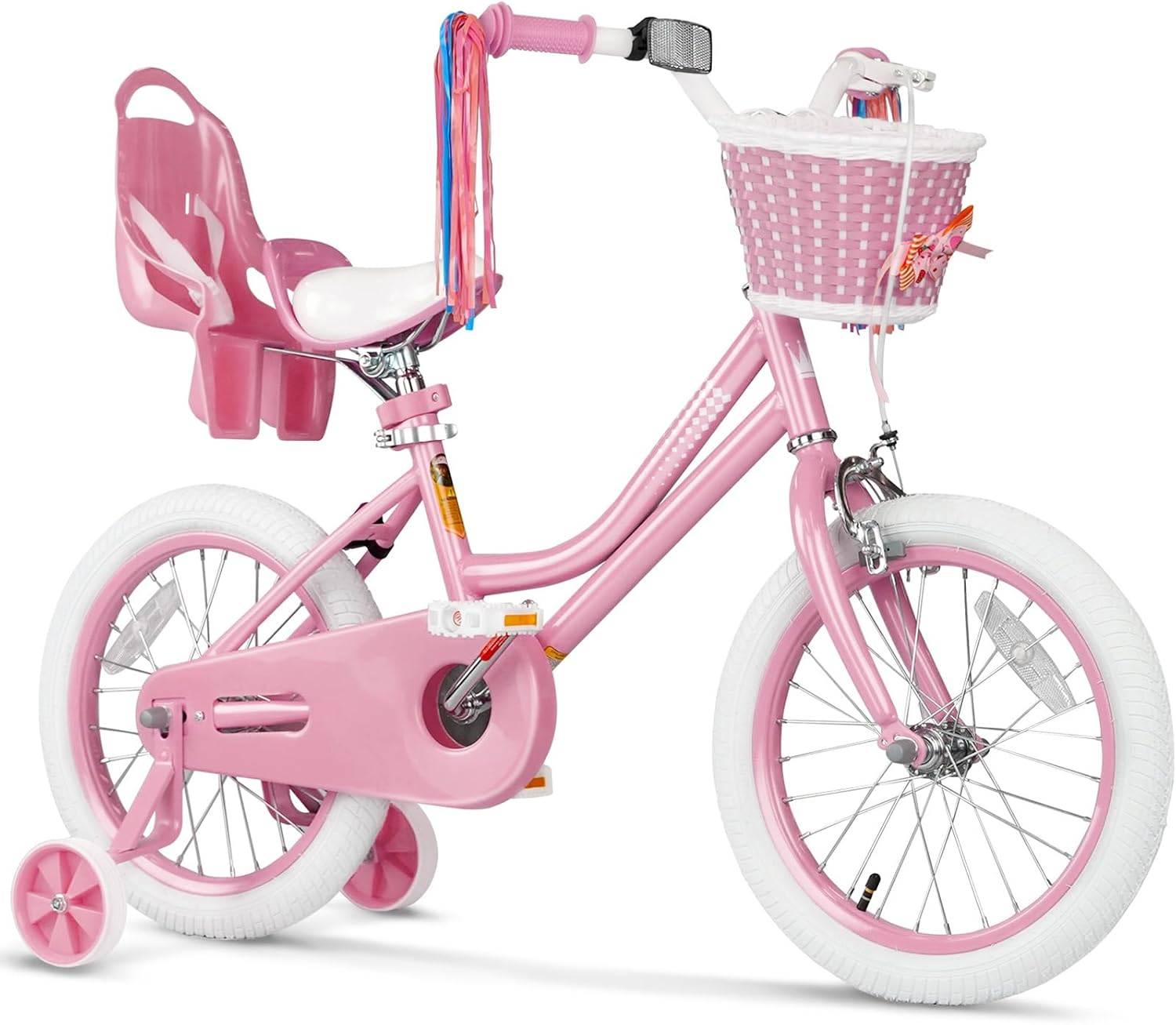 XJD Pink Girls' Bike – Kids 12/14/16 Inch Training Wheel Bicycle
A training-wheel bicycle offered in 12 Inch, 14 Inch and 16 Inch labels. It is relevant only after the rider’s measurements, reach, brake control and confidence confirm the selected size fits.
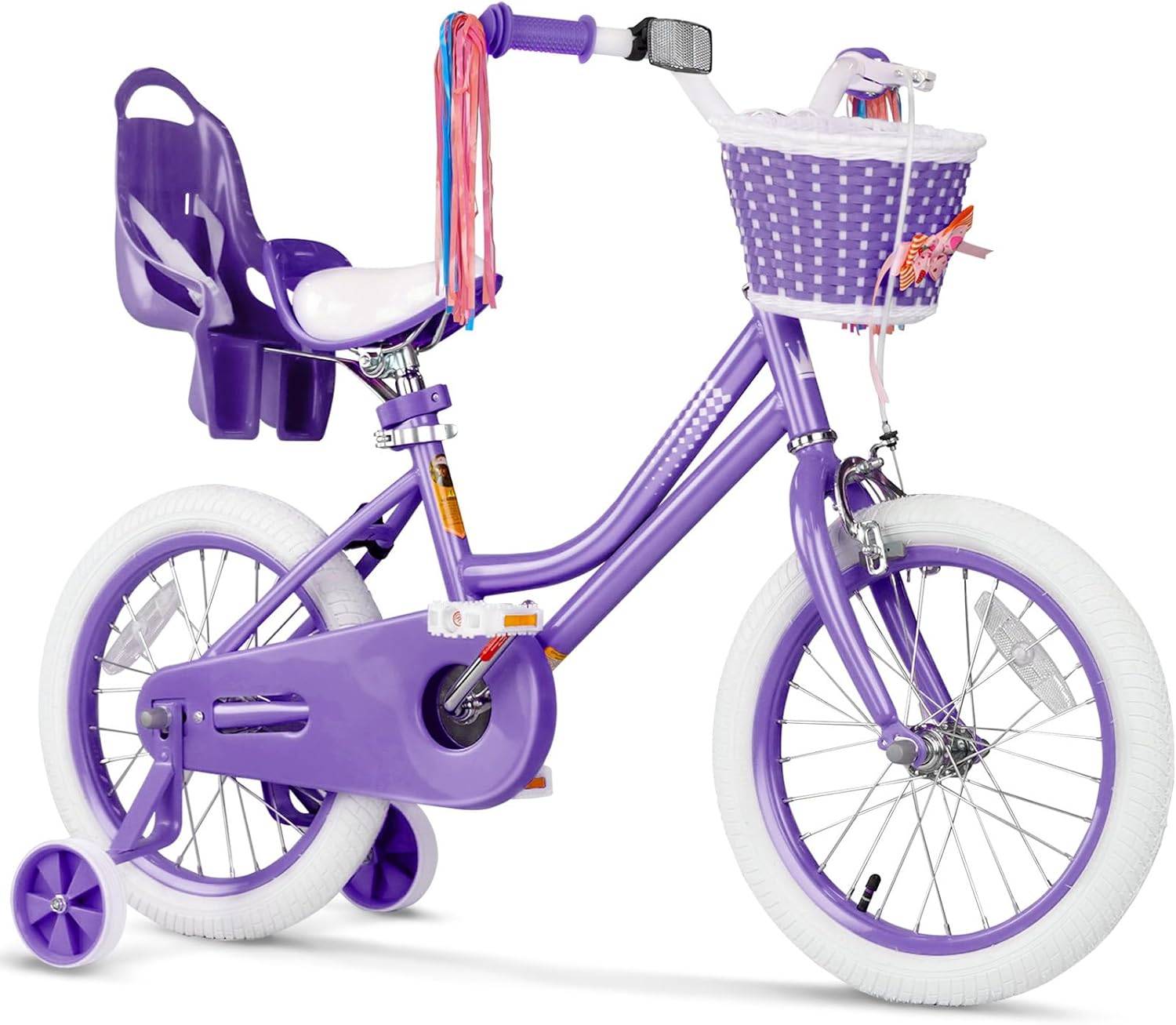 XJD Girls Bike for Kids Ages 3-8, 12/14/16 Inch with Training Wheels – Purple
A purple training-wheel bicycle with 12 Inch, 14 Inch and 16 Inch options. “Ages 3-8” is part of its catalog title and should not replace an individual height, inseam and control check.
 Girls 12/14/16 Inch Kids Bike by XJD with Training Wheels – Peach
A peach training-wheel bicycle available in 12 Inch, 14 Inch and 16 Inch labels. Compare it only within those supplied sizes, then verify stand-over, reach, brake control and current confidence on the exact bicycle.
XJD Pink Girls' Bike – Kids 12/14/16 Inch Training Wheel Bicycle is listed in 12 Inch, 14 Inch and 16 Inch options. XJD Girls Bike for Kids Ages 3-8, 12/14/16 Inch with Training Wheels – Purple offers the same supplied wheel-size choices in purple. Its “Ages 3-8” wording is a catalog label, not fit evidence. Girls 12/14/16 Inch Kids Bike by XJD with Training Wheels – Peach provides those three wheel-size options in peach.
These products are not relevant if the child’s measurements, reach, brake control or confidence require another size or bicycle type. Select the practice place first, measure the child, try the exact bike there or in another controlled setting, and begin only when both the location and fit allow confident stopping.
Bikes for your next adventure
-

Kids Bike Helmet by XJD for Boys & Girls – Black, Blue, Green, Pink, Purple
The XJD Kids Bike Helmet covers a wide 2-to-8-year age range thanks to two head-…$59.99
-

Kids Bike Helmet by XJD for Girls – Pink
The XJD Kids Bike Helmet in Pink is a lightweight multi-sport helmet for girls r…$59.99
$99 -

XJD Kids Bike for Girls – Pink, 12/14/16/20 Inch with Training Wheels
The XJD Kids Bike for Girls in Pink is a training-wheel bike built to carry your…$139
$159