

Which bike is best for youth
The best bike for a young rider is the correctly sized bike they can stand over, steer and stop confidently—not a larger bike chosen for future growth.
Measure the rider before choosing
Start with the child’s current height and inseam, measured while wearing the shoes they will normally ride in. Height provides a wheel-size starting point; inseam helps you judge whether the rider can stand over the bicycle without being crowded by the frame.
Then arrange an individual fit check. Have the child sit on the bike, hold the grips and operate the brakes. They should be able to reach the controls without stretching, turn the handlebar comfortably and keep the bicycle balanced. The American Academy of Pediatrics recommends having a child try the bicycle and advises against buying an oversized bike merely so they can grow into it.
Use wheel size as a starting point
Compare the measured height with the XBikes ranges below. Overlapping ranges are intentional: when two sizes appear possible, actual stand-over clearance, reach, brake control and confidence should decide—not age alone.
| Wheel size | Starting age | Rider height |
|---|---|---|
| 12 Inch | 3–4 | 34–40 in / 86–102 cm |
| 14 Inch | 3–6 | 37–45 in / 94–114 cm |
| 16 Inch | 4–7 | 40–48 in / 102–122 cm |
| 18 Inch | 5–9 | 43–52 in / 109–132 cm |
| 20 Inch | 7–12 | 48–60 in / 122–152 cm |
| 24 Inch | 10–14 | 54–64 in / 137–163 cm |
| 26 Inch | Youth and adults | Over 60 in / 153 cm |
Age is useful only for narrowing the search. A confident seven-year-old and a cautious seven-year-old of the same height may need different handling characteristics or setup. If a child falls near a range boundary, compare both candidate sizes in person rather than automatically moving up.
Decide whether training wheels are relevant
The two supplied catalog options are training-wheel bikes with available 12, 14 and 16 Inch labels. They help answer the title when the rider’s measurements point to one of those sizes and the family specifically wants a training-wheel configuration. They are not relevant substitutes when the fit check indicates an 18, 20, 24 or 26 Inch bike.
The Girls 12/14/16 Inch Kids Bike by XJD with Training Wheels – Peach is listed in 12, 14 and 16 Inch options. The XJD Light Purple Girls Bike with Basket, Training Wheels, 12/14/16/20 Inch is also a training-wheel bike and mentions a basket; however, the supplied available SKU labels are only 12, 14 and 16 Inch. Its title’s reference to 20 Inch should not be treated as confirmation that a 20 Inch option is currently available.
These particular catalog choices provide direct comparison points for families considering a 12, 14 or 16 Inch training-wheel bike, while the rider’s fit still determines which size is appropriate.
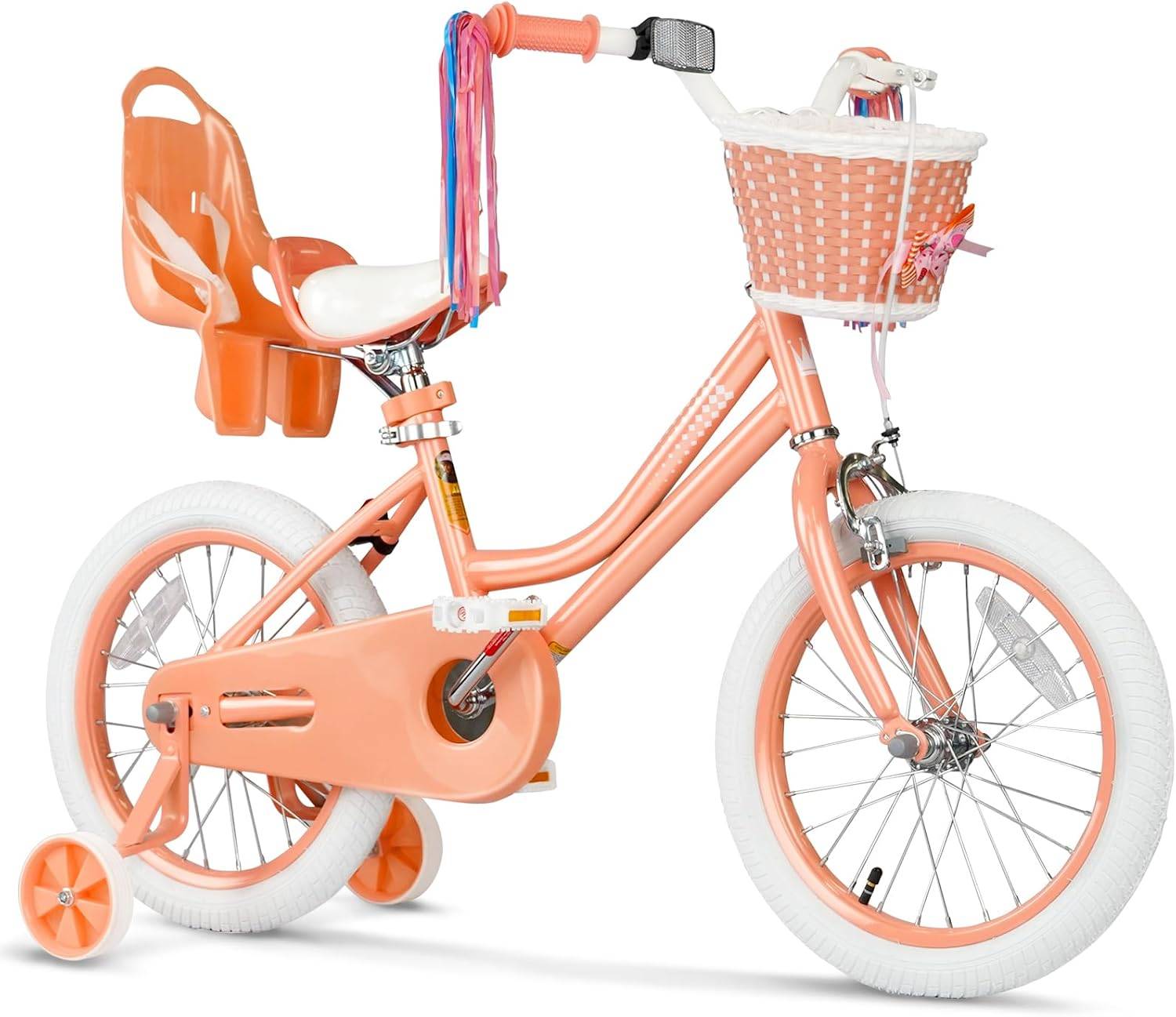 Girls 12/14/16 Inch Kids Bike by XJD with Training Wheels – Peach
A training-wheel bike offered in verified 12, 14 and 16 Inch labels, relevant when the rider’s measurements and individual fit check point to one of those sizes.
 XJD Light Purple Girls Bike with Basket, Training Wheels, 12/14/16/20 Inch
A training-wheel bike with a basket and verified 12, 14 and 16 Inch SKU labels. Its title mentions 20 Inch, but the supplied availability facts do not confirm that size.
Compare the finalists on the child
Once the height range has narrowed the options, use the same practical check on every candidate:
- Stand-over: Ask the child to straddle the bicycle while standing. Reject a bike that prevents a comfortable, controlled stance.
- Reach: Check that the grips can be held without an exaggerated forward stretch or locked elbows.
- Brake control: Confirm that the child can reach and operate the brakes while maintaining a secure grip and steering position.
- Handling: Let the rider start, steer, turn and stop in a controlled area. Watch for strain, wobbling caused by excess size or difficulty managing the bicycle.
- Confidence: Choose the candidate the child can control now. Do not treat room for growth as more important than present control.
If neither bike fits well, neither is the right choice, even when the nominal wheel label matches the table.
Check setup and riding protection
Before riding, follow the exact product manual for assembly, adjustment, maintenance, compatibility, load limits and torque requirements. If any instruction is absent or the setup is uncertain, use a qualified bicycle mechanic rather than guessing.
A bicycle helmet is part of the fit decision too. U.S. Consumer Product Safety Commission guidance says it should fit properly, sit level on the head and have its straps used according to the helmet manufacturer’s instructions. Recheck the fit whenever the helmet is adjusted or replaced.
Make the final choice
Choose the wheel-size range indicated by the rider’s measured height, then approve the bike only after the child demonstrates suitable stand-over clearance, reach, brake control and confidence. Consider either supplied training-wheel model only for a rider who fits its verified 12, 14 or 16 Inch options; otherwise, continue the search in the correctly indicated size instead of sizing up or substituting.
Bikes for your next adventure
-

Kids Bike Helmet by XJD for Girls – Pink
The XJD Kids Bike Helmet in Pink is a lightweight multi-sport helmet for girls r…$59.99
$99 -
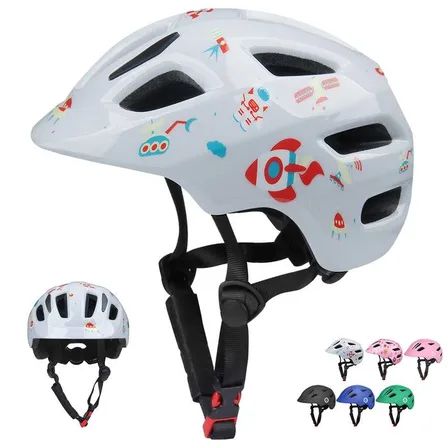
White Astronaut Bike Helmet for Kids by XJD – Toddler to Youth Sizes
4 reviews
The XJD White Astronaut kids' bike helmet is made for toddlers through younger e…$59.99
-
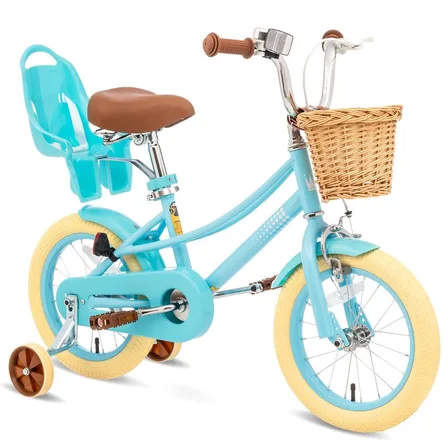
Girls' Training Wheel Bike by XJD, 12–20 Inch Wheels – Blue
This XJD girls' training wheel bike in Blue covers one of the widest fit ranges …$139
$159