

Which size bike for 6 year old
For a 6-year-old, start by comparing 14-, 16- and 18-inch bikes. Measure the child first: height, inseam, reach and control matter more than age.
Which wheel size should you check first?
According to the XBikes starting points, a 14-inch bike covers riders 37–45 in (94–114 cm), a 16-inch bike covers 40–48 in (102–122 cm), and an 18-inch bike covers 43–52 in (109–132 cm). All three age bands include age six, so age alone cannot settle the choice.
| Wheel size | XBikes age starting point | Rider height starting point |
|---|---|---|
| 14 Inch | Ages 3–6 | 37–45 in / 94–114 cm |
| 16 Inch | Ages 4–7 | 40–48 in / 102–122 cm |
| 18 Inch | Ages 5–9 | 43–52 in / 109–132 cm |
| 20 Inch | Ages 7–12 | 48–60 in / 122–152 cm |
A child near 40–45 in may overlap the 14- and 16-inch ranges. One near 43–48 in may overlap the 16- and 18-inch ranges. A very tall six-year-old may enter the 20-inch height range, but 20 inches must not be selected from height alone. Compare the actual bicycles and choose the one the child can control now.
Measure before choosing
Measure the child without shoes, standing straight against a wall. Record total height from the floor to the top of the head. Then measure inseam from the floor to the crotch while the child stands naturally. Use these measurements to identify likely wheel sizes, then check the geometry of the specific bicycle.
Wheel size describes the wheels, not every frame dimension. Two bikes with the same wheel label can differ in stand-over space, saddle adjustment and reach. The exact product manual should supply any model-specific adjustment, assembly, compatibility, load or torque information. If it does not, use a qualified bicycle mechanic.
Do the hands-on fit check
Have the child try the bicycle rather than buying solely from a chart. The American Academy of Pediatrics advises against choosing an oversized bike just to allow room for growth. During the fit check, confirm that the child can:
- Stand over the bicycle with comfortable clearance rather than being pressed against the frame.
- Reach the handlebar without stretching, locking the elbows or losing a natural riding position.
- Turn the handlebar in both directions while remaining balanced and in control.
- Reach and operate the brakes confidently with the controls provided on that exact bicycle.
- Start, stop and put a foot down without panic or a large sideways lean.
If the larger overlapping size makes any of those actions difficult, it is too large for the child now, even if the chart includes the child’s height.
How the supplied XBikes options help
The supplied catalog options are useful comparison points because both offer 14- and 16-inch choices, two common starting candidates for a six-year-old. Neither supplied product has an 18-inch SKU, so these products are not substitutes when an individual fit check indicates that 18 inches is appropriate.
 XJD Light Purple Girls Bike with Basket, Training Wheels, 12/14/16/20 Inch
Available in 12-, 14- and 16-inch SKU labels, this Training Wheel Bike provides 14- and 16-inch comparison options for a six-year-old who passes an individual fit check.
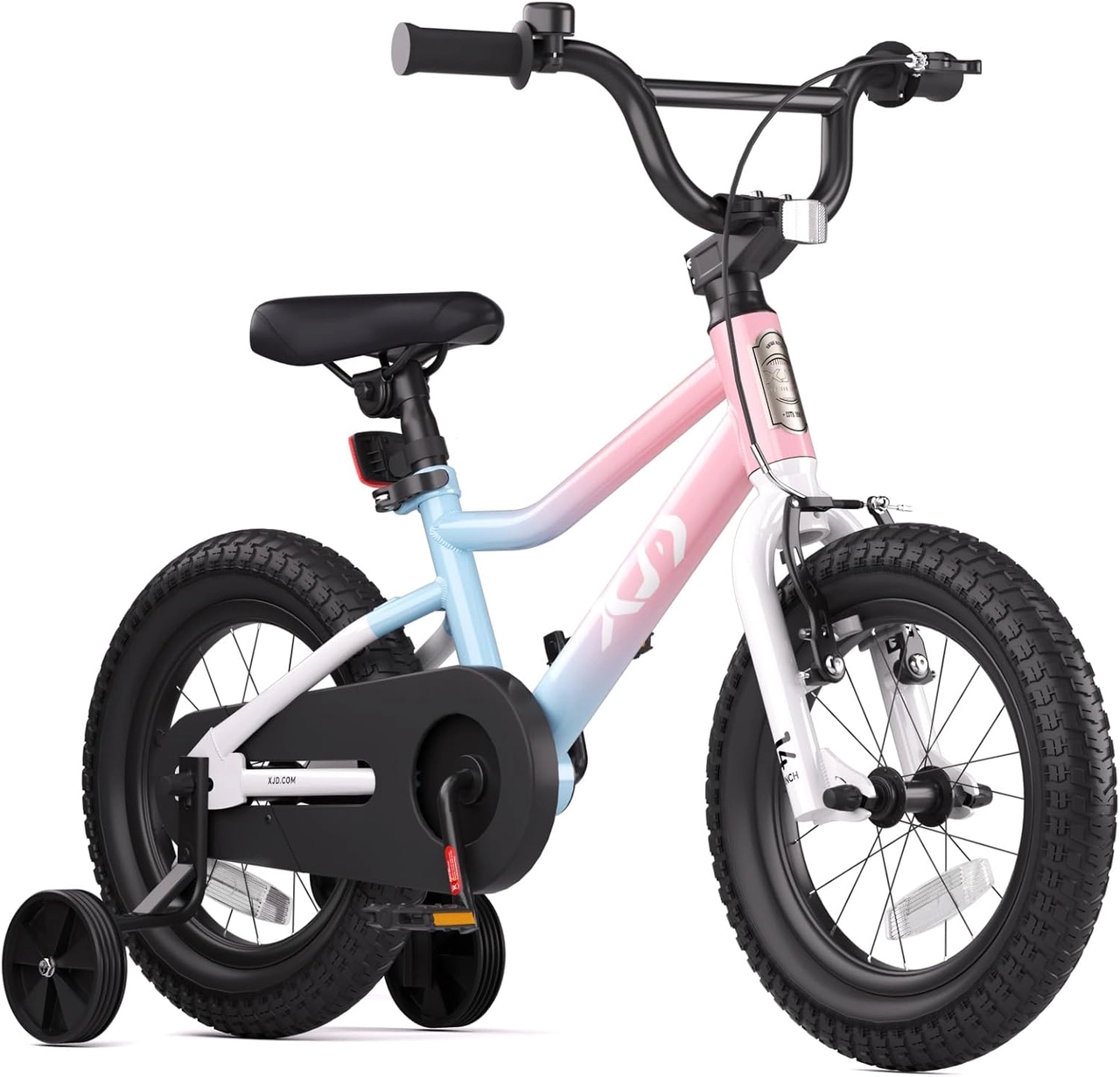 XJD Girls BMX Bike 12/14/16 Inch with Training Wheels – Pink Blue
This Kids’ BMX Bike has supplied 12-, 14- and 16-inch SKU labels. Its 14- and 16-inch options are relevant comparison points, but measured fit and control must determine suitability.
The XJD Light Purple Girls Bike with Basket, Training Wheels, 12/14/16/20 Inch is categorized as a Training Wheel Bike. Its supplied available SKU labels are 12 Inch, 14 Inch and 16 Inch. For this question, compare its 14- and 16-inch versions against the child’s measurements and hands-on control; the title’s other size wording does not establish current availability or fit.
The XJD Girls BMX Bike 12/14/16 Inch with Training Wheels – Pink Blue is categorized as a Kids’ BMX Bike. Its supplied available SKU labels are also 12 Inch, 14 Inch and 16 Inch. The catalog title is only a product label: it does not replace the same height, inseam, reach, brake-control and confidence checks.
Make the final size decision
Begin with the size range containing the child’s measured height. Where ranges overlap, have the child try both adjacent sizes and reject any bike that compromises stand-over clearance, reach, braking or confident starts and stops. Training wheels do not make an oversized frame appropriate, and current control should take priority over hoped-for growth.
Before riding, add a properly fitted bicycle helmet. U.S. Consumer Product Safety Commission guidance says the helmet should sit level and its straps should be adjusted according to the helmet manufacturer’s instructions.
For a 6-year-old, the practical next step is simple: measure height and inseam, shortlist 14, 16 or 18 inches from the table, and buy only after the child demonstrates comfortable control on that exact bike.
Bikes for your next adventure
-
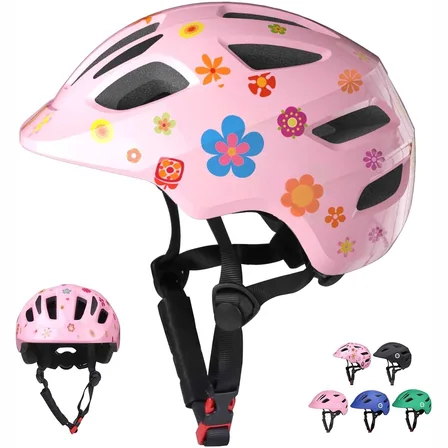
XJD Kids Bike Helmet for Girls, Pink Flowers, Adjustable (XS–S)
The XJD Kids Bike Helmet in Pink Flowers is an adjustable toddler-and-kids helme…$21.24
$24.99 -

Kids Bike Helmet by XJD for Boys & Girls – Black, Blue, Green, Pink, Purple
The XJD Kids Bike Helmet covers a wide 2-to-8-year age range thanks to two head-…$59.99
-

Light Purple XJD Toddler Bike Helmet, Adjustable, Size XS (46–51 cm)
This Light Purple XJD toddler bike helmet is made for the smallest riders — the …$20.39