

A little girl and her bike
A little girl and her bike should be matched by fit, control and confidence—not by color, age alone or extra room for growth. Measure her height and inseam, then have her try the bicycle before choosing.
Measure the rider before comparing bikes
Start with her standing height and inseam. Measure height without shoes, with her back straight against a wall. For inseam, measure from the floor to the crotch while she stands naturally. These measurements help identify a sensible wheel-size starting point, but they do not prove that a particular frame fits.
When she tries a bike, check that she can stand over it comfortably, reach the handlebar without stretching, steer while looking ahead and operate the brakes with control. Her current confidence matters too: a size that feels intimidating can make starting, stopping and turning harder.
Use wheel size only as a starting point
| Wheel size | Starting age | Rider height |
|---|---|---|
| 12 Inch | 3–4 | 34–40 in / 86–102 cm |
| 14 Inch | 3–6 | 37–45 in / 94–114 cm |
| 16 Inch | 4–7 | 40–48 in / 102–122 cm |
| 18 Inch | 5–9 | 43–52 in / 109–132 cm |
| 20 Inch | 7–12 | 48–60 in / 122–152 cm |
| 24 Inch | 10–14 | 54–64 in / 137–163 cm |
| 26 Inch | Youth and adults | Over 60 in / 153 cm |
Where ranges overlap, compare both candidate sizes in person rather than choosing automatically. Prioritize measured height, inseam, reach, brake control and confidence over age. Do not buy an oversized bicycle simply so she can grow into it.
What a useful try-out should reveal
A short fit check should answer practical questions, not merely whether she can sit on the saddle. Ask her to mount and dismount, hold a straight line, turn in both directions, stop on request and restart without being pulled or pushed. Stay in a level, traffic-free area and provide close adult supervision.
- Stand-over: She should be able to straddle the bicycle comfortably rather than balance precariously.
- Reach: Her hands should meet the controls without an exaggerated forward stretch.
- Braking: She must be able to reach and operate the brakes with control.
- Confidence: Watch for relaxed steering and deliberate stops, not just verbal reassurance.
If any of these checks fails, compare a different size or setup. Follow the exact product manual for assembly, adjustment, maintenance, compatibility, load limits and torque; when uncertain, use a qualified bicycle mechanic.
How the supplied girls’ bikes compare
The three catalog options are relevant because each is a girls’ training-wheel bike offered in supplied 12, 14 and 16 Inch SKU labels, letting a parent compare color and listed equipment only after narrowing the size through measurement and a real fit check.
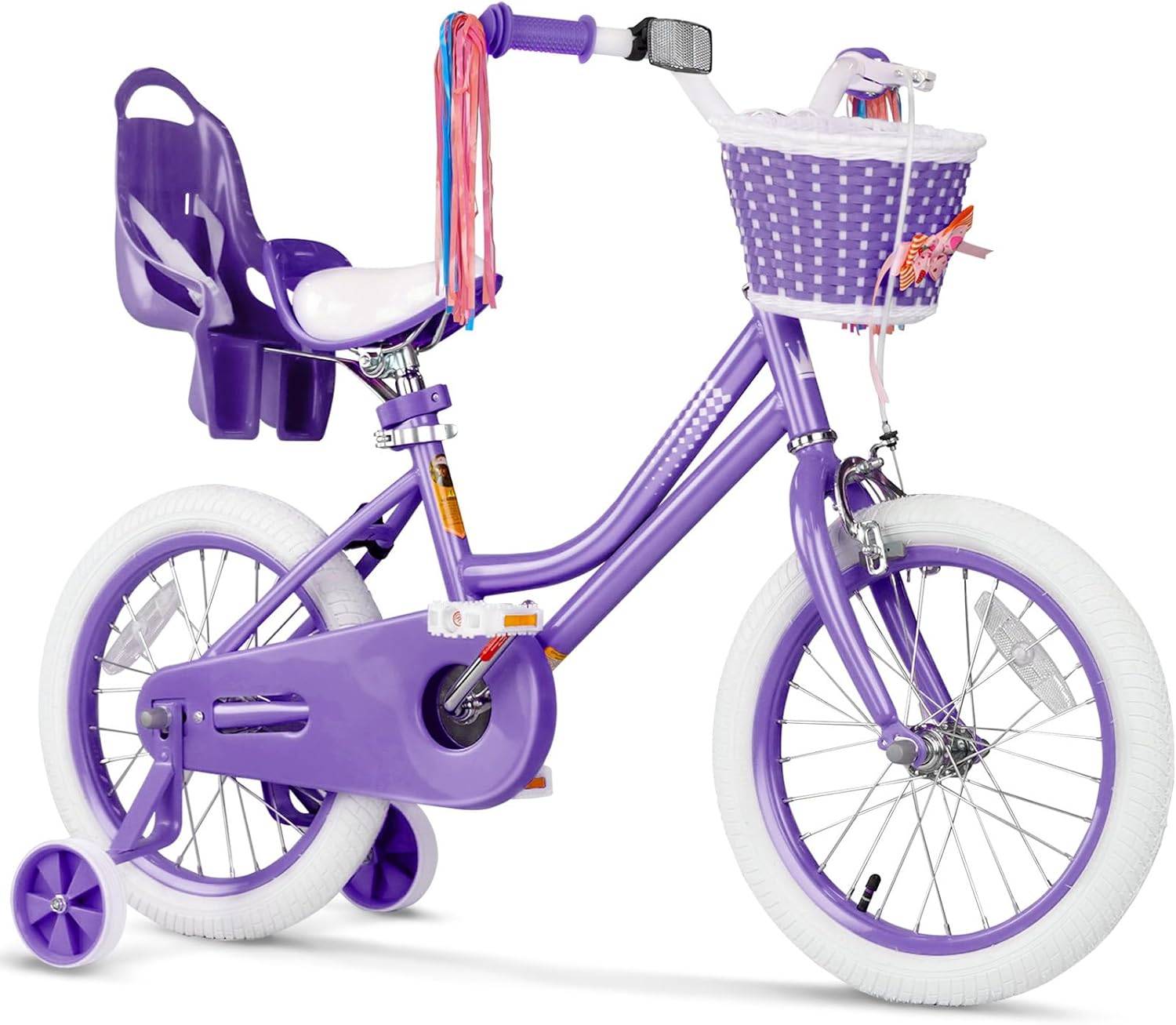 XJD Girls Bike for Kids Ages 3-8, 12/14/16 Inch with Training Wheels – Purple
A purple training-wheel bike with supplied 12, 14 and 16 Inch SKU labels. Its title’s age wording is a catalog label, so select by measurement and an individual fit check.
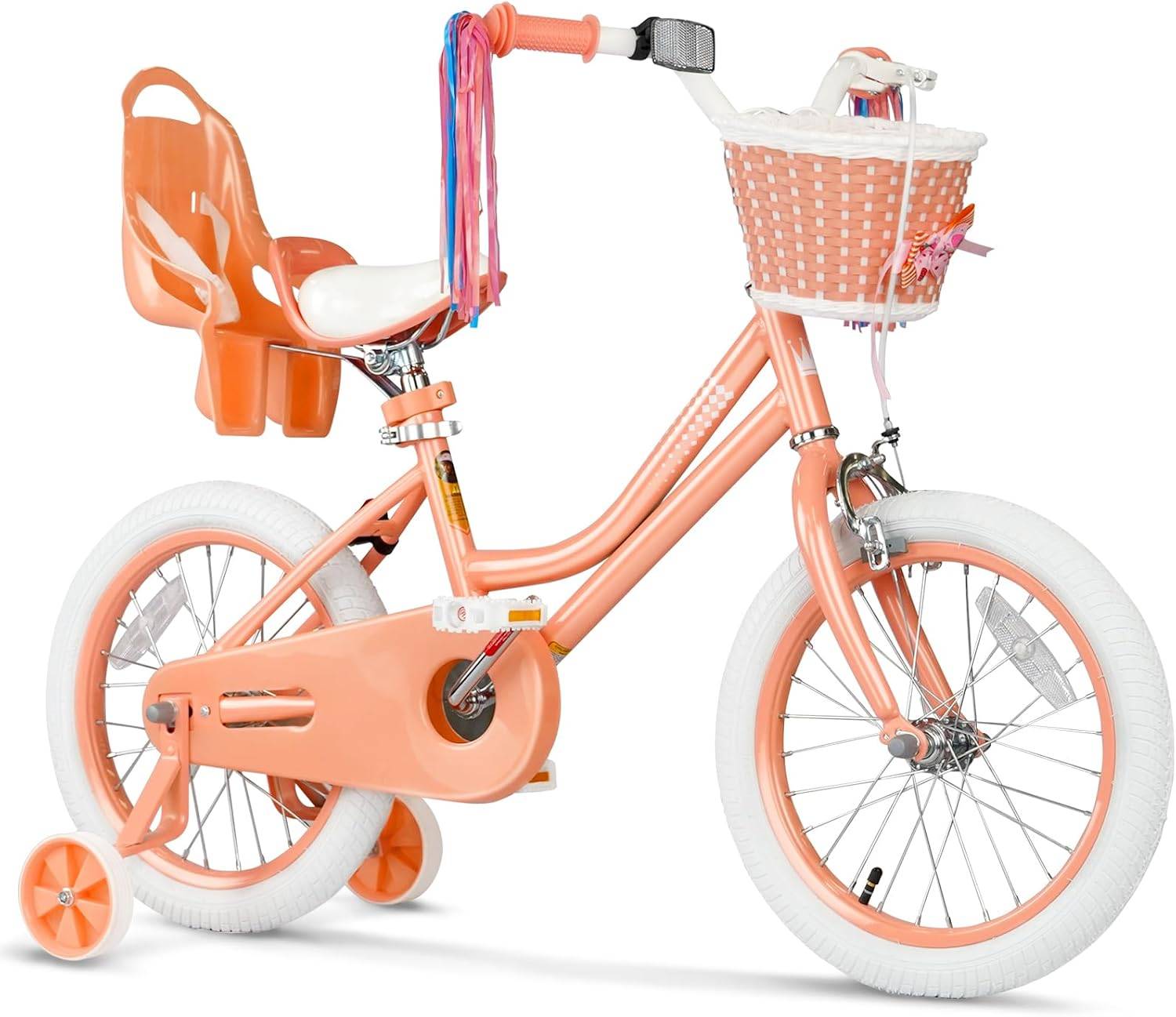 Girls 12/14/16 Inch Kids Bike by XJD with Training Wheels – Peach
A peach training-wheel bike offered in supplied 12, 14 and 16 Inch SKU labels. It is relevant when one of those sizes matches the rider’s measurements and passes reach, braking and confidence checks.
 XJD Light Purple Girls Bike with Basket, Training Wheels, 12/14/16/20 Inch
A light-purple training-wheel bike with a basket and supplied 12, 14 and 16 Inch SKU labels. Its exact title mentions 20 Inch, but that size is not included in the supplied available labels.
XJD Girls Bike for Kids Ages 3-8, 12/14/16 Inch with Training Wheels – Purple is a purple training-wheel option with supplied 12, 14 and 16 Inch labels. The age wording is part of its catalog title, not evidence that it fits an individual child.
Girls 12/14/16 Inch Kids Bike by XJD with Training Wheels – Peach provides the same supplied wheel-size labels in peach and is also categorized as a training-wheel bike. Compare the appropriate label only after measuring the rider.
XJD Light Purple Girls Bike with Basket, Training Wheels, 12/14/16/20 Inch is listed as a light-purple training-wheel bike with a basket. Although 20 Inch appears in its exact title, the supplied available SKU labels are only 12, 14 and 16 Inch, so confirm the actual selectable size rather than assuming a 20 Inch option is available.
These products are relevant only when a 12, 14 or 16 Inch starting point also passes the individual fit check. For a rider who needs 18, 20, 24 or 26 Inch wheels, they are smaller comparison points—not equal substitutes for the required size.
Training wheels and readiness
Training wheels may suit a child who currently needs lateral support, but their presence does not correct poor sizing or unreachable controls. Compare how securely she starts, steers and stops on the correctly sized bicycle. Use the product manual for installation and adjustment instructions, or ask a qualified bicycle mechanic to set them up.
Readiness to ride without training wheels should be judged from balance, controlled steering, reliable stopping and confidence—not a birthday or pressure to progress. Keep practice sessions calm and take a break if fatigue begins to reduce control.
Finish the choice with helmet fit
Use a properly fitting bicycle helmet every ride. It should sit level, and its straps should be adjusted according to the helmet manufacturer’s instructions. A loose, tilted or incorrectly strapped helmet needs correction before riding begins.
The next step for a little girl and her bike is simple: record her height and inseam, shortlist the corresponding wheel size, conduct the stand-over, reach, braking and confidence checks, and choose among the supplied 12, 14 or 16 Inch options only if the actual fit succeeds.
Bikes for your next adventure
-
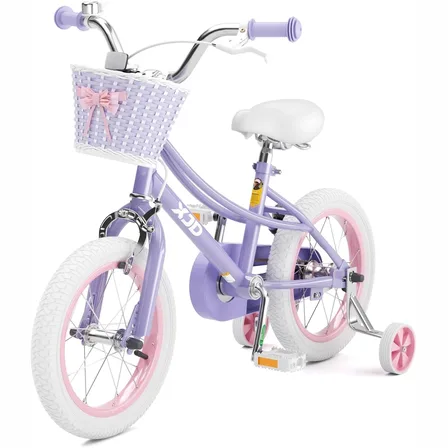
Girls' Training Wheel Bike by XJD with Basket – Purple
If you're shopping for a first bike for a girl roughly 3 to 12 years old (91–152…$75.99
-
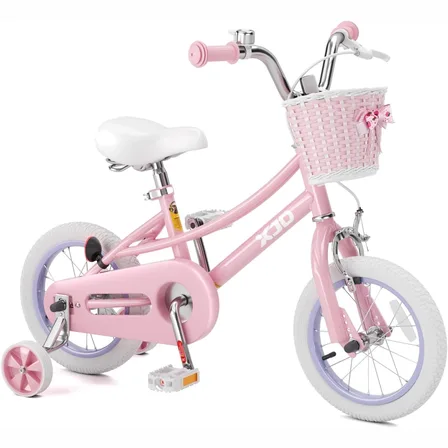
Pink 12/14/16/20" XJD Girls Bike with Training Wheels & Basket
The Pink XJD Girls Bike with Training Wheels & Basket is a first-bike pick f…$65.99
$75.99 -
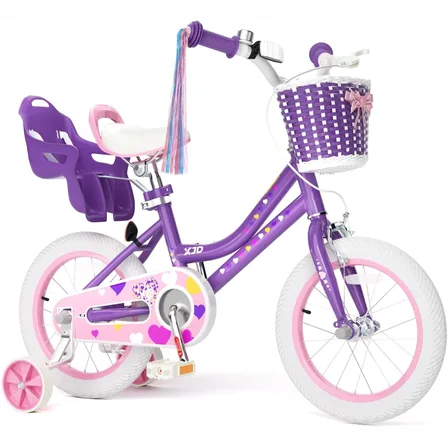
XJD Light Purple Girls Bike with Basket, Training Wheels, 12/14/16/20 Inch
The XJD Girls Bike with Basket in Light Purple is a single-speed training-wheel …$99.99
$119.99