

Do girls like boys with bikes
Some girls like boys who ride bikes, and some do not. A bike can be a shared interest, but kindness, respect and genuine friendship matter far more.
What the question really means
Children often ask this because they want reassurance about fitting in or being liked. A useful answer is honest and simple: riding a bike may give two children something enjoyable to talk about or do together, but it cannot make another person like them.
Encourage the child to focus on being considerate, listening, respecting boundaries and enjoying cycling for its own sake. Avoid suggesting that bikes are mainly for impressing girls or that particular colours and riding styles belong to one gender. Girls and boys can choose any properly fitting bike that suits their confidence and intended riding.
If they want to ride together, start with fit
Before comparing appearance, measure each rider’s standing height and inseam. Age is only a starting point. The child should try the bicycle rather than receive an oversized model bought for future growth.
During the fit check, look at stand-over clearance, reach to the handlebar and whether the rider can steer without stretching. Confirm that the child can reach and operate the brakes with control. Ask how stable and confident the bike feels while starting, stopping and turning. A qualified bicycle mechanic can help if the fit or controls are uncertain.
| Wheel size | XBikes starting point | What to verify |
|---|---|---|
| 12 Inch | Ages 3–4; 34–40 in / 86–102 cm | Individual stand-over, reach and control |
| 14 Inch | Ages 3–6; 37–45 in / 94–114 cm | Individual stand-over, reach and control |
| 16 Inch | Ages 4–7; 40–48 in / 102–122 cm | Individual stand-over, reach and control |
Because these ranges overlap, height alone does not settle the choice. Inseam, reach, brake control and current confidence can make one listed size more appropriate than another. If none fits correctly, do not force a choice from the available sizes.
How the supplied bikes are relevant
The two catalog options are relevant when a young rider needs a 12-, 14- or 16-inch bike and training wheels are part of the comparison. They can support a shared cycling interest, but neither product provides evidence about whether girls will like a boy. Their useful differences here are catalog category, style wording and colour.
XJD Kids' Training Wheel Bike for Boys & Girls, 12/14/16 Inch – White is listed as a Training Wheel Bike in white, with 12 Inch, 14 Inch and 16 Inch SKU labels. XJD Boys & Girls BMX Bike with Training Wheels, 12/14/16" – Blue is listed as a Kids' BMX Bike in blue, also with 12 Inch, 14 Inch and 16 Inch SKU labels.
These particular catalog choices help because they let a parent compare the same three wheel-size labels across a training-wheel option and a BMX-labelled option without treating gendered title wording as fit evidence.
 XJD Kids' Training Wheel Bike for Boys & Girls, 12/14/16 Inch – White
A white Training Wheel Bike catalog option for boys and girls, offered with 12 Inch, 14 Inch and 16 Inch SKU labels. Relevant only when an individual fit check supports one of those sizes.
 XJD Boys & Girls BMX Bike with Training Wheels, 12/14/16" – Blue
A blue Kids' BMX Bike catalog option for boys and girls with training wheels and 12 Inch, 14 Inch and 16 Inch SKU labels. Compare category and colour only after confirming fit and control.
Compare the options without guessing
First, eliminate every SKU label that falls outside the rider’s height starting point. Then have the child try the remaining size or sizes and compare stand-over, seated reach, steering control, brake reach and confidence. Do not assume that matching a listed age is enough.
Next, ask which catalog category and colour the child actually prefers. “Boys & Girls” in both exact product titles is catalog wording; it does not restrict who may ride either bike and does not establish fit. Likewise, the BMX label describes the supplied category, not an assurance about components, performance or suitability for particular manoeuvres.
The supplied facts do not state assembly details, load limits, component compatibility, torque values or maintenance procedures. Follow the exact product manual for those matters, or ask a qualified bicycle mechanic. Do not infer such details from the product name.
Make riding together positive
- Choose a comfortable route and pace that suit both children’s present ability.
- Let either rider decline a race, trick or outing without teasing or pressure.
- Praise considerate behaviour, controlled stops and communication rather than attempts to impress.
- Keep the activity inclusive: friendship and enjoyment are worthwhile outcomes even when there is no romantic interest.
Each rider should wear a bicycle helmet that fits properly, sits level and has straps adjusted according to the helmet manufacturer’s instructions. A helmet is personal protective equipment, not a substitute for a correctly fitting bicycle or attentive supervision.
What to do next
Measure the child’s height and inseam, compare those measurements with the 12-, 14- and 16-inch starting points, and arrange an individual fit check. Consider either supplied bike only if one of its available wheel sizes gives comfortable stand-over, reach, brake control and confidence. Then let the child choose between the relevant catalog styles and colours because they enjoy riding—not because a bicycle is expected to win someone’s affection.
Bikes for your next adventure
-
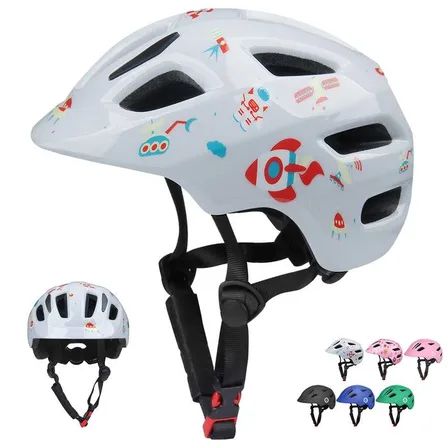
White Astronaut Bike Helmet for Kids by XJD – Toddler to Youth Sizes
4 reviews
The XJD White Astronaut kids' bike helmet is made for toddlers through younger e…$59.99
-

XJD Girls Bike for Kids Ages 3-8, 12/14/16 Inch with Training Wheels – Purple
The XJD Girls Bike in Purple is a training-wheel bicycle for kids ages 3 to 8, f…$149
$169 -
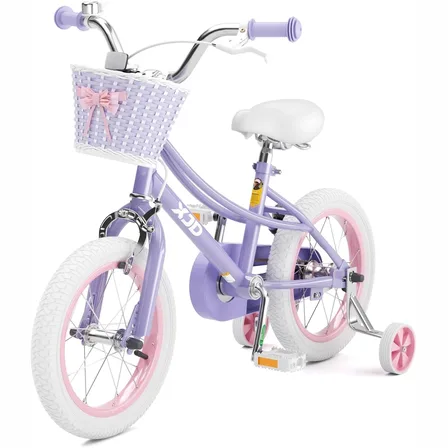
Girls' Training Wheel Bike by XJD with Basket – Purple
If you're shopping for a first bike for a girl roughly 3 to 12 years old (91–152…$75.99