

How to size a girl for a bike
To size a girl for a bike, measure her standing height and inseam, use height to choose a starting wheel size, then confirm stand-over, reach, brake control and confidence on the actual bicycle.
Measure height and inseam first
Have her wear the shoes she will normally ride in. Measure standing height on a level floor with her back straight. For inseam, have her stand with feet slightly apart and measure from the floor to the crotch. Record both measurements rather than relying on clothing size or age.
Height places the rider in the XBikes starting range below. Inseam helps with the physical fit check: she must be able to stand over the bicycle comfortably and get on and off without struggling. Because frame shapes and adjustments differ, an inseam measurement alone cannot prove that a particular bike fits.
Compare her height with the wheel-size ranges
| Wheel size | Starting age | Rider height |
|---|---|---|
| 12 Inch | 3–4 | 34–40 in / 86–102 cm |
| 14 Inch | 3–6 | 37–45 in / 94–114 cm |
| 16 Inch | 4–7 | 40–48 in / 102–122 cm |
| 18 Inch | 5–9 | 43–52 in / 109–132 cm |
| 20 Inch | 7–12 | 48–60 in / 122–152 cm |
| 24 Inch | 10–14 | 54–64 in / 137–163 cm |
| 26 Inch | Youth and adults | Over 60 in / 153 cm |
Overlapping ranges are normal. When her height falls into two ranges, do not automatically choose the larger wheel. Treat both as candidates and let the individual fit check decide. Age is only a starting clue; measured height, inseam, reach, brake control and current confidence take priority.
Check the actual bicycle before deciding
Ask her to stand astride the frame with both feet securely on the ground. She should be comfortable over the bicycle rather than pressed against it or forced onto her toes. Next, have her sit in a normal riding position and hold the handlebar. She should not need to stretch, lock her elbows or twist forward to steer.
Confirm that she can operate the brakes provided on the bicycle while maintaining a secure grip and can turn the handlebar without losing balance. She should also be able to start, stop, get off and control the bike at low speed. A size-chart match is not enough if any of these actions are difficult.
Do not buy an oversized bicycle solely to leave growing room. A bike she cannot comfortably straddle, steer or stop is not the right current size. If adjustments do not produce a controlled position, try another size or frame and consult a qualified bicycle mechanic.
Factor in her present confidence
A confident rider and a beginner of the same height may prefer different candidates within an overlapping range. The beginner still needs the same physical checks, but ease of starting, stopping and placing her feet securely may matter more than potential growing room. Ask her how the bicycle feels and watch what she can actually do instead of interpreting nervousness as something she must simply overcome.
Training wheels describe a bicycle setup, not a sizing rule. They do not correct excessive reach, poor stand-over clearance or inaccessible controls. Follow the exact product manual for assembly, adjustment, compatibility, maintenance and load limits; use a qualified bicycle mechanic when the instructions or fit are uncertain.
How the supplied girls’ bikes compare
The supplied catalog options are useful because they let you compare several wheel-size labels after measuring the rider. The Light Pink XJD Girls' Bicycle with Basket & Training Wheels is offered in 12 Inch, 14 Inch, 16 Inch and 20 Inch labels. The Blue XJD Girls Bike with Training Wheels – 12/14/16 Inch is offered in 12 Inch, 14 Inch and 16 Inch labels.
 Light Pink XJD Girls' Bicycle with Basket & Training Wheels
Relevant for riders whose measurements and hands-on fit check point to its available 12 Inch, 14 Inch, 16 Inch or 20 Inch label; includes basket and training wheels in the catalog title.
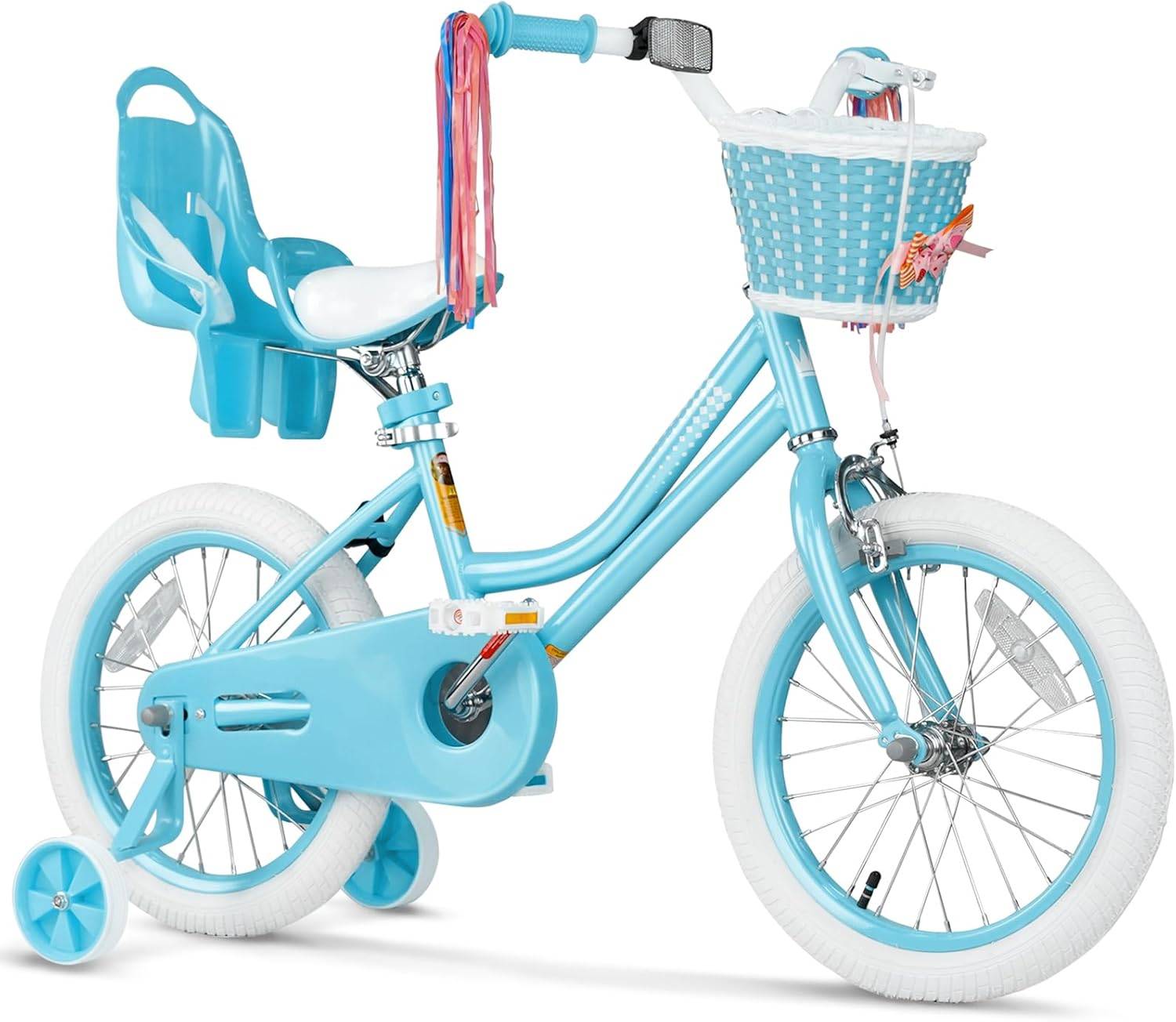 Blue XJD Girls Bike with Training Wheels – 12/14/16 Inch
A comparison option when the rider’s height and individual control check indicate its available 12 Inch, 14 Inch or 16 Inch label; the catalog places it among training wheel bikes.
Both products are relevant when the fit process points to 12, 14 or 16 Inch candidates. The light pink model also provides a 20 Inch catalog option. Neither supplied product has an 18 Inch, 24 Inch or 26 Inch label, so they are not substitutes when the fit check indicates one of those exact wheel sizes. Their colors, basket wording and training-wheel wording do not establish fit.
Make the final size decision
- Measure her standing height and inseam.
- Use the table to identify one or, in an overlap, two candidate wheel sizes.
- Have her try the actual bicycle in normal riding shoes.
- Check stand-over comfort, natural reach, steering, brake operation, starting and stopping.
- Choose the size she can control now, not an oversized bike intended for later growth.
Before riding, add a properly fitting bicycle helmet. It should sit level and its straps should be used according to the helmet manufacturer’s instructions. The final answer to “How do I size her?” is the candidate wheel size that matches her measured height and passes every hands-on control check today.
Bikes for your next adventure
-
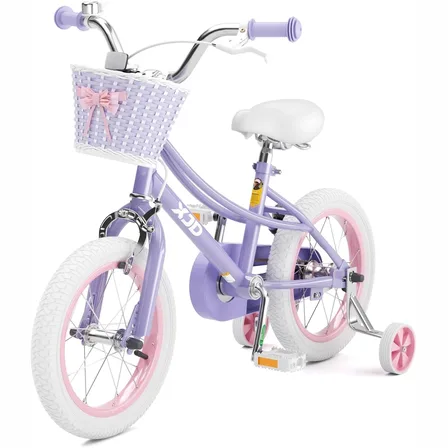
Girls' Training Wheel Bike by XJD with Basket – Purple
If you're shopping for a first bike for a girl roughly 3 to 12 years old (91–152…$75.99
-
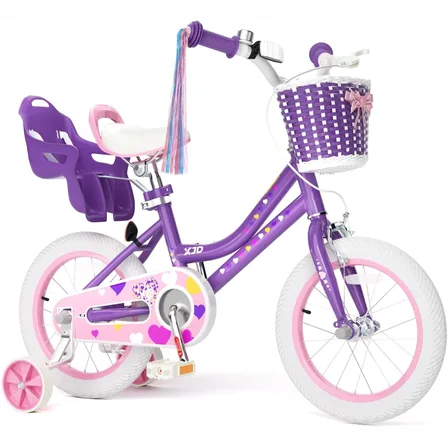
XJD Light Purple Girls Bike with Basket, Training Wheels, 12/14/16/20 Inch
The XJD Girls Bike with Basket in Light Purple is a single-speed training-wheel …$99.99
$119.99 -
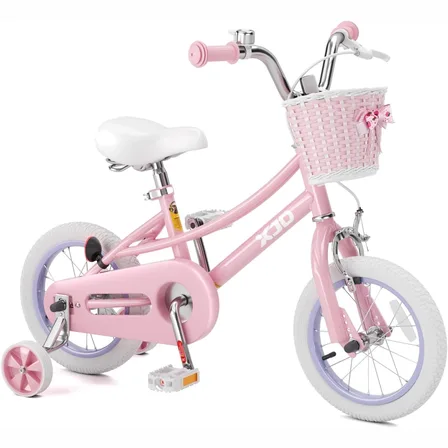
Pink 12/14/16/20" XJD Girls Bike with Training Wheels & Basket
The Pink XJD Girls Bike with Training Wheels & Basket is a first-bike pick f…$65.99
$75.99