

Is It Good for a Girl to Ride a Bicycle?
Yes—riding a bicycle can be good for a girl when the bike fits her now, she can control it confidently, and she wears a properly fitted helmet.
Why cycling can be a good choice
Riding can provide active play, practice with balance and coordination, growing independence, and enjoyable time outdoors. A girl does not need a bicycle designed or marketed specifically for girls to receive those benefits. Color and styling are preferences; fit and control determine whether a particular bike is appropriate.
The important question is therefore not simply whether cycling is good for girls. It is whether this girl can stand over, steer, start, stop and operate the brakes on this bicycle without struggling. Her current ability matters more than expectations based on gender or age.
Measure before comparing bicycles
Measure the rider's height and inseam while she is wearing the shoes she will normally use for riding. Height gives a useful wheel-size starting point. Inseam helps you judge stand-over room when she tries the actual bicycle.
During that fit check, confirm that she can stand over the bike comfortably, reach the handlebar without stretching, turn it in both directions, and reach and operate the brake controls reliably. She should also be able to get into a stable starting and stopping position. Do not choose an oversized bicycle merely to allow room for growth.
Age ranges overlap, so age should never settle the decision by itself. Use these XBikes starting points only for the wheel sizes offered by the two relevant catalog options:
| Wheel size | Age starting point | Rider-height starting point |
|---|---|---|
| 14 Inch | 3–6 | 37–45 in / 94–114 cm |
| 16 Inch | 4–7 | 40–48 in / 102–122 cm |
| 20 Inch | 7–12 | 48–60 in / 122–152 cm |
| 24 Inch | 10–14 | 54–64 in / 137–163 cm |
| 26 Inch | Youth and adults | Over 60 in / 153 cm |
Compare the relevant catalog choices
These catalog options are useful because together they provide 14-, 16-, 20-, 24- and 26-inch comparison points, including a training-wheel model and a beach-cruiser model. The correct choice still depends on the individual fit check rather than the product name or appearance.
 XJD Pink Beach Cruiser for Girls – Rear Rack & V-Brake
Available in 20-, 24- and 26-inch sizes, this beach cruiser is relevant for taller riders whose measurements fit those starting points. Confirm individual stand-over, reach and V-brake control; consult the manual before using the rear rack.
 Girls' Training Wheel Bike by XJD with Basket – Purple
Available in 14-, 16- and 20-inch sizes, this purple training-wheel bike offers comparison points for smaller riders and includes a basket. Training wheels do not replace checks of height, inseam, reach, braking and present confidence.
The Girls' Training Wheel Bike by XJD with Basket – Purple is offered in 14 Inch, 16 Inch and 20 Inch. Its training-wheel format may be relevant for a rider who is not yet ready to balance independently, while the basket and purple presentation may suit her preferences. Do not assume that training wheels correct a poor fit: she must still match the selected size and control the bicycle comfortably.
The XJD Pink Beach Cruiser for Girls – Rear Rack & V-Brake is offered in 20 Inch, 24 Inch and 26 Inch. It becomes a relevant comparison when the rider's measured height places her in one of those starting ranges and she prefers a beach-cruiser option. Confirm that she can reach and operate the V-brake controls. Consult the exact product manual before using the rear rack because no load limit is supplied here.
The models overlap at 20 Inch. At that size, compare the rider's confidence and intended setup as well as fit: one title identifies training wheels and a basket, while the other identifies a beach-cruiser format, rear rack and V-brake. Those catalog distinctions do not establish that either bicycle will fit a particular child.
Check control before saying yes
Have her try the bicycle rather than relying on a label. A useful check includes:
- Verify comfortable stand-over room and a stable position for starting and stopping.
- Watch for excessive reaching, awkward steering or difficulty maintaining control.
- Ask her to demonstrate that she can reach and operate the brakes consistently.
- Choose for her present height, inseam and confidence, not anticipated growth.
If she cannot complete those checks comfortably, try another size or configuration. A wheel-size chart narrows the search; it does not replace trying the assembled bicycle.
Helmet, setup and supervision
Use a bicycle helmet that fits properly, sits level, and has straps positioned according to its manufacturer's instructions. Riding conditions and supervision should match the child's current confidence and control. Start in a suitable low-risk practice area away from traffic while she learns how the bicycle responds.
Follow the exact product manual for assembly, maintenance, adjustments, rack use and training-wheel setup. If the instructions are unavailable or the brakes, steering, wheels or fit are uncertain, use a qualified bicycle mechanic rather than inventing an adjustment or torque value.
Make the decision for this rider
Measure her height and inseam, select a wheel-size starting point, and then have her test stand-over, reach, steering and braking. If she fits and remains in control, riding can be a positive choice. If she is stretched, unstable or unable to brake reliably, choose a better-fitting bicycle before she rides.
Bikes for your next adventure
-
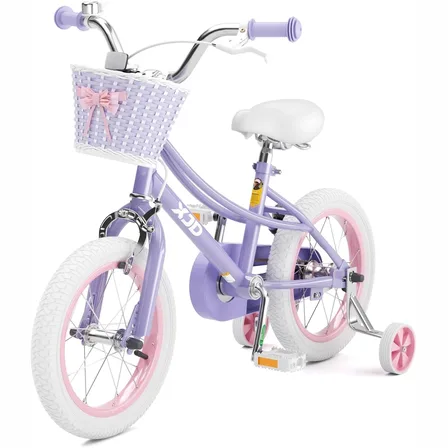
Girls' Training Wheel Bike by XJD with Basket – Purple
If you're shopping for a first bike for a girl roughly 3 to 12 years old (91–152…$75.99
-
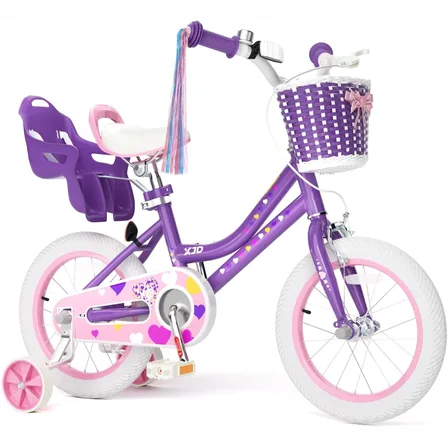
XJD Light Purple Girls Bike with Basket, Training Wheels, 12/14/16/20 Inch
The XJD Girls Bike with Basket in Light Purple is a single-speed training-wheel …$99.99
$119.99 -
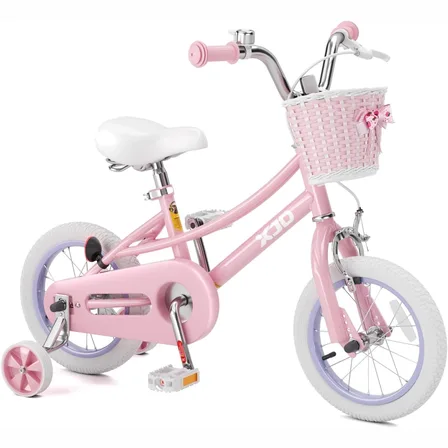
Pink 12/14/16/20" XJD Girls Bike with Training Wheels & Basket
The Pink XJD Girls Bike with Training Wheels & Basket is a first-bike pick f…$65.99
$75.99