

What do you call a girls bike frame
A girls’ bike frame is traditionally called a step-through frame, open frame or low-step frame. These names describe a lowered or absent top tube; they do not determine who can ride the bike.
What the name actually means
“Girls’ frame” is an informal retail description, not a separate fit standard. The more precise term is step-through. A conventional frame with a high top tube is often called a diamond frame. Either design can suit any child if its dimensions, controls and wheel size fit that rider.
A step-through shape can make getting on and off easier, especially for a child developing balance and confidence. However, the label alone says nothing about stand-over clearance, reach, brake access or overall control. Those must be checked on the actual bicycle.
Measure the child before comparing frames
Start with the child’s current height and inseam. Measure height without shoes against a wall. For inseam, have the child stand with feet slightly apart and measure from the floor to the crotch. Use these measurements to narrow the wheel-size range, then arrange an individual fit check.
During that check, confirm that the child can stand over the bicycle without the frame interfering, mount and dismount comfortably, reach the handlebar without stretching, steer while remaining balanced, and operate the brakes confidently. Do not choose an oversized bicycle merely to allow room for growth.
Compare wheel-size starting points
Wheel size is not the same thing as frame shape, but it provides a practical starting point when comparing children’s bicycles. Height should take priority over age, especially where ranges overlap.
| Wheel size | Starting age | Rider height |
|---|---|---|
| 12 Inch | 3–4 | 34–40 in / 86–102 cm |
| 14 Inch | 3–6 | 37–45 in / 94–114 cm |
| 16 Inch | 4–7 | 40–48 in / 102–122 cm |
| 18 Inch | 5–9 | 43–52 in / 109–132 cm |
| 20 Inch | 7–12 | 48–60 in / 122–152 cm |
| 24 Inch | 10–14 | 54–64 in / 137–163 cm |
| 26 Inch | Youth and adults | Over 60 in / 153 cm |
These ranges are starting points, not proof of fit. When a child falls into two ranges, compare both bicycles in person and favor the one that permits better stand-over clearance, reach, brake control and confident handling.
How the supplied bike helps with the comparison
The Purple XJD Girls' Bike with Doll Seat & Basket is listed as a Training Wheel Bike and is offered with 12 Inch, 14 Inch and 16 Inch SKU labels. Those three sizes provide relevant comparison points for a younger rider whose measured height falls within the corresponding ranges above. Its title identifies it as a girls’ bike, but the title does not establish its precise frame geometry or prove that it fits a particular child.
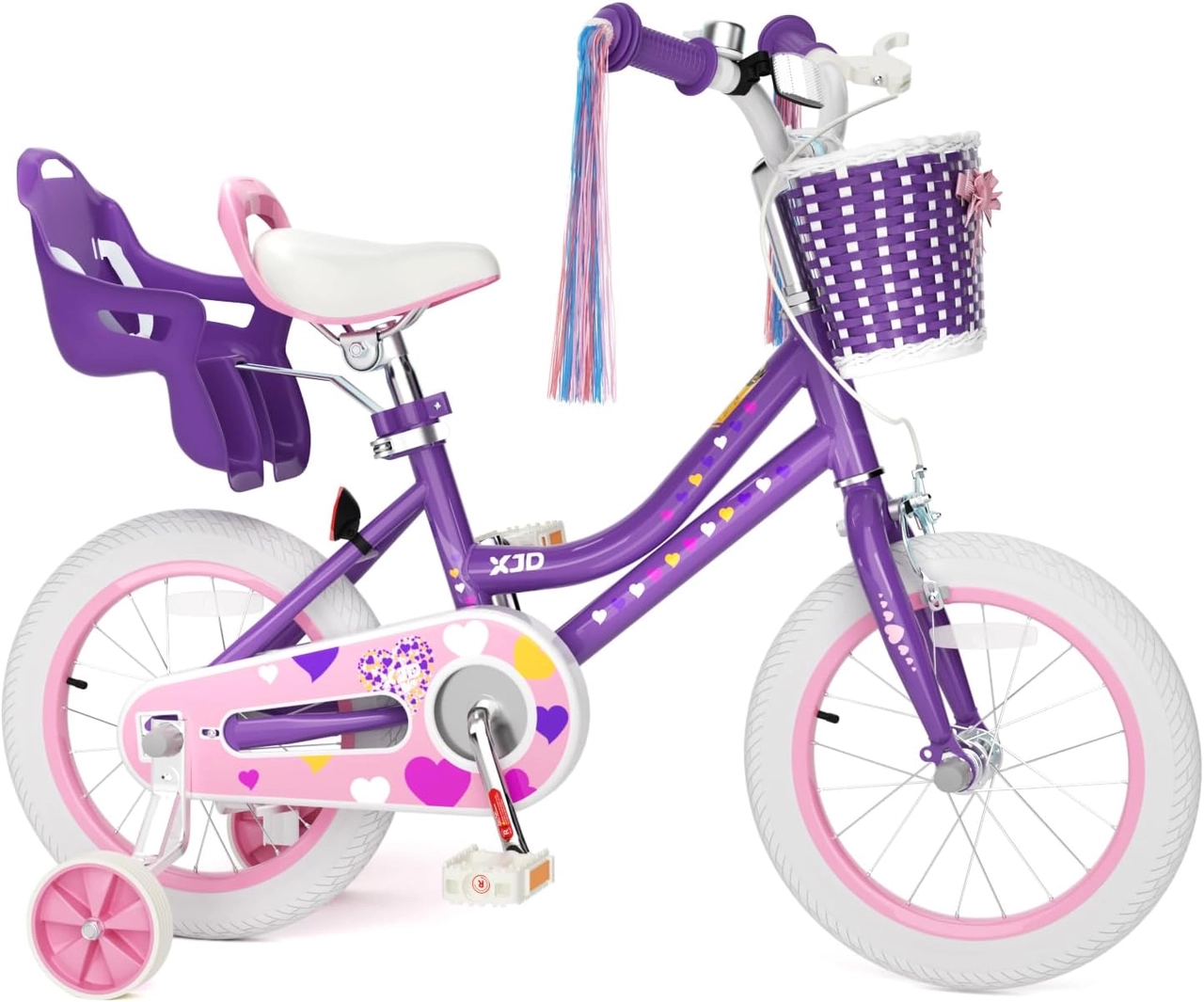
This catalog option is relevant when the rider needs one of those three wheel sizes and a Training Wheel Bike is under consideration. It is not a substitute for an 18 Inch, 20 Inch, 24 Inch or 26 Inch bicycle, and it should not be selected solely because “Girls’ Bike” appears in its name. Check the chosen SKU on the actual child.
What to inspect on the actual frame
Use the product listing, bicycle and exact product manual to confirm whether the frame is genuinely step-through or simply marketed as a girls’ model. Then have the child try it and check:
- Stand-over: the frame should not prevent comfortable standing and safe mounting or dismounting.
- Reach: the child should hold and steer the handlebar without leaning or stretching excessively.
- Brake access: the child must be able to reach and operate the provided braking controls.
- Control: starting, stopping, turning and putting a foot down should feel manageable at the child’s current confidence level.
For assembly, maintenance, torque, load limits or component compatibility, follow the manual for the exact product or consult a qualified bicycle mechanic rather than applying a generic procedure.
Make the title-specific decision
Call the lowered design a step-through frame, but choose by fit rather than by the “girls’ frame” label. Measure height and inseam, shortlist the matching wheel sizes, and let the child compare stand-over, reach, brake operation and control. Select the frame and size that work now—not an oversized bicycle intended for later growth—and pair it with a properly fitting helmet worn level with its straps adjusted according to the helmet manufacturer’s instructions.
Bikes for your next adventure
-
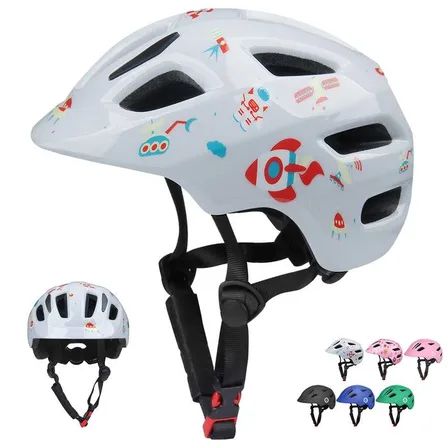
White Astronaut Bike Helmet for Kids by XJD – Toddler to Youth Sizes
4 reviews
The XJD White Astronaut kids' bike helmet is made for toddlers through younger e…$59.99
-
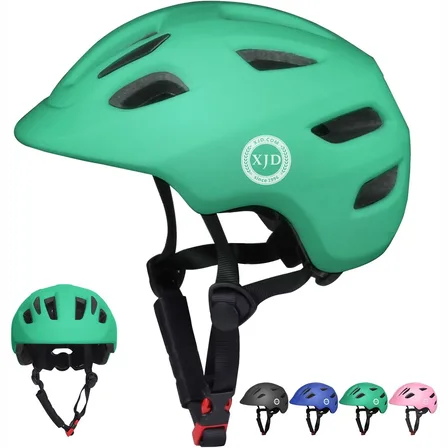
Green XJD Toddler Bike Helmet with Adjustable Fit, XS (46–51 cm)
The XJD toddler bike helmet in Green is built for the youngest riders — the size…$20.39
$23.99 -

Kids Bike Helmet by XJD for Boys & Girls – Black, Blue, Green, Pink, Purple
The XJD Kids Bike Helmet covers a wide 2-to-8-year age range thanks to two head-…$59.99