

What kind of bikes do girls ride
Girls ride any bike type that fits their body, skills and riding plans; color or a “girls’” label does not determine the right bicycle. Measure the rider, check control in person and choose the wheel size she can handle confidently now.
What makes a bike suitable for a girl?
The useful differences are fit and manageability, not gender. A suitable bike lets the rider stand over it, reach the handlebar without stretching, turn comfortably and operate the brakes with control. Her feet and legs should also work with the bicycle’s intended starting and stopping position.
Current confidence matters. A new rider may benefit from a training-wheel bicycle while learning to pedal and steer. A rider who already starts, stops, balances and turns independently may need a different setup. Do not choose a larger bicycle simply because there is room to grow; the American Academy of Pediatrics advises having the child try the bike and checking stand-over clearance, control and brake reach.
Measure before comparing wheel sizes
Measure height without shoes against a wall. Measure inseam from the floor to the crotch while the child stands straight with feet slightly apart. Height gives a starting range, while inseam helps you evaluate stand-over room. Neither measurement replaces an actual fit check.
| Wheel size | XBikes starting point |
|---|---|
| 12 Inch | Ages 3–4; 34–40 in / 86–102 cm |
| 14 Inch | Ages 3–6; 37–45 in / 94–114 cm |
| 16 Inch | Ages 4–7; 40–48 in / 102–122 cm |
| 18 Inch | Ages 5–9; 43–52 in / 109–132 cm |
| 20 Inch | Ages 7–12; 48–60 in / 122–152 cm |
| 24 Inch | Ages 10–14; 54–64 in / 137–163 cm |
| 26 Inch | Youth and adults over 60 in / 153 cm |
These ranges overlap because children with the same height may have different proportions, reach and abilities. Start with measured height, then compare inseam, reach, brake control and confidence. Age alone should never settle the choice.
How the supplied girls’ bikes compare
The supplied catalog options are relevant when the rider needs a training-wheel bike and her individual fit check points to 12, 14 or 16 inches. They help answer the title by showing that “girls’ bikes” can be training-wheel bicycles offered in different wheel sizes, while fit—not the pink or purple presentation—decides which size is usable.
 XJD Pink Girls' Bike – Kids 12/14/16 Inch Training Wheel Bicycle
A pink training-wheel bicycle offered with 12 Inch, 14 Inch and 16 Inch SKU labels; relevant only when the rider’s measurements, control and confidence support one of those sizes.
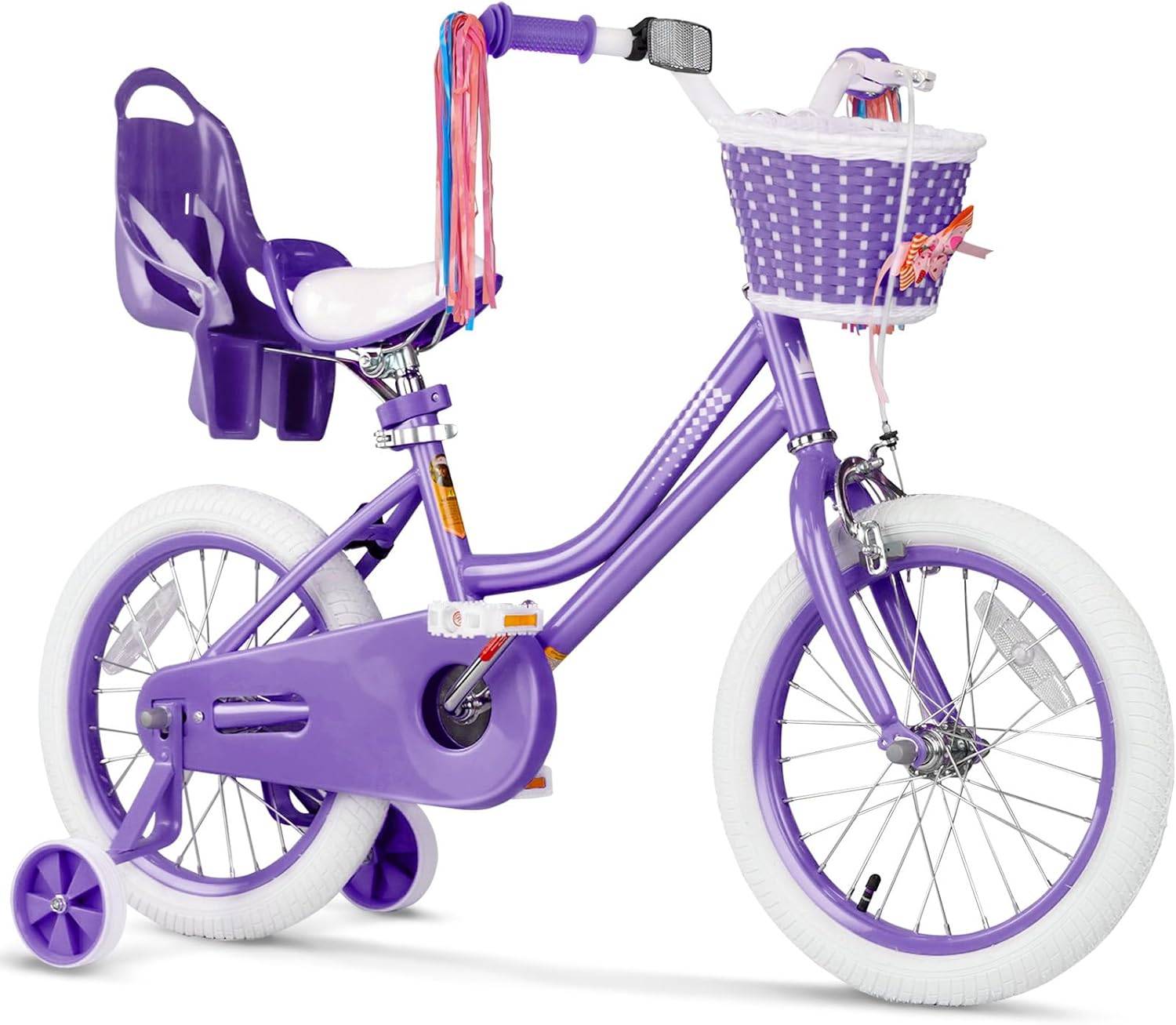 XJD Girls Bike for Kids Ages 3-8, 12/14/16 Inch with Training Wheels – Purple
A purple training-wheel bicycle with 12 Inch, 14 Inch and 16 Inch SKU labels. The age wording in its title is a catalog label, so confirm fit individually.
XJD Pink Girls' Bike – Kids 12/14/16 Inch Training Wheel Bicycle is categorized as a training-wheel bike and has 12 Inch, 14 Inch and 16 Inch SKU labels.
XJD Girls Bike for Kids Ages 3-8, 12/14/16 Inch with Training Wheels – Purple is also categorized as a training-wheel bike with the same three available size labels. “Ages 3-8” is part of its catalog title, not proof that it fits every child in that span. Use the XBikes size starting points and perform an individual fit check.
On the supplied facts, the practical comparison is presentation: one title identifies pink and the other purple. Both list training wheels and the same 12, 14 and 16 Inch choices. No supplied facts establish differences in brakes, weight, materials, geometry or components, so do not infer them.
When these products are not relevant
Neither catalog option should be treated as a match when the fit check points to 18, 20, 24 or 26 inches, because neither lists those sizes. They may illustrate the nearest smaller catalog choices, but they are comparison points only—not substitutes or equivalent sizes.
They may also be unsuitable if the rider does not need training wheels or cannot comfortably stand over, steer, reach the controls and brake on the selected model. If the rider falls within overlapping height ranges, have her try the plausible sizes rather than automatically choosing the larger one.
Perform the in-person control check
- Confirm that the selected wheel size includes the rider’s measured height as a starting point.
- Have her stand over the bicycle and check that she can manage it without being crowded or overextended.
- Check that she can sit in a controlled position, reach the handlebar, turn it and operate the brakes comfortably.
- Ask her to demonstrate controlled starting, stopping and steering in an appropriate supervised area.
- If fit, assembly or control remains uncertain, consult the exact product manual or a qualified bicycle mechanic.
For any assembly sequence, maintenance interval, load limit, compatibility detail or torque value, follow the exact product manual; none of those specifications is supplied here.
Make the final choice
Choose the bike she controls today, not the one she may grow into. Pair it with a bicycle helmet that fits properly, sits level and has straps adjusted according to the helmet manufacturer’s instructions, as advised by the U.S. Consumer Product Safety Commission. Measure height and inseam now, shortlist only matching wheel sizes, and let her confirm stand-over, reach, braking and confidence before deciding which kind of girls’ bike to buy.
Bikes for your next adventure
-

Flower Pink XJD Girls Bike with Doll Seat & Basket
The XJD Flower Pink girls' bike is made for riders 71–122 cm tall (roughly ages …$69.99
-
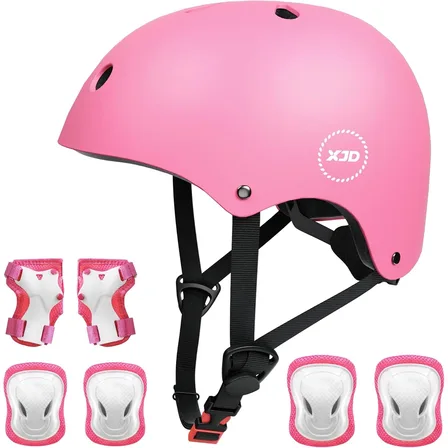
XJD Kids Helmet & Protective Gear Set for Girls, Pink
The XJD Kids Helmet & Protective Gear Set in Pink is a complete safety kit for g…$24.64
-

Kids Bike Helmet by XJD for Boys & Girls – Black, Blue, Green, Pink, Purple
The XJD Kids Bike Helmet covers a wide 2-to-8-year age range thanks to two head-…$59.99