

What makes a bike a girl bike
A “girl bike” is mainly a bike marketed with certain colors, graphics or accessories—not a separate fit standard. Choose by the child’s body, control and confidence, not the label.
What actually makes it a girl bike?
In children’s bicycles, “girl” usually describes presentation rather than who can ride the bike. A color, basket, frame appearance or product name may signal the intended marketing, but none determines whether the bicycle fits a particular child.
The useful question is therefore not “Is this officially a girl bike?” but “Can this rider stand over, reach, steer and stop this bike comfortably?” Any child may prefer—or dislike—the styling associated with a girls’ model. Let preference guide appearance and measured fit guide size.
Measure before comparing bikes
Measure the child’s height without shoes, then measure inseam from the floor to the crotch while the child stands straight. Height provides a wheel-size starting point; inseam helps assess stand-over clearance. Because frame shapes vary, measurements cannot replace trying the exact bicycle.
During a fit check, have the child stand over the frame and sit in a normal riding position. Check whether the child can:
- stand over the bicycle without being forced onto tiptoes;
- reach the handlebars without stretching or locking the arms;
- turn the bars while remaining balanced and in control;
- reach and operate the brakes confidently;
- start, stop and put a foot down without panic.
Do not buy an oversized bicycle merely to leave room for growth. If control is marginal now, the larger size is not the right fit now.
Use wheel size as a starting point
The supplied girls’ models currently list 12-, 14- and 16-inch SKU labels. XBikes uses these starting ranges, with the individual fit check taking priority:
| Wheel-size label | Starting age | Starting rider height |
|---|---|---|
| 12 Inch | 3–4 | 34–40 in / 86–102 cm |
| 14 Inch | 3–6 | 37–45 in / 94–114 cm |
| 16 Inch | 4–7 | 40–48 in / 102–122 cm |
Overlapping ranges are normal. Age is only a rough starting point, while measured height, inseam, reach, brake control and current riding confidence decide whether a candidate deserves an in-person fit check.
How the supplied girls’ bikes compare
The XJD Light Purple Girls Bike with Basket, Training Wheels, 12/14/16/20 Inch is cataloged as a training-wheel bike and lists a basket in its title. Its supplied available SKU labels are 12 Inch, 14 Inch and 16 Inch; the 20-inch wording in the title does not establish current 20-inch availability.
The XJD Girls BMX Bike 12/14/16 Inch with Training Wheels – Pink Blue is cataloged as a kids’ BMX bike and also lists training wheels. Its supplied available SKU labels are likewise 12 Inch, 14 Inch and 16 Inch.
These particular catalog options help answer the title because both show what “girls’ bike” means in actual listings: styling and named features can differ while the available size choices still require the same rider-specific fit comparison.
 XJD Light Purple Girls Bike with Basket, Training Wheels, 12/14/16/20 Inch
A light-purple training-wheel bike with a basket in its exact title. The supplied available SKU labels are 12 Inch, 14 Inch and 16 Inch, making it relevant only after an individual fit check.
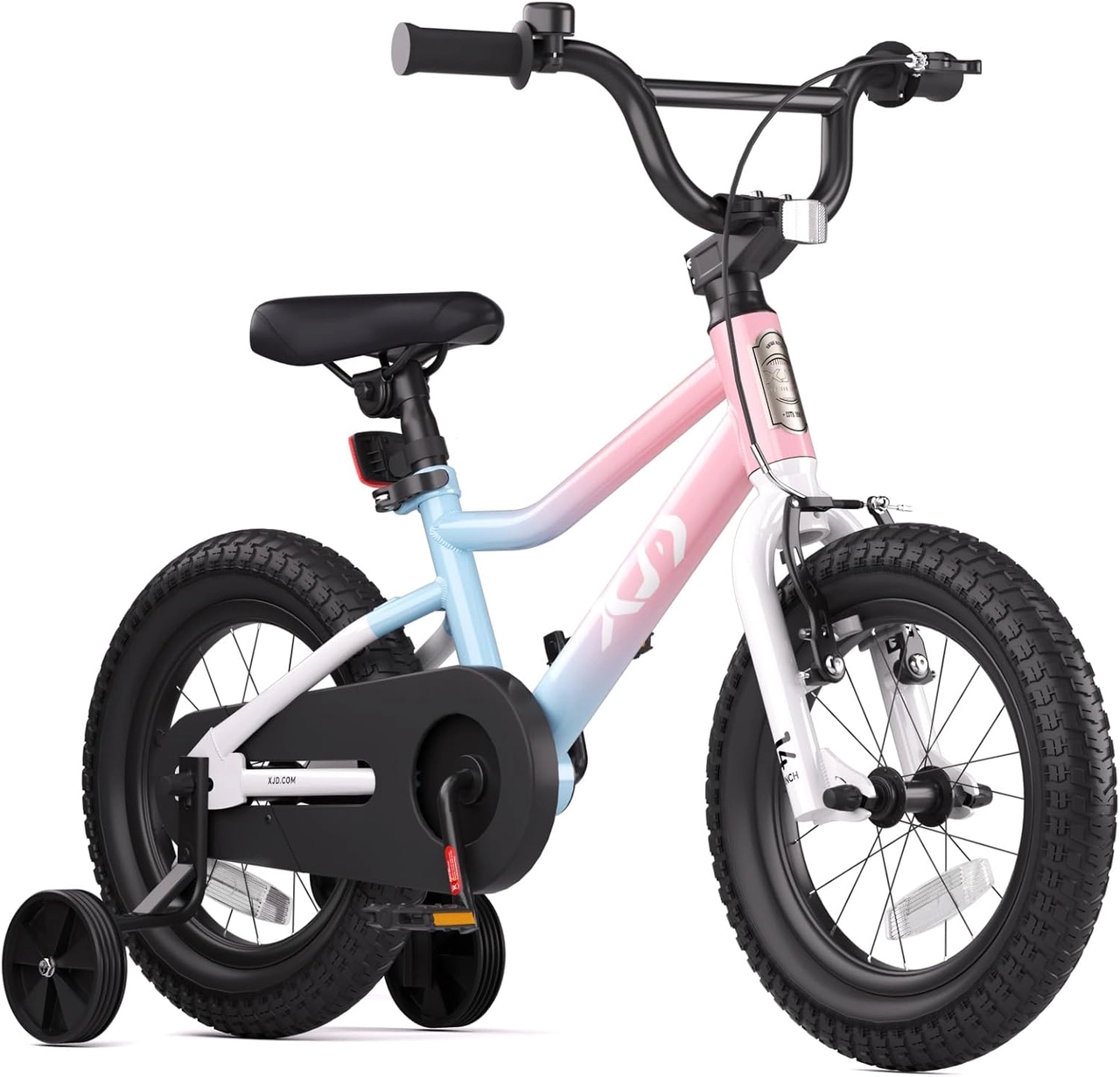 XJD Girls BMX Bike 12/14/16 Inch with Training Wheels – Pink Blue
A pink-and-blue kids’ BMX bike listed with training wheels and available SKU labels of 12 Inch, 14 Inch and 16 Inch. Compare its presentation only after confirming the rider’s size and control.
Compare them first by the correct available wheel-size label and actual fit, then by the child’s preference for the light-purple basket presentation or the pink-and-blue BMX presentation. The catalog facts do not establish differences in weight, materials, brakes, geometry or safety performance, so those should not be assumed.
When these products are relevant
These two bicycles are relevant when the child fits a 12-, 14- or 16-inch starting range, wants the listed presentation, and needs a model cataloged with training wheels. Training wheels in a title do not resolve fit: the rider must still be able to reach, steer and operate the controls.
They are not suitable comparison substitutes when the measured rider needs an 18-, 20-, 24- or 26-inch bicycle. If you are specifically seeking 20 Inch, note that neither supplied product lists 20 Inch among its available SKU labels, even though one exact product title contains “20 Inch.” Use the required size rather than treating a nearby size as equivalent.
For assembly, adjustment, maintenance, load limits, part compatibility or torque, follow the exact product manual or ask a qualified bicycle mechanic. Do not infer those details from the product title.
Make the final decision
- Measure height and inseam.
- Use the XBikes range to identify a starting wheel size.
- Have the child try the exact bike and check stand-over, reach, steering, braking and stopping confidence.
- Reject an oversized or hard-to-control option, even if its styling is preferred.
- Choose the child’s preferred “girl bike” appearance only after fit and control are confirmed.
Add a properly fitting bicycle helmet that sits level, with its straps used according to the helmet manufacturer’s instructions. The deciding feature of a suitable girl bike is not the word “girl”; it is a fit the child can control now, paired with styling she actually wants.
Bikes for your next adventure
-
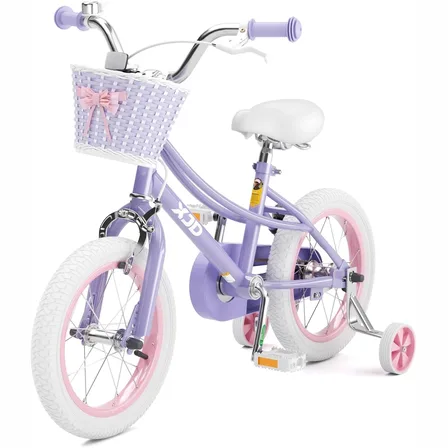
Girls' Training Wheel Bike by XJD with Basket – Purple
If you're shopping for a first bike for a girl roughly 3 to 12 years old (91–152…$75.99
-

Pink 12/14/16/20" XJD Girls Bike with Training Wheels & Basket
The Pink XJD Girls Bike with Training Wheels & Basket is a first-bike pick f…$65.99
$75.99 -
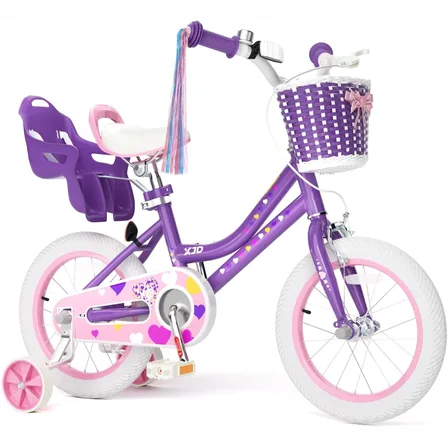
XJD Light Purple Girls Bike with Basket, Training Wheels, 12/14/16/20 Inch
The XJD Girls Bike with Basket in Light Purple is a single-speed training-wheel …$99.99
$119.99