

What size bike for 6 year old girl
For most 6-year-old girls, start by comparing 14-, 16-, and 18-inch bikes. Measure her height first: 16 inches fits 40–48 in (102–122 cm), while 18 inches starts at 43 in (109 cm). Choose only after checking inseam, stand-over clearance, reach, brake control, and confidence on the actual bike.
Use height before age
At age six, more than one wheel size may appear suitable because children of the same age can differ considerably in height, leg length, coordination, and riding experience. The XBikes starting points place a 14-inch bike at ages 3–6 and heights of 37–45 in (94–114 cm), a 16-inch bike at ages 4–7 and 40–48 in (102–122 cm), and an 18-inch bike at ages 5–9 and 43–52 in (109–132 cm).
That makes 16 inches the usual first comparison for a 6-year-old within its height range. A shorter rider may fit a 14-inch bike better, while a taller rider may need to try an 18-inch bike. These ranges narrow the search; they do not confirm fit.
Measure her before comparing bikes
- Height: Have her stand barefoot against a wall, looking straight ahead. Measure from the floor to the top of her head, then compare the result with the XBikes ranges.
- Inseam: With her feet slightly apart, measure from the floor to the crotch. Use this measurement during the stand-over and saddle checks rather than assuming height alone settles the choice.
- Reach and hand control: On the bike, check that she can hold the handlebar comfortably, steer without stretching, and operate the brakes reliably if the bicycle has hand controls.
- Confidence: Notice whether she can start, stop, turn, and remain in control without appearing intimidated by the bicycle.
How to decide among 14, 16, and 18 inches
| Wheel size | XBikes starting range | What it means at age six |
|---|---|---|
| 14 Inch | 37–45 in / 94–114 cm; ages 3–6 | Worth trying for a shorter rider, provided the cockpit and controls are not cramped. |
| 16 Inch | 40–48 in / 102–122 cm; ages 4–7 | The central starting point for many 6-year-olds, subject to an individual fit check. |
| 18 Inch | 43–52 in / 109–132 cm; ages 5–9 | Worth comparing for a taller rider, but only if stand-over, reach, and control are comfortable. |
Do not move up simply because she is near the top of an age band. The American Academy of Pediatrics advises having a child try the bicycle and avoiding an oversized bike bought for future growth. A bike she cannot confidently control now is not made appropriate by the expectation that she will grow into it.
What a real fit check should show
Ask her to straddle the bicycle while standing over its frame. She should be able to stand securely rather than balance on tiptoe or lean the bike sharply. Next, place her in the riding position and look for an easy, controlled reach to the handlebar. Her posture should not require an exaggerated stretch.
Have her demonstrate that she can steer and stop while maintaining control. If there are hand brakes, confirm that her fingers can reach and operate them effectively. Also watch a start, a slow turn, and a stop in a traffic-free area. If the bike feels cumbersome, difficult to mount, or hard to stop, compare the next smaller size even when the height chart overlaps.
How the supplied girls’ bikes relate
The two catalog options are useful because each offers 12-, 14-, and 16-inch SKU labels, allowing direct comparison of the two most relevant smaller starting points. The XJD Pink Girls' Bike – Kids 12/14/16 Inch Training Wheel Bicycle is categorized as a training-wheel bike. The XJD Girls Bike for Kids Ages 3-8, 12/14/16 Inch with Training Wheels – Purple is also categorized as a training-wheel bike and has the same three listed wheel-size choices.
The age wording in the purple bike’s exact catalog title is only a product label, not proof that it fits a particular 6-year-old. For either model, compare her measured height with the XBikes standard and then perform the same stand-over, reach, brake-control, and confidence checks.
These products can be relevant when the fit check points to 14 or 16 inches and a training-wheel bicycle suits her current confidence. Neither supplied product has an 18-inch option, so if her measurements and trial indicate 18 inches, these are smaller comparison points rather than substitutes.
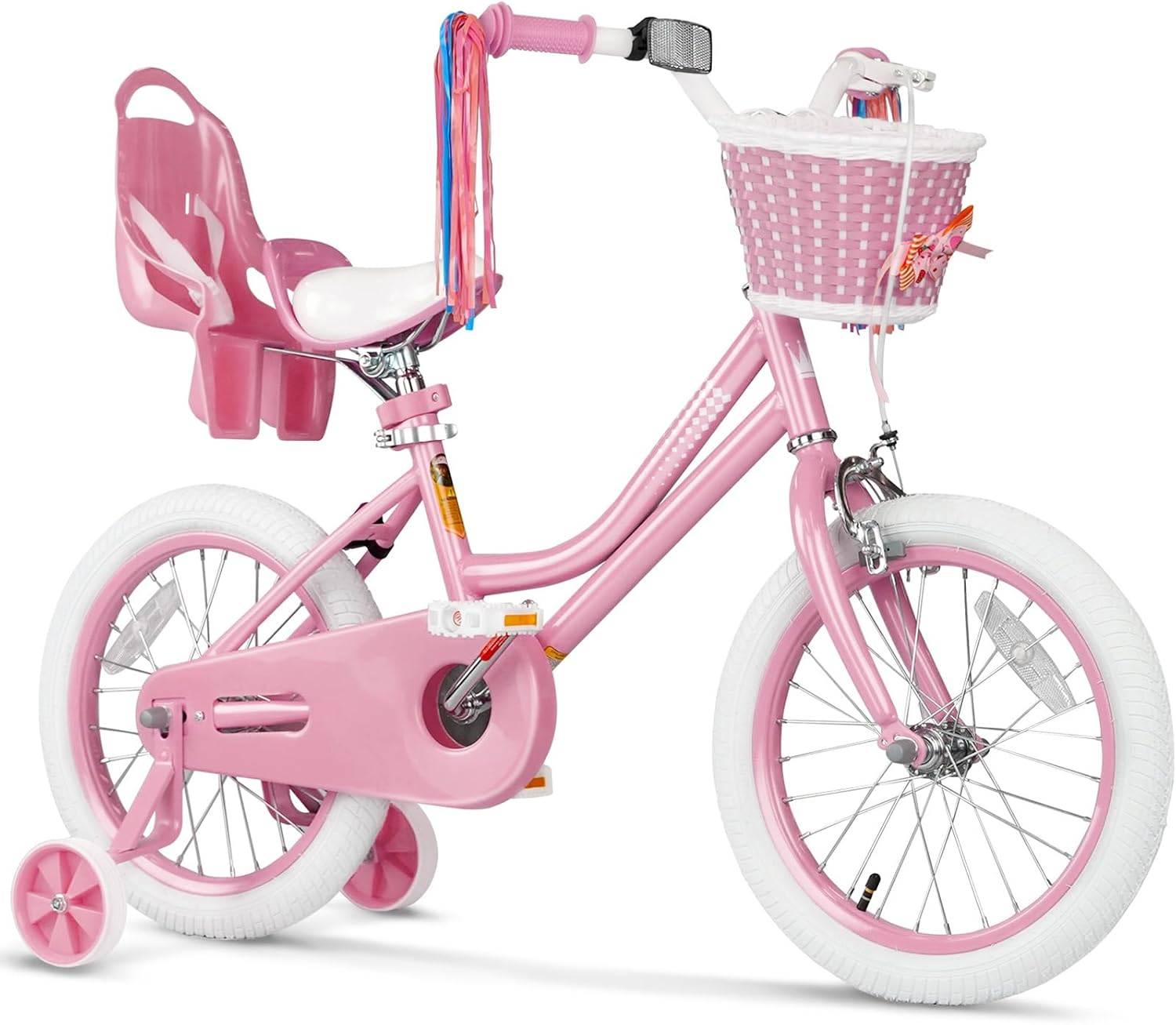 XJD Pink Girls' Bike – Kids 12/14/16 Inch Training Wheel Bicycle
A training-wheel bicycle offered with 12-, 14-, and 16-inch SKU labels. Its 14- and 16-inch versions are relevant comparison options when the rider’s measurements and hands-on fit check support those sizes.
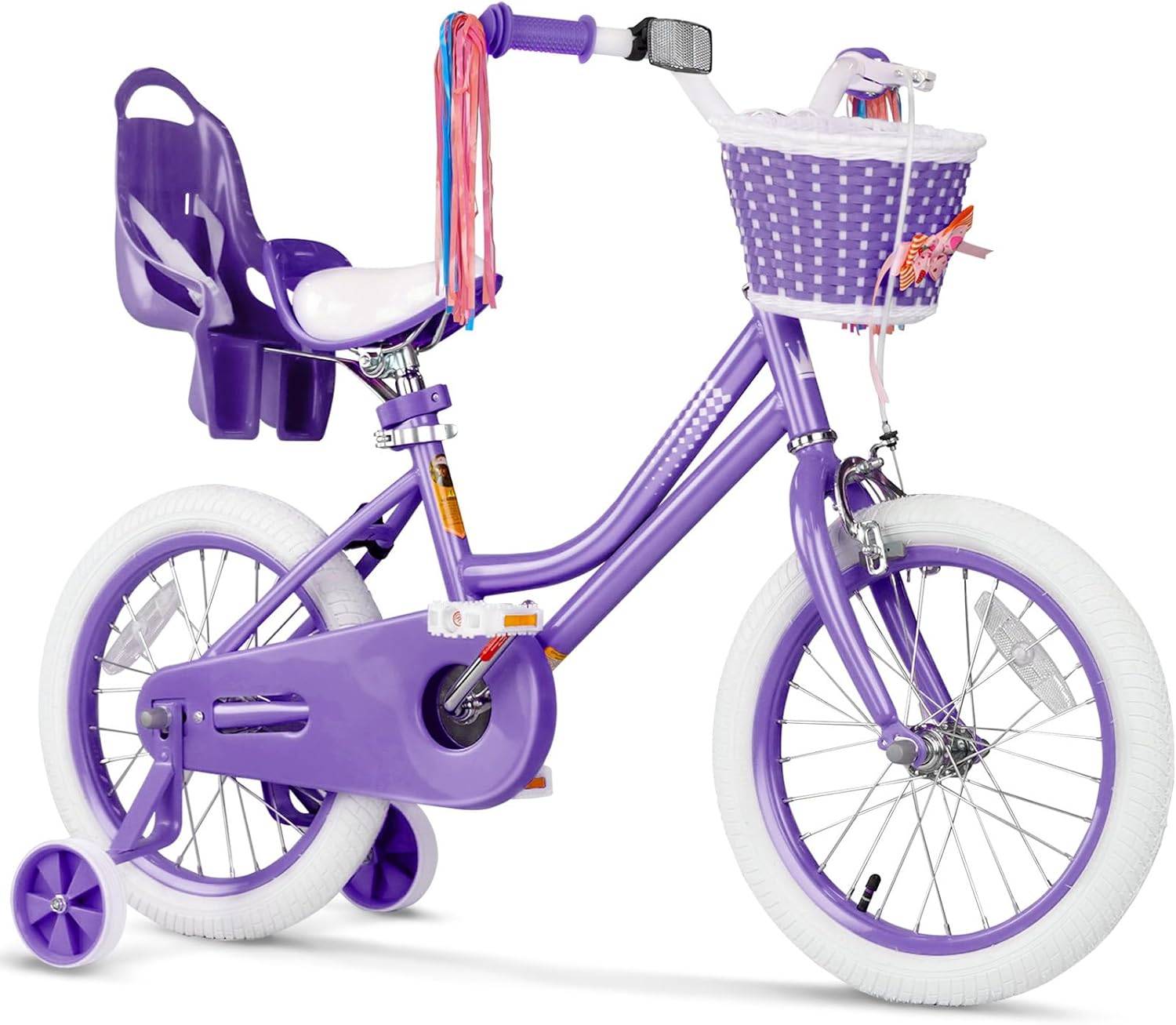 XJD Girls Bike for Kids Ages 3-8, 12/14/16 Inch with Training Wheels – Purple
A purple training-wheel bicycle with 12-, 14-, and 16-inch SKU labels. The age wording in its title is a catalog label; select its 14- or 16-inch version only from the XBikes height ranges and an individual fit check.
Make the final choice
Choose 14 inches if she falls within its height range and controls it more naturally than a 16-inch bike. Choose 16 inches when her height is within 40–48 in (102–122 cm) and she passes every practical check. Compare an 18-inch bike when she is at least 43 in (109 cm) and the trial confirms comfortable control; do not select it from age alone.
Before riding, provide a properly fitted bicycle helmet. The U.S. Consumer Product Safety Commission advises that it sit level and that its straps be used according to the helmet manufacturer’s instructions. Follow the exact bicycle manual for assembly and maintenance details not provided here, or use a qualified bicycle mechanic. For your 6-year-old girl, measure today, try the matching sizes, and buy the one she can confidently stand over, reach, steer, and stop.
Bikes for your next adventure
-

XJD Girls Bike for Kids Ages 3-8, 12/14/16 Inch with Training Wheels – Purple
The XJD Girls Bike in Purple is a training-wheel bicycle for kids ages 3 to 8, f…$149
$169 -

Pink Girls' 12/14/16" Bike by XJD – Basket & Doll Seat
The XJD Pink Girls' Bike with Basket & Doll Seat is made for riders 71–122 cm ta…$75.99
$99.99 -

Light Purple XJD Toddler Bike Helmet, Adjustable, Size XS (46–51 cm)
This Light Purple XJD toddler bike helmet is made for the smallest riders — the …$20.39