

What size bike for girl 5 feet tall
A girl who is exactly 5 feet tall should usually compare a 20-inch bike with a 24-inch bike, then choose by fit and control—not age alone.
The short answer at 5 feet tall
Five feet equals 60 inches, or about 152 cm. In the XBikes starting ranges, that measurement sits at the upper boundary for a 20-inch bike and within the range for a 24-inch bike. A 26-inch bike starts with riders over 60 inches or 153 cm, so it should not be selected merely because the rider is close to that threshold.
At this boundary, the wheel-size chart cannot settle the choice by itself. A 20-inch bike may suit a rider who needs a shorter reach or more manageable feel. A properly proportioned 24-inch bike may provide a better fit when she can stand over it comfortably, reach the controls, and handle it confidently. Frame geometry can differ even when wheel labels match, so an individual trial matters.
Measure before comparing bikes
Measure her without shoes, standing straight against a wall. Record total height from the floor to the top of her head. Then measure inseam from the floor to the crotch, using a book held level between the legs to represent the saddle area.
Bring both measurements when checking a bicycle, but do not attempt to calculate a guaranteed wheel size from inseam alone. The supplied XBikes chart uses rider height as a starting point; inseam is especially useful for checking stand-over clearance and whether the saddle can be positioned appropriately under the exact bike's instructions.
Compare the relevant size ranges
| Wheel label | XBikes rider-height starting point | Meaning for a 5-foot rider |
|---|---|---|
| 20 Inch | 48–60 in / 122–152 cm | At the upper edge; try it rather than assuming it is too small. |
| 24 Inch | 54–64 in / 137–163 cm | Within the range; compare directly with a 20-inch bike. |
| 26 Inch | Over 60 in / 153 cm | Not indicated at exactly 5 feet; reconsider only if a new measurement exceeds the threshold and the fit check succeeds. |
The chart associates 20-inch bikes with ages 7–12 and 24-inch bikes with ages 10–14, but age is secondary. Height, inseam, reach, brake operation, and current riding confidence should decide between overlapping sizes.
What a successful fit check looks like
Have her try the exact bicycle. The American Academy of Pediatrics advises against buying an oversized bike simply for future growth. During the trial, check that she can:
- Stand over the frame comfortably rather than being pressed against it.
- Mount, start, turn, stop, and dismount without struggling against the bike's size.
- Reach the handlebar without stretching, locking her elbows, or losing a balanced posture.
- Operate the brakes reliably with her hands in a normal riding position.
- Place her feet as directed by the bicycle's setup guidance and remain confident at low speed.
If the 24-inch option compromises stand-over clearance, reach, braking, or confidence, do not choose it just because it offers more room to grow. If the 20-inch option feels cramped or restricts comfortable control, compare a properly adjusted 24-inch model instead.
How the supplied XBikes options relate
The supplied catalog gives useful comparison points at the two overlapping sizes and at the next threshold. The Pink 12/14/16/20" XJD Girls Bike with Training Wheels & Basket includes a 20 Inch SKU label. The 26-Inch XJD Beach Cruiser Bike for Girls – Purple, V-Brake includes Mint Green and Pink SKU labels in both 20 Inch and 24 Inch, plus 26 Inch choices; the Purple supplied option is labeled 26 Inch. These labels help narrow an in-person size comparison, but they do not establish fit.
 Pink 12/14/16/20" XJD Girls Bike with Training Wheels & Basket
Its available labels include 20 Inch, the upper-boundary starting size for a rider who is exactly 5 feet tall. The 12-, 14-, and 16-inch labels correspond to shorter supplied height ranges.
 26-Inch XJD Beach Cruiser Bike for Girls – Purple, V-Brake
Its available labels include 20 Inch and 24 Inch for direct comparison at 5 feet tall. Its 26 Inch choices are relevant only above 60 inches or 153 cm and after an individual fit check.
For a rider measuring exactly 5 feet, focus first on the available 20-inch and 24-inch labels. Treat every 26-inch option as a later comparison point, not an equivalent substitute: the XBikes starting standard places 26-inch bikes above 60 inches or 153 cm. Likewise, the smaller 12-, 14-, and 16-inch labels on the first product fall below the relevant height ranges for this rider.
Do this before choosing
- Confirm height and inseam rather than relying on a remembered measurement or age.
- Try a 20-inch and a 24-inch bicycle, adjusted according to each exact product manual.
- Compare stand-over room, handlebar reach, brake reach, turning, starting, and stopping.
- Choose the size she controls confidently today; do not size up solely for growth.
- Use a properly fitting bicycle helmet that sits level, with straps secured according to its manufacturer's instructions.
For assembly, adjustment limits, compatibility, maintenance, and torque requirements, follow the exact bicycle manual or use a qualified bicycle mechanic. The practical decision at 5 feet tall is therefore specific: measure her now, test both 20-inch and 24-inch fits, and select the one she can stand over, reach, steer, and stop without strain.
Bikes for your next adventure
-
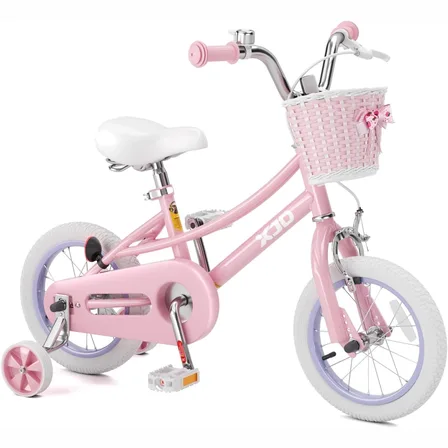
Pink 12/14/16/20" XJD Girls Bike with Training Wheels & Basket
The Pink XJD Girls Bike with Training Wheels & Basket is a first-bike pick f…$65.99
$75.99 -
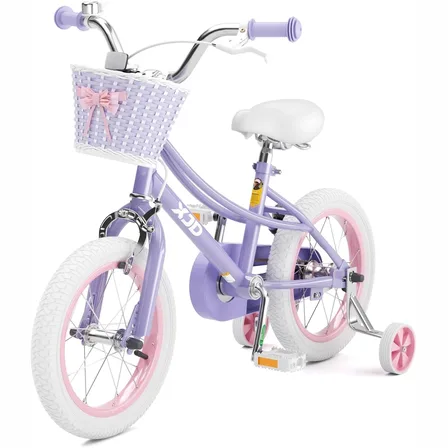
Girls' Training Wheel Bike by XJD with Basket – Purple
If you're shopping for a first bike for a girl roughly 3 to 12 years old (91–152…$75.99
-
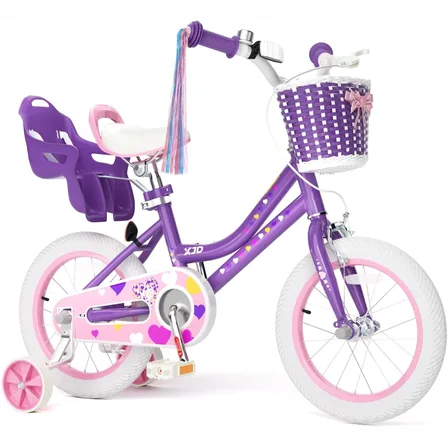
XJD Light Purple Girls Bike with Basket, Training Wheels, 12/14/16/20 Inch
The XJD Girls Bike with Basket in Light Purple is a single-speed training-wheel …$99.99
$119.99