

What size girls bike for 4 year old
Most 4-year-old girls need a 12-, 14-, or 16-inch bike. Measure her height first, then confirm stand-over clearance, reach, brake control, and confidence on the actual bike.
Choose the starting size from her height
At age four, wheel size cannot be selected reliably from age alone. Use the child’s current height to narrow the choice, then perform an individual fit check. The XBikes starting points overlap because children with the same height can differ in inseam, arm reach, coordination, and riding experience.
| Wheel size | XBikes age starting point | XBikes rider-height starting point |
|---|---|---|
| 12 Inch | Ages 3–4 | 34–40 in / 86–102 cm |
| 14 Inch | Ages 3–6 | 37–45 in / 94–114 cm |
| 16 Inch | Ages 4–7 | 40–48 in / 102–122 cm |
A 4-year-old measuring below 40 inches will generally begin the comparison with 12- and 14-inch bikes. At 40 inches or taller, include a 16-inch bike. Where the height ranges overlap, do not automatically choose the larger wheel: the better choice is the bike she can mount, control, and stop comfortably now.
Measure height and inseam
Measure without shoes and with the child standing naturally against a wall. For height, keep her heels on the floor and mark the top of her head with a level book. Measure from the floor to the mark.
For inseam, have her stand with her feet slightly apart. Hold a firm book upward between her legs to represent the bicycle saddle, then measure from the floor to the top edge of the book. Record both measurements in inches or centimetres. Height selects the initial wheel-size range; inseam helps you judge whether she can stand over and mount the particular frame.
Do not infer frame clearance from wheel size alone. Frame shapes vary, so compare the inseam with the actual bicycle while the child is present rather than relying on a size label.
Check the bike with the rider
The American Academy of Pediatrics advises having a child try the bicycle and avoiding an oversized bike bought solely for future growth. During the fit check, look for the following:
- Stand-over: She can straddle the bike with both feet planted and without the frame pressing uncomfortably against her.
- Starting and stopping: She can get on, set off, and put her feet down without the bike pulling her off balance.
- Reach: She can hold the handlebars without locking her elbows, stretching her torso, or losing a stable seated position.
- Steering: She can turn the bars while remaining balanced and looking ahead.
- Brake control: She can reach and operate the bike’s supplied braking controls confidently. Check the exact model rather than assuming a particular brake design.
If she cannot complete these checks calmly, try a different frame or the next smaller relevant wheel size. A bike she may eventually grow into is not a suitable replacement for one she can control today.
How the supplied girls’ bikes compare
The two catalog options are relevant because each is a training-wheel bike offered in 12 Inch, 14 Inch, and 16 Inch SKU labels—the three XBikes starting sizes that can apply at age four after measuring height. They allow a like-for-like wheel-size comparison rather than forcing a decision from color or title wording.
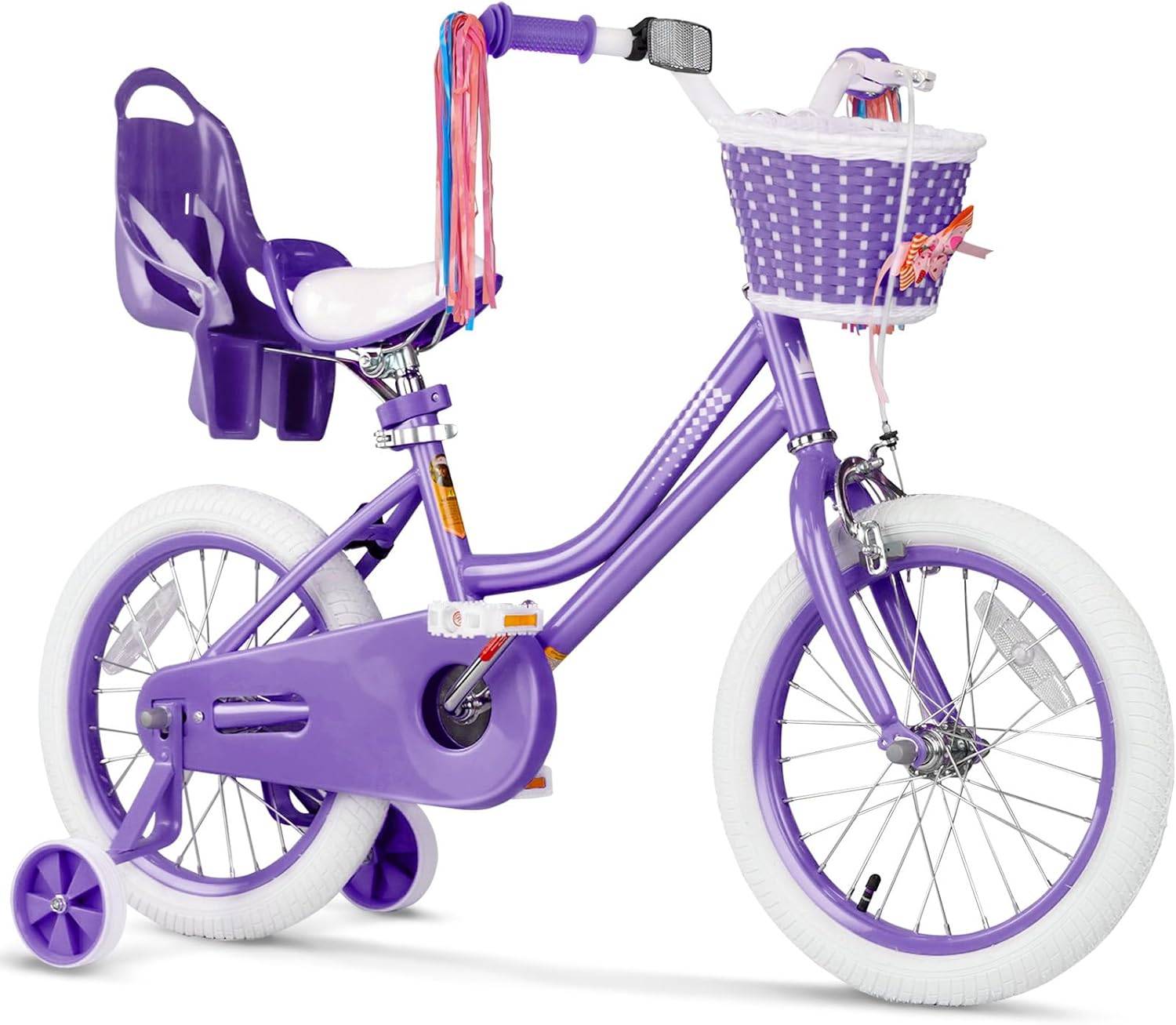 XJD Girls Bike for Kids Ages 3-8, 12/14/16 Inch with Training Wheels – Purple
A purple training-wheel bike offered with 12 Inch, 14 Inch, and 16 Inch SKU labels, making it relevant for comparing the height-based starting sizes that can apply to a 4-year-old.
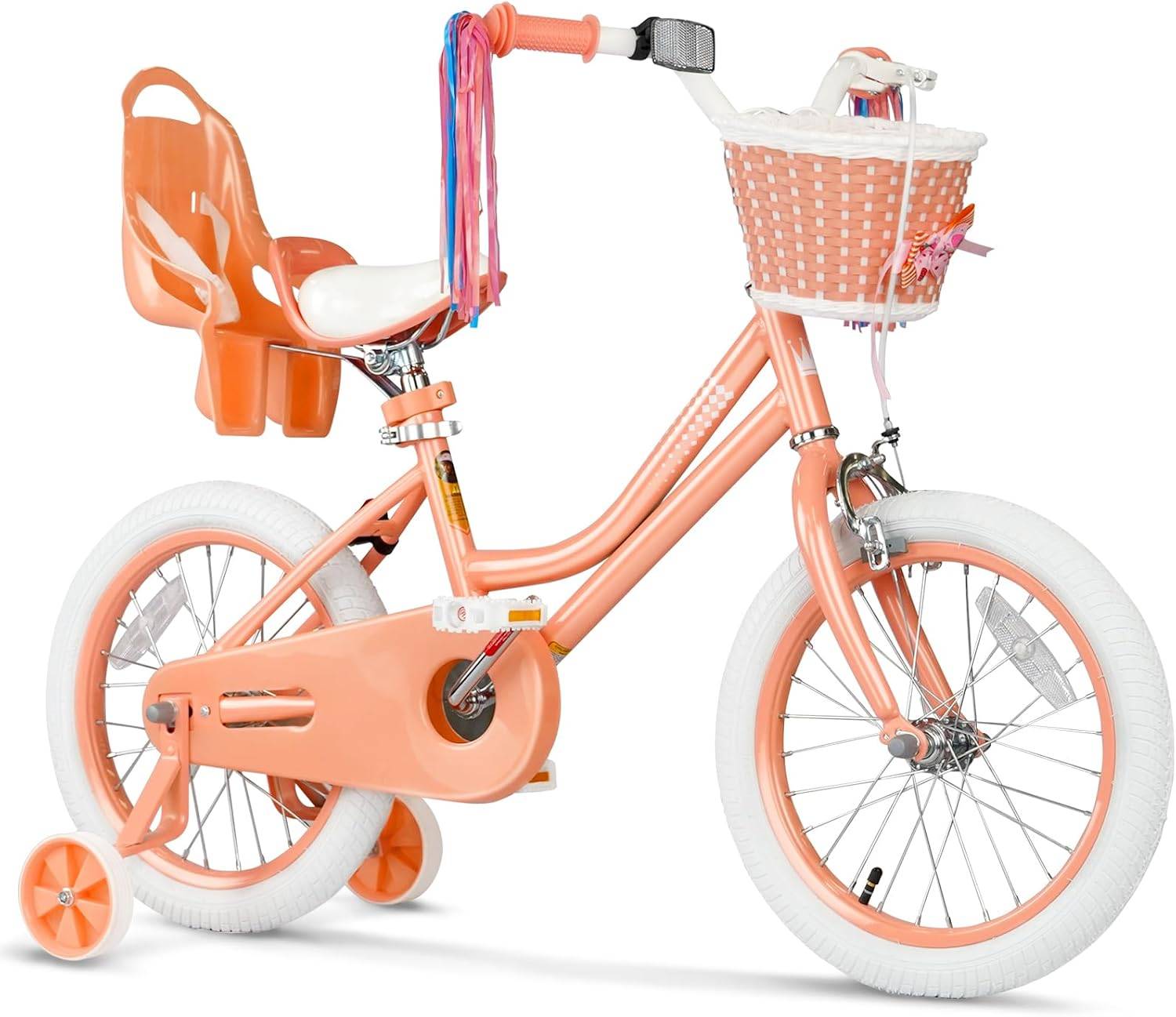 Girls 12/14/16 Inch Kids Bike by XJD with Training Wheels – Peach
A peach training-wheel bike available with 12 Inch, 14 Inch, and 16 Inch SKU labels. Its relevance depends on the child’s measured height and a successful individual fit check.
XJD Girls Bike for Kids Ages 3-8, 12/14/16 Inch with Training Wheels – Purple is listed in the Training Wheel Bikes category and is available with 12 Inch, 14 Inch, and 16 Inch labels.
Girls 12/14/16 Inch Kids Bike by XJD with Training Wheels – Peach is also listed in the Training Wheel Bikes category with the same three available size labels.
Those supplied facts establish wheel-size availability, training-wheel classification, and color wording only. The age phrase in the first product’s exact title is a catalog label, not evidence that every child in that age span will fit. Select the size using measured height and the hands-on checks above. For assembly, adjustment, maintenance, load limits, compatibility, or torque, follow the exact product manual or ask a qualified bicycle mechanic.
Helmet fit is a separate check
A correctly sized bicycle does not make an incorrectly fitted helmet suitable. The U.S. Consumer Product Safety Commission advises that a bicycle helmet must fit properly, sit level on the head, and have its straps used according to the helmet manufacturer’s instructions. Check the helmet each time she rides, especially after adjustments or growth.
Make the final decision
- Measure her height and inseam without shoes.
- Use height to compare the applicable 12-, 14-, and possibly 16-inch options.
- Have her try the exact bike and verify stand-over, mounting, reach, steering, stopping, and brake control.
- Choose the size she controls comfortably today, even when a larger bike appears to offer more growing room.
For a 4-year-old girl, the answer is therefore usually 12, 14, or 16 inches—not one automatic size. Measure first, try the relevant sizes, and buy only when she can confidently control the exact bicycle.
Bikes for your next adventure
-

Pink Girls' 12/14/16" Bike by XJD – Basket & Doll Seat
The XJD Pink Girls' Bike with Basket & Doll Seat is made for riders 71–122 cm ta…$75.99
$99.99 -

XJD Girls Bike for Kids Ages 3-8, 12/14/16 Inch with Training Wheels – Purple
The XJD Girls Bike in Purple is a training-wheel bicycle for kids ages 3 to 8, f…$149
$169 -

Light Purple XJD Toddler Bike Helmet, Adjustable, Size XS (46–51 cm)
This Light Purple XJD toddler bike helmet is made for the smallest riders — the …$20.39