

Why girl bikes are different
Girl bikes are usually different in styling and accessories, not in the fundamentals of fit. Choose by the rider’s measurements, reach, control and confidence—not by the label.
What “girl bike” actually means
A bike marketed for girls may use particular colors, graphics or accessories. Those details can make a child more excited to ride, but they do not establish whether the bicycle fits. A “girls’” label is therefore a preference cue, not a sizing standard.
The important differences are the ones a rider can feel: whether she can stand over the bike comfortably, reach the controls, steer without stretching and stop confidently. Compare those points on the actual bicycle rather than assuming two bikes with the same gender label will fit alike.
Measure before comparing wheel sizes
Measure the child’s height without shoes. Also measure inseam from the floor to the crotch while she stands naturally. Use the height ranges below as starting points, then have her try the bicycle. Age is only a rough guide and should never override her measurements or control.
| Wheel size | Starting age | Rider height |
|---|---|---|
| 12 Inch | 3–4 | 34–40 in / 86–102 cm |
| 14 Inch | 3–6 | 37–45 in / 94–114 cm |
| 16 Inch | 4–7 | 40–48 in / 102–122 cm |
| 18 Inch | 5–9 | 43–52 in / 109–132 cm |
| 20 Inch | 7–12 | 48–60 in / 122–152 cm |
| 24 Inch | 10–14 | 54–64 in / 137–163 cm |
| 26 Inch | Youth and adults | Over 60 in / 153 cm |
Overlapping ranges are normal. When a rider falls into two ranges, do not automatically select the larger size for growth. Her inseam, reach, brake control and current confidence should decide which bike is manageable now.
Use a hands-on fit check
Have the child try the exact model and size whenever possible. The American Academy of Pediatrics advises against buying an oversized bicycle simply for a child to grow into. Check these points:
- Stand-over: she should be able to straddle the bicycle without the frame obstructing a comfortable stance.
- Reach: she should hold the bars and turn them without locking her arms, leaning excessively or losing balance.
- Brake control: she must be able to reach and operate the bicycle’s controls reliably. Confirm the actual setup on the model being considered.
- Confidence: she should be able to start, steer, stop and put a foot down without appearing overwhelmed by the bike’s size.
If any of these checks fail, a preferred color or accessory does not make that size suitable.
How the supplied girls’ bikes compare
These catalog options help separate appearance and accessories from the sizing decision: all are girls’ training-wheel bikes, while their listed wheel-size choices and included accessory descriptions differ. Compare the available size first, then let the rider choose among relevant designs.
 Girls' Training Wheel Bike by XJD with Basket – Purple
A purple training-wheel bike with a basket, offered in 14 Inch, 16 Inch and 20 Inch labels. Its 20 Inch option extends beyond the size choices of the other supplied products; fit still requires measurement and a hands-on check.
 Flower Pink XJD Girls Bike with Doll Seat & Basket
A flower-pink training-wheel bike with a doll seat and basket, offered in 12 Inch, 14 Inch and 16 Inch labels. Consider it only where one of those starting sizes matches the rider and the exact bike passes a fit check.
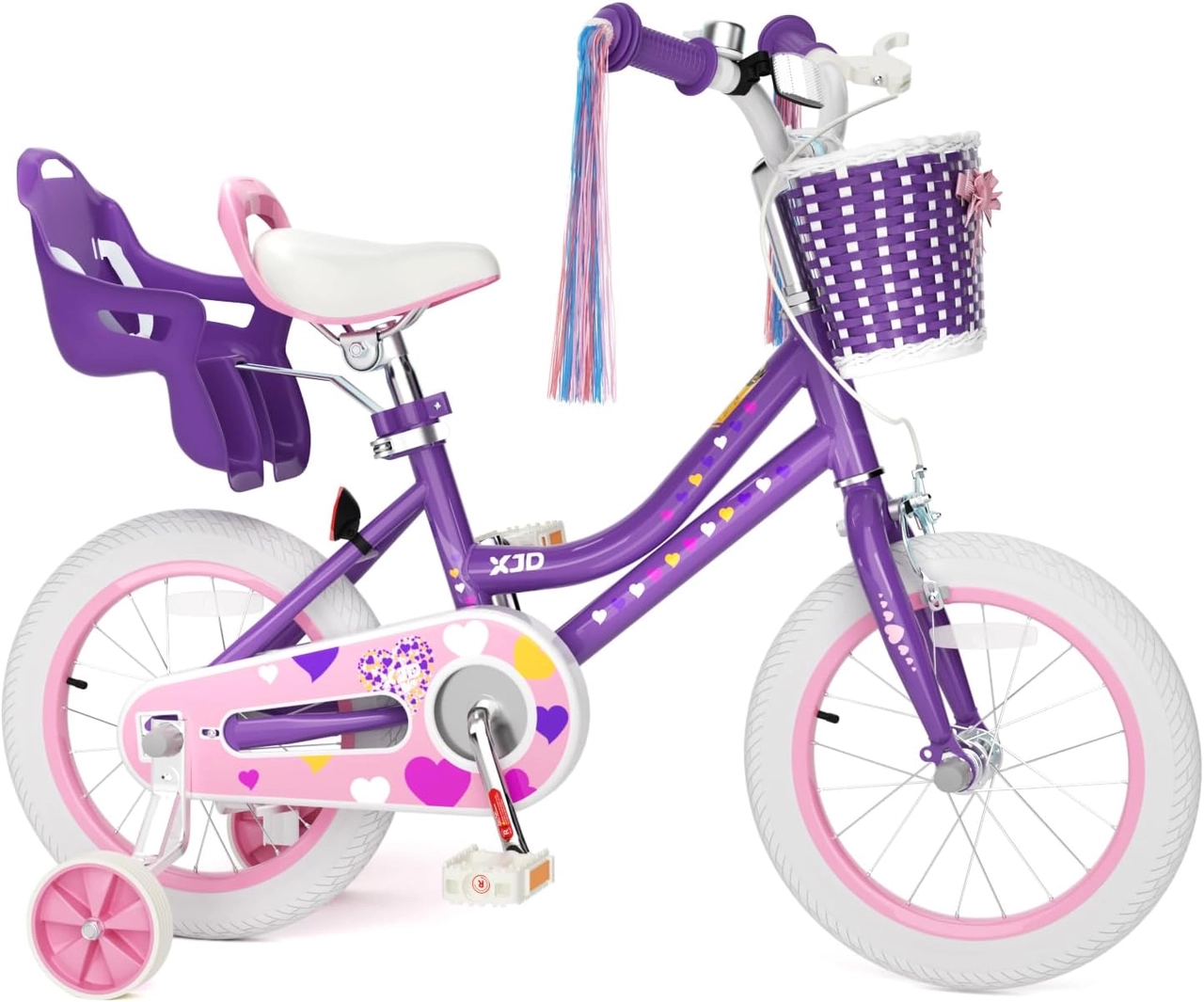 Purple XJD Girls' Bike with Doll Seat & Basket
A purple training-wheel bike with a doll seat and basket, offered in 12 Inch, 14 Inch and 16 Inch labels. Its styling can guide preference after measurements, reach, control and confidence confirm suitability.
Girls' Training Wheel Bike by XJD with Basket – Purple is offered in 14 Inch, 16 Inch and 20 Inch labels. It is the only supplied option extending to 20 Inch, so it may enter the comparison for a measured rider in that starting range, subject to an individual fit check.
Flower Pink XJD Girls Bike with Doll Seat & Basket is offered in 12 Inch, 14 Inch and 16 Inch labels. Purple XJD Girls' Bike with Doll Seat & Basket has the same listed size choices. Their supplied facts identify a doll seat and basket, so color can distinguish them after size suitability is established.
None of these products is listed in 18 Inch, 24 Inch or 26 Inch. If the rider needs one of those exact sizes after measurement and a fit check, these products are nearest-size comparison points only—not substitutes. A neighboring wheel size is not equivalent.
What to verify before riding
Once the fit is right, follow the exact product manual for assembly, adjustments, maintenance, load limits, compatibility and torque. If instructions are missing or the setup is uncertain, use a qualified bicycle mechanic rather than guessing.
A bicycle helmet is essential but separate from bike sizing. Follow U.S. Consumer Product Safety Commission guidance: the helmet must fit properly, sit level and have its straps adjusted according to the helmet manufacturer’s instructions.
Make the decision in the right order
- Measure height and inseam.
- Use the XBikes chart to identify a starting wheel size.
- Try the exact bike and check stand-over, reach, control access and stopping confidence.
- Reject an oversized or hard-to-control option, even if it allows room for growth.
- Among the bikes that genuinely fit, let the rider choose the styling and accessories she enjoys.
So, girl bikes differ mainly in presentation and accessory choices; the correct bike is the one that fits this rider today. Measure first, verify control on the exact model, and treat “girls’” as a design preference rather than evidence of fit.
Bikes for your next adventure
-
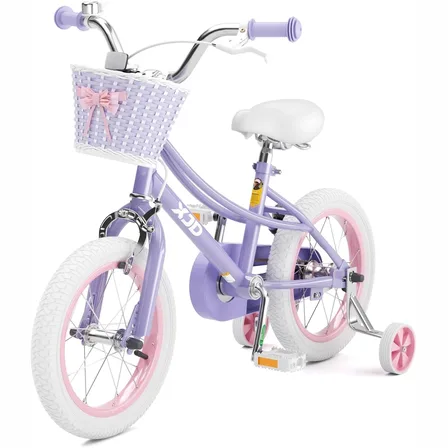
Girls' Training Wheel Bike by XJD with Basket – Purple
If you're shopping for a first bike for a girl roughly 3 to 12 years old (91–152…$75.99
-
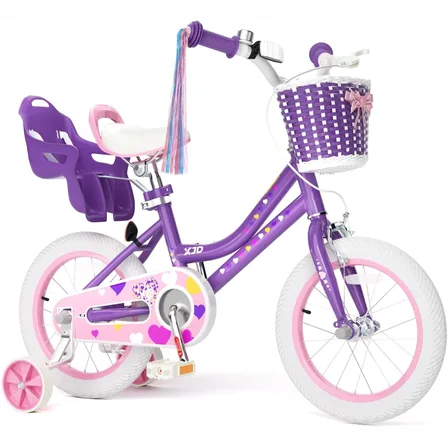
XJD Light Purple Girls Bike with Basket, Training Wheels, 12/14/16/20 Inch
The XJD Girls Bike with Basket in Light Purple is a single-speed training-wheel …$99.99
$119.99 -
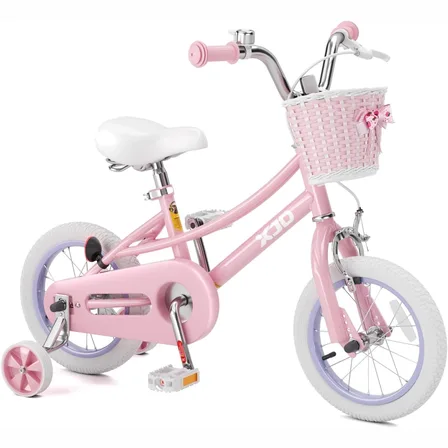
Pink 12/14/16/20" XJD Girls Bike with Training Wheels & Basket
The Pink XJD Girls Bike with Training Wheels & Basket is a first-bike pick f…$65.99
$75.99