Can you get a 20 inch bike with stabilisers
Yes—you can get a 20 inch bike with stabilisers. First measure the child and confirm they can stand over, reach, steer and brake comfortably.
What to measure before choosing 20 inch
Measure the rider’s height without shoes, then check the bicycle in person if possible. XBikes uses 48–60 in (122–152 cm) and ages 7–12 as starting points for a 20 inch bike, but height and age do not prove that a particular frame fits.
Also measure the child’s inseam and compare it with the bicycle’s stand-over clearance and available saddle adjustment. No universal inseam number is given here because frame geometry differs. The child should be able to mount and stop without struggling or leaning the bicycle sharply just to reach the ground.
Ask the rider to hold the grips, turn the handlebar and operate the brakes. Their arms should not be uncomfortably stretched, and they must be able to reach and control the brake levers. Current confidence matters too: stabilisers can support balance practice, but they do not make an oversized or hard-to-control bicycle fit.
Which catalog option answers the question?
The XJD Kids Bike for Girls – Pink, 12/14/16/20 Inch with Training Wheels is directly relevant because its supplied catalog options include a 20 Inch SKU label, and the product title specifies training wheels. It also has 12, 14 and 16 inch labels, so select the exact 20 inch option rather than relying on the shared listing title.
This catalog option helps answer the title because it explicitly combines the requested 20 inch size with training wheels; the smaller options remain separate sizes and are not equivalent substitutes.
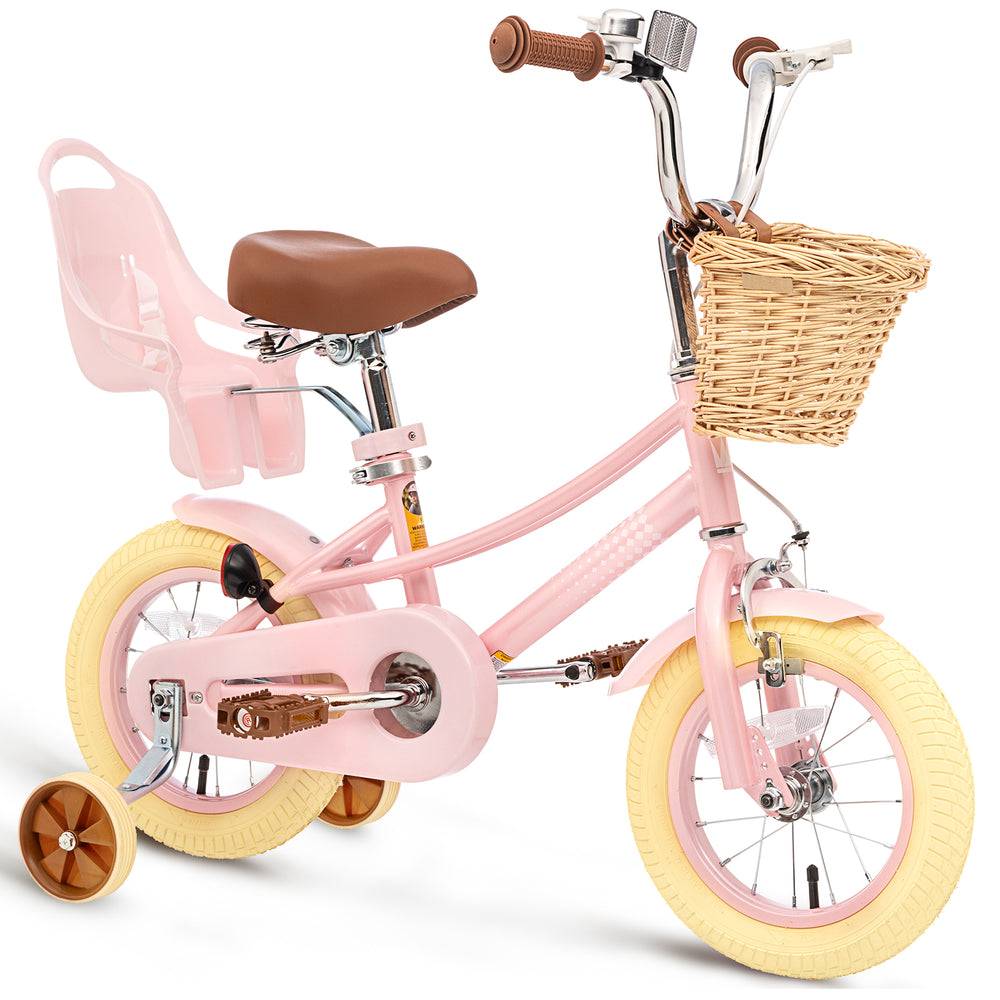
How 20 inch compares with nearby sizes
| Wheel size | XBikes starting age | XBikes starting height | How to use the comparison |
|---|---|---|---|
| 16 Inch | 4–7 | 40–48 in / 102–122 cm | A smaller catalog option to consider only if an individual fit check indicates 20 inch is too large. |
| 18 Inch | 5–9 | 43–52 in / 109–132 cm | A fit reference between 16 and 20 inch; it is not listed among the supplied product’s SKU labels. |
| 20 Inch | 7–12 | 48–60 in / 122–152 cm | The requested size and an available SKU label for the supplied product. |
| 24 Inch | 10–14 | 54–64 in / 137–163 cm | A larger comparison point, not an available SKU label for the supplied product. |
Overlapping age and height ranges are normal starting points, not permission to size up. Do not buy a bicycle that is currently oversized merely to allow room for growth. A child near a boundary should try the candidate sizes and choose according to present control, not the larger number.
Check the fit with the stabilisers installed
Before riding, verify that the selected box, bicycle and manual all identify the intended 20 inch configuration. Because the supplied facts do not specify assembly steps, stabiliser adjustment, compatibility details, load limits or torque values, follow the exact product manual. If anything is unclear, loose or difficult to align, use a qualified bicycle mechanic.
- Confirm the child can get on and off without being lifted into position.
- Check comfortable stand-over room and a usable saddle position.
- Watch for an easy reach to the grips without excessive stretching.
- Have the child demonstrate controlled steering and reliable brake operation before riding independently.
- Recheck fit and control as confidence changes; stabilisers should not conceal a reach or braking problem.
Do not assume that training wheels remove the need for supervision or bicycle control. Any adjustment or later removal should follow the product manual, since no product-specific procedure is included in the supplied catalog facts.
Helmet and first-ride check
Use a bicycle helmet that fits the individual child. It should sit level, with its straps adjusted according to the helmet manufacturer’s instructions. A helmet that is merely labeled for a broad age group still needs a proper fit check.
For the first ride, focus on whether the child can start, steer, brake and stop calmly in the actual setup. Stop and reassess if they cannot reach the controls, appear stretched, cannot manage the bicycle’s position at a halt, or depend on the stabilisers to compensate for a bicycle that is too large.
Your 20 inch decision
Choose the 20 Inch option of XJD Kids Bike for Girls – Pink, 12/14/16/20 Inch with Training Wheels only if the rider’s measured height is a reasonable starting match and the hands-on check confirms stand-over, reach, braking and confident control. If that check fails, compare a genuinely smaller bicycle rather than treating stabilisers as a fix for poor fit.
Recommended products
-
Save 12%
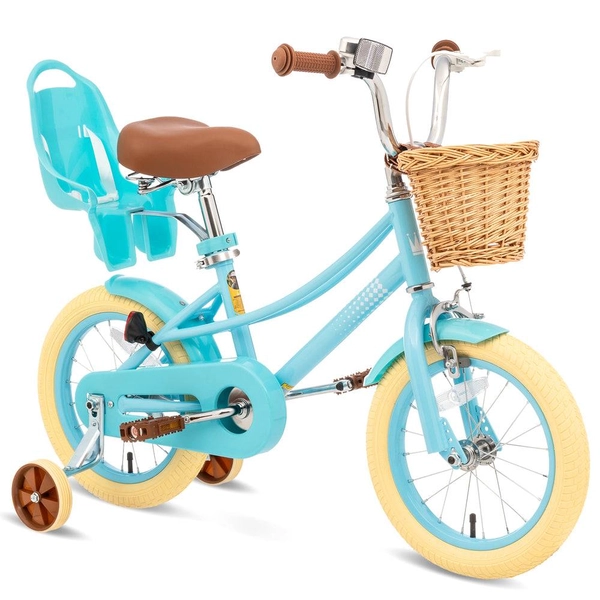
Girls' Training Wheel Bike by XJD, 12–20 Inch Wheels – Blue
This XJD girls' training wheel bike in Blue covers one of the widest fit ranges …
Training Wheel Bikes Wheel Size 12 Inch / 14 Inch / 16 Inch / 20 Inch Recommended Height 86–152 cm Training Wheels Yes 12 Inch -
Save 15%
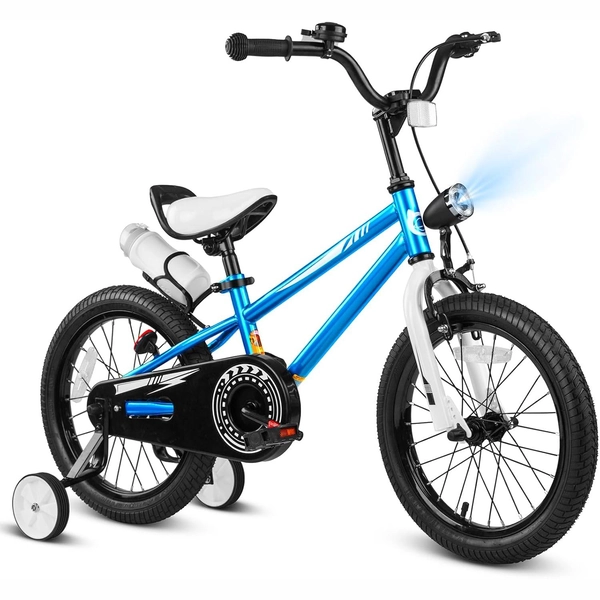
XJD Boys 12/14/16" Training Wheel Bike – Blue
The XJD Boys Bike in Blue is a training wheel bike for riders 71–122 cm tall—rou…
Training Wheel Bikes Wheel Size 12 Inch / 14 Inch / 16 Inch Recommended Height 86–122 cm Training Wheels Yes 16 Inch -
Save 15%
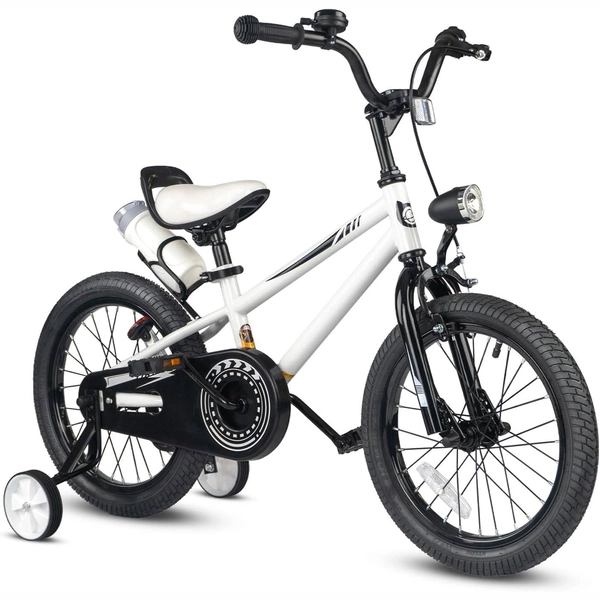
XJD Kids' Training Wheel Bike for Boys & Girls, 12/14/16 Inch – White
The XJD kids' training wheel bike in White is made for riders ages 3–8 (roughly …
Training Wheel Bikes Wheel Size 12 Inch / 14 Inch / 16 Inch Recommended Height 86–122 cm Training Wheels Yes 14 Inch -
Save 12%
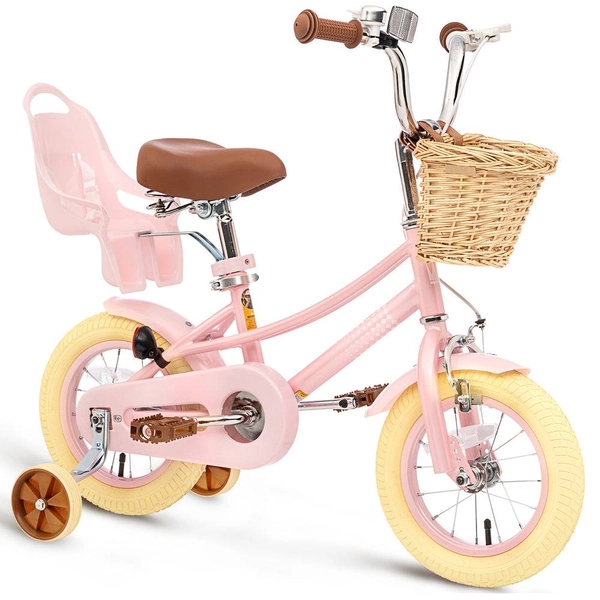
XJD Kids Bike for Girls – Pink, 12/14/16/20 Inch with Training Wheels
The XJD Kids Bike for Girls in Pink is a training-wheel bike built to carry your…
Training Wheel Bikes Wheel Size 12 Inch / 14 Inch / 16 Inch / 20 Inch Recommended Height 86–152 cm Training Wheels Yes 12 Inch