How old are children riding bikes with training wheels
Children riding bikes with training wheels are often about 3 to 7 years old, but age does not decide readiness or bike size. Measure the child’s height and inseam, then check stand-over clearance, reach, brake control and confidence on the actual bicycle. Some older children may still benefit from training wheels, while some younger riders may be ready to balance without them.
Age is only a starting point
The usual age depends partly on wheel size. Under the XBikes starting points, 12-, 14- and 16-inch bikes span ages 3–7. A 20-inch bike begins at ages 7–12. These ranges help narrow the search, but they do not show whether a particular child can safely control a particular bicycle.
Training wheels address balance confidence; they do not correct a frame that is too large, a reach that is too long or brakes the child cannot operate. Do not move up a size simply because the child will grow. The American Academy of Pediatrics recommends having the child try the bicycle and checking stand-over, control and brake reach.
Measure before comparing sizes
- Measure standing height: Have the child stand straight without shoes against a wall. Compare the result with the height ranges below.
- Measure inseam: Measure from the floor to the crotch while the child stands naturally. Use this measurement during an actual stand-over check; the supplied sizing standard does not provide a numerical inseam requirement.
- Check reach: Seated in a normal riding position, the child should be able to hold and steer the handlebar without stretching or losing control.
- Check the brakes: The child must be able to reach and operate the bicycle’s braking controls. Confirm the exact setup on the bicycle rather than assuming it from wheel size.
- Observe confidence: Look for controlled starting, stopping and steering. Fear, stiff arms or repeated loss of control means the fit or riding task needs reassessment.
XBikes wheel-size starting points
| Wheel size | Starting age range | Rider height |
|---|---|---|
| 12 Inch | 3–4 | 34–40 in / 86–102 cm |
| 14 Inch | 3–6 | 37–45 in / 94–114 cm |
| 16 Inch | 4–7 | 40–48 in / 102–122 cm |
| 18 Inch | 5–9 | 43–52 in / 109–132 cm |
| 20 Inch | 7–12 | 48–60 in / 122–152 cm |
Begin with measured height, not the child’s birthday. Where height ranges overlap, compare both candidate sizes in person and choose according to stand-over clearance, reach, brake control and current confidence. An 18-inch starting point is included for comparison, although neither supplied catalog option has an 18-inch SKU label.
When the supplied bikes are relevant
The Flower Pink XJD Girls Bike with Doll Seat & Basket is offered in 12 Inch, 14 Inch and 16 Inch, covering catalog choices that align with the supplied starting points from ages 3–7 and heights 34–48 inches, depending on size. The Girls' Training Wheel Bike by XJD with Basket – Purple is offered in 14 Inch, 16 Inch and 20 Inch, extending the comparison into the 20-inch starting range for ages 7–12 and heights 48–60 inches. These options help families compare listed wheel sizes after measuring the rider; their titles and accessories are not evidence of fit.
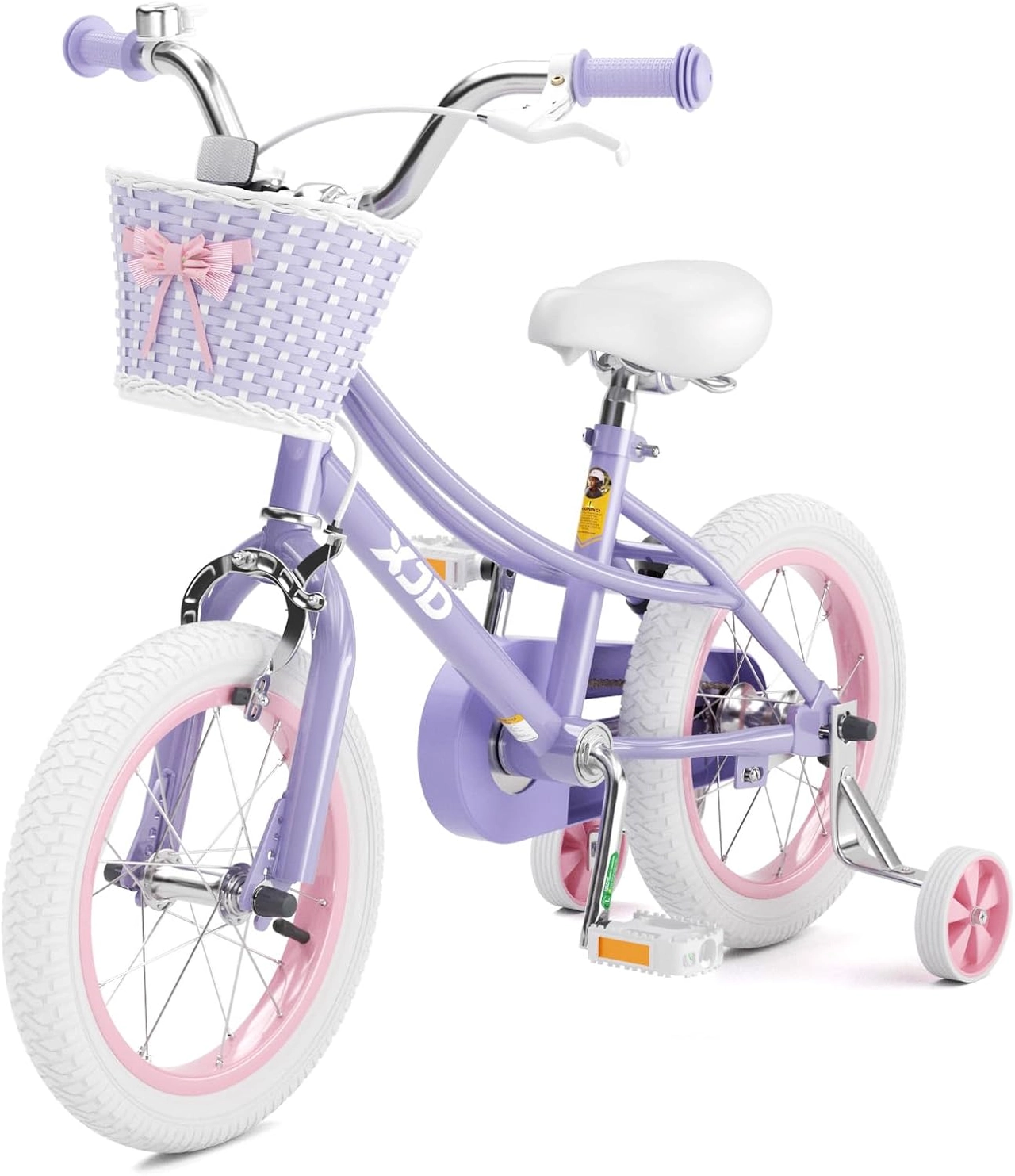 Girls' Training Wheel Bike by XJD with Basket – Purple
Available in 14-, 16- and 20-inch SKU labels, this bike provides comparison choices across several XBikes age and height starting ranges, subject to an individual fit check.
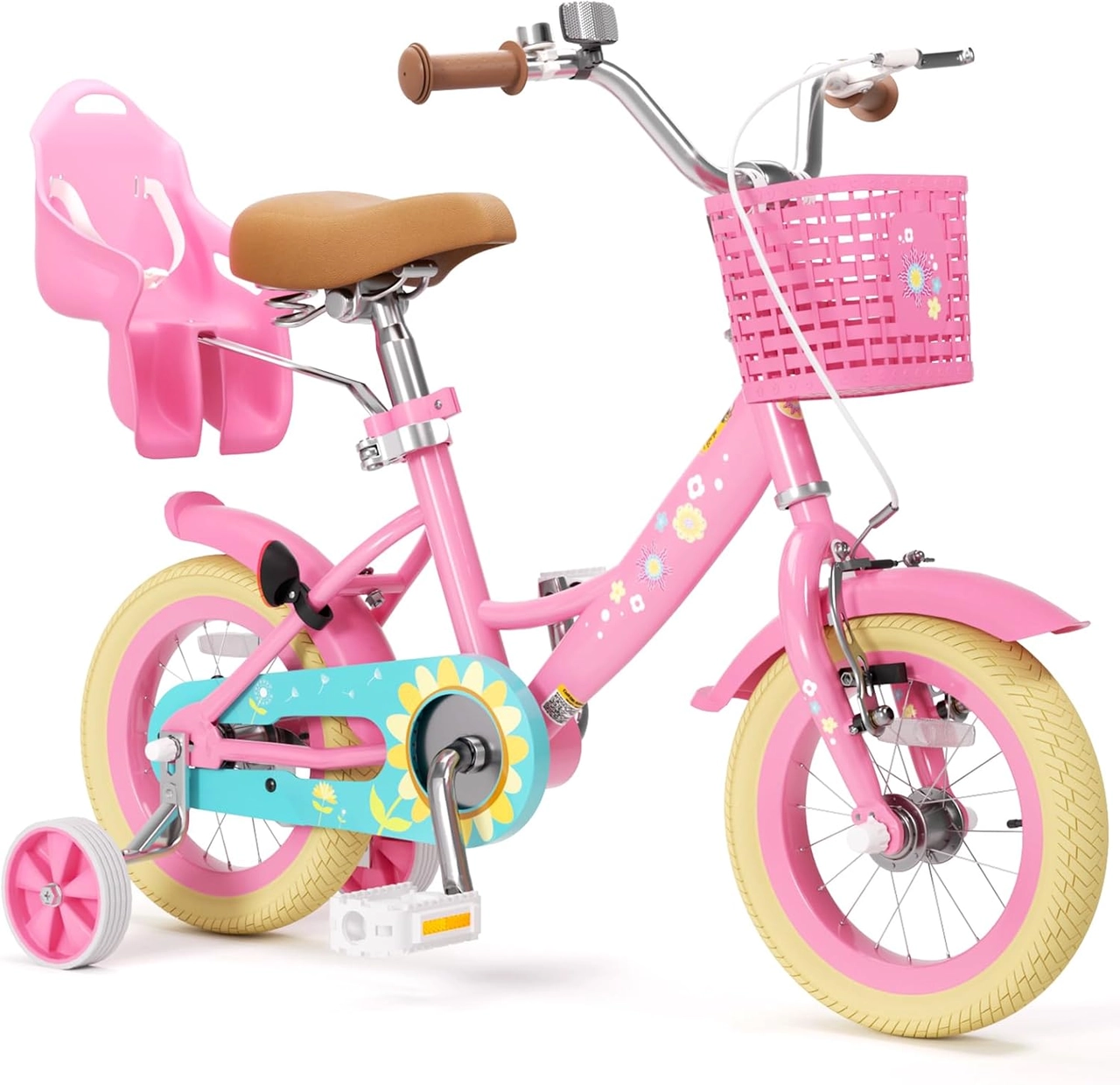 Flower Pink XJD Girls Bike with Doll Seat & Basket
Its 12-, 14- and 16-inch SKU labels make this bike relevant to younger-rider size comparisons, but measured height, stand-over, reach, brake control and confidence must determine fit.
Neither product should be selected from age alone. They are relevant only when one of their available wheel sizes matches the child’s measured-height starting range and the individual fit check succeeds. If the child needs an 18-inch size after comparison, these products are nearest-size comparison points, not 18-inch substitutes.
Decide whether training wheels still help
Training wheels may remain useful when the child can pedal, steer and brake but is not yet confident balancing. They may be less useful when the child is already coasting and balancing reliably or when the stabilizers interfere with normal progress. Read the exact product manual for adjustment, assembly, compatibility, maintenance and any load or torque requirements. If instructions are missing or the setup appears uneven or damaged, use a qualified bicycle mechanic.
Reassess after practice rather than removing training wheels on a birthday deadline. The practical signal is controlled riding: the child can start, steer, stop and respond calmly while the bicycle fits correctly.
Complete the safety check
Use a properly fitting bicycle helmet every ride. The U.S. Consumer Product Safety Commission advises that the helmet sit level and that its straps be adjusted according to the helmet manufacturer’s instructions. Also choose a clear practice area away from traffic and inspect the bicycle according to its manual before riding.
For the next step, record the child’s height and inseam today, identify the matching wheel-size starting point, and arrange an individual stand-over, reach and brake-control check. Keep training wheels only if they support the child’s present balance confidence on a correctly fitted bike.
Recommended products
-
Save 12%
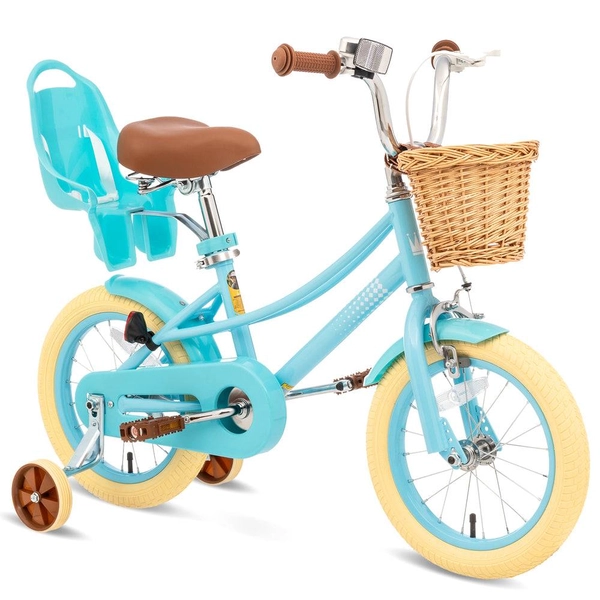
Girls' Training Wheel Bike by XJD, 12–20 Inch Wheels – Blue
This XJD girls' training wheel bike in Blue covers one of the widest fit ranges …
Training Wheel Bikes Wheel Size 12 Inch / 14 Inch / 16 Inch / 20 Inch Recommended Height 86–152 cm Training Wheels Yes 12 Inch -
Save 15%
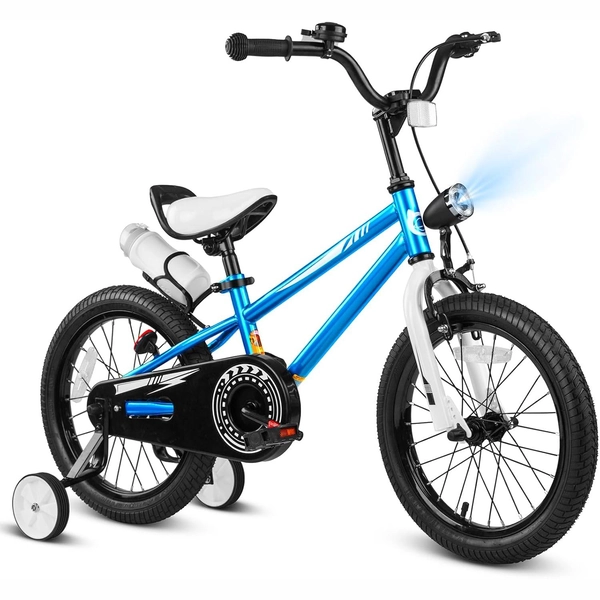
XJD Boys 12/14/16" Training Wheel Bike – Blue
The XJD Boys Bike in Blue is a training wheel bike for riders 71–122 cm tall—rou…
Training Wheel Bikes Wheel Size 12 Inch / 14 Inch / 16 Inch Recommended Height 86–122 cm Training Wheels Yes 16 Inch -
Save 15%
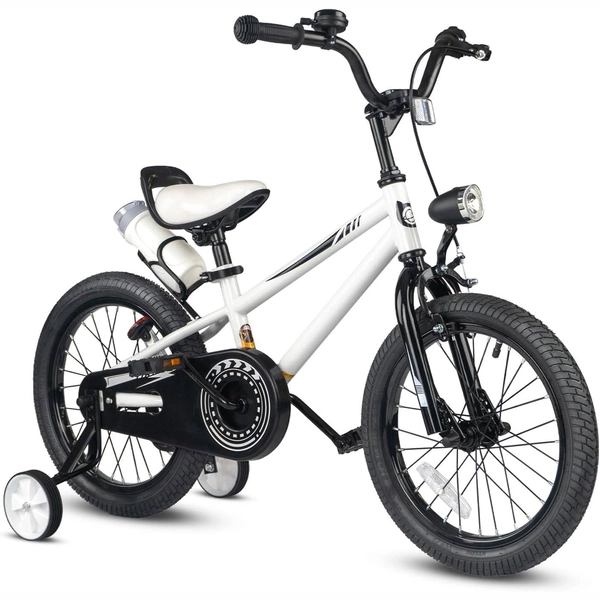
XJD Kids' Training Wheel Bike for Boys & Girls, 12/14/16 Inch – White
The XJD kids' training wheel bike in White is made for riders ages 3–8 (roughly …
Training Wheel Bikes Wheel Size 12 Inch / 14 Inch / 16 Inch Recommended Height 86–122 cm Training Wheels Yes 14 Inch -
Save 12%
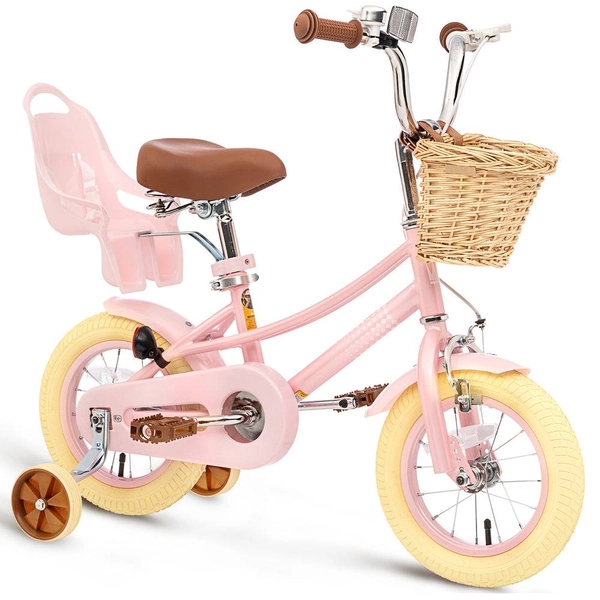
XJD Kids Bike for Girls – Pink, 12/14/16/20 Inch with Training Wheels
The XJD Kids Bike for Girls in Pink is a training-wheel bike built to carry your…
Training Wheel Bikes Wheel Size 12 Inch / 14 Inch / 16 Inch / 20 Inch Recommended Height 86–152 cm Training Wheels Yes 12 Inch