What age can kids ride bike without training wheels
There is no single age when kids should ride without training wheels. Many are ready during the 4–7 range, but measured fit, balance, braking and confidence matter more than age.
Use readiness, not a birthday
A child is ready to try two wheels when they can balance while moving, steer a predictable path, start with limited help and stop under control. They should also understand simple instructions and want to practise. Removing training wheels because of age, comparison with friends or pressure from adults can make learning harder.
Age ranges attached to wheel sizes are starting points for choosing a bicycle, not deadlines for independent riding. A confident four-year-old may be ready, while an older child may need more practice. Both are normal.
Measure the child and check the bicycle
Measure standing height without shoes and inseam from the floor to the crotch. Compare height with the XBikes starting points below, then have the child try the actual bicycle. Never buy an oversized bike merely to allow room for growth.
| Wheel size | Starting age | Rider height |
|---|---|---|
| 12 Inch | 3–4 | 34–40 in / 86–102 cm |
| 14 Inch | 3–6 | 37–45 in / 94–114 cm |
| 16 Inch | 4–7 | 40–48 in / 102–122 cm |
| 18 Inch | 5–9 | 43–52 in / 109–132 cm |
| 20 Inch | 7–12 | 48–60 in / 122–152 cm |
| 24 Inch | 10–14 | 54–64 in / 137–163 cm |
| 26 Inch | Youth and adults | Over 60 in / 153 cm |
On the actual bike, check that the child can stand over it comfortably, reach the handlebar without stretching, turn the handlebar while staying balanced and operate the brakes reliably. Current confidence and control can rule out a size even when height falls inside its starting range. This try-before-you-decide approach is consistent with American Academy of Pediatrics guidance.
A quick test before removing the wheels
In a flat, open area away from traffic, watch for these signs:
- The child keeps their head up and looks where they are going.
- They steer without sudden, repeated corrections.
- They can stop when asked and reach the brake controls comfortably.
- They can coast with their feet raised briefly without leaning heavily to one side.
- They are willing to continue after a small wobble.
If several signs are missing, keep the session focused on balance, steering and stopping. Waiting is appropriate; training wheels are still relevant while they help the child practise basic control and build confidence.
How to make the transition
- Choose a level, spacious practice area without vehicles, obstacles or steep slopes.
- Check the bicycle against its exact product manual before riding. If assembly, adjustment or compatibility is uncertain, use a qualified bicycle mechanic.
- Fit a bicycle helmet so it sits level, fits properly and uses its straps exactly as the helmet manufacturer directs, following U.S. Consumer Product Safety Commission guidance.
- Begin with short sessions. Let the child practise controlled coasting, steering and stopping before expecting independent starts.
- Remove support gradually, staying close enough to assist without pulling the handlebar or forcing speed.
If the child repeatedly tips, cannot stop on request or becomes frightened, pause and restore the previous setup if the manual permits it. More practice is a better next step than moving to a larger bicycle.
Where the supplied bike fits the decision
The XJD Kids Bike for Girls – Pink, 12/14/16/20 Inch with Training Wheels is relevant because its catalog options include 12 Inch, 14 Inch, 16 Inch and 20 Inch sizes, all with training wheels named in the supplied title. Those options let parents compare the child’s measured height with several XBikes starting points while considering a training-wheel setup. The title itself is only a catalog label and does not prove fit for any particular child.
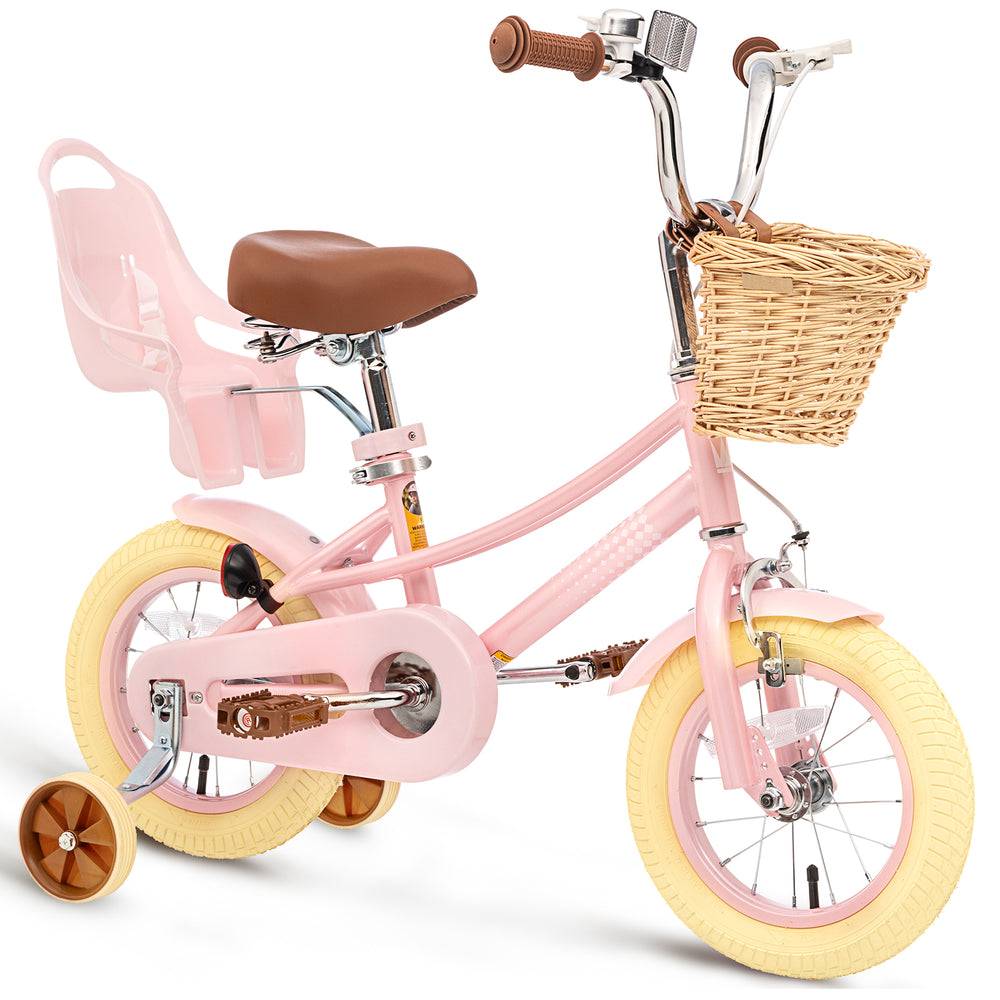
Choose among these listed sizes by measured height and an individual stand-over, reach, brake-control and confidence check. The product does not include an 18 Inch option in the supplied catalog facts, so it should not be treated as equivalent when an 18 Inch fit is indicated. Follow the exact product manual or consult a qualified bicycle mechanic for assembly, adjustments, load limits, compatibility and maintenance details.
Make the age decision today
First measure height and inseam, then test the correctly sized bicycle. If the child can balance, steer, reach and control the brakes, stop on request and wants to try, begin brief practice without training wheels. If fit or control is uncertain, keep the training wheels for now, correct the fit or seek mechanic help, and reassess after more practice—not after the next birthday.
Recommended products
-
Save 13%
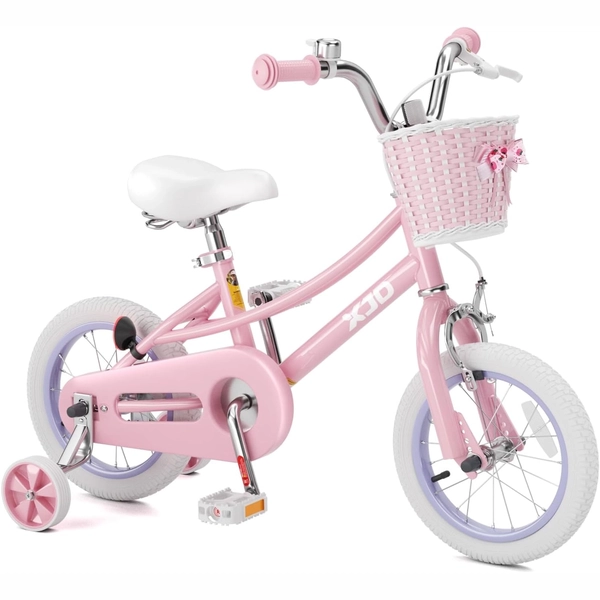
Pink 12/14/16/20" XJD Girls Bike with Training Wheels & Basket
The Pink XJD Girls Bike with Training Wheels & Basket is a first-bike pick f…
Training Wheel Bikes Wheel Size 12 Inch / 14 Inch / 16 Inch / 20 Inch Recommended Height 86–152 cm Training Wheels Yes Single Speed 12 Inch -
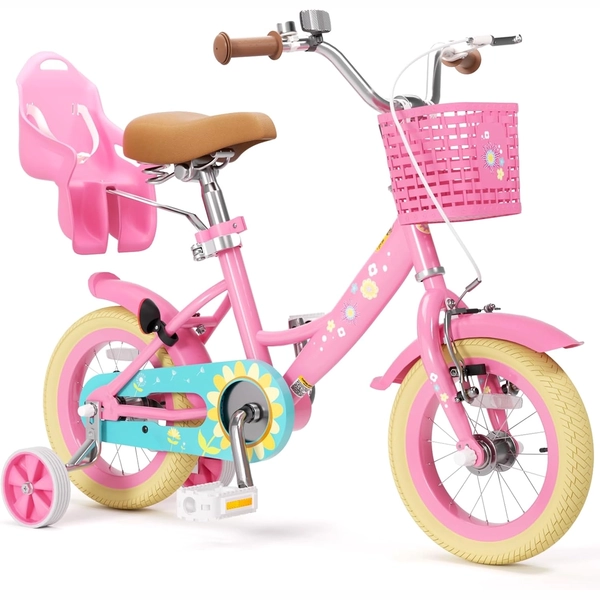
Flower Pink XJD Girls Bike with Doll Seat & Basket
The XJD Flower Pink girls' bike is made for riders 71–122 cm tall (roughly ages …
Training Wheel Bikes Wheel Size 12 Inch / 14 Inch / 16 Inch Recommended Height 86–122 cm Training Wheels Yes Geared 12 Inch -
Save 11%
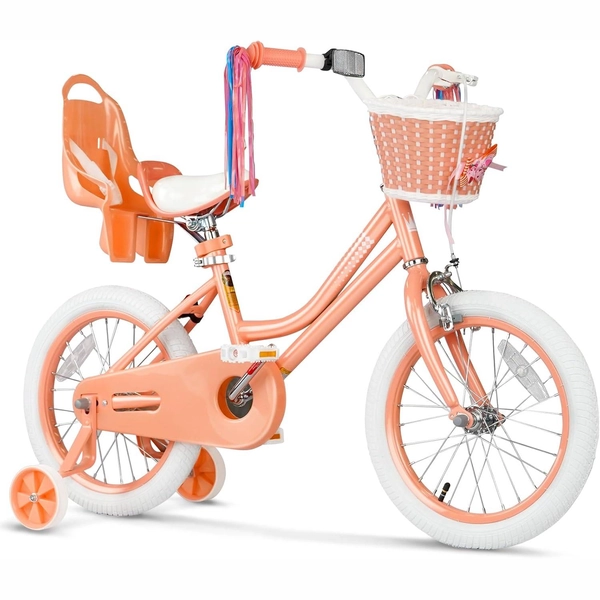
Girls 12/14/16 Inch Kids Bike by XJD with Training Wheels – Peach
The XJD Girls Bike in Peach is a training-wheel bike built for girls roughly 3 t…
Training Wheel Bikes Wheel Size 12 Inch / 14 Inch / 16 Inch Recommended Height 86–122 cm Training Wheels Yes 12 Inch -
Save 16%
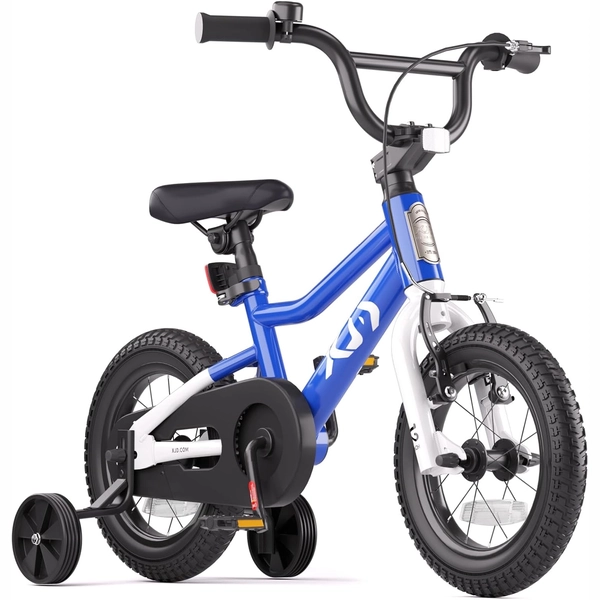
XJD Boys & Girls BMX Bike with Training Wheels, 12/14/16" – Blue
The XJD Boys & Girls BMX Bike in Blue is a first pedal bike for kids roughly age…
Kids' BMX Bikes Wheel Size 12 Inch / 14 Inch / 16 Inch Recommended Height 86–122 cm Training Wheels Yes Single Speed 12 Inch