

How many inch bike for 4 year old
For most 4-year-olds, start by comparing a 12-inch, 14-inch and 16-inch bike. Measure the child’s height first: XBikes places 12-inch bikes at 34–40 in (86–102 cm), 14-inch bikes at 37–45 in (94–114 cm), and 16-inch bikes at 40–48 in (102–122 cm). Where ranges overlap, choose by actual fit and control—not age alone.
Which inch bike fits a 4-year-old?
A 12-inch bike is the starting point for a 4-year-old measuring 34–40 in (86–102 cm). A 14-inch bike is another possibility from 37–45 in (94–114 cm), while a 16-inch bike enters the comparison at 40–48 in (102–122 cm).
| Wheel size | XBikes age starting point | Rider height | Relevance at age 4 |
|---|---|---|---|
| 12 Inch | Ages 3–4 | 34–40 in / 86–102 cm | Compare for a child within this height range |
| 14 Inch | Ages 3–6 | 37–45 in / 94–114 cm | Compare where height and fit support it |
| 16 Inch | Ages 4–7 | 40–48 in / 102–122 cm | Consider only if the child is at least 40 in / 102 cm and controls it comfortably |
These ranges are screening tools, not guarantees. Two children of the same height can have different inseams, arm reach and confidence. Do not move up merely because the fourth birthday has arrived.
Measure before comparing bikes
- Measure standing height: have the child stand barefoot against a wall, looking straight ahead, then measure from the floor to the top of the head.
- Measure inseam: with feet slightly apart, measure from the floor to the crotch. Use this measurement during an in-person stand-over check rather than trying to derive a wheel size from an unsupplied formula.
- Note current confidence: record whether the child is learning, already balancing, or comfortable starting, stopping and steering. Confidence affects which overlapping size is practical.
Compare the measured height with the XBikes ranges first. Then have the child try the exact bicycle, because wheel diameter does not reveal the frame’s stand-over clearance, saddle range or handlebar reach.
Run a hands-on fit check
With an adult holding the bicycle steady, check whether the child can stand over it securely and mount without struggling. Seated, the child should reach the handlebars without stretching or leaning awkwardly. Their hands must reach and operate the fitted brake controls reliably.
Ask the child to demonstrate steering, starting and stopping in a controlled area. The right candidate is one they can control now. Following American Academy of Pediatrics guidance, do not buy an oversized bicycle solely to leave room for growth.
If the child cannot stand over the bike appropriately, reach its controls, operate its brakes or handle it with current confidence, reject that size even when the age or height range appears to match. If adjustment or assembly is uncertain, follow the exact product manual or consult a qualified bicycle mechanic.
How the supplied bikes help with the comparison
The three supplied catalog options are relevant because each offers 12-inch, 14-inch and 16-inch SKU labels—the three wheel sizes most likely to require comparison for a 4-year-old under the XBikes starting points. They are training-wheel bikes, so they are pertinent when that format suits the child, but training wheels do not replace the height, reach, brake-control and confidence checks.
 Pink 12/14/16/20" XJD Girls Bike with Training Wheels & Basket
Offers 12 Inch, 14 Inch and 16 Inch comparison sizes relevant to many 4-year-olds, plus a 20 Inch label that should be excluded unless the supplied height standard and an individual fit check support it.
 Light Pink XJD Girls' Bicycle with Basket & Training Wheels
This training-wheel bicycle offers 12 Inch, 14 Inch, 16 Inch and 20 Inch labels. Compare the first three against measured height, then verify stand-over, reach, brake control and confidence on the exact bike.
 Blue XJD Girls Bike with Training Wheels – 12/14/16 Inch
Its available 12 Inch, 14 Inch and 16 Inch labels cover the three XBikes starting ranges most relevant to the question. The correct SKU still depends on measured height and a hands-on fit check.
Compare the available size labels carefully
Pink 12/14/16/20" XJD Girls Bike with Training Wheels & Basket has 12 Inch, 14 Inch, 16 Inch and 20 Inch labels. For this question, compare only the size that matches the child’s measurements and hands-on fit. Its 20-inch option starts at ages 7–12 and 48–60 in (122–152 cm), so age four alone does not support choosing it.
Light Pink XJD Girls' Bicycle with Basket & Training Wheels also has 12 Inch, 14 Inch, 16 Inch and 20 Inch labels. The same fitting decision applies: the shared title does not make those sizes interchangeable, and the selected SKU must be verified.
Blue XJD Girls Bike with Training Wheels – 12/14/16 Inch offers 12 Inch, 14 Inch and 16 Inch labels. That makes it a direct catalog comparison across the three relevant starting ranges, subject to an individual fit check.
These facts do not establish price, stock, bicycle weight, brake type, load limit or assembly procedure. Confirm the selected wheel-size label, then use the exact product manual for assembly, maintenance, compatibility and torque instructions. Use a qualified bicycle mechanic when needed.
Make the final decision
Choose 12 inches if the child is within 34–40 in (86–102 cm) and controls the exact bike well. Compare 14 inches within 37–45 in (94–114 cm), especially in the overlap. Consider 16 inches only from 40 in (102 cm) upward and only when stand-over, reach, braking and confidence are all suitable.
Before riding, provide a properly fitting bicycle helmet. It should sit level and its straps should be used according to the helmet manufacturer’s instructions. The next step is simple: measure the 4-year-old, shortlist only the matching 12-, 14- or 16-inch range, and have them try that exact bicycle before deciding.
Bikes for your next adventure
-
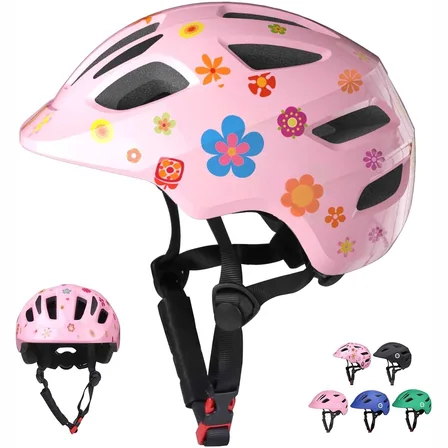
XJD Kids Bike Helmet for Girls, Pink Flowers, Adjustable (XS–S)
The XJD Kids Bike Helmet in Pink Flowers is an adjustable toddler-and-kids helme…$21.24
$24.99 -

Kids Bike Helmet by XJD for Boys & Girls – Black, Blue, Green, Pink, Purple
The XJD Kids Bike Helmet covers a wide 2-to-8-year age range thanks to two head-…$59.99
-

Kids Bike Helmet by XJD for Girls – Pink
The XJD Kids Bike Helmet in Pink is a lightweight multi-sport helmet for girls r…$59.99
$99