

How to measure a bike for 4 yr old
To measure a bike for a 4-year-old, measure the child’s standing height and inseam, then check stand-over, reach and brake control on the actual bike.
Take the two measurements that narrow the size
Have the child wear the shoes they will normally ride in. For height, stand them upright against a wall, looking forward, and measure from the floor to the top of the head.
For inseam, have the child stand with feet naturally apart. Place a firm, thin book upright between the legs to represent the saddle, then measure from the floor to the top edge of the book. Keep this measurement available when checking the bicycle’s stand-over and saddle range; wheel size alone does not reveal whether a particular frame will fit.
Compare height with XBikes starting points
| Wheel size | XBikes age starting point | Rider height |
|---|---|---|
| 12 Inch | Ages 3–4 | 34–40 in / 86–102 cm |
| 14 Inch | Ages 3–6 | 37–45 in / 94–114 cm |
| 16 Inch | Ages 4–7 | 40–48 in / 102–122 cm |
For a 4-year-old, the measured height may place the child in the 12-, 14- or 16-inch ranges. Where ranges overlap, do not automatically choose the larger wheel. Height is only the first filter; inseam, control and confidence decide whether the complete bicycle fits.
Do not buy an oversized bicycle merely to leave growing room. A bike that will fit later may be difficult to stand over, steer, stop or manage now.
Perform the fit check on the actual bike
- Stand-over: With the child straddling the bicycle and both feet on the ground, confirm that they can stand comfortably over the frame. Use the measured inseam to screen out a frame that is too tall.
- Saddle position: Adjust it only within the limits and method in the exact product manual. The child should be able to start, stop and support the bike in a way appropriate to their present confidence.
- Reach: While seated, the child should reach the handlebar without stretching, locking the arms or leaning awkwardly away from the saddle.
- Brake control: Confirm that the child can reach and operate the bicycle’s braking controls reliably. Do not assume a control is suitable merely because the wheel-size label matches.
- Whole-bike control: Let the child try the bicycle in a controlled setting. They should be able to mount, steer, turn and stop without the bike feeling unwieldy.
If any of these checks fail, compare another frame or wheel size. Do not try to solve a poor fit with an unsafe adjustment; follow the product manual or ask a qualified bicycle mechanic.
How the supplied bikes help with comparison
The catalog options below are relevant because each is categorized as a training-wheel bike and offers supplied 12 Inch, 14 Inch and 16 Inch SKU labels—the three XBikes starting points that can include a 4-year-old. They let you compare candidate sizes, but their shared wheel label does not replace trying the specific bicycle.
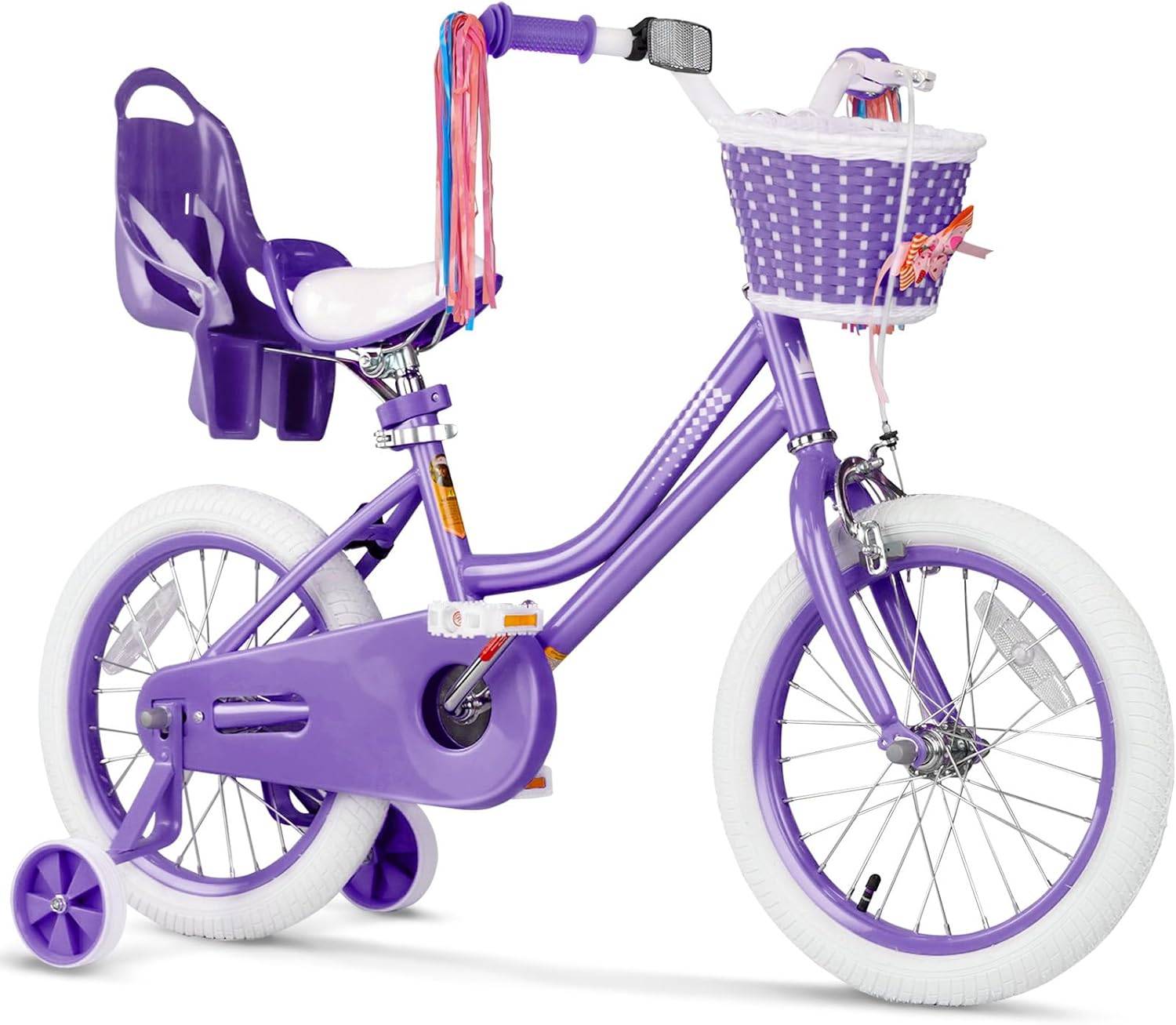 XJD Girls Bike for Kids Ages 3-8, 12/14/16 Inch with Training Wheels – Purple
A training-wheel bike offered in supplied 12 Inch, 14 Inch and 16 Inch SKU labels. Compare the child’s measured height with those starting points, then verify the specific frame’s stand-over, reach and brake control.
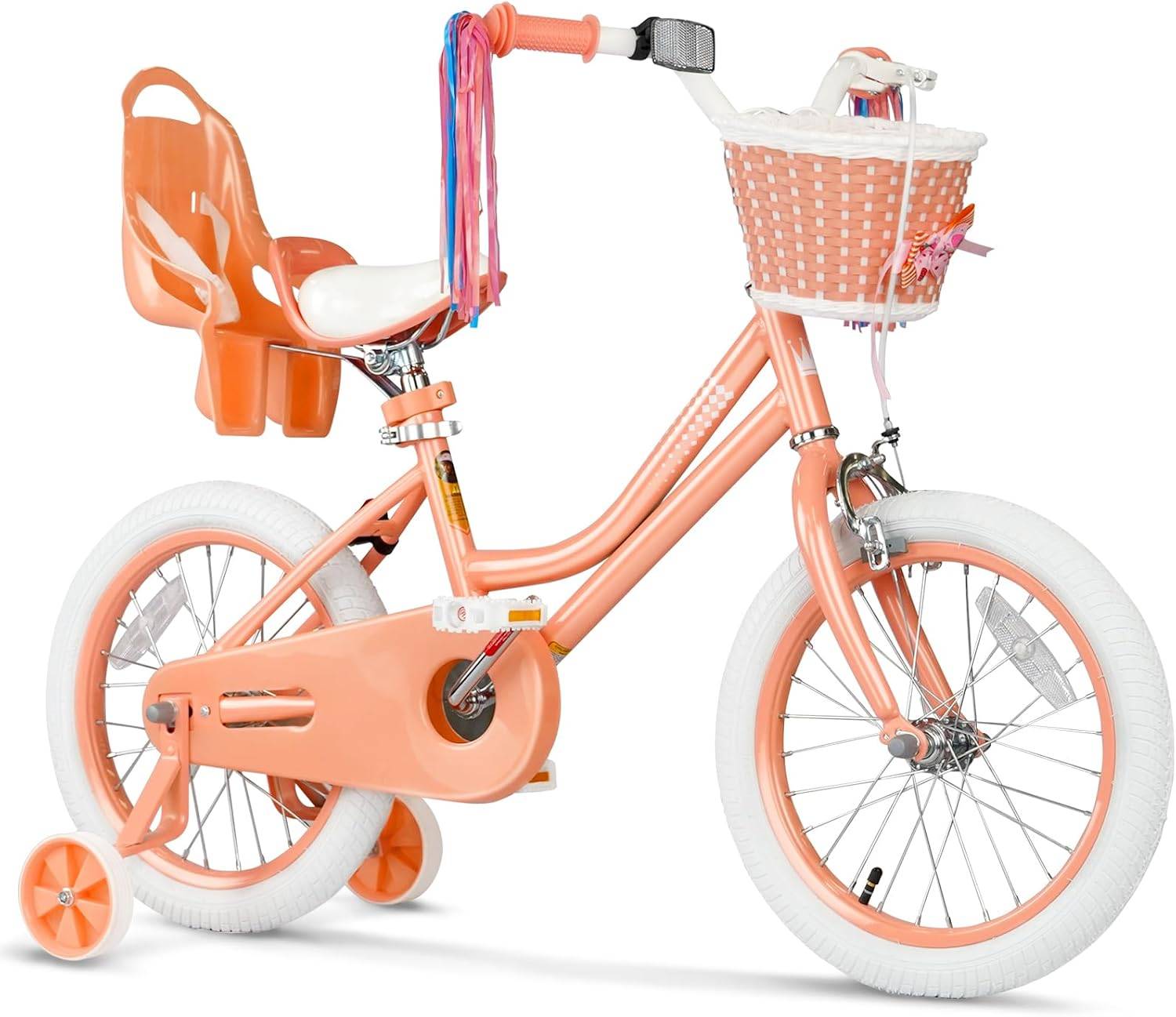 Girls 12/14/16 Inch Kids Bike by XJD with Training Wheels – Peach
This training-wheel model has supplied 12 Inch, 14 Inch and 16 Inch options, making it relevant for comparing the possible size ranges of a measured 4-year-old. Its catalog title is not a substitute for an individual fit check.
 XJD Light Purple Girls Bike with Basket, Training Wheels, 12/14/16/20 Inch
Although its exact catalog title mentions additional sizing, the supplied available SKU labels are 12 Inch, 14 Inch and 16 Inch. Use those as comparison points only, followed by stand-over, reach, braking and control checks.
XJD Girls Bike for Kids Ages 3-8, 12/14/16 Inch with Training Wheels – Purple is listed with 12 Inch, 14 Inch and 16 Inch options. Girls 12/14/16 Inch Kids Bike by XJD with Training Wheels – Peach has the same supplied size choices. XJD Light Purple Girls Bike with Basket, Training Wheels, 12/14/16/20 Inch also has supplied available SKU labels of 12 Inch, 14 Inch and 16 Inch.
Any age wording inside a product title is a catalog label, not evidence that the bike fits your child. Use the measured height against the XBikes ranges, then check the individual bicycle’s stand-over, reach, brake control and manageability. Consult the exact manual for assembly, adjustments, maintenance, load limits, compatibility and torque information not supplied here.
Make the final size decision
Begin with every size whose height range contains the child’s measured height. If the child is 40 in / 102 cm, for example, all three displayed ranges meet at or include that measurement, so the real-bike fit check becomes especially important.
Choose only the bicycle the child can comfortably straddle, reach, steer and stop today. Their current confidence matters alongside physical fit. Before riding, add a properly fitting bicycle helmet that sits level and has its straps secured according to the helmet manufacturer’s instructions.
Your next step is simple: record the child’s height and inseam, shortlist the matching 12-, 14- or 16-inch starting points, and have the child try each plausible bicycle before deciding.
Bikes for your next adventure
-

Kids Bike Helmet by XJD for Boys & Girls – Black, Blue, Green, Pink, Purple
The XJD Kids Bike Helmet covers a wide 2-to-8-year age range thanks to two head-…$59.99
-

Kids Bike Helmet by XJD for Girls – Pink
The XJD Kids Bike Helmet in Pink is a lightweight multi-sport helmet for girls r…$59.99
$99 -

XJD Kids Bike for Girls – Pink, 12/14/16/20 Inch with Training Wheels
The XJD Kids Bike for Girls in Pink is a training-wheel bike built to carry your…$139
$159