

How to bike with a 4 year old
To bike with a 4-year-old, first measure the child, choose a bike they can control now, check helmet fit, and practise together in a traffic-free area.
Measure before choosing a wheel size
Measure the child’s standing height without shoes, then measure inseam from the floor to the crotch. Age is only a starting point: at four, a child may overlap several size bands, but that does not mean every overlapping size will fit.
| Wheel size | XBikes starting point | What it means at age four |
|---|---|---|
| 12 Inch | Ages 3–4; 34–40 in / 86–102 cm | Consider when the measured height falls in this range. |
| 14 Inch | Ages 3–6; 37–45 in / 94–114 cm | Another possible range, subject to a hands-on fit check. |
| 16 Inch | Ages 4–7; 40–48 in / 102–122 cm | Relevant only if the child is tall enough and can control it confidently. |
Do not move up merely because a four-year-old is near the top of an age band or because a larger bike offers room to grow. An oversized bicycle can make starting, stopping, steering and balancing harder.
Compare fit and control in person
Have the child try the exact bicycle. Check that they can stand over it without being forced onto tiptoe or against the frame. While seated, they should reach the handlebar naturally rather than stretching, locking their elbows or leaning far forward.
Ask them to operate every fitted brake control. Their hands must reach and move the controls reliably while they maintain their grip and steering position. Also watch whether they can start, stop, turn and put a foot down without panic. Measured height, inseam, reach, brake control and present confidence all outrank the age printed beside a wheel size.
Decide how much riding support is appropriate
A four-year-old may still need training wheels, or may be ready to ride without them; confidence and control determine the next step. Training wheels can provide support while the child learns pedalling and steering, but their presence does not correct a bicycle that is too large or difficult to control.
Begin in a flat, open, traffic-free place. Walk beside the child at first, staying close enough to help while allowing them to steer. Practise starting, straight riding, gentle turns, controlled stopping and putting a foot down. Add distance only after those actions are repeatable and calm. Keep the session short if attention or coordination starts to fade.
Use these catalog options as fit comparisons
The three supplied XBikes options each offer 12 Inch, 14 Inch and 16 Inch labels, so they help a parent compare the three size ranges most likely to overlap age four. Their catalog categories and included title details also distinguish a BMX option from two training-wheel bikes; actual fit must still be checked.
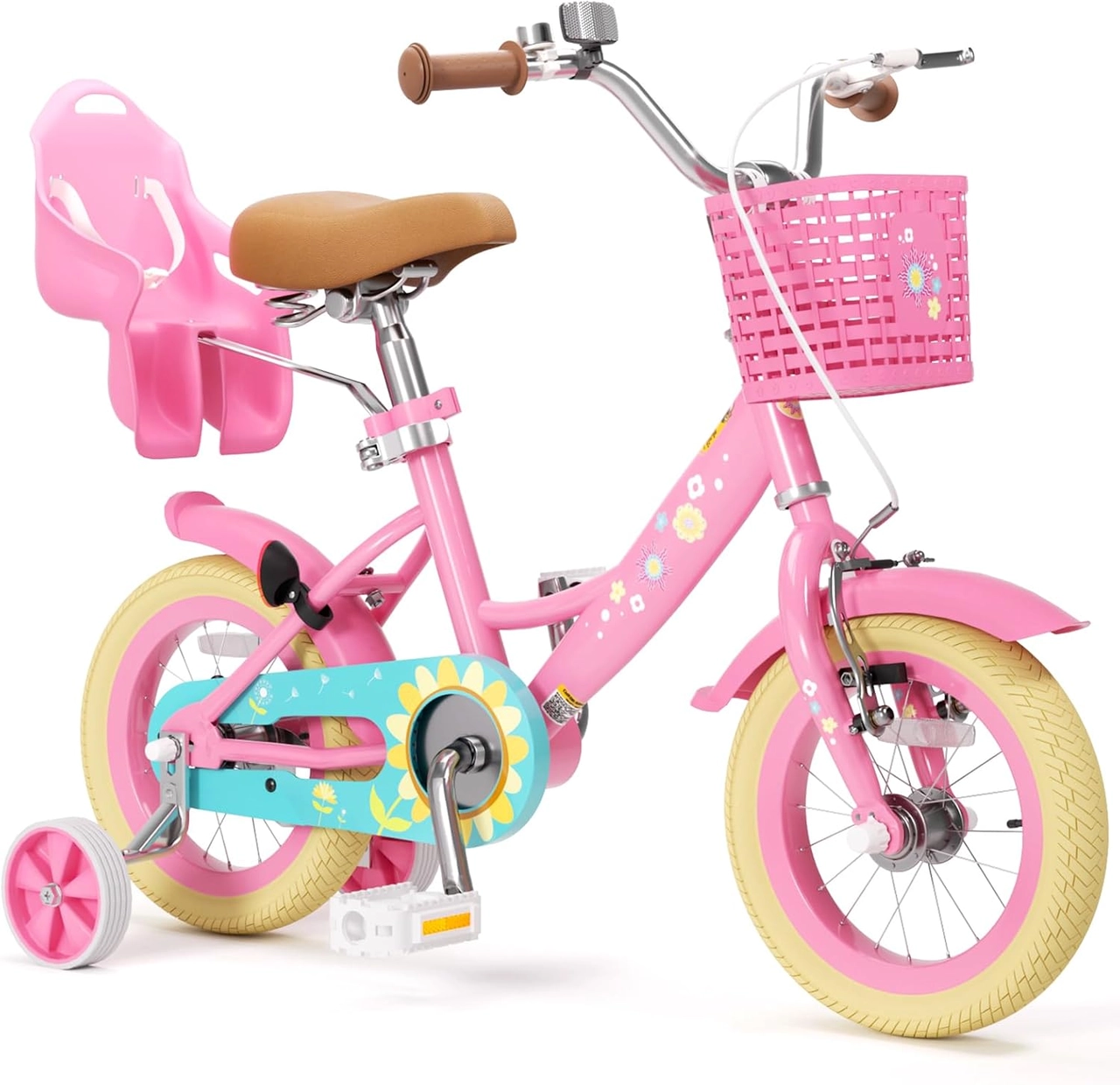 Flower Pink XJD Girls Bike with Doll Seat & Basket
A Training Wheel Bike offered in 12 Inch, 14 Inch and 16 Inch labels. Its title identifies a doll seat and basket; select a size only after measuring and checking the child’s control.
 Purple XJD Girls' Bike with Doll Seat & Basket
This Training Wheel Bike offers 12 Inch, 14 Inch and 16 Inch labels. Its title states that it has a doll seat and basket; the child’s measured fit should determine relevance.
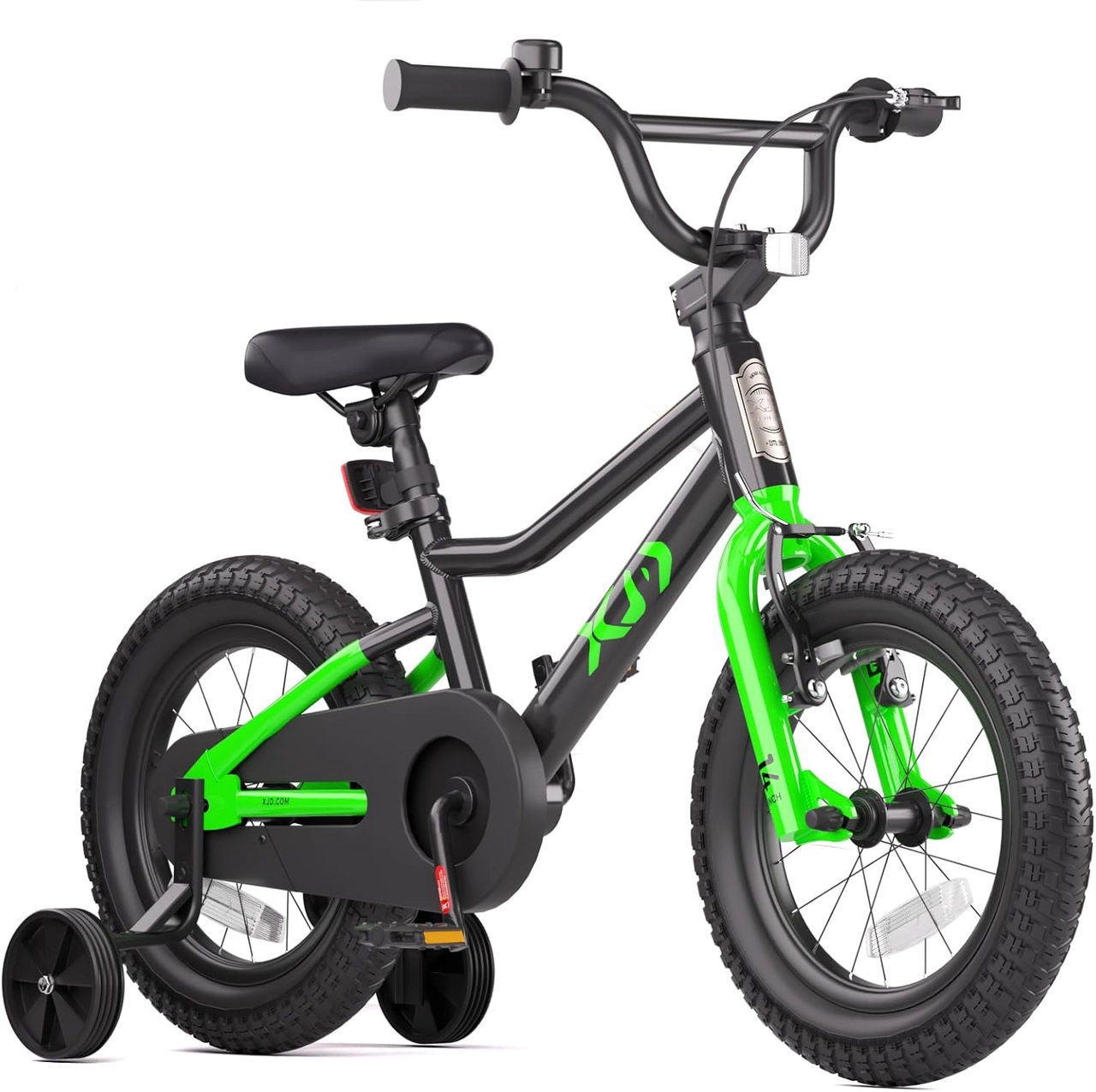 Black XJD Kids' BMX Bicycle with Training Wheels
Categorized as a Kids' BMX Bike and offered in 12 Inch, 14 Inch and 16 Inch labels. Its title states that it has training wheels, but an individual fit check remains necessary.
Flower Pink XJD Girls Bike with Doll Seat & Basket is categorized as a Training Wheel Bike and is offered in 12 Inch, 14 Inch and 16 Inch labels. Its title identifies a doll seat and basket.
Purple XJD Girls' Bike with Doll Seat & Basket has the same supplied size labels and Training Wheel Bikes category, with a purple catalog identity plus a doll seat and basket stated in its title.
Black XJD Kids' BMX Bicycle with Training Wheels is categorized under Kids' BMX Bikes and is also offered in 12 Inch, 14 Inch and 16 Inch labels. Its exact title states that it has training wheels.
Choose among them by the child’s measurements and hands-on control, not color, category wording or accessories. The catalog facts do not supply brake type, weight, materials, load limits or compatibility, so consult the exact product manual or a qualified bicycle mechanic for those details.
Fit the helmet before the first ride
Use a bicycle helmet that fits the child properly. It should sit level on the head, and its straps should be adjusted according to the helmet manufacturer’s instructions. Recheck the position after fastening it; a helmet that shifts out of place needs adjustment before riding.
Clothing and footwear should allow comfortable movement and secure contact with the pedals. Before each outing, follow the bicycle’s exact manual for required checks. If assembly, adjustment or maintenance is uncertain, use a qualified bicycle mechanic rather than inventing a torque setting or procedure.
Make the age-four decision
Measure height and inseam today, shortlist only the matching 12, 14 or 16 Inch range, and let the child try that exact bike. Buy only when stand-over clearance, reach, brake operation and basic control all work now. Then practise together away from traffic until starting, turning and stopping are consistently controlled.
Bikes for your next adventure
-

Kids Bike Helmet by XJD for Boys & Girls – Black, Blue, Green, Pink, Purple
The XJD Kids Bike Helmet covers a wide 2-to-8-year age range thanks to two head-…$59.99
-

Kids Bike Helmet by XJD for Girls – Pink
The XJD Kids Bike Helmet in Pink is a lightweight multi-sport helmet for girls r…$59.99
$99 -

XJD Kids Bike for Girls – Pink, 12/14/16/20 Inch with Training Wheels
The XJD Kids Bike for Girls in Pink is a training-wheel bike built to carry your…$139
$159