

What bike should a 4 year old have
Most 4-year-olds should try a 12-inch or 14-inch bike first, based on measured height and fit—not age alone. Consider a 16-inch bike only if the child is at least 40 inches (102 cm) tall and can control it comfortably.
Choose the starting size from height
Measure the child without shoes, standing straight against a wall. Use that height to choose which wheel sizes to try. The XBikes ranges are starting points, not guarantees:
| Wheel size | XBikes age starting point | Rider height |
|---|---|---|
| 12 Inch | 3–4 | 34–40 in / 86–102 cm |
| 14 Inch | 3–6 | 37–45 in / 94–114 cm |
| 16 Inch | 4–7 | 40–48 in / 102–122 cm |
A child between 37 and 40 inches falls within both the 12-inch and 14-inch ranges. Compare both in person if possible. Do not automatically choose the larger bike for extra growing room; a bike that is too large can make starting, stopping and steering harder.
Measure inseam as well as height
Height narrows the options, but inseam helps reveal whether the frame is manageable. Have the child stand in socks with feet slightly apart. Place a firm, thin book between the legs, gently raise it to simulate a saddle, then measure from the floor to the top edge of the book.
Compare that measurement with the actual bicycle’s stand-over clearance and its adjustment information. Those dimensions were not supplied for the listed products, so consult the exact product listing and manual rather than assuming that every bike with the same wheel size fits identically.
Check the bike with the child on it
A useful fit check requires more than matching a number. Have the child try the bicycle and look for all of the following:
- The child can stand over the bike without the frame pressing uncomfortably against the body.
- The handlebars are within easy reach without a deep forward stretch or locked elbows.
- The child can turn the bars in both directions while remaining balanced and in control.
- The child can reach and operate the bicycle’s braking controls confidently.
- Starting, stopping and getting off do not require an adult to catch the bike each time.
If the child is within two size ranges, choose according to this control check and current confidence. A smaller suitable bike is generally more useful than an oversized bike bought solely for future growth.
When the supplied bikes are relevant
The three catalog options are relevant when a 12-inch, 14-inch or 16-inch fit is indicated and the family wants a training-wheel bicycle. Each offers those three labeled sizes, so the useful comparison begins with fit and preferred color rather than assumptions based on the titles.
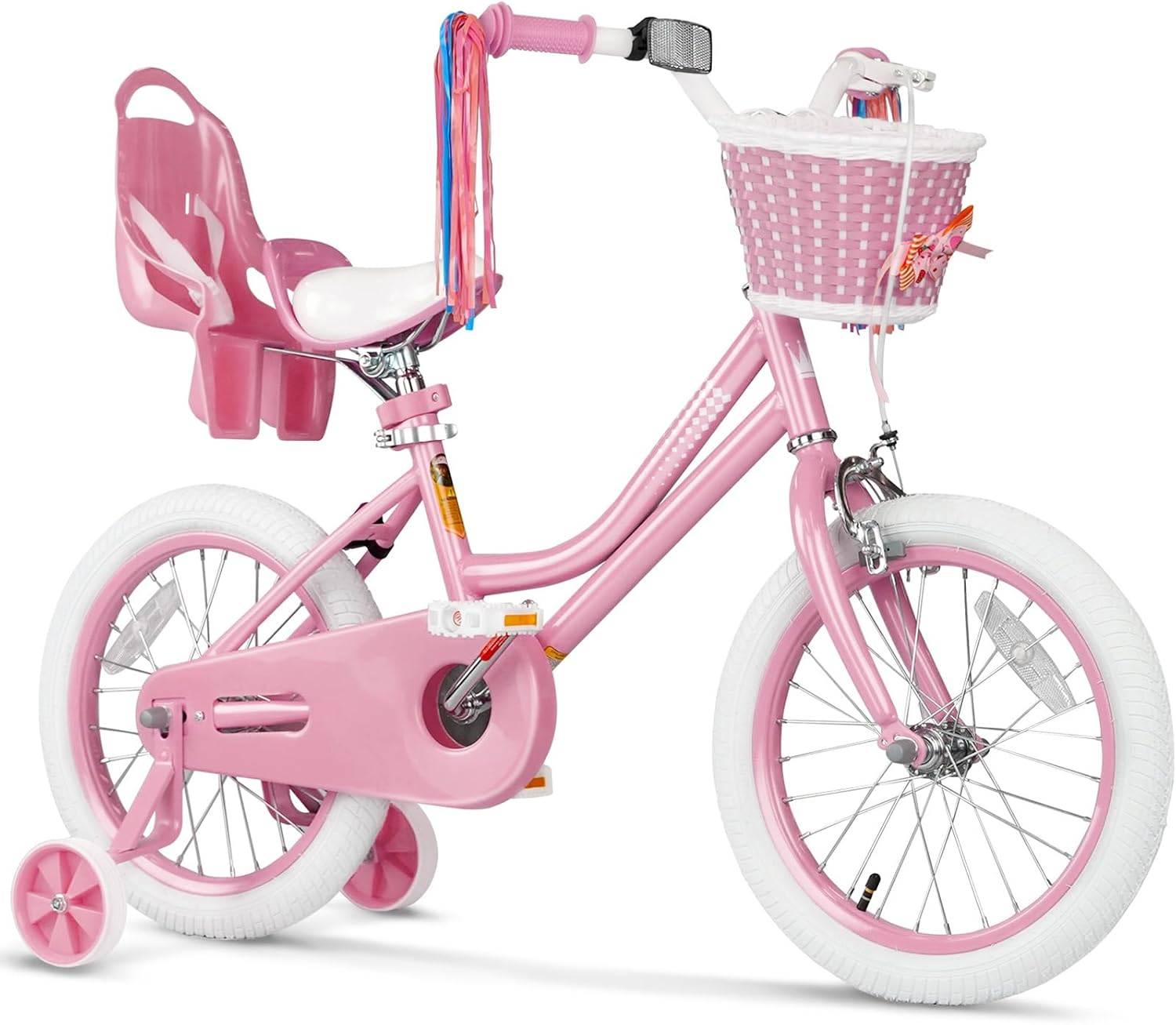 XJD Pink Girls' Bike – Kids 12/14/16 Inch Training Wheel Bicycle
A pink training-wheel bicycle offered with 12 Inch, 14 Inch and 16 Inch SKU labels. Its relevance depends on measured height and an individual stand-over, reach, braking and control check.
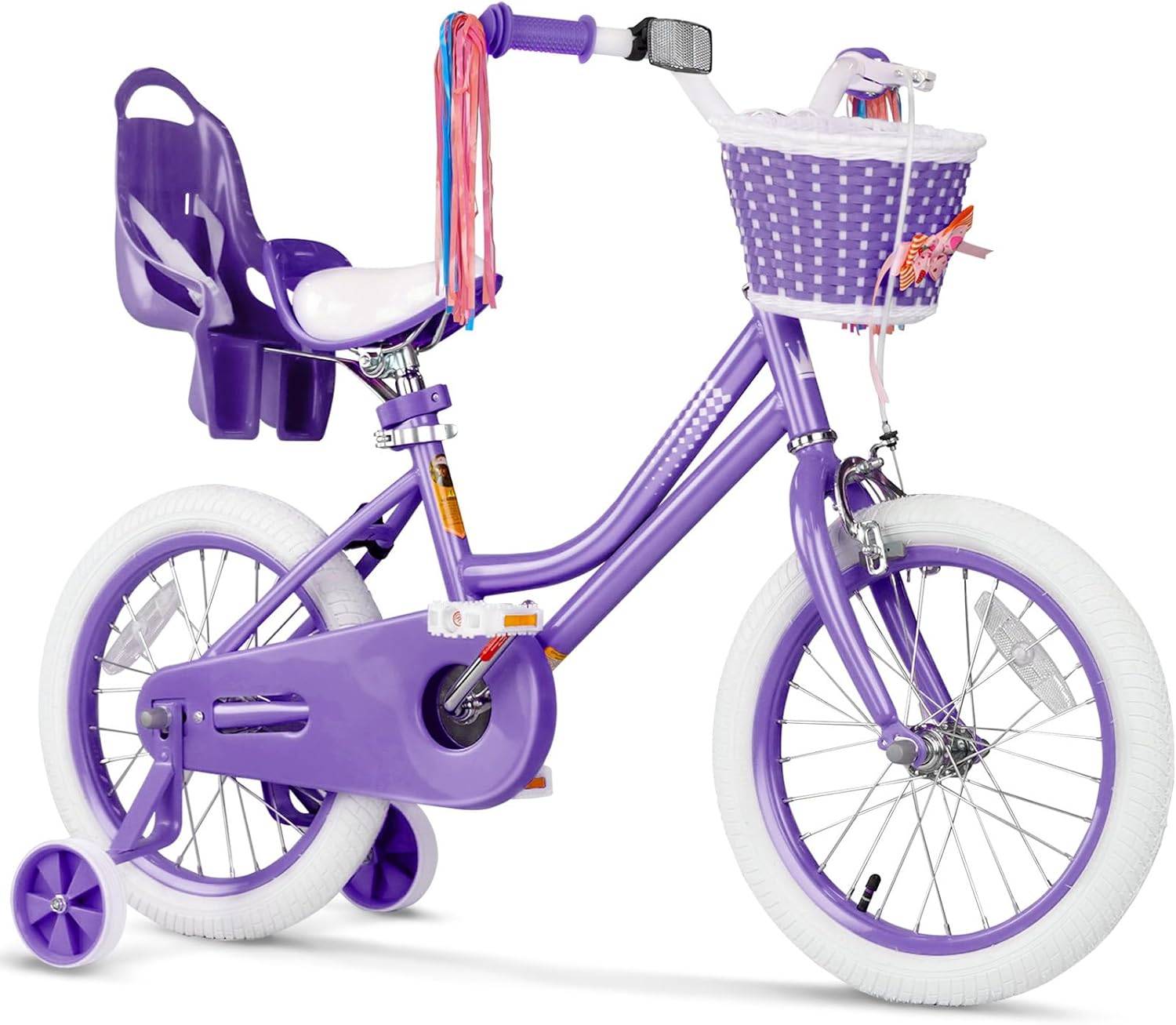 XJD Girls Bike for Kids Ages 3-8, 12/14/16 Inch with Training Wheels – Purple
A purple training-wheel option with 12 Inch, 14 Inch and 16 Inch SKU labels. The age wording in its title is a catalog label; use measured height and an individual fit check.
 Girls 12/14/16 Inch Kids Bike by XJD with Training Wheels – Peach
A peach training-wheel bicycle available under 12 Inch, 14 Inch and 16 Inch SKU labels. Consider it only when one of those sizes matches the child’s height and practical fit.
- XJD Pink Girls' Bike – Kids 12/14/16 Inch Training Wheel Bicycle is a pink training-wheel option with 12 Inch, 14 Inch and 16 Inch SKU labels.
- XJD Girls Bike for Kids Ages 3-8, 12/14/16 Inch with Training Wheels – Purple is the purple option in the same supplied wheel-size choices. The age wording is part of its catalog title, not proof that it fits a particular child.
- Girls 12/14/16 Inch Kids Bike by XJD with Training Wheels – Peach is the peach training-wheel option, also available under 12 Inch, 14 Inch and 16 Inch SKU labels.
These products are not relevant if the child’s measured height falls outside the chosen size range, cannot achieve comfortable stand-over and reach, cannot use the controls, or does not need a training-wheel bike. No supplied facts establish differences in components, weight, materials or braking systems, so do not infer them from the names.
Check confidence and control
A cautious beginner may benefit from trying the smaller of two fitting sizes, while a confident rider may be comfortable on the larger fitting option. Training wheels do not correct a frame that is too tall or a cockpit that is too long. The child still needs to mount, steer, stop and dismount under control.
For assembly, adjustments, maintenance, load limits, compatibility and torque requirements, follow the manual for the exact model and size. If anything is unclear or the controls cannot be positioned comfortably, use a qualified bicycle mechanic.
Finish with helmet and a practical decision
Use a properly fitting bicycle helmet every time. It should sit level and its straps should be adjusted according to the helmet manufacturer’s instructions. Recheck the fit as the child grows.
For a 4-year-old, measure height and inseam now, shortlist 12 Inch or 14 Inch from the table, and try the child on the bike. Move to 16 Inch only at 40 inches (102 cm) or taller and only when stand-over, reach, braking and confidence all pass the individual fit check.
Bikes for your next adventure
-

Pink Girls' 12/14/16" Bike by XJD – Basket & Doll Seat
The XJD Pink Girls' Bike with Basket & Doll Seat is made for riders 71–122 cm ta…$75.99
$99.99 -

XJD Girls Bike for Kids Ages 3-8, 12/14/16 Inch with Training Wheels – Purple
The XJD Girls Bike in Purple is a training-wheel bicycle for kids ages 3 to 8, f…$149
$169 -
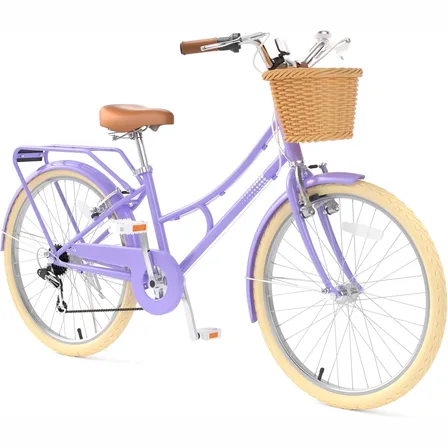
24-Inch Purple XJD Beach Cruiser Bike with U-Brake
The XJD 24-Inch Purple Beach Cruiser is built for girls and young women roughly …$159.99