

What's the best bike for a 4 year old
For most 4-year-olds, the best bike is a properly fitted 12-inch or 14-inch model—not the largest bike they can grow into. Measure height and inseam, then confirm stand-over clearance, comfortable reach, brake control and confidence on the actual bicycle.
Start with height, not the fourth birthday
Measure the child standing straight without shoes, with their back against a wall. Record total height. For inseam, place a book firmly between the legs to represent the saddle and measure from the floor to the book’s top edge.
Use the measurements to choose which wheel sizes to try:
| Wheel size | XBikes starting range | Relevance at age 4 |
|---|---|---|
| 12 Inch | Ages 3–4; 34–40 in / 86–102 cm | Often the first size to compare for a smaller or less-confident rider. |
| 14 Inch | Ages 3–6; 37–45 in / 94–114 cm | Often worth comparing when the child is within its height range. |
| 16 Inch | Ages 4–7; 40–48 in / 102–122 cm | Consider only when height and the individual fit check support it. |
The ranges overlap intentionally. They are starting points, not proof of fit. A tall 4-year-old may be ready to try a 16-inch bicycle, while another child of the same age may control a 12-inch bicycle much better.
Check the fit on the actual bike
Have the child try the bicycle rather than relying on a label. The American Academy of Pediatrics advises against buying an oversized bike merely to allow room for growth. A bike that is too large can make starting, stopping and steering harder.
During the fit check, confirm that the child can:
- Stand over the bicycle without the frame pressing into the body.
- Reach the handlebars without stretching, locking the elbows or losing an upright, controlled posture.
- Turn the handlebars while remaining balanced and comfortably seated.
- Reach and operate the bicycle’s brakes reliably, if fitted.
- Place their feet as intended for starting and stopping, following the model’s setup and manual.
If the child looks tense, cannot control the brakes, or struggles to start and stop, compare the next smaller appropriate size. Do not treat barely reaching the controls as “room to grow.”
Compare 12, 14 and 16 inches deliberately
If height falls within both the 12-inch and 14-inch ranges, try both. Favor the bicycle on which the child demonstrates better control now. Current confidence matters alongside height, inseam, reach and brake operation.
If the child measures 40 in / 102 cm or taller, a 16-inch bike enters the XBikes starting range. That does not make it automatically preferable: stand-over clearance, reach and control still decide. If the child is below that starting height, do not substitute age alone for the measurement.
How the supplied XBikes options are relevant
The three catalog options help because each is offered with 12 Inch, 14 Inch and 16 Inch SKU labels, allowing parents to compare the wheel-size starting points most relevant to a 4-year-old. Their catalog categories and styling differ, but none can be selected responsibly without checking the individual child’s fit.
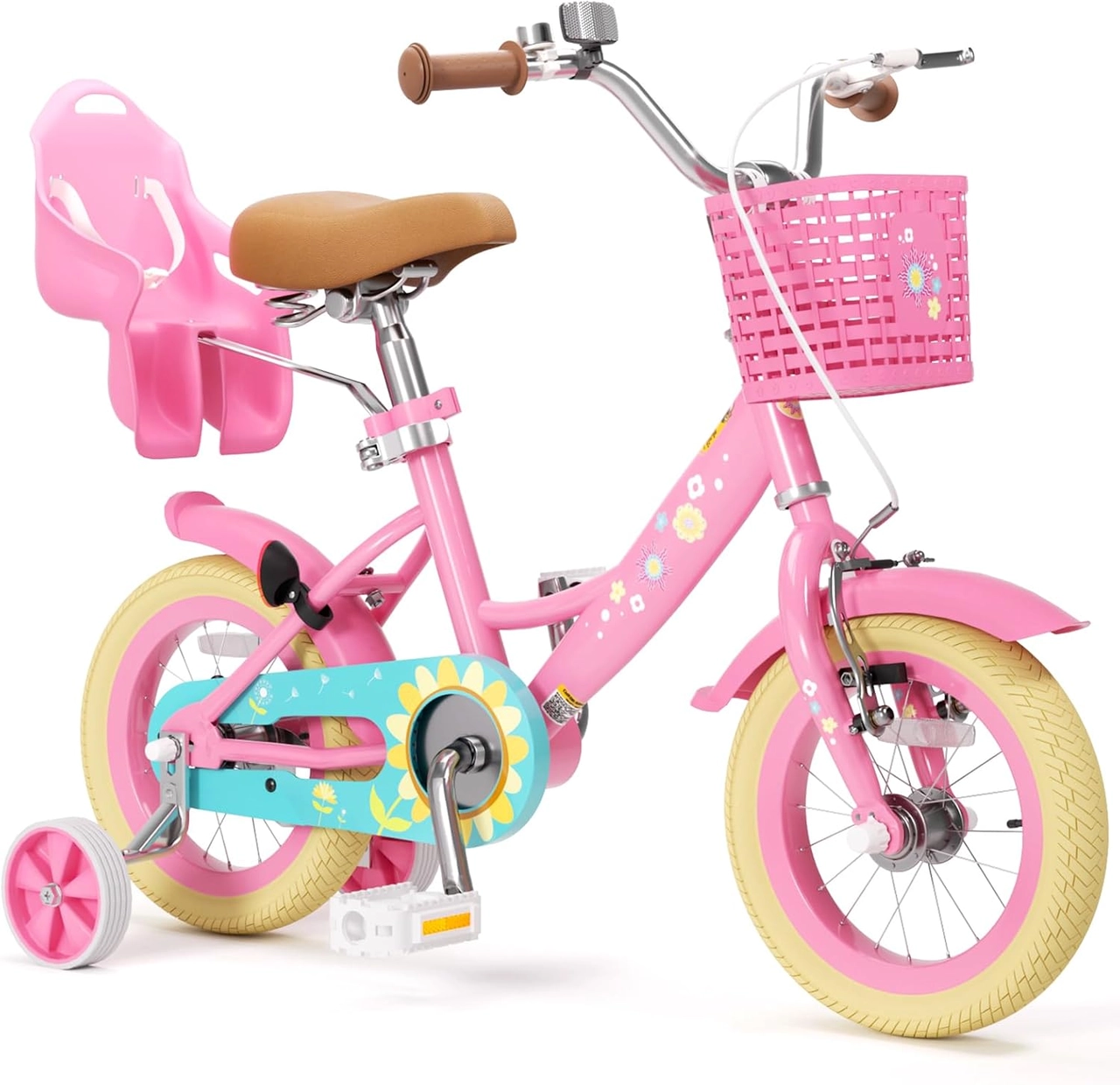 Flower Pink XJD Girls Bike with Doll Seat & Basket
A Training Wheel Bike offered with 12 Inch, 14 Inch and 16 Inch SKU labels. Compare the child's measurements and control before choosing; the doll seat and basket do not determine fit.
 Purple XJD Girls' Bike with Doll Seat & Basket
A Training Wheel Bike available with 12 Inch, 14 Inch and 16 Inch SKU labels. It is relevant across overlapping size ranges, but the child's height, inseam, reach and confidence must decide.
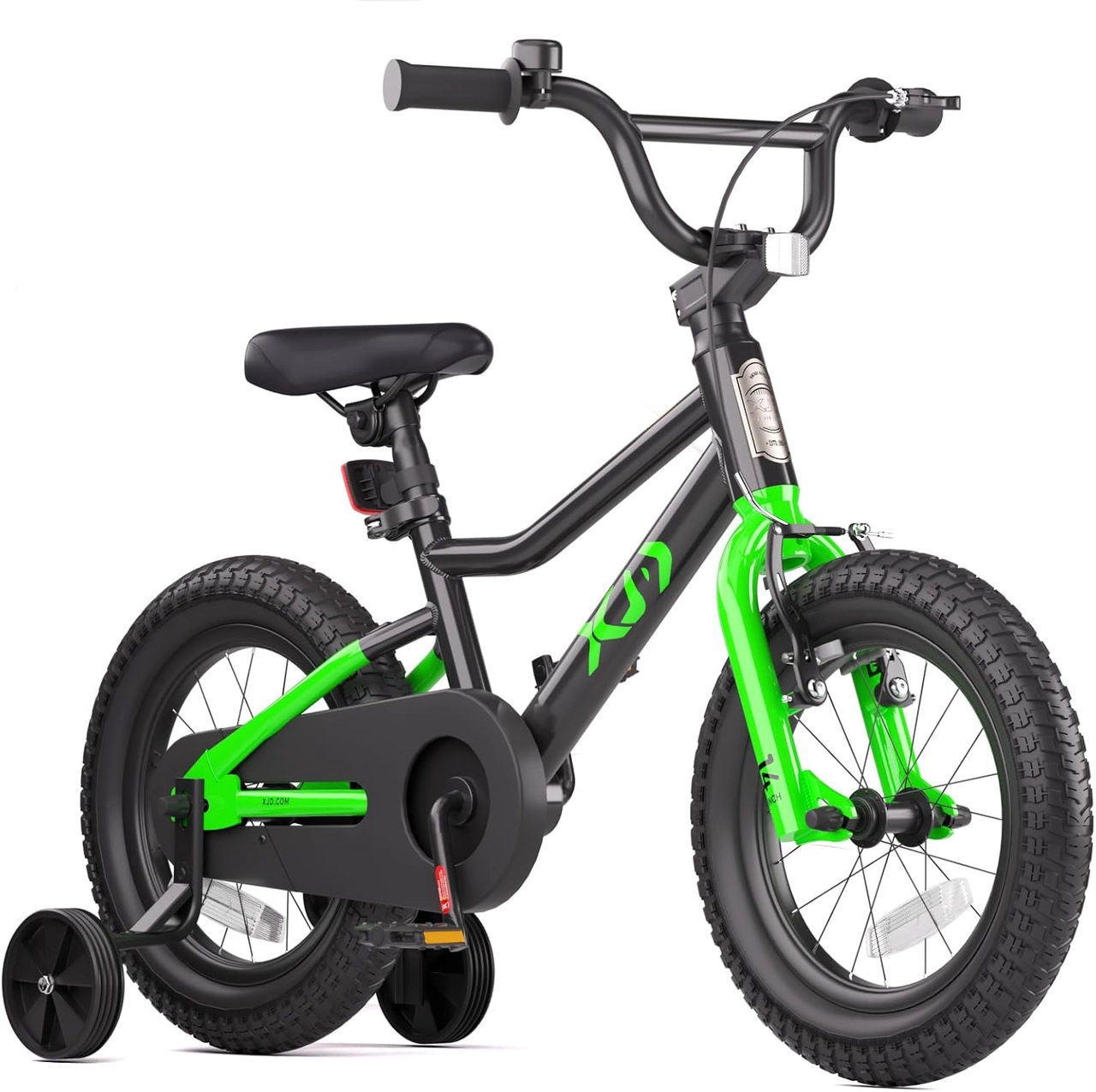 Black XJD Kids' BMX Bicycle with Training Wheels
A Kids' BMX Bike with training wheels, offered with 12 Inch, 14 Inch and 16 Inch SKU labels. Its BMX catalog category does not replace the same individual height and control checks.
Flower Pink XJD Girls Bike with Doll Seat & Basket is categorized as a Training Wheel Bike and is offered in 12 Inch, 14 Inch and 16 Inch labels. Purple XJD Girls' Bike with Doll Seat & Basket has the same supplied category and size-label choices, so the fit decision should not be based on color or accessories alone.
Black XJD Kids' BMX Bicycle with Training Wheels is categorized under Kids' BMX Bikes and is also offered in 12 Inch, 14 Inch and 16 Inch labels. Its BMX catalog description does not establish a different fit standard; use the same measurements and hands-on control checks.
All three are relevant comparison options, but the supplied facts do not establish weight, brake type, material, load limits or exact geometry. Check the exact product page and manual for those details. Use a qualified bicycle mechanic when assembly, adjustment, compatibility or maintenance instructions are unclear.
Decide whether training wheels suit the rider
All supplied products mention training wheels either in their title or catalog category. That makes them relevant when a child currently needs that form of support. Training wheels do not correct an oversized frame or unreachable controls, however.
Judge the child’s present confidence: can they steer where intended, start without panic and stop on request? Compare sizes before comparing appearance. Follow the exact manual for fitting, adjustment and removal procedures; do not improvise hardware settings or torque values.
Complete the safety check and choose
A properly fitting bicycle helmet is part of every ride. U.S. Consumer Product Safety Commission guidance calls for the helmet to fit properly, sit level and have its straps used according to the manufacturer’s instructions. Supervise practice in a suitable area away from traffic.
Your next step is specific: measure height and inseam, shortlist 12 Inch or 14 Inch from the ranges above, add 16 Inch only at 40 in / 102 cm or taller, and have the 4-year-old try the candidates. Choose the size they can stand over, reach, brake, steer, start and stop confidently today.
Bikes for your next adventure
-
Flower Pink XJD Girls Bike with Doll Seat & Basket
The XJD Flower Pink girls' bike is made for riders 71–122 cm tall (roughly ages …$69.99
-

Pink Girls' 12/14/16" Bike by XJD – Basket & Doll Seat
The XJD Pink Girls' Bike with Basket & Doll Seat is made for riders 71–122 cm ta…$75.99
$99.99 -

XJD Girls Bike for Kids Ages 3-8, 12/14/16 Inch with Training Wheels – Purple
The XJD Girls Bike in Purple is a training-wheel bicycle for kids ages 3 to 8, f…$149
$169