

What size bike do you buy a 4 year old
For a 4-year-old, compare 12-, 14- and 16-inch bikes: choose by measured height and fit, not age alone. Do not buy a larger bike just for growth.
Start with height, then confirm the fit
Measure your child without shoes, standing straight against a wall. Record total height from the floor to the top of the head. Then measure inseam from the floor to the crotch while the child stands with feet slightly apart. Height narrows the wheel-size range; inseam helps you judge whether the child can stand over the bicycle comfortably.
| Wheel size | XBikes age starting point | Rider height starting point |
|---|---|---|
| 12 Inch | Ages 3–4 | 34–40 in / 86–102 cm |
| 14 Inch | Ages 3–6 | 37–45 in / 94–114 cm |
| 16 Inch | Ages 4–7 | 40–48 in / 102–122 cm |
The ranges overlap deliberately. A 4-year-old measuring 38 inches, for example, falls within both the 12- and 14-inch starting ranges. That does not make the sizes interchangeable: the right choice is whichever bicycle the child can stand over, reach and control more comfortably.
What to check during a real fit test
Have the child try the exact bicycle whenever possible. Shoes should be the kind they will wear while riding. Ask the child to sit, hold the grips, place their feet appropriately and practise getting on and off with adult support.
- Stand-over: The child should be able to straddle the bicycle without the frame pressing uncomfortably into the crotch.
- Reach: They should reach the handlebar without stretching, locking their elbows or leaning far forward.
- Brake control: If the bicycle has hand controls, the child must be able to reach and operate them. Confirm the exact controls on the product rather than assuming a brake type.
- Confidence: Look for calm steering, controlled stopping and an easy start. A size that technically matches height may still be too demanding.
If two sizes match the height table, choose from the fit test rather than automatically selecting the larger one. An oversized bicycle can make starting, stopping and steering harder.
How the supplied 12-, 14- and 16-inch options compare
The three catalog bicycles help because each is offered with 12 Inch, 14 Inch and 16 Inch SKU labels, covering all three XBikes starting ranges that commonly include age four. They are training-wheel bicycles, so they are relevant when that format suits the child’s present confidence and learning needs; the wheel-size fit check still comes first.
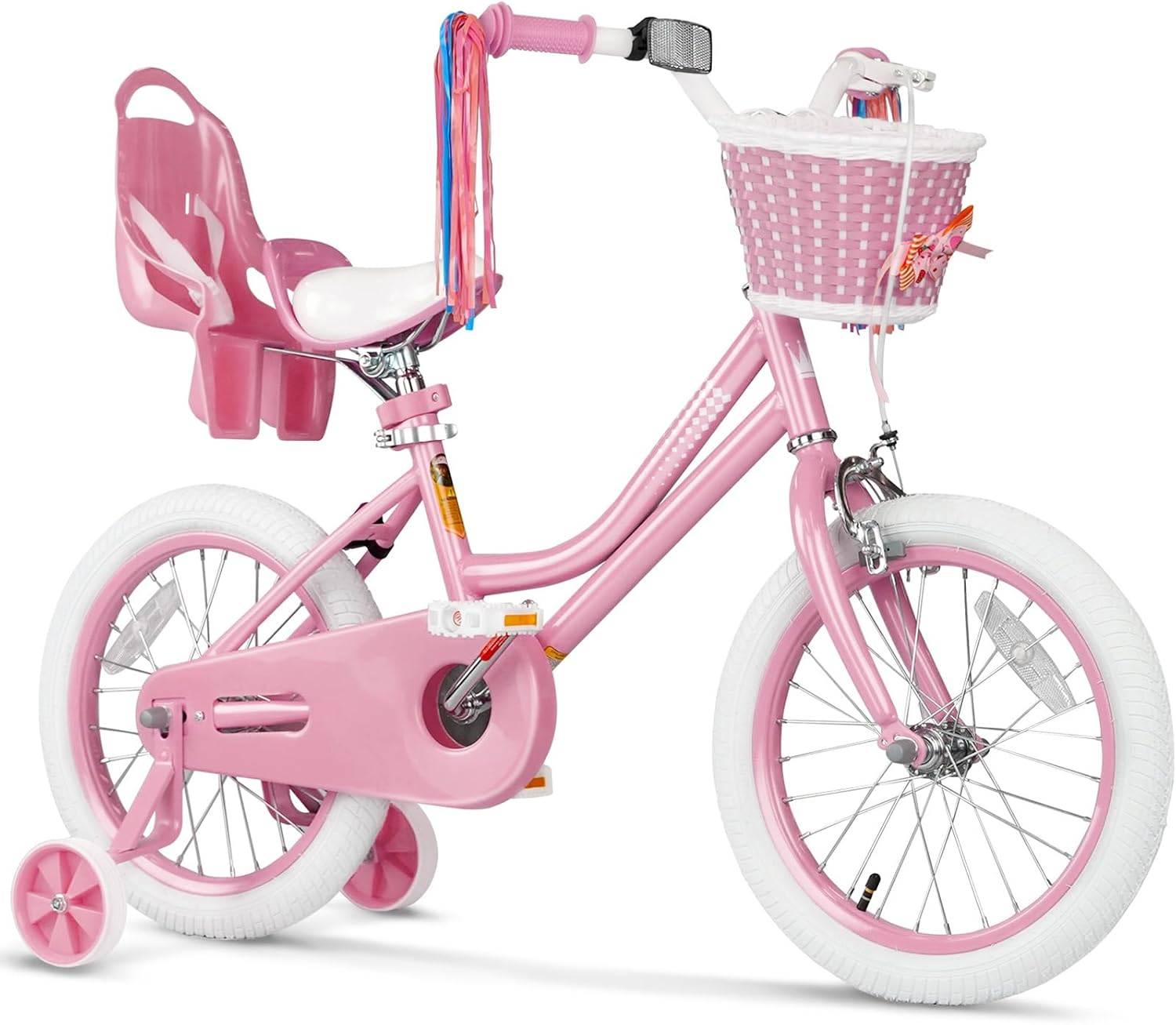 XJD Pink Girls' Bike – Kids 12/14/16 Inch Training Wheel Bicycle
A training-wheel bicycle offered with 12 Inch, 14 Inch and 16 Inch SKU labels. Shortlist the label matching the child’s measured-height range, then confirm individual fit and control.
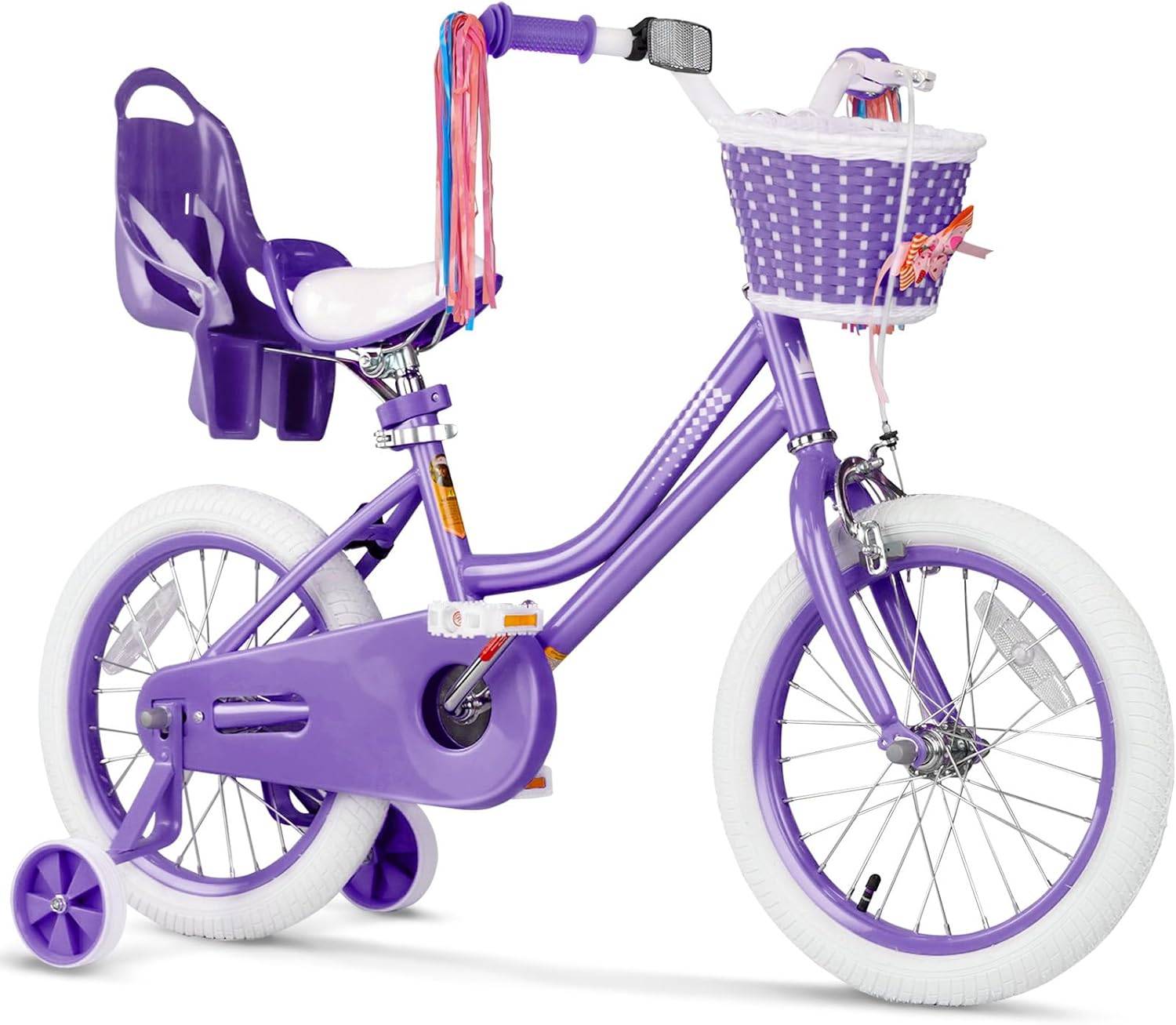 XJD Girls Bike for Kids Ages 3-8, 12/14/16 Inch with Training Wheels – Purple
This training-wheel model has 12 Inch, 14 Inch and 16 Inch options. The age wording in its title is a catalog label; measured height and a hands-on fit check should determine relevance.
 Girls 12/14/16 Inch Kids Bike by XJD with Training Wheels – Peach
A Training Wheel Bikes option available in 12 Inch, 14 Inch and 16 Inch labels. It is relevant for comparing those starting sizes, provided the selected SKU passes the child’s fit check.
XJD Pink Girls' Bike – Kids 12/14/16 Inch Training Wheel Bicycle is listed in Training Wheel Bikes and offers 12 Inch, 14 Inch and 16 Inch choices. Compare only the SKU whose wheel size matches the child’s measured-height range, then verify stand-over, reach and control.
XJD Girls Bike for Kids Ages 3-8, 12/14/16 Inch with Training Wheels – Purple has the same three supplied wheel-size labels and belongs to the same category. “Ages 3-8” is part of its catalog title, not independent fit evidence; use the XBikes height ranges and an individual try-on instead.
Girls 12/14/16 Inch Kids Bike by XJD with Training Wheels – Peach also supplies 12 Inch, 14 Inch and 16 Inch options. Its relevance is therefore the available size comparison and training-wheel format, not a promise that every option fits every 4-year-old.
These catalog facts do not specify price, availability, weight, materials, brake type or detailed dimensions. Check the exact selected SKU and product manual before deciding. Follow that manual for assembly, adjustments, maintenance, load limits, compatibility and torque; use a qualified bicycle mechanic when the instructions or fit are uncertain.
When these products are not the right comparison
Do not select one merely because the child is four. A child below 34 inches / 86 cm or above 48 inches / 122 cm is outside all three supplied starting ranges, so another size assessment is needed. These products may also be irrelevant if the child does not need or want a training-wheel bicycle.
Even inside the stated ranges, reject a candidate if the child cannot stand over it comfortably, reach the handlebar and applicable brakes, steer without strain or stop with control. Training wheels do not correct an unsuitable frame fit.
Make the decision
- Measure height and inseam without shoes.
- Use height to shortlist 12, 14 or 16 inches from the table.
- Try the exact shortlisted bicycle and check stand-over, reach, brake operation and confidence.
- Choose the size the child controls now, rather than sizing up for future growth.
- Add a properly fitting bicycle helmet. It should sit level, with straps adjusted according to the helmet manufacturer’s instructions.
For your 4-year-old, take the measurements today, shortlist the matching wheel size, and buy only after the child demonstrates a comfortable, controlled fit on that exact bicycle.
Bikes for your next adventure
-

XJD Girls BMX Bike 12/14/16 Inch with Training Wheels – Pink Blue
The XJD Girls BMX Bike in Pink/Blue is built as a first pedal bike for kids roug…$99.99
$119.99 -

Blue XJD Kids Bike Helmet for Boys & Girls
The Blue XJD Kids Bike Helmet is a lightweight, adjustable multi-sport helmet fo…$59.99
$99 -

Kids Bike Helmet by XJD for Boys & Girls – Black, Blue, Green, Pink, Purple
The XJD Kids Bike Helmet covers a wide 2-to-8-year age range thanks to two head-…$59.99