

What size bike does my 4 yr old need
For a 4-year-old, compare 12-, 14- and 16-inch bikes by measured height: 12 inch for 34–40 in, 14 inch for 37–45 in, and 16 inch for 40–48 in. Age is only a starting point; the correct bike is the one the child can stand over, reach, steer and brake confidently.
Measure your child before choosing
Measure height with the child standing straight, without shoes, against a wall. Then measure inseam from the floor to the crotch. Height identifies which wheel sizes deserve a fit check, while inseam helps you judge whether the child can stand over the bicycle comfortably.
Use the XBikes starting points that overlap age four:
| Wheel size | XBikes age starting point | Rider height starting point |
|---|---|---|
| 12 Inch | Ages 3–4 | 34–40 in / 86–102 cm |
| 14 Inch | Ages 3–6 | 37–45 in / 94–114 cm |
| 16 Inch | Ages 4–7 | 40–48 in / 102–122 cm |
These ranges overlap deliberately. For example, a child measuring 39 inches falls within both the 12- and 14-inch starting ranges. That does not make the sizes equivalent; it means both should be compared through an individual fit check.
Turn the measurement into a shortlist
If your four-year-old is 34–36 inches tall, begin with a 12-inch bike. At 37–39 inches, compare 12- and 14-inch options. At 40 inches, all three ranges meet, so handling and confidence become especially important. From 41–45 inches, begin with 14 and 16 inches; from 46–48 inches, the 16-inch size is the applicable starting point.
Do not move up merely because a larger bike will last longer. Guidance from the American Academy of Pediatrics emphasizes trying the bicycle rather than buying one oversized for growth. A bike that matches a height range can still be wrong if its frame shape, reach or controls do not suit the individual child.
Perform the fit check on the actual bike
Have the child wear their normal riding shoes and try the bicycle with an adult stabilizing it. Check these points before deciding:
- Stand-over: The child should be able to straddle the frame with stable footing and without the frame pressing uncomfortably into the body.
- Starting and stopping: They should be able to get into a riding position and return to secure footing without struggling or tipping.
- Reach: Their hands should reach the handlebar naturally. They should not need to stretch, lock their elbows or lean excessively forward.
- Steering: Ask them to turn the handlebar in both directions while seated. They should remain balanced and in control.
- Brake control: Confirm that they can reach and operate the bicycle's actual braking controls. Do not assume a child can manage them based on age or height.
- Confidence: Watch for relaxed, deliberate control. If the child appears intimidated by the bike's height or struggles to manage it, compare the smaller eligible size.
How the supplied bike helps with comparison
The catalog option, Pink Girls' 12/14/16" Bike by XJD – Basket & Doll Seat, is relevant because its available SKU labels include 12 Inch, 14 Inch and 16 Inch—the three wheel sizes most likely to overlap the measurements of a four-year-old. Those labels let you compare the appropriate size candidates, but they do not replace trying the selected size or confirming individual control.

Use only the SKU label that matches the child's measured-height shortlist, then verify stand-over, reach, braking and confidence on that exact configuration. The supplied catalog facts do not specify frame dimensions, brake type, weight, load limit or assembly details. Consult the exact product manual or a qualified bicycle mechanic for those points.
Do not overlook helmet fit
A properly fitting bicycle helmet is necessary regardless of wheel size or whether the bike uses training wheels. Following U.S. Consumer Product Safety Commission guidance, place the helmet level on the child's head and adjust its straps according to the helmet manufacturer's instructions. A helmet that tilts back, shifts around or cannot be secured correctly needs adjustment or a different fit.
Also choose a controlled practice area away from traffic and obstacles. Close adult supervision remains important while the child learns starting, steering and stopping.
Make the final size decision
Measure first, shortlist by height, and compare overlapping sizes in person. Choose the smallest eligible option that provides comfortable stand-over and natural reach while allowing confident steering and braking; do not select a larger wheel solely for future growth. For your four-year-old, that decision will usually begin with 12, 14 or 16 inches—but it ends with what the child can control now.
Bikes for your next adventure
-
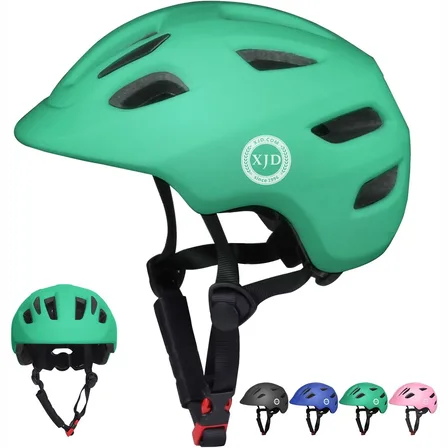
Green XJD Toddler Bike Helmet with Adjustable Fit, XS (46–51 cm)
The XJD toddler bike helmet in Green is built for the youngest riders — the size…$20.39
$23.99 -

Kids Bike Helmet by XJD for Boys & Girls – Black, Blue, Green, Pink, Purple
The XJD Kids Bike Helmet covers a wide 2-to-8-year age range thanks to two head-…$59.99
-

Kids Bike Helmet by XJD for Girls – Pink
The XJD Kids Bike Helmet in Pink is a lightweight multi-sport helmet for girls r…$59.99
$99