

What size bike for 4 year old uk
For most 4-year-olds in the UK, start by comparing 12-inch, 14-inch and 16-inch bikes. Measure the child first: 12-inch suits 86–102 cm, 14-inch suits 94–114 cm, and 16-inch suits 102–122 cm. Choose only after checking stand-over clearance, reach, braking and confidence on the actual bike.
The short answer: usually 12, 14 or 16 inches
A bike described as 12, 14 or 16 inches is identified by its wheel size. It is not a direct measurement of the child's leg or the bicycle frame.
At age four, the XBikes starting points overlap deliberately. A shorter four-year-old may fit a 12-inch bike, many will compare 12-inch and 14-inch options, and a taller child may be ready to try a 16-inch bike. Age alone cannot settle the choice.
| Wheel size | XBikes age starting point | Rider height |
|---|---|---|
| 12 Inch | 3–4 years | 86–102 cm |
| 14 Inch | 3–6 years | 94–114 cm |
| 16 Inch | 4–7 years | 102–122 cm |
These ranges are comparison points, not a guarantee of fit. Do not move up merely because the child has turned four.
Measure height and inseam before shopping
Measure height without shoes, with the child standing upright against a wall. Record the result in centimetres and use it to identify which rows in the table deserve a fit check.
Then measure the inseam. Have the child stand naturally with their feet slightly apart and place a straight-edged book between the legs to represent the saddle area. Measure from the floor to the top edge of the book. Keep this measurement available when checking the dimensions or manual for the exact bicycle.
Height narrows the choices; inseam helps assess whether the child can stand over and mount the bike comfortably. Because bicycle shapes and adjustment ranges can differ, a wheel-size label cannot confirm stand-over clearance by itself.
How to compare overlapping sizes
If the measured height falls into two ranges, try both sizes rather than automatically choosing the larger one. On each bike, check whether the child can:
- stand over the bicycle without being obstructed by it;
- sit in a controlled position and reach the handlebars without stretching;
- turn the handlebars while remaining balanced and comfortable;
- reach and operate the brakes reliably, where fitted;
- start, stop and steer with their present level of confidence.
American Academy of Pediatrics guidance supports having the child try the bicycle and warns against buying an oversized bike solely for future growth. A bike that a child will eventually grow into may be difficult to control now.
Where the supplied XBikes options fit
The two catalogued choices are useful because each is offered with 12 Inch, 14 Inch and 16 Inch SKU labels—the three sizes most likely to need comparison for a four-year-old. The Black XJD Kids' BMX Bicycle with Training Wheels is catalogued under Kids' BMX Bikes. The Pink Girls' 12/14/16" Bike by XJD – Basket & Doll Seat is catalogued under Training Wheel Bikes. Those titles and categories describe the catalog options; they do not prove that a particular size fits your child.
Use these particular products to compare the relevant wheel-size choices against the child's measured height, then confirm the individual fit. Select the required SKU label carefully: the availability of three labels does not make the sizes interchangeable.
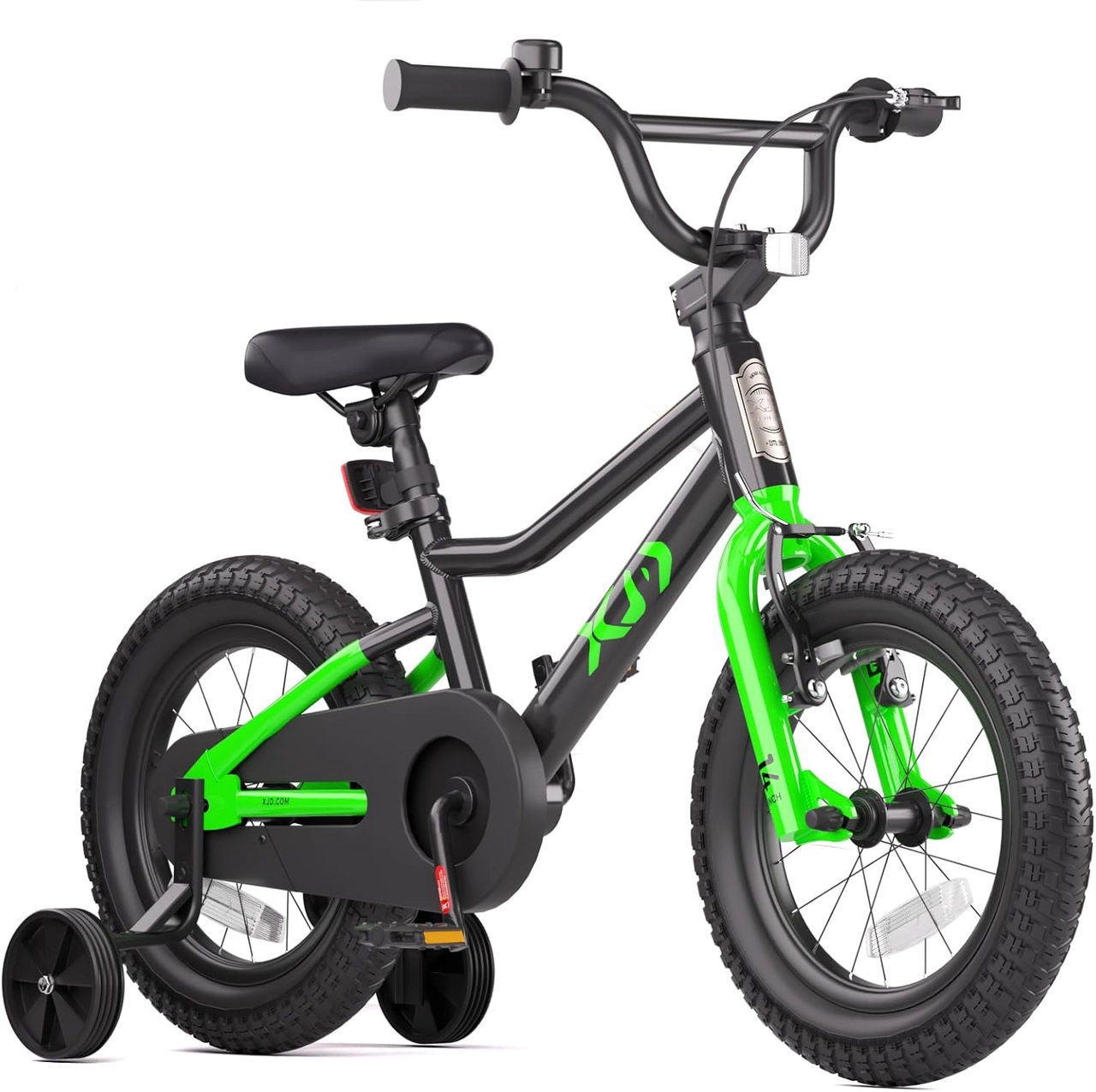 Black XJD Kids' BMX Bicycle with Training Wheels
Available in 12 Inch, 14 Inch and 16 Inch options, this Kids' BMX Bikes model lets parents compare all three relevant starting sizes after measuring their four-year-old.
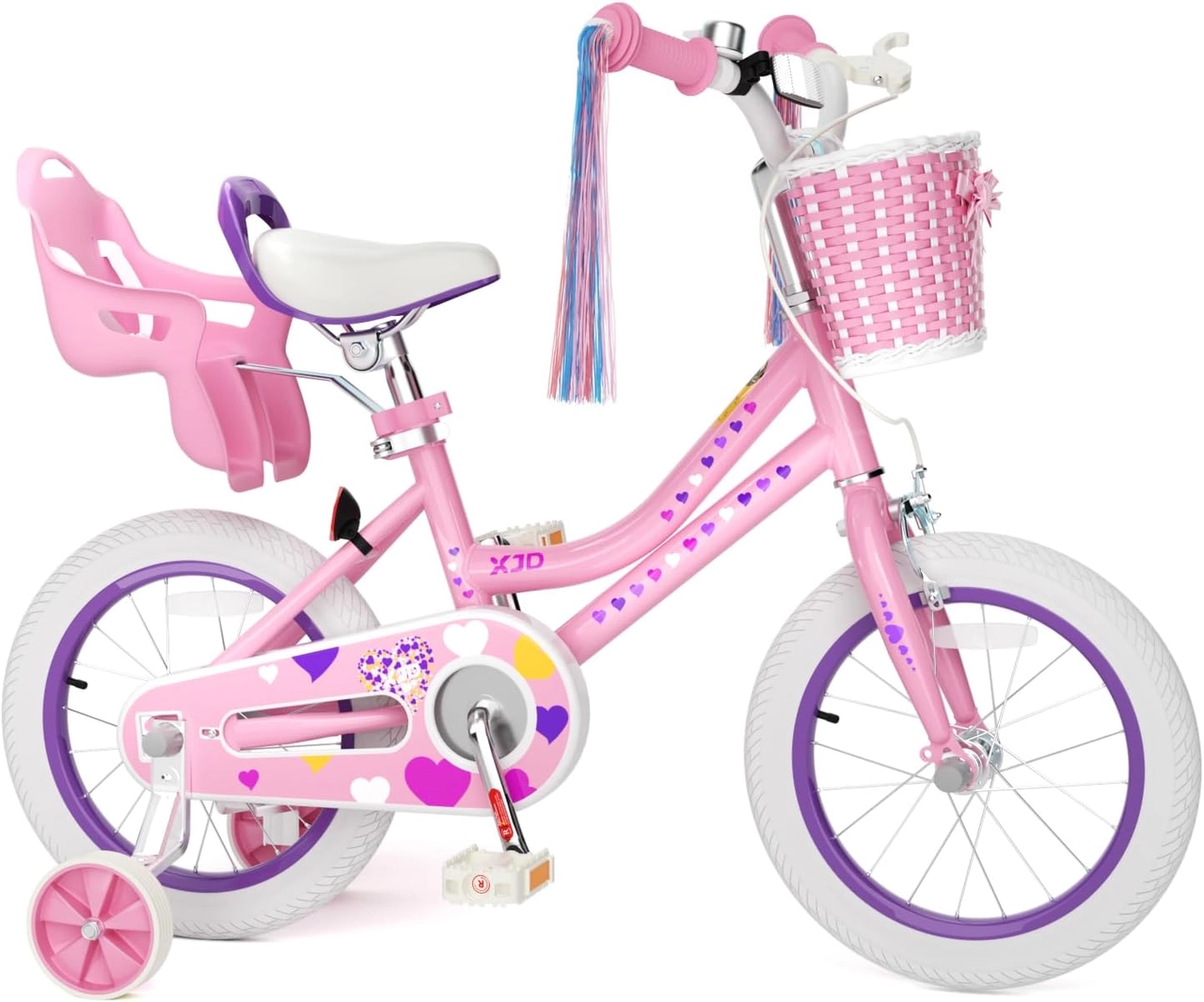 Pink Girls' 12/14/16" Bike by XJD – Basket & Doll Seat
This Training Wheel Bikes model has 12 Inch, 14 Inch and 16 Inch SKU labels, making it relevant for measured size comparison; its catalog title does not establish individual fit.
The supplied facts do not specify frame geometry, saddle adjustment range, weight, brake type, load limit or detailed assembly requirements. Check the exact product manual for those details. Follow its assembly and maintenance instructions, or ask a qualified bicycle mechanic where anything is uncertain.
Complete an in-person fit check
Begin with the size range indicated by measured height. Let the child get onto the bike and observe them rather than judging fit while they stand beside it. Their posture should allow comfortable steering and dependable control without an exaggerated reach.
Pay particular attention to braking. The child must be able to reach and use the bicycle's braking controls as provided. If they cannot operate them confidently, that bike is not an appropriate current fit even when their height appears inside the relevant range.
Confidence matters too. A taller four-year-old who technically enters the 16-inch range at 102 cm should still compare it with a smaller relevant option if the larger bicycle compromises control. Equally, do not choose a smaller bike when the fit check shows cramped positioning or inadequate stand-over suitability.
Helmet and final decision
A properly fitted bicycle helmet is essential. U.S. Consumer Product Safety Commission guidance says it should sit level and its straps should be used according to the helmet manufacturer's instructions. Check the fit each time rather than relying only on the helmet's printed size.
For a four-year-old in the UK, measure height and inseam today, shortlist 12 inches at 86–102 cm, 14 inches at 94–114 cm or 16 inches at 102–122 cm, and choose the smallest option among the suitable candidates that provides comfortable stand-over, reach, brake operation and confident control—not the largest size intended for future growth.
Bikes for your next adventure
-

Kids Bike Helmet by XJD for Boys & Girls – Black, Blue, Green, Pink, Purple
The XJD Kids Bike Helmet covers a wide 2-to-8-year age range thanks to two head-…$59.99
-

Kids Bike Helmet by XJD for Girls – Pink
The XJD Kids Bike Helmet in Pink is a lightweight multi-sport helmet for girls r…$59.99
$99 -

XJD Kids Bike for Girls – Pink, 12/14/16/20 Inch with Training Wheels
The XJD Kids Bike for Girls in Pink is a training-wheel bike built to carry your…$139
$159