

What size bike for my 4 year old
Most 4-year-olds should start by trying a 12-inch or 14-inch bike. Measure your child’s height and inseam, then confirm stand-over room, reach, brake control and confidence on the actual bicycle.
Choose the starting size from measured height
Age narrows the search, but height is the more useful first comparison. Under the XBikes starting points, a 12-inch bike covers ages 3–4 and heights of 34–40 inches (86–102 cm). A 14-inch bike covers ages 3–6 and heights of 37–45 inches (94–114 cm). A 16-inch bike begins at age 4 and covers heights of 40–48 inches (102–122 cm).
| Wheel size | XBikes age starting point | Rider height |
|---|---|---|
| 12 Inch | 3–4 | 34–40 in / 86–102 cm |
| 14 Inch | 3–6 | 37–45 in / 94–114 cm |
| 16 Inch | 4–7 | 40–48 in / 102–122 cm |
For a 4-year-old under 40 inches tall, compare 12-inch and 14-inch models first. At 40 inches or taller, add a 16-inch model to the comparison. Overlapping height ranges do not make the sizes equivalent: the child still needs to try each candidate.
Measure height and inseam correctly
Measure height with your child standing straight without shoes, heels against a wall and eyes looking forward. Mark the top of the head and measure from the floor. Record the result in inches or centimetres so it can be compared directly with the table.
For inseam, have the child stand without shoes, feet slightly apart. Place a firm, thin book between the legs and raise it gently to simulate the bicycle’s saddle contact. Measure vertically from the floor to the top edge of the book. Inseam is essential for the physical fit check, even though the supplied XBikes starting points do not prescribe an inseam number.
Check the bike in person
Have your child straddle the bicycle’s top tube with both feet flat on the ground. There should be comfortable clearance rather than contact or a forced tiptoe stance. Then seat the child and check that starting, stopping and putting a foot down feel controlled.
Watch the upper body as well. Your child should reach the handlebar without an extreme forward stretch, steer through turns without losing balance, and operate the brakes comfortably. If the child cannot reach or control the brakes, the bike is not a suitable fit even when age and height appear to match.
The American Academy of Pediatrics advises having a child try the bicycle and avoiding an oversized bike bought merely for future growth. A larger wheel size is appropriate only when stand-over clearance, reach, braking and current confidence all work now.
How the supplied bikes help with comparison
The three supplied catalog options all offer 12-inch, 14-inch and 16-inch labels, so they let you compare the sizes most likely to overlap at age four. They are relevant possibilities only after measurement and an individual fit check; their catalog categories and titles do not establish fit.
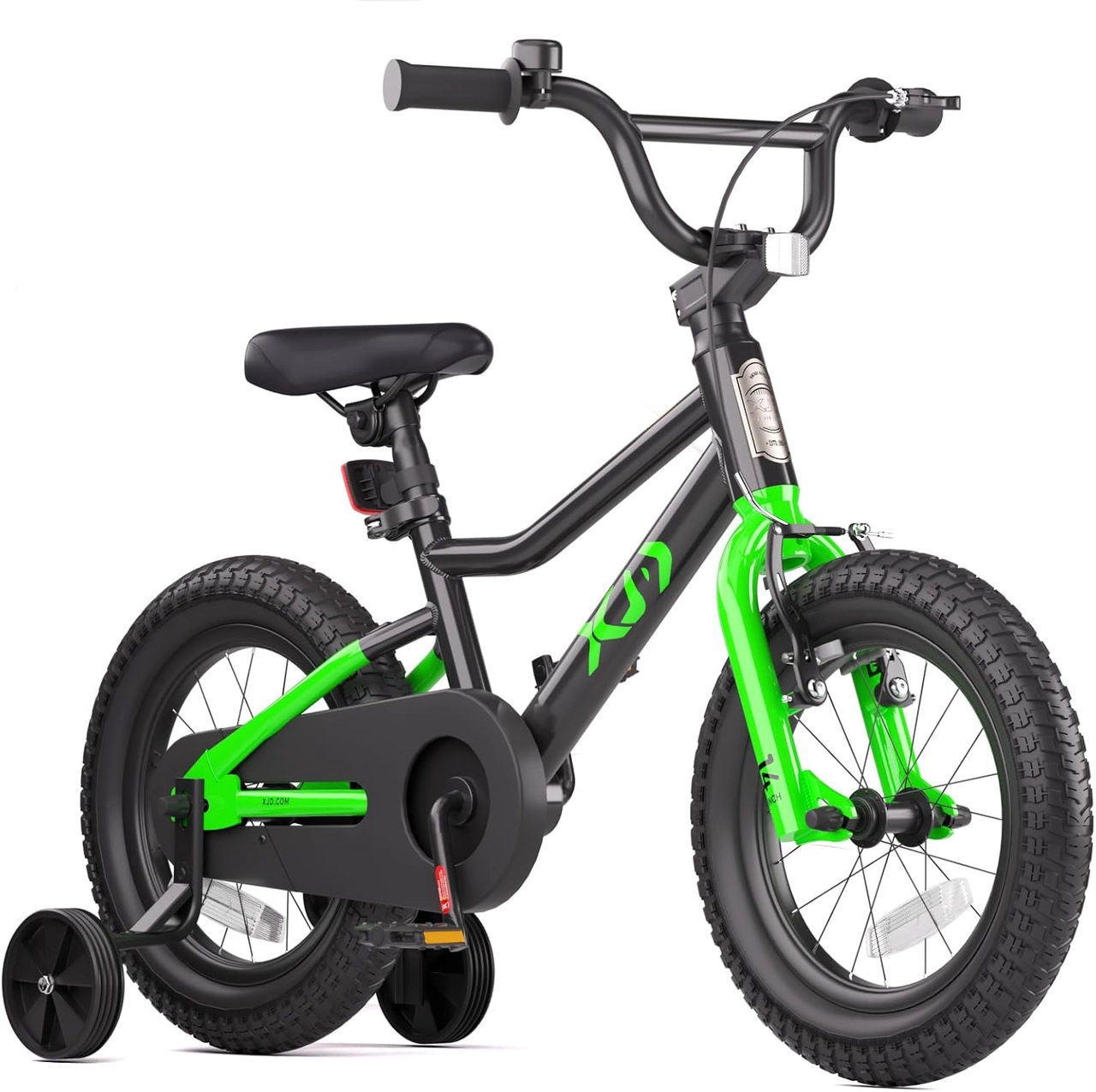 Black XJD Kids' BMX Bicycle with Training Wheels
Available in 12 Inch, 14 Inch and 16 Inch, this Kids' BMX Bikes model provides the three main size comparison points relevant to a measured 4-year-old.
 Pink Girls' 12/14/16" Bike by XJD – Basket & Doll Seat
This Training Wheel Bikes model comes in 12 Inch, 14 Inch and 16 Inch, allowing parents to compare overlapping XBikes height ranges before completing an individual fit check.
 Pink 12/14/16/20" XJD Girls Bike with Training Wheels & Basket
Offered in 12 Inch, 14 Inch, 16 Inch and 20 Inch, this Training Wheel Bikes model includes the likely comparison sizes; 20 Inch is outside the usual XBikes starting point for age four.
Black XJD Kids' BMX Bicycle with Training Wheels is cataloged under Kids' BMX Bikes and is offered in 12 Inch, 14 Inch and 16 Inch. Those labels cover the three useful comparison points for a 4-year-old.
Pink Girls' 12/14/16" Bike by XJD – Basket & Doll Seat is cataloged under Training Wheel Bikes and has 12 Inch, 14 Inch and 16 Inch options. Treat the sizes in its title as catalog labels, then select by measurement and control.
Pink 12/14/16/20" XJD Girls Bike with Training Wheels & Basket is also cataloged under Training Wheel Bikes. It offers 12 Inch, 14 Inch, 16 Inch and 20 Inch labels, but the XBikes starting point for 20 Inch is ages 7–12 and heights of 48–60 inches (122–152 cm), so it is not the normal starting comparison for a 4-year-old.
Rule out a size that is too large
Do not move up merely because a child will grow. Rule out any bicycle that prevents flat-footed stand-over, requires an uncomfortable reach, makes steering awkward or puts the brake controls beyond reliable use. Hesitation and loss of control matter too: a technically reachable bike may still be too demanding for the child’s current confidence.
If assembly, adjustment, compatibility, load limits, maintenance or torque affects the fit, follow the exact product manual or ask a qualified bicycle mechanic. Do not guess at an adjustment or transfer instructions from another model.
Before the first ride
Repeat the control check in a quiet, open riding area under close adult supervision. Use a properly fitting bicycle helmet. U.S. Consumer Product Safety Commission guidance says the helmet should sit level and its straps should be used according to the helmet manufacturer’s instructions.
Your next decision is straightforward: measure height and inseam, compare 12 Inch and 14 Inch first, include 16 Inch only when the measured height supports it, and buy only the size your 4-year-old can straddle, reach, brake and control today.
Bikes for your next adventure
-
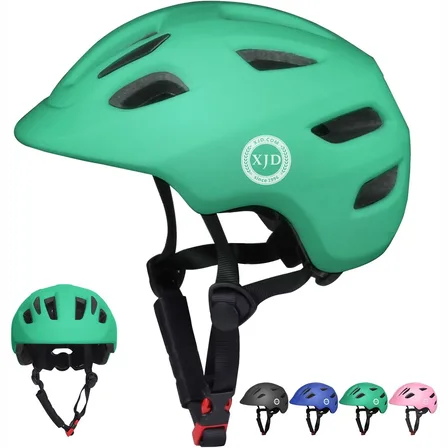
Green XJD Toddler Bike Helmet with Adjustable Fit, XS (46–51 cm)
The XJD toddler bike helmet in Green is built for the youngest riders — the size…$20.39
$23.99 -

Kids Bike Helmet by XJD for Boys & Girls – Black, Blue, Green, Pink, Purple
The XJD Kids Bike Helmet covers a wide 2-to-8-year age range thanks to two head-…$59.99
-

Kids Bike Helmet by XJD for Girls – Pink
The XJD Kids Bike Helmet in Pink is a lightweight multi-sport helmet for girls r…$59.99
$99