

What size bike is appropriate for a 4 year old
For most 4-year-olds, start by comparing a 12-, 14-, or 16-inch bike. Measure the child first: height, inseam, reach, brake control, and confidence determine the appropriate size—not age alone.
Use height to narrow the wheel size
Measure the child barefoot while standing straight against a wall. Record total height from the floor to the top of the head. Then compare that measurement with the XBikes starting points below.
| Wheel size | XBikes starting range | What it means at age 4 |
|---|---|---|
| 12 Inch | Ages 3–4; 34–40 in / 86–102 cm | Compare when the rider is within this height range. |
| 14 Inch | Ages 3–6; 37–45 in / 94–114 cm | Compare when the rider is within this height range. |
| 16 Inch | Ages 4–7; 40–48 in / 102–122 cm | Compare when the rider is within this height range. |
The ranges overlap intentionally. A 4-year-old who is 40 inches tall, for example, reaches the stated height range for all three sizes. That does not make them equally suitable. A hands-on fit check must settle the decision.
Measure inseam and check stand-over clearance
For inseam, place a book firmly between the child’s legs with its spine level, then measure from the floor to the top of the book. Use that measurement when checking the bicycle’s stand-over position and the adjustment information in its exact product manual.
Have the child straddle the bike while wearing the shoes normally used for riding. The child should be able to stand securely rather than being forced onto tiptoes or pressed against the frame. The American Academy of Pediatrics advises having the child try the bicycle and avoiding an oversized bike bought merely for future growth.
Do not invent clearance from wheel diameter alone: frame shapes and adjustments can differ. If the manual does not provide enough information, ask a qualified bicycle mechanic to confirm the fit.
Test reach, steering, and brake control
Seat the child on the bicycle and watch the whole riding position. The child should reach the handlebar without stretching, turn it comfortably in both directions, and keep a controlled posture. Check that the child can reach and operate the bike’s brakes as designed. Wheel-size ranges cannot prove any of these points.
Confidence matters too. Ask the child to start, stop, steer, and get off under close adult supervision in a traffic-free area. If the rider appears tense, cannot control the bike, or struggles to stop, reject that fit even when height falls inside the published range. Do not move up a size simply to extend the time before the bike is outgrown.
How the supplied bikes help with comparison
The catalog options below are relevant because each is a training-wheel bike with supplied 12 Inch, 14 Inch, and 16 Inch SKU labels—the three XBikes starting sizes that can overlap age four. They provide useful size comparison points, but their catalog titles and training wheels do not replace measuring or a physical fit check.
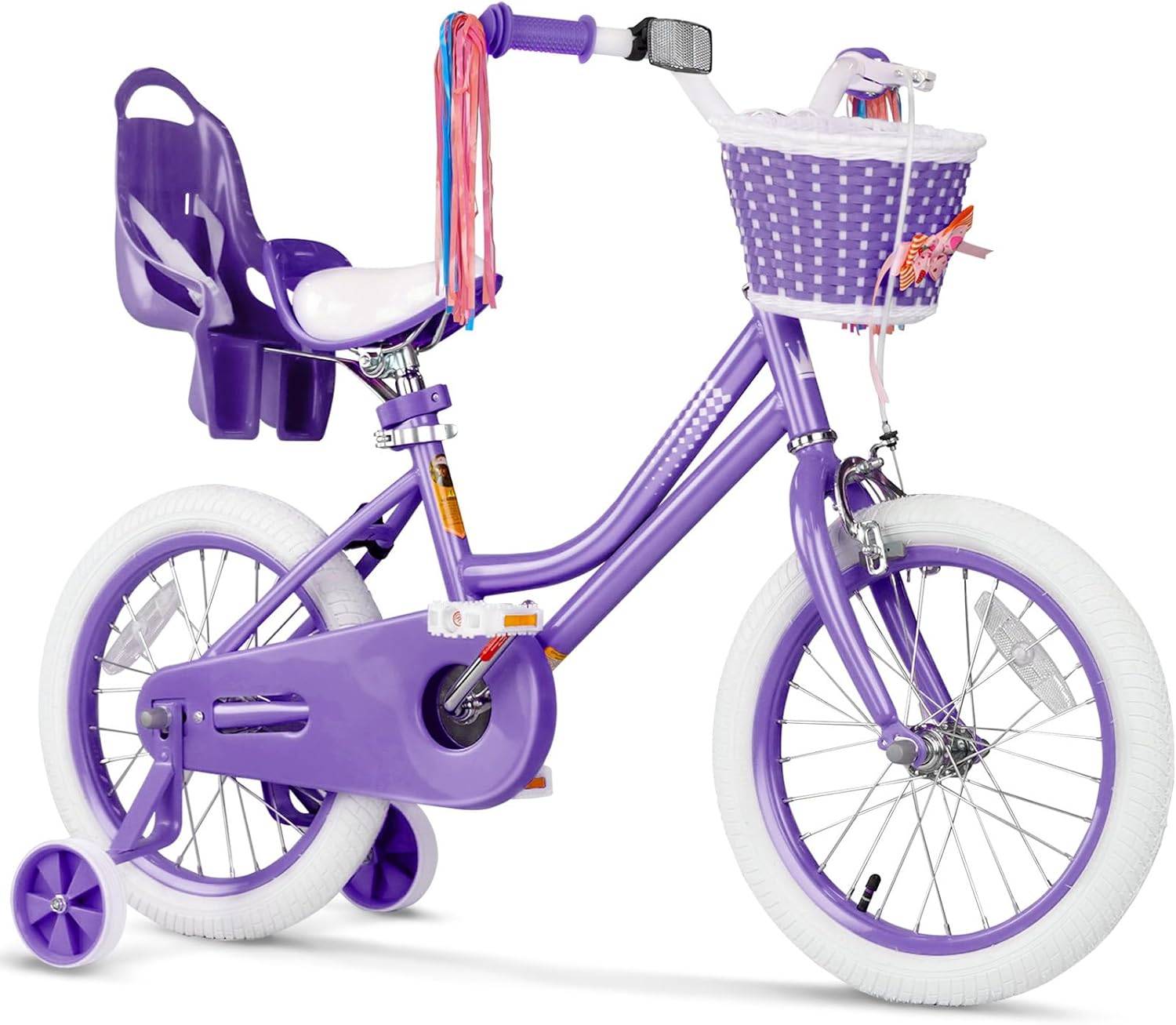 XJD Girls Bike for Kids Ages 3-8, 12/14/16 Inch with Training Wheels – Purple
A Training Wheel Bike with supplied 12 Inch, 14 Inch, and 16 Inch labels, making it relevant for comparison after measuring the child and completing an individual fit check.
 Girls 12/14/16 Inch Kids Bike by XJD with Training Wheels – Peach
This Training Wheel Bike offers supplied 12 Inch, 14 Inch, and 16 Inch labels. Compare the appropriate label with the rider’s measured height, then verify stand-over, reach, braking, and control.
 XJD Light Purple Girls Bike with Basket, Training Wheels, 12/14/16/20 Inch
A Training Wheel Bike with supplied available labels of 12 Inch, 14 Inch, and 16 Inch. The title also mentions 20 Inch, but that size is not among the supplied available SKU labels.
XJD Girls Bike for Kids Ages 3-8, 12/14/16 Inch with Training Wheels – Purple is listed under Training Wheel Bikes and has supplied 12 Inch, 14 Inch, and 16 Inch labels.
Girls 12/14/16 Inch Kids Bike by XJD with Training Wheels – Peach is also a Training Wheel Bike with the same three supplied size labels.
XJD Light Purple Girls Bike with Basket, Training Wheels, 12/14/16/20 Inch has supplied available SKU labels of 12 Inch, 14 Inch, and 16 Inch. Although 20 Inch appears in its exact catalog title, only those three available labels were supplied here.
Treat the age wording in any product title as a catalog label, not proof of fit. Compare only the wheel-size label that matches the child’s measured range, then verify the individual bicycle in person. Follow the exact product manual or consult a qualified bicycle mechanic for assembly, maintenance, compatibility, load limits, and torque.
Do a final safety check
Once a size passes the stand-over, reach, steering, brake, and confidence checks, choose a properly fitting bicycle helmet. The U.S. Consumer Product Safety Commission advises that the helmet must fit properly, sit level, and have its straps used according to the manufacturer’s instructions.
- Confirm the child’s measured height is within the size’s starting range.
- Confirm secure stand-over and a comfortable seated reach.
- Confirm the child can steer and operate the brakes with control.
- Confirm the helmet fits level and its straps are adjusted as directed.
Make the 4-year-old’s size decision
Begin with 12 Inch at 34–40 inches tall, 14 Inch at 37–45 inches, or 16 Inch at 40–48 inches. Where ranges overlap, choose only after the child tries the bike. The appropriate size is the one the child can stand over, reach, steer, brake, start, and stop confidently today—not the largest bike they may grow into.
Bikes for your next adventure
-

Pink Girls' 12/14/16" Bike by XJD – Basket & Doll Seat
The XJD Pink Girls' Bike with Basket & Doll Seat is made for riders 71–122 cm ta…$75.99
$99.99 -
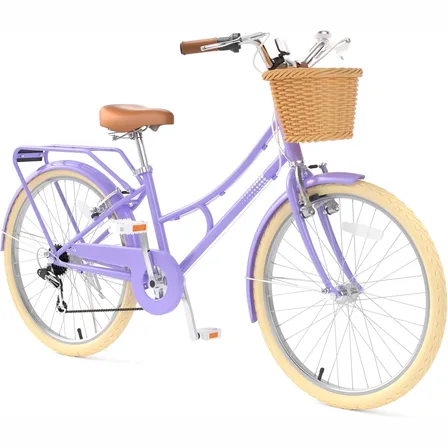
24-Inch Purple XJD Beach Cruiser Bike with U-Brake
The XJD 24-Inch Purple Beach Cruiser is built for girls and young women roughly …$159.99
-

XJD Kids Bike for Girls – Pink, 12/14/16/20 Inch with Training Wheels
The XJD Kids Bike for Girls in Pink is a training-wheel bike built to carry your…$139
$159