

What size bike to get my 4 year old
Most 4-year-olds should start by trying a 12-, 14-, or 16-inch bike, chosen by measured height and an individual fit check—not by age alone.
Choose the starting size from height
Measure your child without shoes, standing straight against a wall. Use the floor-to-top-of-head measurement to select which wheel sizes to try. For a 4-year-old, the relevant XBikes starting points overlap:
| Wheel size | XBikes age starting point | Rider height |
|---|---|---|
| 12 Inch | Ages 3–4 | 34–40 in / 86–102 cm |
| 14 Inch | Ages 3–6 | 37–45 in / 94–114 cm |
| 16 Inch | Ages 4–7 | 40–48 in / 102–122 cm |
If your child is 39 inches tall, for example, both 12- and 14-inch sizes are starting candidates. If your child is exactly 40 inches, all three ranges meet at that measurement. Overlap does not mean the sizes fit equally: frame shape, reach, brake access, leg length and confidence still determine which bike your child can control.
Do not move automatically to a larger wheel because your child has turned four. The American Academy of Pediatrics advises having the child try the bicycle and avoiding an oversized bike bought merely for growth.
Measure inseam before the fit check
Height narrows the options; inseam helps reveal whether the child can stand over and mount the bike comfortably. Have the child stand in socks with feet slightly apart. Place a rigid book between the legs, raise it gently to simulate a saddle, and measure from the floor to the top edge of the book.
Compare that measurement with the stand-over clearance and saddle adjustment information for the exact bicycle. No universal inseam number is supplied here, so use the product manual rather than assuming that wheel diameter predicts frame clearance. If the published dimensions are unclear, have a qualified bicycle mechanic assess the fit.
What the child must be able to do
A promising size should let the child stand over the bike without being trapped against the frame. Seated, the rider should look balanced rather than stretched toward the handlebar. Ask the child to steer left and right, stop, start and get a foot down without panic or a sudden loss of balance.
Check hand position as well. The child needs to reach and operate the bike's braking controls without releasing a secure grip or straining forward. Brake type is not provided for the catalog choices below, so inspect each exact model and follow its manual. Current confidence matters: a hesitant beginner may control a smaller eligible size more effectively than the largest size within the same height range.
Make the trial realistic but controlled. Use the shoes the child will ride in, set the bicycle according to its manual, and supervise the check away from traffic. Reject a size if the child cannot mount, steer, brake or dismount predictably, even when the age and height table includes it.
How the supplied bikes help you compare
The Purple XJD Girls' Bike with Doll Seat & Basket and the Black XJD Kids' BMX Bicycle with Training Wheels each have 12 Inch, 14 Inch and 16 Inch SKU labels. That makes both relevant comparison options for the wheel-size range commonly considered at age four. Their categories differ—Training Wheel Bikes and Kids' BMX Bikes—but those labels do not establish individual fit.
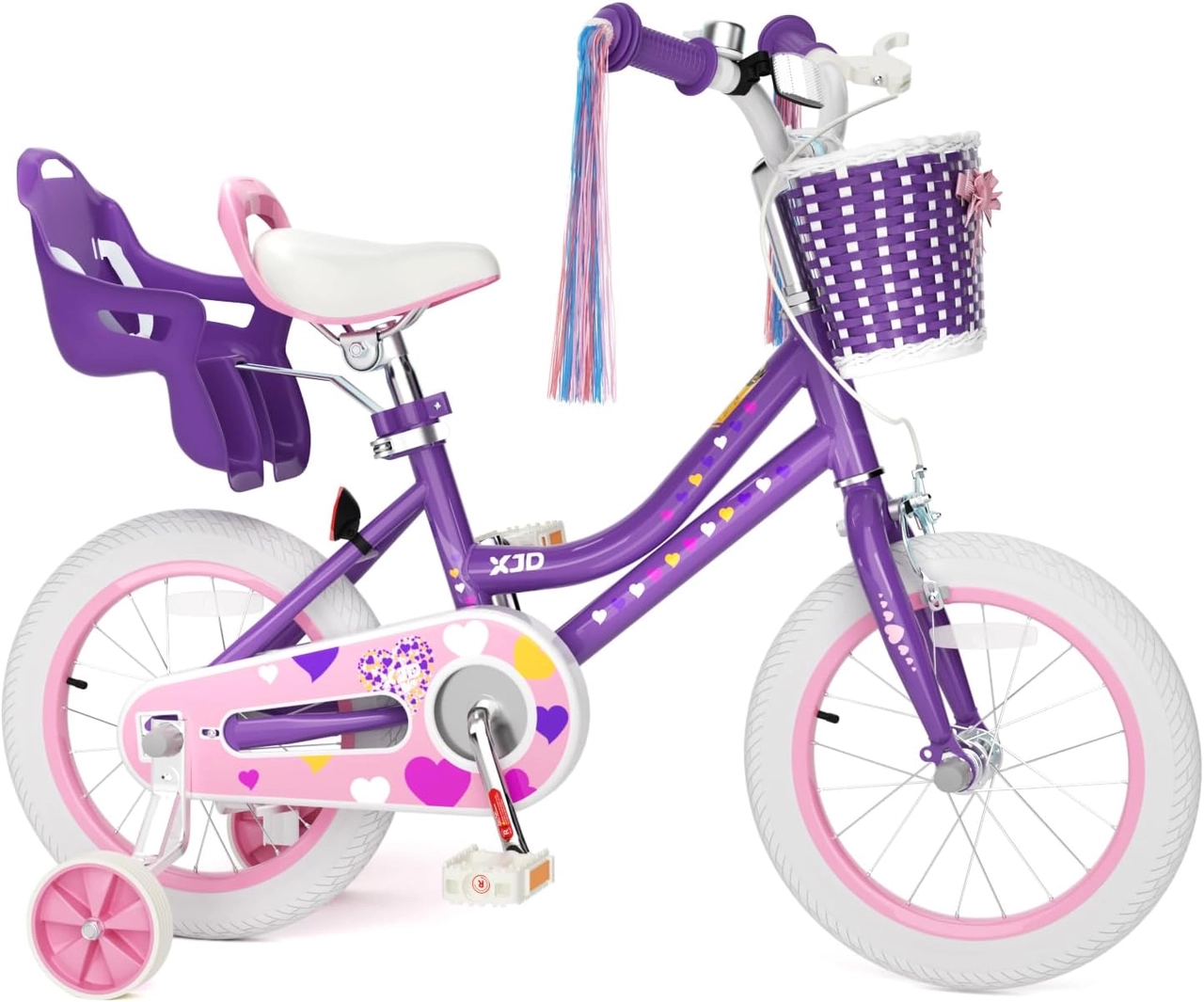 Purple XJD Girls' Bike with Doll Seat & Basket
Available in 12 Inch, 14 Inch and 16 Inch labels, this Training Wheel Bikes option spans the relevant XBikes height starting points for many 4-year-olds, subject to an individual fit check.
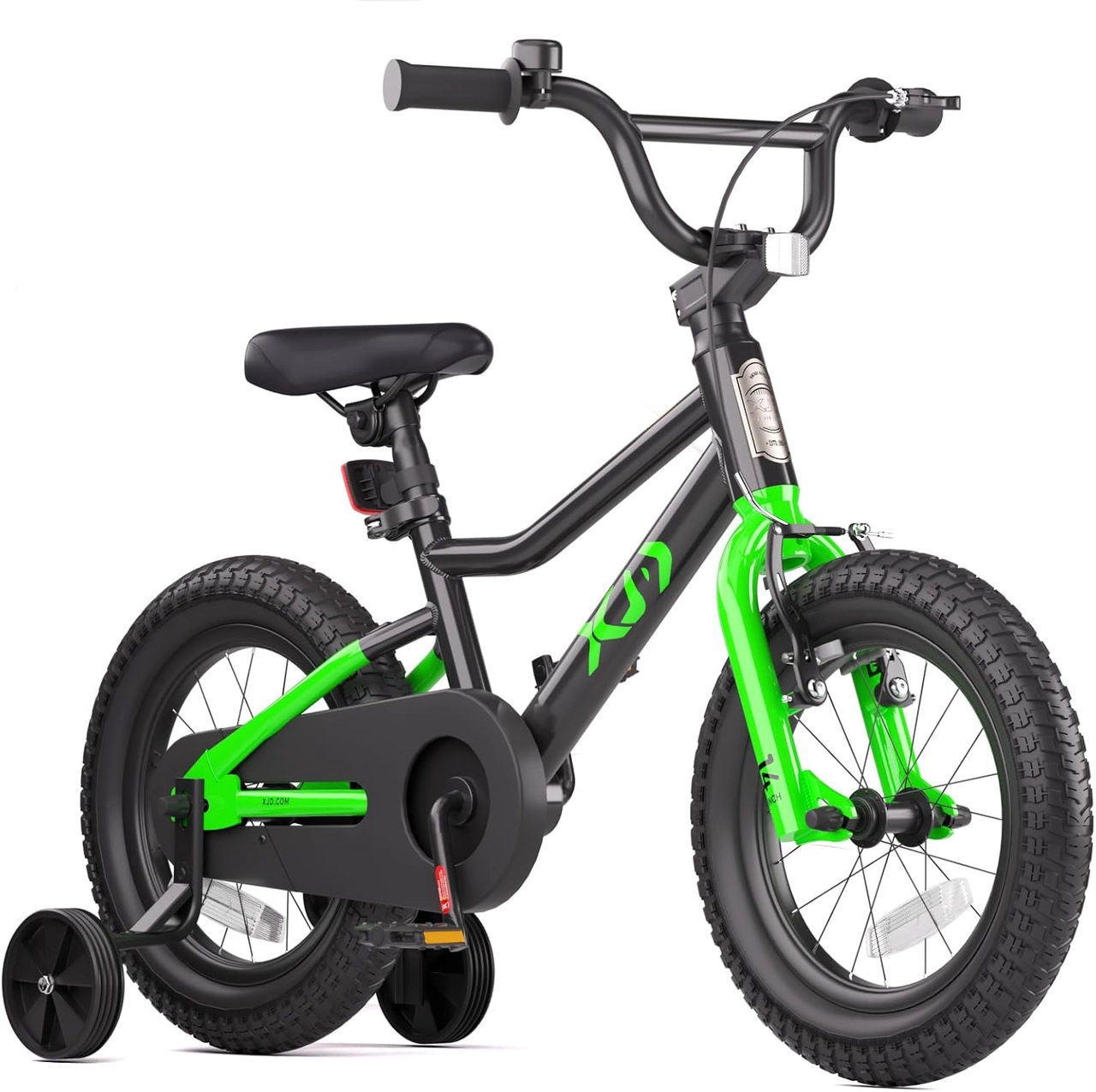 Black XJD Kids' BMX Bicycle with Training Wheels
This Kids' BMX Bikes option has 12 Inch, 14 Inch and 16 Inch labels, allowing comparison across the overlapping XBikes height ranges applicable at age four; measured fit and control remain decisive.
Start with the SKU whose height range contains your child's measured height, then perform the same physical fit check on the exact bicycle. Do not infer weight, materials, braking system, load limits, assembly details or compatibility from either title or category; those facts were not supplied. Consult the exact product manual for setup and maintenance, or use a qualified bicycle mechanic.
Decide between overlapping sizes
When two sizes include the child's height, compare control rather than choosing the larger one by default. A useful side-by-side check is:
- Confirm that the child's measured height falls within the listed range.
- Compare the measured inseam with the exact bike's stand-over and saddle information.
- Have the child mount and stand over each candidate.
- Check comfortable handlebar reach and reliable access to the braking controls.
- Choose only the size on which starting, steering, stopping and putting a foot down remain controlled.
If neither candidate permits those actions comfortably, neither is the right fit, regardless of the age label. Recheck the measurements and try a different frame or eligible wheel size rather than accepting poor control.
Before the first ride
Use a properly fitting bicycle helmet. U.S. Consumer Product Safety Commission guidance says the helmet should sit level and its straps should be adjusted according to the manufacturer's instructions. A helmet cannot correct an oversized or poorly controlled bicycle, so complete the bike fit and helmet fit as separate checks.
For your 4-year-old, measure height and inseam today, shortlist 12, 14 or 16 Inch only where the height range applies, and buy only after the child demonstrates comfortable stand-over, reach, braking and control on the exact bike.
Bikes for your next adventure
-
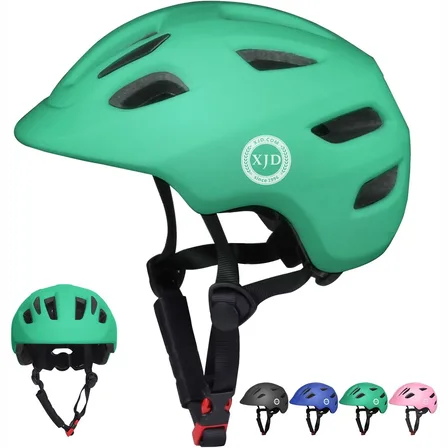
Green XJD Toddler Bike Helmet with Adjustable Fit, XS (46–51 cm)
The XJD toddler bike helmet in Green is built for the youngest riders — the size…$20.39
$23.99 -

Kids Bike Helmet by XJD for Boys & Girls – Black, Blue, Green, Pink, Purple
The XJD Kids Bike Helmet covers a wide 2-to-8-year age range thanks to two head-…$59.99
-

Kids Bike Helmet by XJD for Girls – Pink
The XJD Kids Bike Helmet in Pink is a lightweight multi-sport helmet for girls r…$59.99
$99