

What size of bike should a 4 year old have
Most 4-year-olds should start by trying a 14-inch or 16-inch bike, while a smaller rider may need 12 inches. Measure height and check the fit in person.
Start with measured height, not age
For a 4-year-old, the XBikes starting ranges overlap. A 12-inch bike corresponds to a rider height of 34–40 in (86–102 cm), a 14-inch bike to 37–45 in (94–114 cm), and a 16-inch bike to 40–48 in (102–122 cm). This makes 14 inches a common comparison point, but it does not make it the automatic answer.
| Wheel size | Starting age range | Rider height |
|---|---|---|
| 12 Inch | Ages 3–4 | 34–40 in / 86–102 cm |
| 14 Inch | Ages 3–6 | 37–45 in / 94–114 cm |
| 16 Inch | Ages 4–7 | 40–48 in / 102–122 cm |
If the child falls where two ranges overlap, compare both sizes. Current confidence, stand-over room, reach and brake control should decide the fit—not the temptation to leave extra growing room.
Measure the child before comparing bikes
Measure the child’s height while they stand upright without shoes, with their back near a wall and eyes facing forward. Record the result in inches or centimetres, then compare it with the table.
Also measure inseam from the floor to the crotch while the child stands naturally. The inseam does not select a wheel size by itself, but it helps you assess whether the child can stand over the actual bicycle comfortably. Bike geometry varies, so two bikes with the same wheel label may not fit identically.
Bring both measurements when shopping. They narrow the options, but the final decision should be made with the child on the bicycle.
Check the actual riding position
Have the child try each candidate bike. The American Academy of Pediatrics advises against buying an oversized bicycle merely so a child can grow into it. During the fit check, look for all of the following:
- The child can stand over the frame with comfortable clearance and without leaning the bike sharply.
- They can get on and off without struggling or becoming frightened.
- They can hold the handlebars with relaxed arms and steer without stretching.
- They can operate the fitted brakes confidently and reach the controls without shifting their hands into an unstable position.
- They can start, stop and keep the bicycle under control at a suitable practice area.
If the child appears cramped on one size but stretched or hesitant on the next, neither label alone resolves the choice. Compare the actual frame dimensions and adjustment guidance in each product manual, or ask a qualified bicycle mechanic to assess the fit.
How the supplied bike helps with the comparison
The XJD Pink Girls' Bike – Kids 12/14/16 Inch Training Wheel Bicycle is relevant because its supplied size labels include 12 Inch, 14 Inch and 16 Inch—the three starting points most likely to be compared for a 4-year-old. The wording in its title is a catalog label, not proof that it fits a particular child. Select among those labels only after using measured height and an individual fit check.
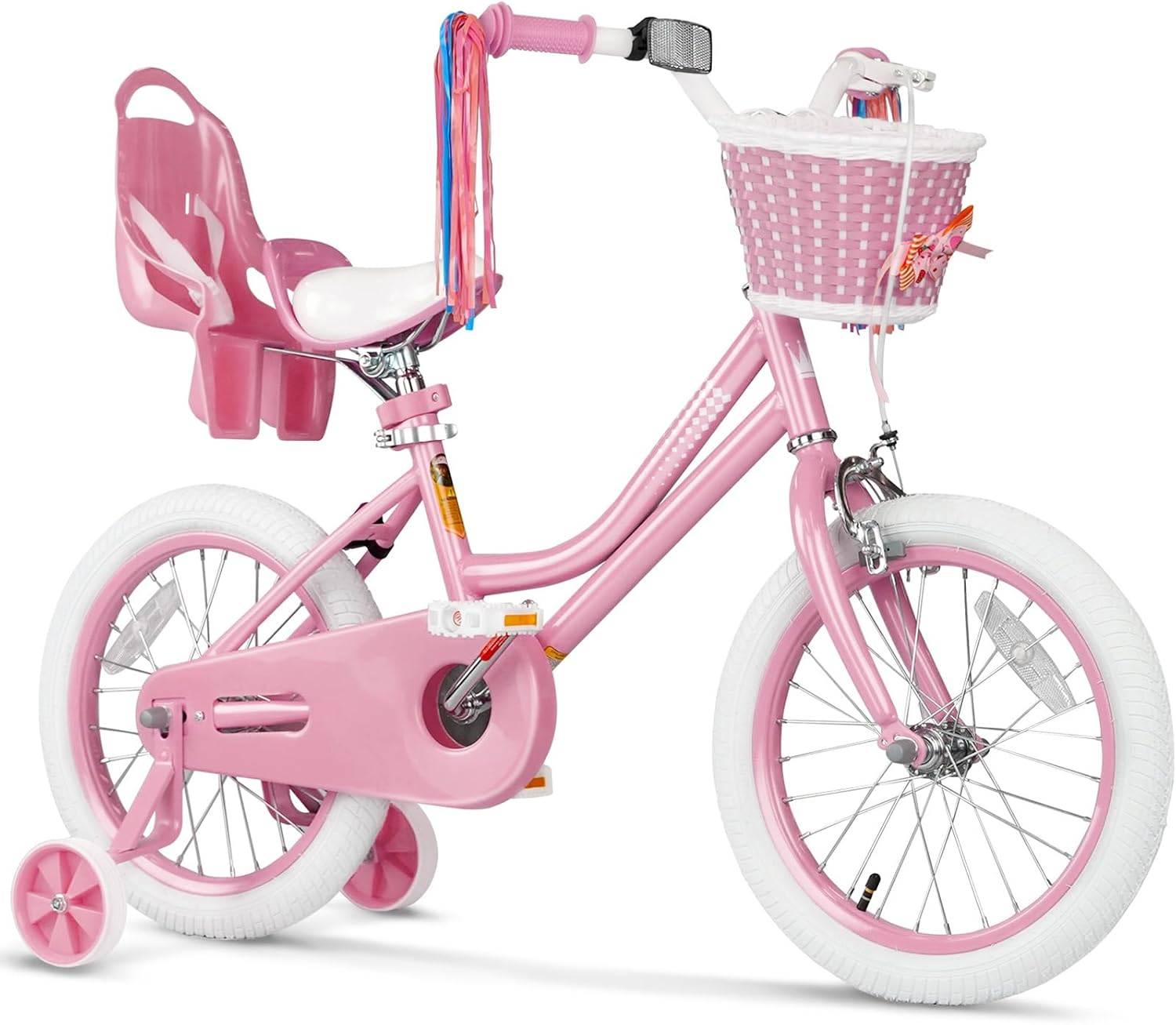
The 12 Inch option is relevant for a child measuring 34–40 in (86–102 cm). The 14 Inch option covers 37–45 in (94–114 cm), while the 16 Inch option starts at 40 in (102 cm) and extends to 48 in (122 cm). These overlaps allow a useful comparison, but one wheel size is not interchangeable with another.
Do not size up just for growth
A bike that is too large can make mounting, steering, stopping and reaching the brakes harder. If a 4-year-old is below the 16-inch starting height or cannot control a 16-inch bike comfortably, choose a smaller correctly fitting option rather than assuming they will soon adapt.
Conversely, do not choose 12 inches solely because the child is four. A taller child who feels cramped and cannot use the bike naturally should try 14- and 16-inch options within the relevant height ranges. Follow the exact product manual for assembly, adjustments, maintenance, load limits and compatibility. If anything is unclear, use a qualified bicycle mechanic rather than inventing an adjustment or procedure.
Make the final check before riding
Once the bicycle fits, add a properly fitting bicycle helmet. U.S. Consumer Product Safety Commission guidance says the helmet should sit level and its straps should be used according to the helmet manufacturer’s instructions.
The practical decision is simple: measure the 4-year-old’s height and inseam, shortlist 12, 14 or 16 inches from the supplied ranges, then have the child try the candidates. Choose the size they can stand over, reach, brake and control confidently today.
Bikes for your next adventure
-

Pink Girls' 12/14/16" Bike by XJD – Basket & Doll Seat
The XJD Pink Girls' Bike with Basket & Doll Seat is made for riders 71–122 cm ta…$75.99
$99.99 -

XJD Girls Bike for Kids Ages 3-8, 12/14/16 Inch with Training Wheels – Purple
The XJD Girls Bike in Purple is a training-wheel bicycle for kids ages 3 to 8, f…$149
$169 -
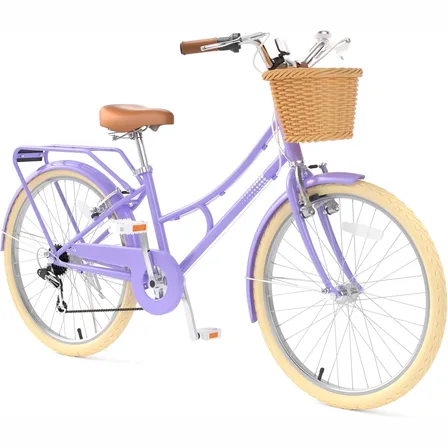
24-Inch Purple XJD Beach Cruiser Bike with U-Brake
The XJD 24-Inch Purple Beach Cruiser is built for girls and young women roughly …$159.99