

What bike is best for a 2 year old
For a 2-year-old, the best bike is the smallest model the child can comfortably stand over, reach, steer and stop. In the XBikes chart, 12-inch bikes start at 34–40 in (86–102 cm) and ages 3–4, so many 2-year-olds will not yet fit one.
Measure before choosing a wheel size
Age alone cannot determine fit. Measure the child’s standing height and inseam while they wear the shoes they will use for riding. Compare their measured height with the XBikes starting points, then have them try the actual bicycle.
| Wheel size | XBikes starting age | Rider height | Relevance at age 2 |
|---|---|---|---|
| 12 Inch | Ages 3–4 | 34–40 in / 86–102 cm | The first size to assess, but only if the child’s measurements and hands-on fit support it |
| 14 Inch | Ages 3–6 | 37–45 in / 94–114 cm | Usually a later option; do not choose it merely to allow growth |
| 16 Inch | Ages 4–7 | 40–48 in / 102–122 cm | Outside the usual starting range for a 2-year-old |
If the child is below 34 in (86 cm), none of these wheel sizes matches the supplied XBikes height starting points. Even within the 12-inch range, height is only the first screen—not proof of fit.
Use a hands-on fit check
Have the child try the bicycle rather than ordering by an age label. The right candidate should let the child get on and off without struggling and stand over the bicycle with clearance. Their seated position should not force an uncomfortable reach toward the handlebar.
Watch what happens when the child turns the handlebar and uses the brakes. They need to reach the controls, operate them with their hands and remain in control while looking ahead. Current confidence matters too: a bicycle that technically matches the height chart can still be too demanding.
- Stand-over: The child can straddle the bike without the frame interfering.
- Reach: Steering does not require stretching or leaning excessively.
- Brake control: The child can reach and operate the fitted braking controls.
- Confidence: The child remains calm and responsive while mounting, steering and stopping.
Do not size up for growth
A 14-inch or 16-inch bike is not a better purchase simply because it may last longer. An oversized bicycle can make mounting, steering and braking harder now. Follow the fit evidence in front of you: measured height, inseam, reach, brake operation and the child’s ability to control the bicycle.
Training wheels may provide lateral support, but they do not correct excessive frame height, a long reach or inaccessible controls. If the child cannot pass the fit check on a 12-inch model, wait or choose a different correctly fitted riding option rather than moving up a size.
How the supplied XBikes options compare
The two catalog choices below are relevant because both are training-wheel bikes with supplied 12-inch, 14-inch and 16-inch SKU labels. For this question, their 12-inch versions are the only ones that align with the earliest XBikes starting point; the larger labels do not make them suitable for a smaller child.
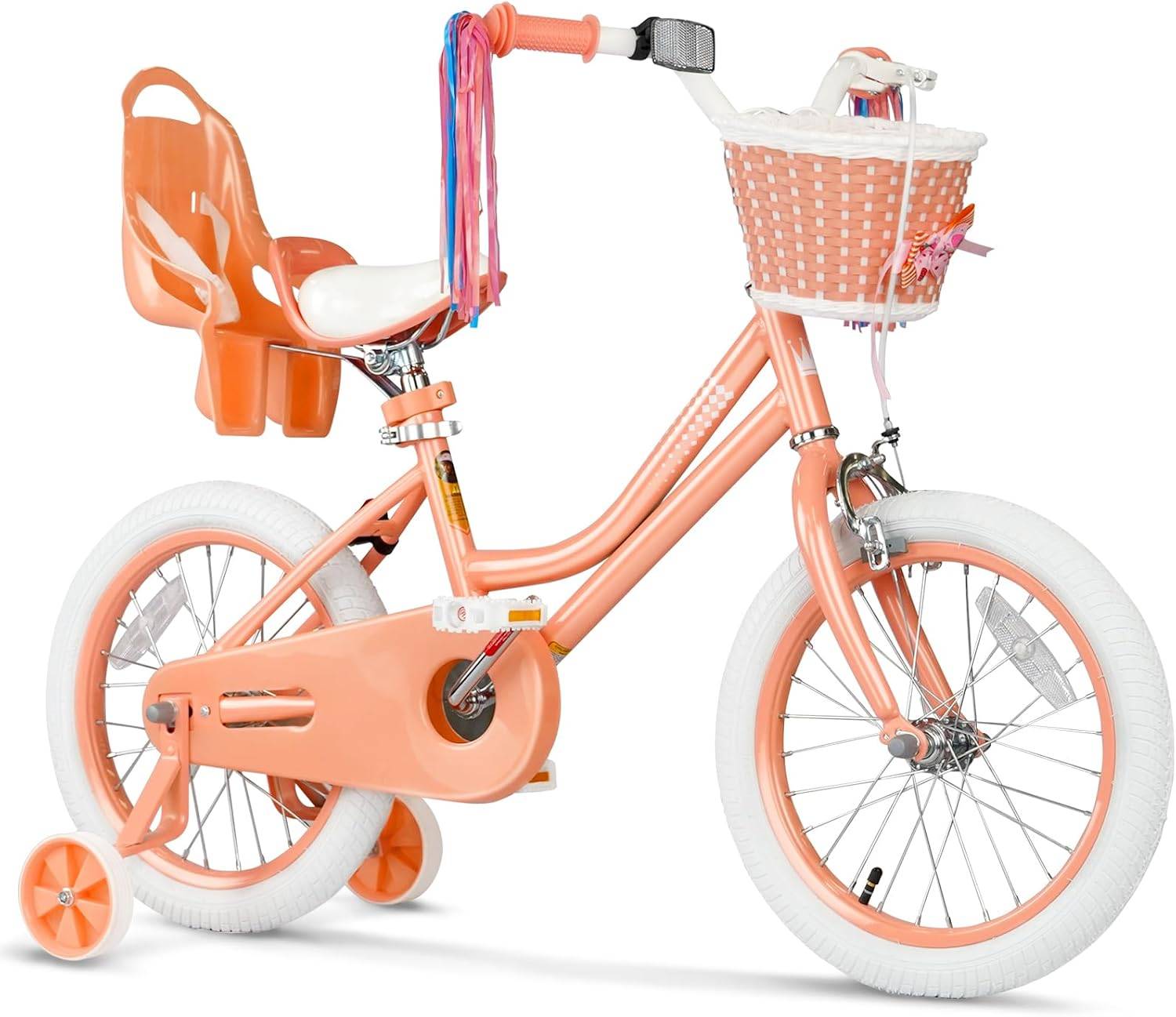 Girls 12/14/16 Inch Kids Bike by XJD with Training Wheels – Peach
Relevant only through its 12-inch option when the child fits the 34–40 in (86–102 cm) starting range and passes an individual stand-over, reach, brake-control and confidence check.
 XJD Light Purple Girls Bike with Basket, Training Wheels, 12/14/16/20 Inch
This training-wheel bike has supplied 12-, 14- and 16-inch SKU labels. For a 2-year-old, assess only the 12-inch option, and only after measurements and a hands-on fit check.
Girls 12/14/16 Inch Kids Bike by XJD with Training Wheels – Peach is listed in the Training Wheel Bikes category and is supplied in 12 Inch, 14 Inch and 16 Inch labels. Assess only the 12-inch option for a 2-year-old who measures within 34–40 in (86–102 cm), then confirm the complete fit in person.
XJD Light Purple Girls Bike with Basket, Training Wheels, 12/14/16/20 Inch is also listed as a Training Wheel Bike. Although its exact catalog title mentions several sizes, the supplied available SKU labels here are 12 Inch, 14 Inch and 16 Inch. Again, only the 12-inch version is a plausible starting comparison for this age, subject to the same measurements and control checks.
Between these products, the supplied facts establish differences in title and color wording, and one title mentions a basket. They do not establish differences in weight, materials, brakes, dimensions, performance or safety. Those unknowns cannot support declaring either product better.
Check setup and riding protection
Before riding, follow the exact product manual for assembly, adjustments, maintenance, load limits, compatibility and any torque requirements. If the instructions are missing, unclear or the bicycle cannot be set up correctly, use a qualified bicycle mechanic rather than improvising a procedure.
A bicycle helmet must fit properly, sit level and have its straps adjusted according to the helmet manufacturer’s instructions. Choose a supervised riding area away from traffic and obstacles while the child learns how the bicycle responds.
The decision for your 2-year-old
Measure first. If the child is 34–40 in (86–102 cm), try a 12-inch bike and buy only if stand-over clearance, reach, braking and control all work now. If any check fails—or the child is below the chart’s starting height—neither supplied bike is currently the right fit, regardless of training wheels or room to grow.
Bikes for your next adventure
-

Flower Pink XJD Girls Bike with Doll Seat & Basket
The XJD Flower Pink girls' bike is made for riders 71–122 cm tall (roughly ages …$69.99
-

XJD Girls Bike for Kids Ages 3-8, 12/14/16 Inch with Training Wheels – Purple
The XJD Girls Bike in Purple is a training-wheel bicycle for kids ages 3 to 8, f…$149
$169 -

Pink Girls' 12/14/16" Bike by XJD – Basket & Doll Seat
The XJD Pink Girls' Bike with Basket & Doll Seat is made for riders 71–122 cm ta…$75.99
$99.99