

What bike should i buy for a 2 year old
For a 2-year-old, buy only a bicycle that fits the child now—not one sized for growth. Measure height and inseam, then confirm stand-over, reach and control in person.
Start with the child, not the age label
Age alone cannot determine the right bike. Measure your child’s height without shoes and inseam from the floor to the crotch. Use those measurements to identify a possible wheel size, then have the child try the actual bicycle.
XBikes’ smallest listed starting point is a 12-inch bike, associated with ages 3–4 and a rider height of 34–40 inches (86–102 cm). Because your child is two, do not assume that even a 12-inch model will fit. If the child is shorter than 34 inches (86 cm), none of the supplied wheel-size ranges provides a numerical match.
Use this wheel-size starting point
| Wheel size | XBikes age starting point | Rider height | Relevance to a 2-year-old |
|---|---|---|---|
| 12 Inch | Ages 3–4 | 34–40 in / 86–102 cm | The only supplied size worth considering, and only when measured height and an individual fit check support it. |
| 14 Inch | Ages 3–6 | 37–45 in / 94–114 cm | Usually a later starting point; do not choose it merely to allow room for growth. |
| 16 Inch | Ages 4–7 | 40–48 in / 102–122 cm | Not the appropriate starting point for this age unless an unusual individual fit is conclusively demonstrated. |
The table narrows the search; it does not establish fit. Measured height, inseam, reach, brake control and current confidence take priority over every age range.
Check the actual fit before buying
Have the child try the exact bike. When standing over it, the child should not be pressed against the frame. While seated and holding the handlebar, the child should reach naturally without stretching, twisting or leaning excessively.
Also check whether the child can steer through both directions, get on and off with control, and operate the bicycle’s brakes. Small hands must be able to reach and use the controls effectively. If the child cannot manage these tasks calmly, the bike is too large or otherwise unsuitable, regardless of the wheel label.
Do not solve a failed fit by planning for the child to “grow into” the bicycle. An oversized bike makes starting, stopping and steering harder at the moment those skills are still developing.
Decide whether training wheels suit the next step
The supplied products are training-wheel bikes. Training wheels may be relevant when a child fits the bicycle and is ready to practise pedalling and steering with lateral support. They do not correct excessive frame size, an unreachable handlebar, inaccessible brakes or a lack of basic control.
If your two-year-old does not fit the 12-inch range or cannot control a pedal bike during a supervised trial, wait or consider a smaller, correctly fitted learning option outside these supplied products. Choose according to present ability, not an expected milestone.
How the two catalog options compare
The XJD Girls Bike for Kids Ages 3-8, 12/14/16 Inch with Training Wheels – Purple and Girls 12/14/16 Inch Kids Bike by XJD with Training Wheels – Peach are relevant because both are training-wheel bicycles offered with a 12-inch option, the smallest supplied XBikes starting point. Their exact titles and color descriptions differ, but the provided facts do not establish a fit or functional advantage for either one.
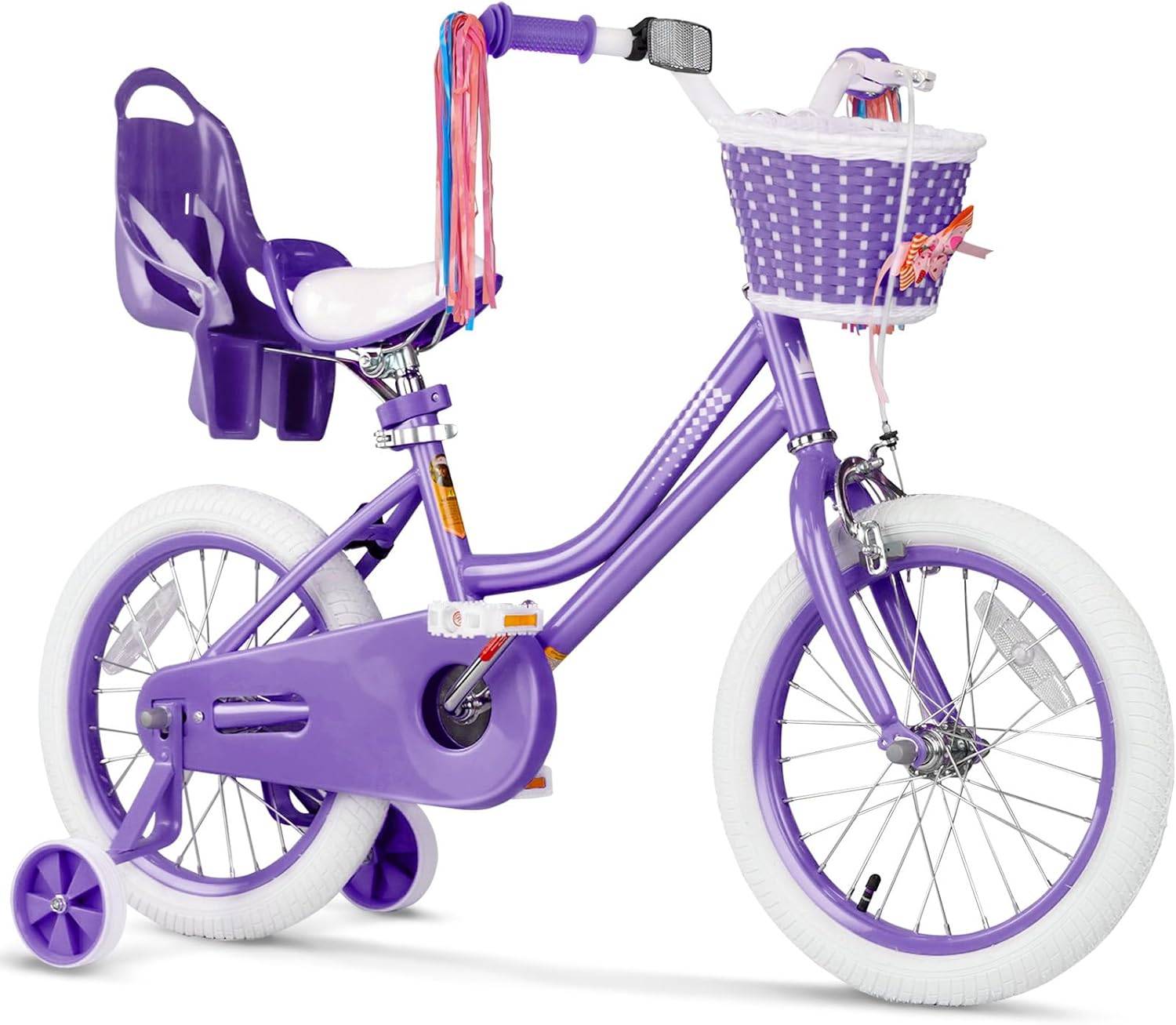 XJD Girls Bike for Kids Ages 3-8, 12/14/16 Inch with Training Wheels – Purple
This purple training-wheel bike is relevant only in its 12-inch version if the child’s measured height and hands-on fit check support it; the age wording in its title is not fit evidence.
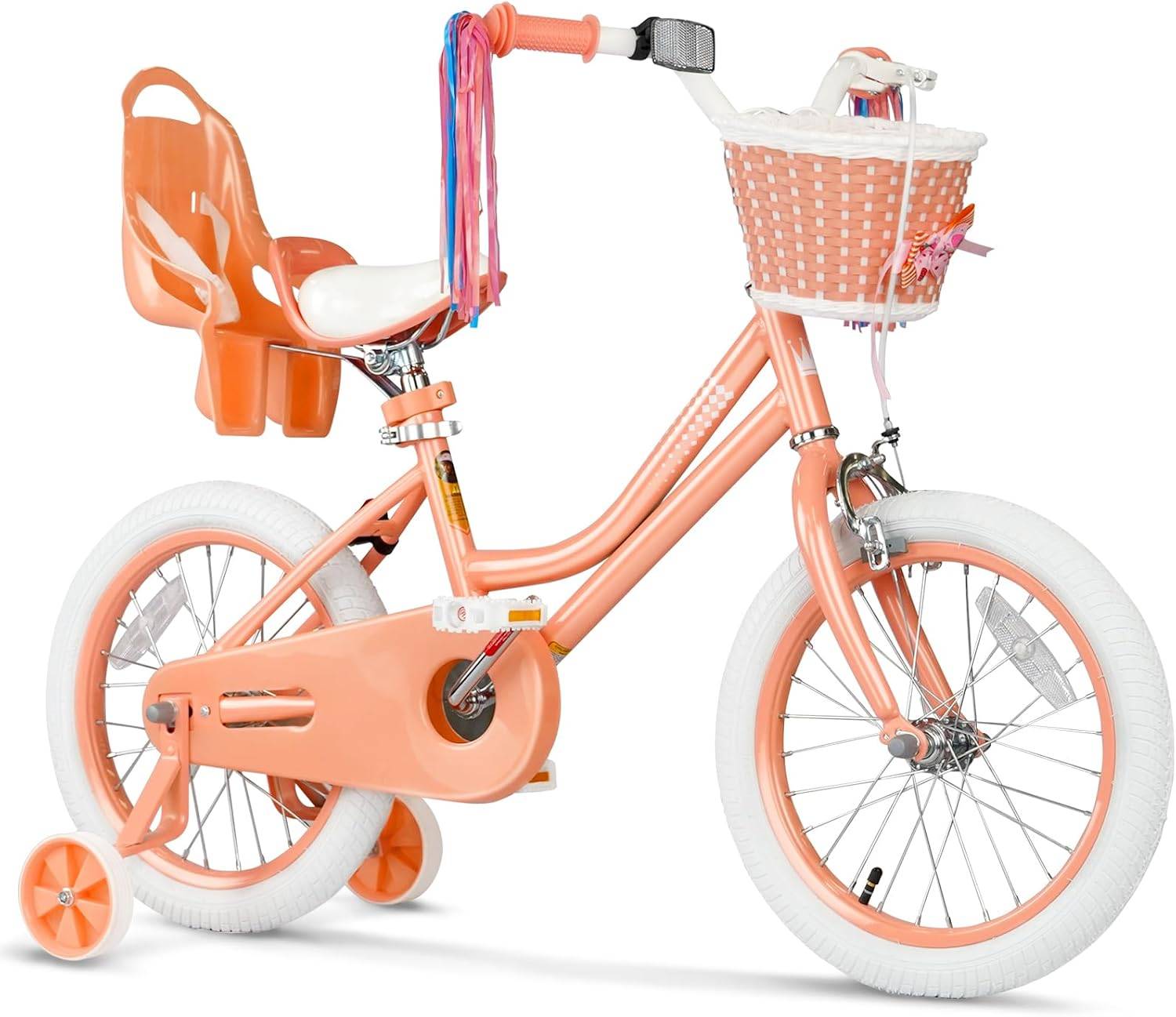 Girls 12/14/16 Inch Kids Bike by XJD with Training Wheels – Peach
This peach training-wheel bike includes a 12-inch option, the smallest supplied XBikes starting point. Consider it only after confirming height, inseam, reach, brake control and confidence on the actual bicycle.
For this decision, compare only the 12-inch versions after measuring the child. The 14-inch and 16-inch versions correspond to taller and older starting points in the supplied standard. Treat “Ages 3-8” in the first product’s title strictly as a catalog label, not evidence that any version fits a particular child.
No supplied facts distinguish the products by price, weight, materials, brakes, assembly, load limit, warranty or certification. Check the exact product manual for those details. Follow its assembly and maintenance instructions, or ask a qualified bicycle mechanic to inspect the bike.
What to do next
- Measure the child’s barefoot height and inseam.
- Consider a 12-inch bike only if height falls within 34–40 inches (86–102 cm).
- Arrange an individual trial and check stand-over, handlebar reach, steering, mounting, stopping, brake reach and confidence.
- Reject any bike the child cannot control now, even if it is intended to last longer.
- Use a properly fitting bicycle helmet that sits level, with straps adjusted according to the helmet manufacturer’s instructions.
For your 2-year-old, choose a 12-inch training-wheel model only after both the measurement and hands-on checks pass; otherwise, wait or select a smaller learning option that fits today.
Bikes for your next adventure
-

XJD Girls BMX Bike 12/14/16 Inch with Training Wheels – Pink Blue
The XJD Girls BMX Bike in Pink/Blue is built as a first pedal bike for kids roug…$99.99
$119.99 -

Blue XJD Kids Bike Helmet for Boys & Girls
The Blue XJD Kids Bike Helmet is a lightweight, adjustable multi-sport helmet fo…$59.99
$99 -

Kids Bike Helmet by XJD for Boys & Girls – Black, Blue, Green, Pink, Purple
The XJD Kids Bike Helmet covers a wide 2-to-8-year age range thanks to two head-…$59.99