

What size bike does a 2 year old need
A 2-year-old does not have an automatic bicycle size. XBikes’ smallest starting point is a 12-inch bike for riders 34–40 in (86–102 cm), normally ages 3–4. Measure your child and confirm the actual fit; if they fall outside that range or cannot control the bike, none of the supplied models is yet an appropriate choice.
Measure before choosing a wheel size
Start with current measurements, not clothing size, a birthday, or expected growth. Measure the child without shoes while they stand straight against a wall. Record their full height from the floor to the top of the head.
Next, measure the inseam from the floor to the crotch. The catalog does not supply saddle-height or stand-over dimensions, so the inseam cannot select a model by itself. Use it when checking the actual bicycle: the child needs suitable clearance when standing over it and must be able to get on and off without struggling.
Also observe reach. Seated in a normal riding position, the child should reach the handlebar without stretching or becoming unstable. If the bicycle has hand-operated brakes, confirm that the child can comfortably reach and operate them while maintaining control.
Compare the measurement with the XBikes starting point
| Wheel size | Age starting point | Rider-height starting point | Meaning for a 2-year-old |
|---|---|---|---|
| 12 Inch | 3–4 | 34–40 in / 86–102 cm | Consider only if the measured height fits and an individual test confirms stand-over, reach, braking and control. |
| 14 Inch | 3–6 | 37–45 in / 94–114 cm | Do not move up merely because the child will grow. |
| 16 Inch | 4–7 | 40–48 in / 102–122 cm | Outside the normal age starting point and unlikely to be the first comparison for this question. |
Age is only a starting point. A tall 2-year-old is not automatically ready for a 12-inch bicycle, and fitting the height band does not override poor reach, limited brake control or low confidence. Conversely, do not select 14 or 16 inches simply to extend the period before the next purchase.
Perform an individual fit check
Have the child try the exact bicycle with close adult supervision. This follows the verified HealthyChildren guidance to test the bike, avoid buying oversized for growth, and check stand-over, control and brake reach.
- Stand-over: Ask the child to straddle the bicycle with both feet supported. They should not be forced against the frame or tipped onto their toes.
- Mounting and stopping: Confirm that they can get into position and stop without needing an adult to hold the bicycle upright.
- Reach: Check that the handlebar and any brake controls are comfortably accessible without an exaggerated lean.
- Control: In a clear, protected practice area, look for calm steering and the ability to respond to simple stop instructions.
- Confidence: Hesitation, freezing, or repeated loss of control means the nominal size is not enough to establish readiness.
If any check fails, do not compensate by assuming the child will soon grow into the bicycle. Reassess later or ask a qualified bicycle mechanic to help evaluate fit. Follow the exact product manual for assembly, adjustment, maintenance, compatibility, load limits and torque.
How the supplied 12-inch options relate
The three supplied training-wheel bicycles all offer a 12 Inch SKU, so they provide relevant catalog options only after the child meets the 12-inch height starting point and passes the individual fit check. Their larger SKU labels do not make those versions suitable for a 2-year-old.
 Light Pink XJD Girls' Bicycle with Basket & Training Wheels
Its 12 Inch SKU is relevant only when the child fits the 34–40 in height starting point and passes an individual fit check. It also has 14, 16 and 20 Inch SKUs.
 Blue XJD Girls Bike with Training Wheels – 12/14/16 Inch
This training-wheel bicycle offers 12, 14 and 16 Inch SKUs. Only the 12 Inch option overlaps XBikes’ smallest starting point, and measured fit and control remain decisive.
 XJD Boys 12/14/16" Training Wheel Bike – Blue
Available in 12, 14 and 16 Inch SKUs, this training-wheel bicycle is relevant through its 12 Inch option only if the child’s height, stand-over, reach and control are suitable.
Light Pink XJD Girls' Bicycle with Basket & Training Wheels is listed in 12, 14, 16 and 20 Inch sizes. For this question, compare only its 12 Inch version; the 14, 16 and 20 Inch labels correspond to progressively larger XBikes starting points.
Blue XJD Girls Bike with Training Wheels – 12/14/16 Inch offers 12, 14 and 16 Inch SKUs. Its 12 Inch option is the only supplied size that overlaps the smallest XBikes standard, but the product title and training wheels do not prove fit or readiness.
XJD Boys 12/14/16" Training Wheel Bike – Blue also comes in 12, 14 and 16 Inch SKUs. Treat those numbers as available wheel-size labels, then use the child’s measured height and an actual fit check rather than the wording of the title.
Helmet fit is a separate requirement
A suitable bicycle fit does not establish helmet fit. The U.S. Consumer Product Safety Commission advises using a properly fitting bicycle helmet that sits level, with its straps adjusted according to the helmet manufacturer’s instructions. Check the helmet each time the child rides.
Make the decision
Measure height and inseam now. If the child is 34–40 in (86–102 cm), try the exact 12-inch bicycle and accept it only if stand-over, reach, brake use, stopping and confidence are all satisfactory. If the child is shorter, cannot control it, or needs a larger bike merely to accommodate growth, do not choose any of these supplied options yet.
Bikes for your next adventure
-

Light Purple XJD Toddler Bike Helmet, Adjustable, Size XS (46–51 cm)
This Light Purple XJD toddler bike helmet is made for the smallest riders — the …$20.39
-

XJD Boys 12/14/16" Training Wheel Bike – Blue
The XJD Boys Bike in Blue is a training wheel bike for riders 71–122 cm tall—rou…$169
$199 -
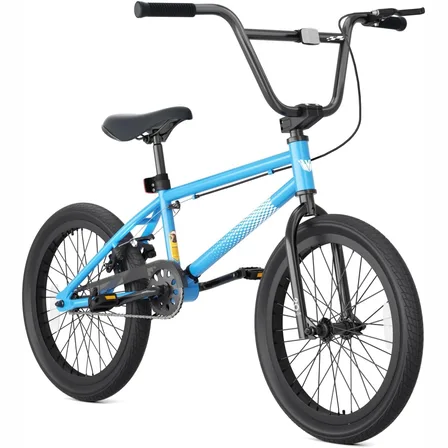
Blue XJD Freestyle BMX Bike, 20-Inch – No Pegs
The XJD 20-Inch Blue Freestyle BMX is an entry-level BMX bike for boys and girls…$189.99