

What size of bike for a 2 year old
For a 2-year-old, do not choose a bike by age alone. Measure the child first; a 12-inch bike is only a starting point if the child fits it.
The short answer: measure before choosing 12 inches
XBikes lists a 12-inch bike as a starting point for ages 3–4 and rider heights of 34–40 inches (86–102 cm). Because a 2-year-old falls below that age starting point, do not assume even the smallest supplied 12-inch option will fit. The deciding factors are the child’s measured height and inseam, followed by stand-over clearance, reach, brake control and current confidence.
If the child cannot stand over the bike comfortably, reach the controls without stretching, or keep the bike under control, it is too large now. Do not buy an oversized bicycle merely to allow room for growth. A child should try the exact bicycle whenever possible.
What to measure
- Height: Have the child stand barefoot against a wall, looking straight ahead. Measure from the floor to the top of the head.
- Inseam: With feet slightly apart, measure from the floor to the crotch. This helps you judge whether the child can stand over the frame comfortably.
- Reach: On the actual bicycle, check whether the child can hold the handlebar without leaning far forward, locking the arms or losing a stable seated position.
- Control reach: Confirm that the child can operate the fitted controls, including the brakes, easily and consistently. The exact setup must be checked on the assembled bicycle.
Do not turn the inseam measurement into a wheel-size formula: frame shape, saddle position and control layout can differ. Compare the measurements with the actual bicycle and follow its exact product manual for adjustment limits.
How to perform the fit check
First, place the child over the bicycle with both feet on the ground. There should be comfortable clearance rather than pressure from the frame. Next, seat the child and check that the handlebar and controls are within easy reach. Ask the child to demonstrate starting, steering, stopping and putting a foot down while a supervising adult keeps the bicycle secure.
A fit is not acceptable merely because the child’s height reaches a chart range. Hesitation, difficulty steering, inability to stop reliably or a stretched riding position are reasons to wait or compare a smaller, more manageable option. The American Academy of Pediatrics’ guidance supports trying the bicycle, checking stand-over and control reach, and avoiding an oversized purchase for growth.
Where the supplied XBikes options fit
The two catalog bicycles are training-wheel models offered in 12-, 14- and 16-inch labels. For this question, only their 12-inch variants are plausible comparison points: XBikes starts 14 inches at ages 3–6 and 37–45 inches (94–114 cm), while 16 inches starts at ages 4–7 and 40–48 inches (102–122 cm). Those larger labels should not be treated as equivalent choices for a 2-year-old.
XJD Pink Girls' Bike – Kids 12/14/16 Inch Training Wheel Bicycle offers 12-, 14- and 16-inch variants. Compare only the exact 12-inch variant if the child is at least 34 inches (86 cm) tall and passes the individual fit and control checks.
XJD Girls Bike for Kids Ages 3-8, 12/14/16 Inch with Training Wheels – Purple also offers 12-, 14- and 16-inch variants. “Ages 3-8” is part of its catalog title, not evidence that any variant fits a particular child. Again, the 12-inch version is relevant only after measurement and an actual fit check.
These particular catalog options help answer the title because their 12-inch variants show the smallest supplied wheel-size starting point, while their 14- and 16-inch variants make clear why moving up for growth would conflict with the stated ranges.
 XJD Pink Girls' Bike – Kids 12/14/16 Inch Training Wheel Bicycle
Its 12-inch variant is a possible comparison only for a child measuring 34–40 inches (86–102 cm) who passes a hands-on fit check. The 14- and 16-inch variants have higher starting ranges.
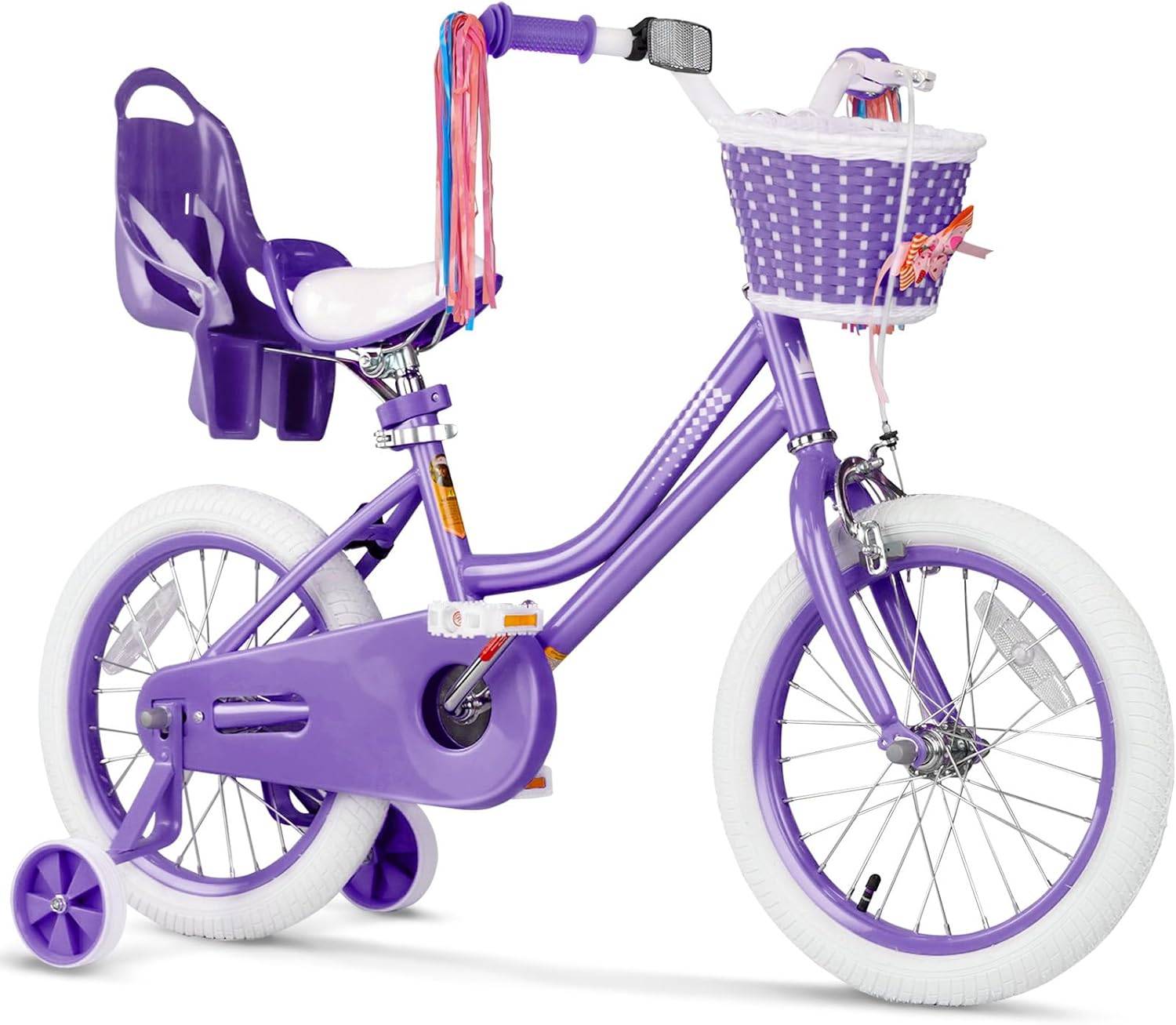 XJD Girls Bike for Kids Ages 3-8, 12/14/16 Inch with Training Wheels – Purple
This training-wheel bicycle has 12-, 14- and 16-inch variants. The age wording in its title is only a catalog label; assess the 12-inch variant using measured height, stand-over, reach, brake control and confidence.
Before the first ride
Use a bicycle helmet that fits properly, sits level and has straps adjusted according to the helmet manufacturer’s instructions, as advised by the U.S. Consumer Product Safety Commission. Supervise the child in an appropriate riding area and reassess control whenever the bicycle or saddle setup changes.
For assembly, maintenance, adjustment limits, compatibility, load limits and torque, follow the manual for the exact product or ask a qualified bicycle mechanic. Do not improvise an adjustment to make a too-large bicycle appear to fit.
Your decision for a 2-year-old
Measure height and inseam now. Consider a supplied 12-inch variant only if the child is 34–40 inches (86–102 cm), can stand over it comfortably, reaches the handlebar and brakes easily, and demonstrates confident control. If any check fails—or the child is below 34 inches—do not move up to 14 or 16 inches; wait or look for a genuinely smaller option that can be individually fitted.
Bikes for your next adventure
-

XJD Girls Bike for Kids Ages 3-8, 12/14/16 Inch with Training Wheels – Purple
The XJD Girls Bike in Purple is a training-wheel bicycle for kids ages 3 to 8, f…$149
$169 -

Pink Girls' 12/14/16" Bike by XJD – Basket & Doll Seat
The XJD Pink Girls' Bike with Basket & Doll Seat is made for riders 71–122 cm ta…$75.99
$99.99 -

Black XJD Toddler Bike Helmet, Adjustable – Kids' Protective Helmet
The XJD Toddler Bike Helmet in black is an adjustable protective helmet for kids…$20.39