

Does toddler need helmet in bike trailer in minnesota
Minnesota does not currently require a toddler to wear a helmet in an ordinary pedal-bike trailer under statewide law. Still, the prudent choice is a properly fitted bicycle helmet whenever the trailer and helmet can be used together exactly as their manufacturers direct.
What Minnesota requires
Minnesota’s statewide bicycle rules do not establish a general helmet mandate for a child riding in a trailer pulled by an ordinary bicycle. The rules do require a bicycle or trailer to carry no more people than it was designed and equipped to carry.
This answer concerns a conventional, nonmotorized bicycle and passenger trailer. Different laws apply to motorized bicycles and other powered vehicles. A city, park, trail operator, childcare provider or organized program may also impose its own helmet rule. Check the rules for the specific place and activity before leaving.
A legal minimum is not a complete safety decision. A trailer can tip, be struck or stop abruptly. A helmet provides protection for the head, so have the toddler wear one when the trailer maker permits it and a correct fit is possible.
Check the trailer before choosing a helmet
Read the exact trailer manual first. Confirm that the child satisfies its passenger requirements and that the restraint, seating position and helmet use follow its instructions. Do not invent a minimum age, load limit or setup method when those details are absent from the manual; ask the manufacturer or a qualified bicycle mechanic.
Seat the child in the stationary trailer while wearing the helmet and fastening the trailer restraint. Look for unwanted contact between the back of the helmet and the seat or trailer structure. The helmet must not be pushed forward over the child’s eyes, forced upward or held at an angle. The toddler should remain in the intended seated position with enough interior clearance.
If the helmet cannot sit level because the trailer seat pushes against it, do not ride and do not loosen the helmet to make it fit. Check the manuals or ask the manufacturers whether a different compatible helmet shape or approved seating arrangement is required.
Measure the toddler’s head
Use a flexible tape around the widest part of the head, passing above the eyebrows and around the fullest point at the back. Keep the tape level and comfortably snug. Record the result in centimeters and repeat the measurement to catch an angled tape or reading error.
Compare that number with the helmet’s stated size range. Do not select by the word toddler, by appearance or by age alone. The child’s measured circumference must fall within the offered range, and the helmet must also pass an individual fit check.
Verify helmet fit on the child
The U.S. Consumer Product Safety Commission advises that a bicycle helmet fit properly, sit level and use its straps according to the manufacturer’s instructions. With the helmet on the toddler, check that:
- it rests level rather than tipping backward or forward;
- it is snug without painful pressure;
- it does not shift substantially when the child moves their head;
- the straps and buckle follow the helmet maker’s directions; and
- the child’s vision is unobstructed.
Then repeat the check with the toddler restrained inside the trailer. A helmet that fits while standing can be displaced by the trailer seat. If either the helmet or trailer manual prohibits the combination, follow that instruction.
How the supplied XBikes options compare
The two catalog options help only when the measured head circumference fits one of their listed ranges. Their supplied details do not establish trailer compatibility, toddler age suitability or certification, so those points must be verified from the exact product and trailer manuals.
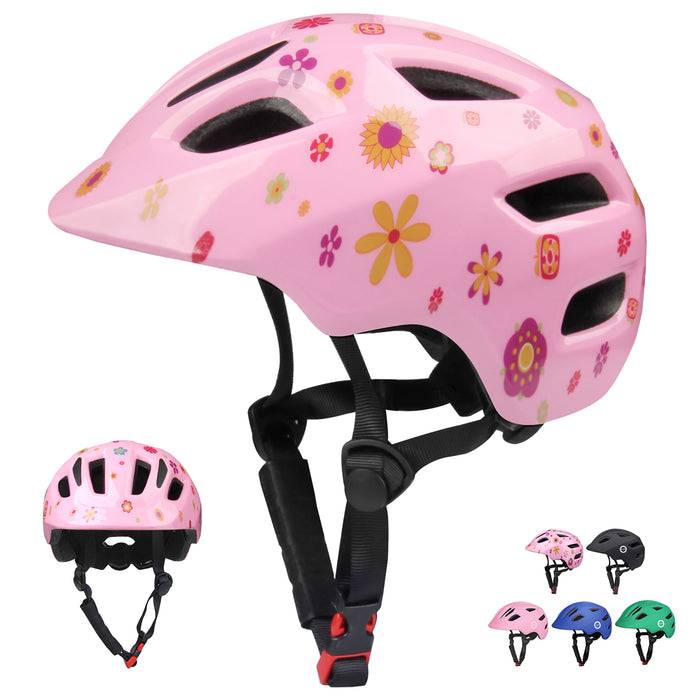 Girls Bike Helmet by XJD, Pink Flower Print
Listed in S for 46–51 cm and M for 52–56 cm. It is relevant only if the toddler’s measured head falls within a range and the helmet fits correctly without conflicting with the trailer seat.
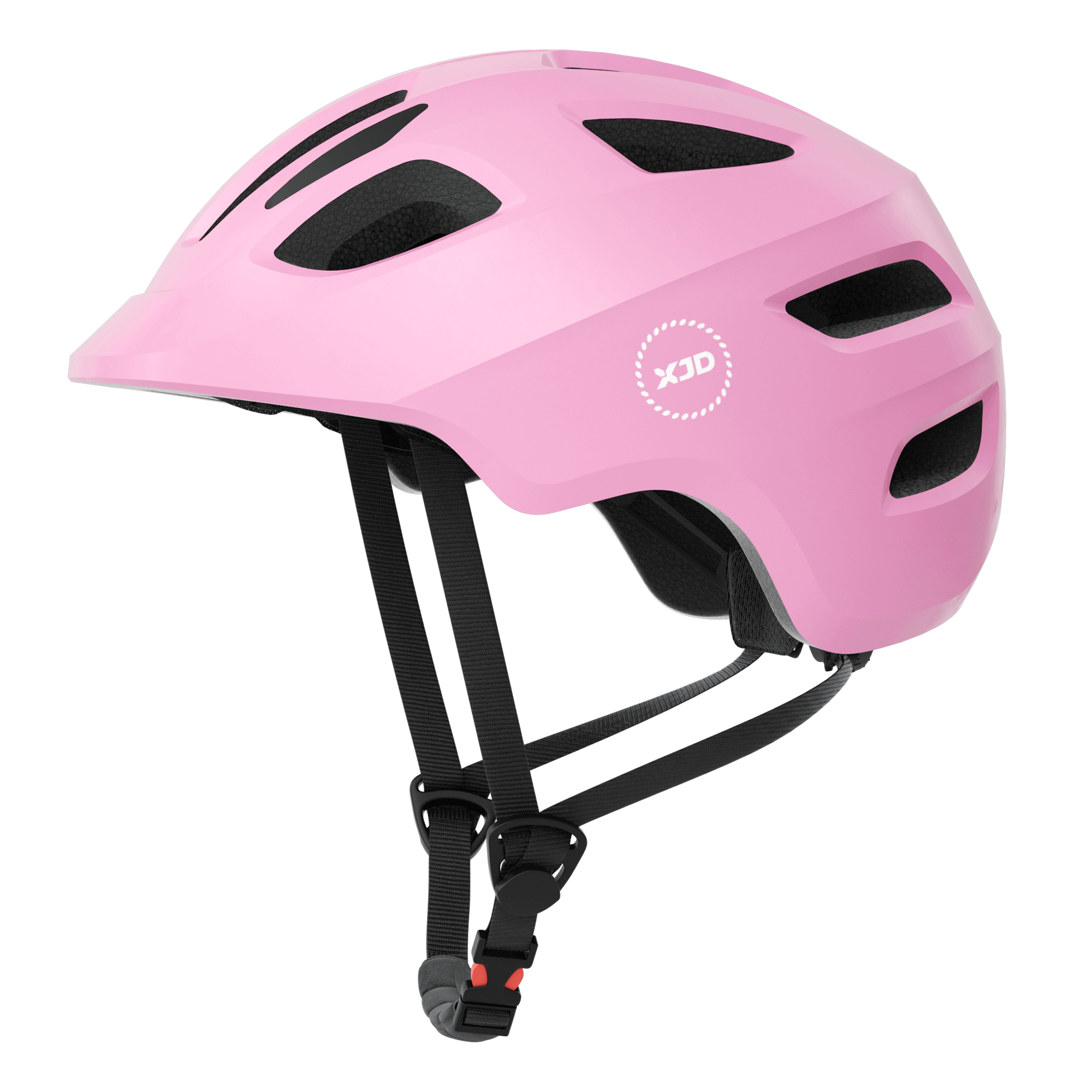 Kids Bike Helmet by XJD for Girls – Pink
Offers S at 46–51 cm and M at 52–56 cm across Black, Blue, Green, Pink and Purple labels. The supplied facts do not establish toddler-age suitability or compatibility with a particular bike trailer.
Girls Bike Helmet by XJD, Pink Flower Print is listed in S at 46–51 cm and M at 52–56 cm. Kids Bike Helmet by XJD for Girls – Pink offers those same S and M circumference ranges, with Black, Blue, Green, Pink and Purple labels. Based on the supplied facts, head-size coverage is the same; the second listing provides more listed color choices.
If the toddler measures below 46 cm, between 51 and 52 cm, or above 56 cm, neither supplied option matches the listed ranges. Do not treat a near measurement as a fit. Look for a helmet whose stated range includes the actual circumference, then verify it on the child.
Make the ride-or-wait decision
- Check whether the local trail, program or municipality has a helmet rule.
- Read the trailer manual for passenger and helmet instructions.
- Measure the toddler’s head twice in centimeters.
- Compare the measurement with the helmet’s exact size range.
- Fit the helmet level and snugly according to its manual.
- Repeat the fit check with the toddler secured in the stationary trailer.
Ride only when the child, restraint, trailer and properly fitted helmet work together without displacement or conflict. If the helmet cannot sit correctly in the trailer—or the child does not meet the trailer maker’s requirements—wait rather than riding without a helmet or improvising the setup.
Bikes for your next adventure
-

Kids Bike Helmet by XJD for Girls – Pink
The XJD Kids Bike Helmet in Pink is a lightweight multi-sport helmet for girls r…$59.99
$99 -

Blue XJD Kids Bike Helmet for Boys & Girls
The Blue XJD Kids Bike Helmet is a lightweight, adjustable multi-sport helmet fo…$59.99
$99 -
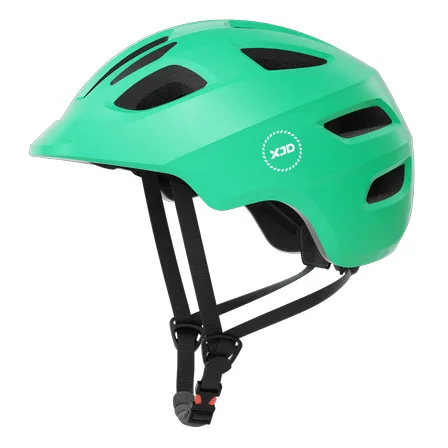
Green XJD Kids Bike Helmet for Boys & Girls
The Green XJD Kids Bike Helmet is a lightweight multi-sport helmet for toddlers …$59.99
$99