

How a toddler helmet shiuld look
A toddler helmet should look level, centered and snug, with no obvious gaps or wobble. Measure the child’s head first, compare that number with the helmet’s stated range, then adjust and fasten every strap exactly as the manufacturer instructs.
What a correct fit looks like
Viewed from the front, the helmet should sit straight rather than leaning to either side. From the side, it should be level—not tipped back so the front of the head is exposed and not pushed so far forward that it obstructs the child’s view.
The shell should remain centered during ordinary head movement. A helmet that shifts freely, rotates out of position or needs an unusual strap arrangement to stay put is not fitted correctly. It should feel evenly snug around the head without creating a painful pressure point.
Hair, hats and bulky accessories can change the fit. Measure and test the helmet as it will actually be worn. Do not place a thick hat underneath unless the helmet manufacturer specifically permits it.
Measure before comparing sizes
- Use a flexible measuring tape. Wrap it around the widest part of the child’s head, keeping the tape level rather than letting it slope upward or downward.
- Record the circumference. Do not select a size from age, appearance, clothing size or a product-name label.
- Compare the measurement with the exact SKU range. The child’s number must fall within the stated range; being close to a range is not the same as being inside it.
- Try the helmet on. A matching circumference range is only a screening step because head shapes differ.
- Repeat the check regularly. Growing children and changes in hair or headwear can alter how a previously adjusted helmet sits.
If the measurement falls between available ranges, do not guess, force the smaller helmet or buy the larger one solely for growth. Look for another helmet whose stated range includes the measurement and verify the individual fit.
How the XBikes option compares
The supplied XBikes catalog option, Girls' Bike Helmet from XJD – Purple, helps with the size comparison because its available SKU labels provide two explicit circumference ranges: S covers 18.11–20.08 inches (46–51 cm), while M covers 20.47–22.05 inches (52–56 cm). Those ranges—not the word “Girls’” or the color in the title—are the relevant starting points for fit.
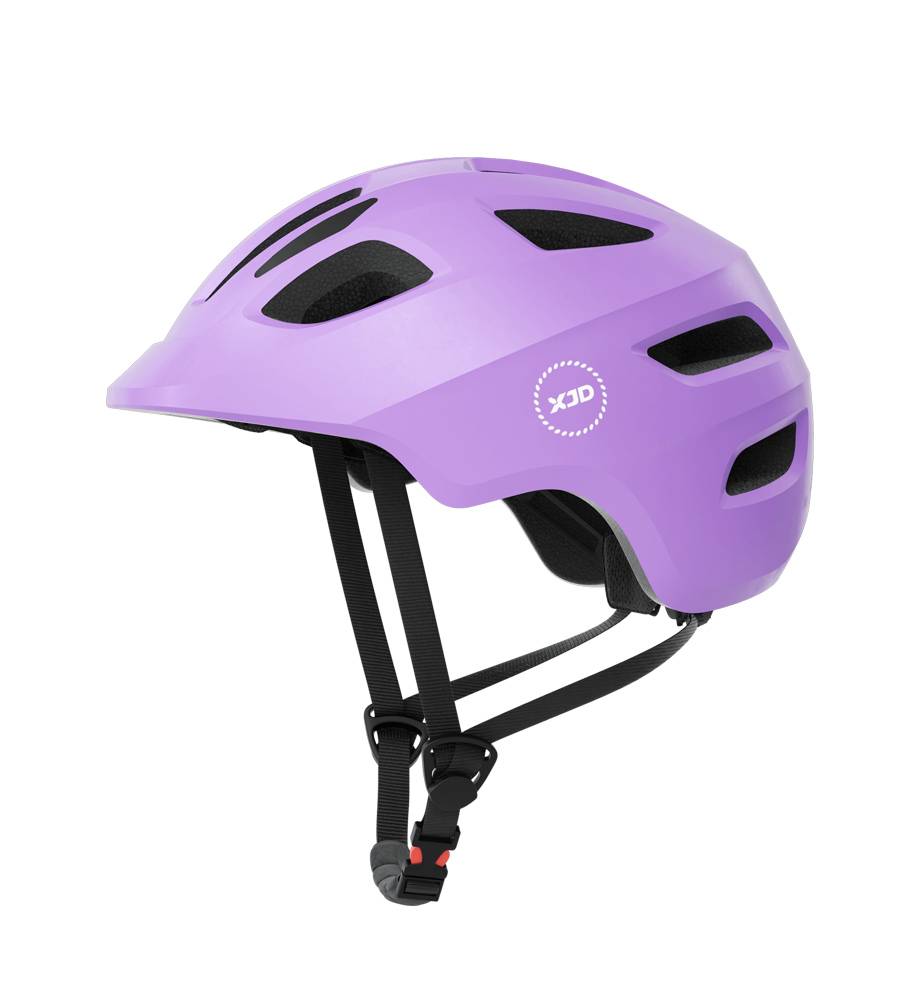
Both S and M labels are listed in Black, Blue, Green, Pink and Purple. Color does not resolve fit: first match the measured circumference to one of the stated ranges, and then have the child try that exact size. The catalog facts do not supply an age range, certification, weight, material or construction details, so none should be inferred from the name or appearance.
This product is relevant only if the child’s measured head circumference is within one of its listed ranges and the helmet can be adjusted into a level, stable and comfortable position. It is not relevant when the measurement is outside both ranges, when its shape produces pressure or gaps, or when it will not stay correctly positioned after adjustment.
Adjust the straps without improvising
Once the helmet is seated level, route, adjust and fasten its straps according to the exact product instructions. The straps should work together to retain the helmet’s correct position; they should not be twisted, routed in a homemade configuration or used to compensate for a shell that is plainly the wrong size or shape.
Ask the child whether anything pinches or hurts, but also inspect the result yourself. A toddler may accept a loose helmet because it feels less noticeable, or resist a properly snug one because it feels unfamiliar. Comfort matters, but the helmet must still remain correctly positioned and fastened.
Do not alter padding, straps or other components unless the manufacturer’s instructions explicitly authorize the change. For any adjustment method, replacement part, compatibility question or maintenance procedure not stated in the supplied catalog facts, consult the exact product manual or a qualified bicycle mechanic.
Run a short movement check
With the helmet fastened, have the child look up, down and to both sides. Watch the helmet rather than judging only by the child’s reaction. It should remain level and centered instead of sliding back, dropping over the eyes or leaning sideways.
Next, check the full circumference for conspicuous empty spaces and concentrated pressure. If repeated adjustments cannot produce an even, stable fit, try a different size or helmet shape. Do not treat tightening alone as proof that the underlying size is correct.
Make the final decision
- Proceed: the measured circumference is inside the stated range, the helmet sits level and centered, it remains stable through gentle movement, and every strap can be used according to the manual.
- Try another size or shape: the helmet rocks, tilts, obstructs vision, exposes the front by tipping back, creates painful pressure or cannot be retained without over-tightening.
- Do not rely on the catalog title: wording such as “Girls’” and a named color do not demonstrate toddler fit.
Before the next ride, measure the toddler’s head, choose only a range that contains that measurement, and accept the helmet only if the tried-on result is level, centered, stable and correctly strapped.
Bikes for your next adventure
-

Kids Bike Helmet by XJD for Boys & Girls – Black, Blue, Green, Pink, Purple
The XJD Kids Bike Helmet covers a wide 2-to-8-year age range thanks to two head-…$59.99
-
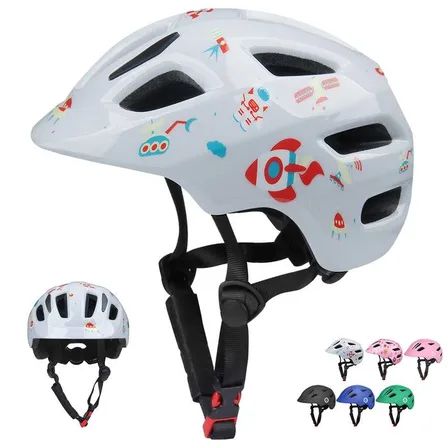
White Astronaut Bike Helmet for Kids by XJD – Toddler to Youth Sizes
4 reviews
The XJD White Astronaut kids' bike helmet is made for toddlers through younger e…$59.99
-
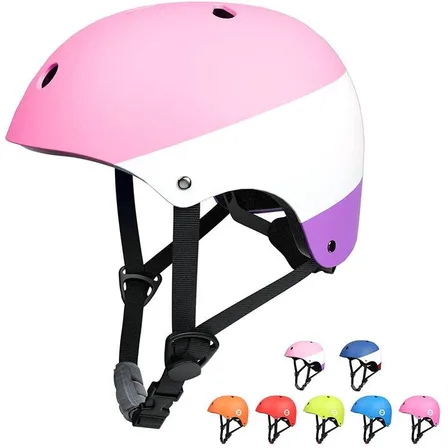
XJD Kids Bike Helmet for Boys & Girls, B White / Pink White
The XJD Kids Bike Helmet covers a wide age range — suggested for ages 2 through …$59.99