

How a toddler helmet should fit
A toddler helmet should sit level, low on the forehead and snug all around, without rocking or causing pressure. Measure the head first, then adjust and check the straps with the child wearing it.
Measure before choosing a size
Use a flexible measuring tape around the widest part of the child’s head. Pass it above the eyebrows and ears and around the fullest area at the back. Keep the tape level and comfortably close to the skin rather than pulling it tight.
Record the measurement in centimetres and repeat it to catch a tilted tape or reading error. Compare that number with the helmet’s stated size range. Head circumference—not the child’s age, clothing size or bicycle size—is the useful starting measurement.
If the measurement falls between ranges, or sits at a range boundary, try the relevant sizes if possible. A size label alone cannot show how the helmet’s internal shape will suit an individual head.
Check the helmet’s position
Place the helmet directly on the child’s head, with hair arranged as it will be during riding. It should sit level from front to back and low enough to protect the forehead. It should not tip backward, droop forward or lean to one side.
Before fastening the chin strap, use the helmet’s adjustment system according to its manufacturer’s instructions. Aim for even contact around the head. The shell should not slide freely when the child gently turns or shakes their head, but the fit should not pinch or create a painful pressure point.
Do not make an oversized helmet seem suitable by relying only on tighter straps. If its body still shifts, blocks vision or will not remain level, choose a different size or shape.
Set and test the straps
Fasten and arrange every strap exactly as the helmet manual directs. The side straps should lie flat, surround the ear without crossing it and hold the helmet in its level position. The chin strap should be close enough to stay secure while still allowing the child to open their mouth and move comfortably.
Check for twists, loose ends and contact that irritates the neck or ears. Then ask the child to look up, down and from side to side. Recheck that the helmet stays level, the forehead remains covered and vision is unobstructed. If adjustment cannot achieve all three, the helmet does not fit.
What to compare in the supplied options
XBikes lists two adjustable children’s helmets with the same supplied size choices: XS (46–51 cm) and S (52–56 cm). The Blue XJD Kids' Bike Helmet, Adjustable Fit – Sizes XS & S and the Pink Adjustable Kids Helmet by XJD – Toddler Bike Helmet, XS & S are therefore relevant when the child’s measured circumference falls within one of those listed ranges. Their color and title differ, but the supplied sizing information does not establish a fit difference.
These particular catalog options help answer the sizing decision because their centimetre ranges can be compared directly with the measurement you took. They are candidates for an individual try-on, not proof that either helmet will fit a particular toddler.
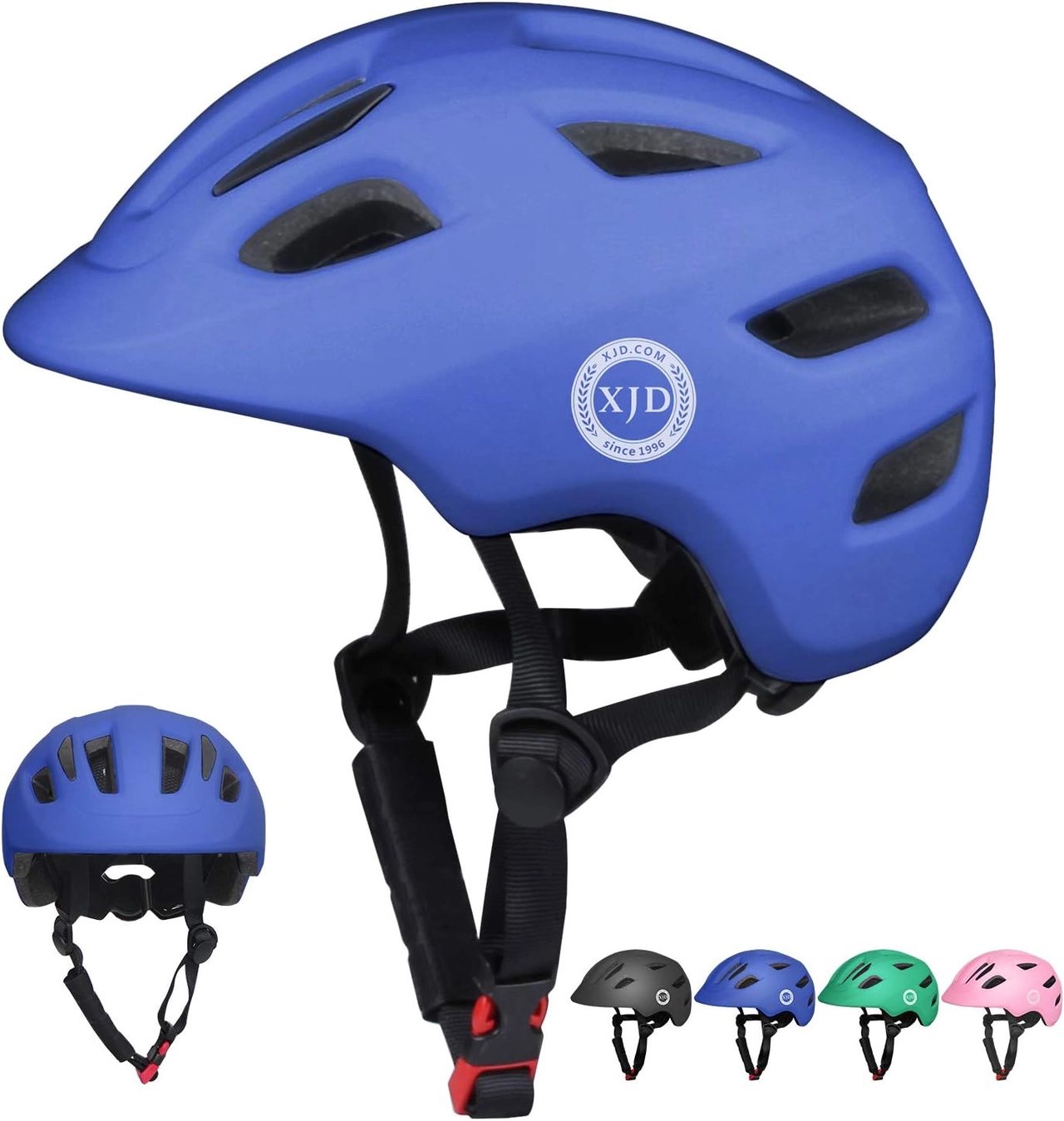 Blue XJD Kids' Bike Helmet, Adjustable Fit – Sizes XS & S
An adjustable catalog option in XS (46–51 cm) and S (52–56 cm); compare the child’s measured head circumference with these ranges, then confirm fit by trying it on.
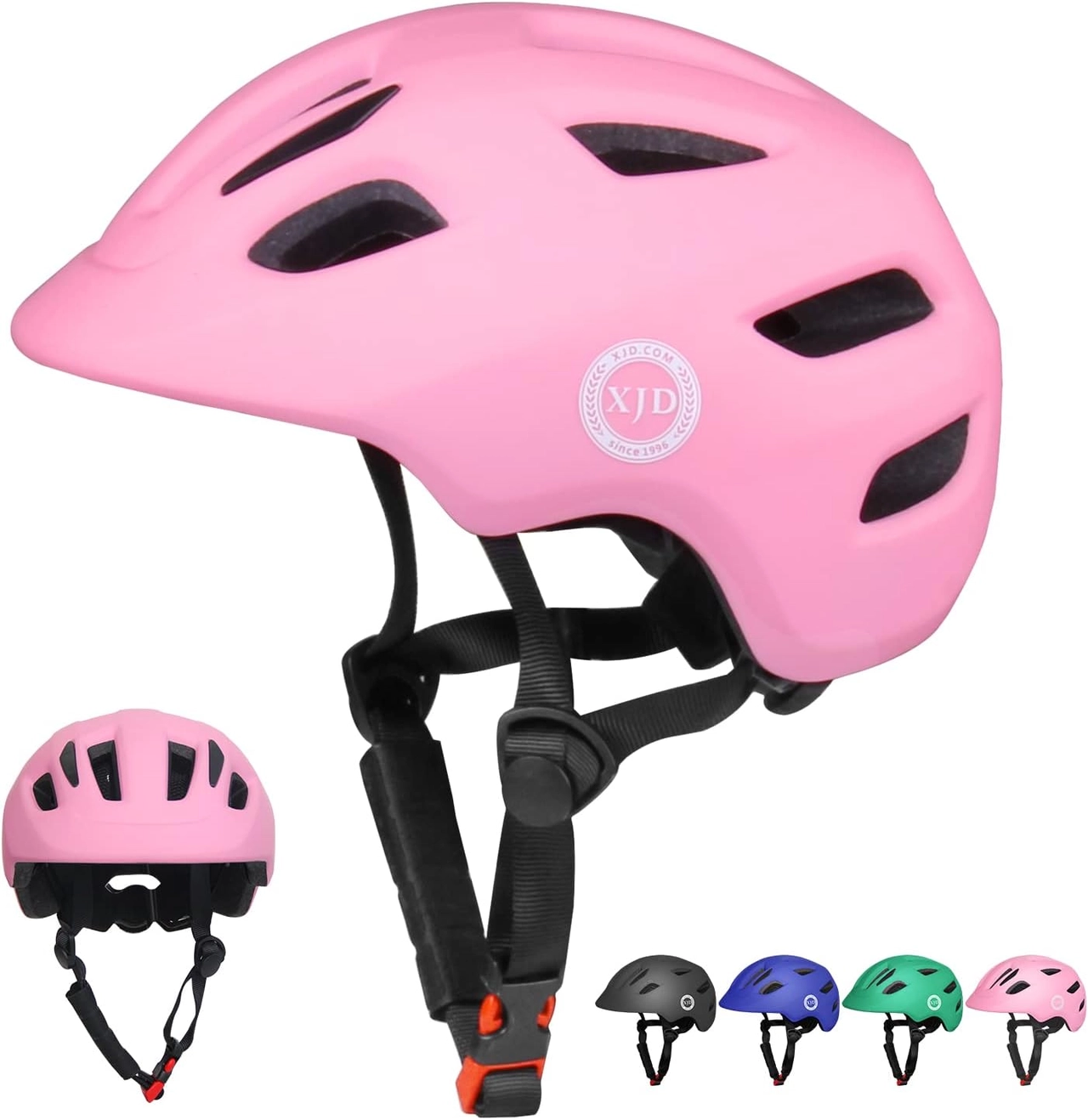 Pink Adjustable Kids Helmet by XJD – Toddler Bike Helmet, XS & S
This toddler-labeled catalog option is available in XS (46–51 cm) and S (52–56 cm). The title’s age wording is not fit evidence, so measure and perform an individual fit check.
The word “Toddler” in one exact product title is a catalog label, not fit evidence. If the child measures below 46 cm, above 56 cm or between the listed ranges, neither supplied size is confirmed as suitable; consult the exact product manual and consider another correctly ranged helmet.
Use a short fit-check routine
- Measure: Take the level head-circumference measurement twice.
- Compare: Match it to the manufacturer’s stated centimetre range rather than choosing by age.
- Position: Put the helmet level and low on the forehead.
- Adjust: Follow the helmet manufacturer’s instructions for its internal system and straps.
- Move: Have the child turn and nod their head while you watch for slipping, tipping or blocked vision.
- Listen: Ask about pinching, pain or rubbing; a secure fit should also be wearable without distress.
Recheck before every ride
A child’s growth, hairstyle, strap movement and what is worn under a helmet can alter the fit. Check position, snugness and strap arrangement each time. Avoid bulky items under the helmet unless the manufacturer’s instructions explicitly permit them.
Replace or stop using a helmet when directed by its manual, including after circumstances the manufacturer identifies as requiring replacement. For any maintenance, component or compatibility question not covered here, follow the exact product manual.
The decision is simple: measure the toddler’s head, choose only a range that contains that measurement, and keep the helmet only if a hands-on check shows that it remains level, forehead-covering, snug and comfortable with correctly arranged straps.
Bikes for your next adventure
-

Kids Bike Helmet by XJD for Boys & Girls – Black, Blue, Green, Pink, Purple
The XJD Kids Bike Helmet covers a wide 2-to-8-year age range thanks to two head-…$59.99
-
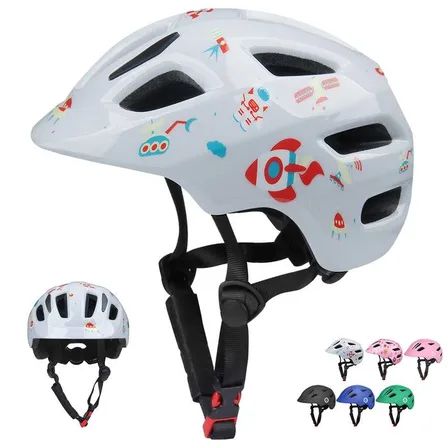
White Astronaut Bike Helmet for Kids by XJD – Toddler to Youth Sizes
4 reviews
The XJD White Astronaut kids' bike helmet is made for toddlers through younger e…$59.99
-
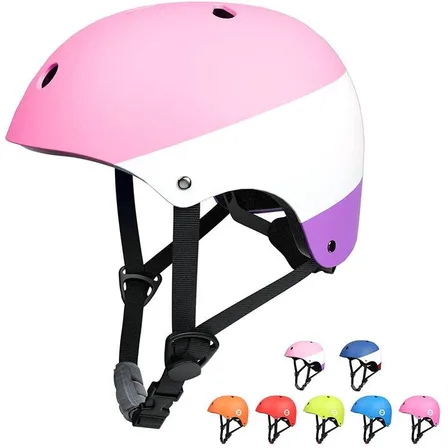
XJD Kids Bike Helmet for Boys & Girls, B White / Pink White
The XJD Kids Bike Helmet covers a wide age range — suggested for ages 2 through …$59.99