

How a toddler helmet should look
A toddler helmet should sit level, low on the forehead, and snug all around without painful pressure. It should stay in place when the child moves.
What the fit should look like
Viewed from the side, the helmet should be level rather than tipped back or pushed forward. It should cover the upper forehead while leaving the child’s eyes and vision unobstructed. The shell should look centered, with no obvious gap caused by thick hair, a ponytail, or a hat underneath.
Viewed from the front, it should not lean to either side. The straps should lie flat rather than twist, and they should be arranged according to the helmet manufacturer’s instructions. The buckle and adjustment system must be secure without pinching skin.
A properly adjusted helmet should move with the child’s head. If you can easily slide it around, expose much more forehead by pushing it backward, or pull it over the child’s eyes, the fit needs adjustment or a different size.
Measure before comparing sizes
- Use a flexible measuring tape around the widest part of the head, passing above the eyebrows and around the back.
- Keep the tape level and comfortably close to the skin; do not pull it tight enough to compress the head.
- Record the circumference in centimetres and repeat the measurement to catch positioning errors.
- Compare that number with the exact size information for the helmet being considered.
Do not select a larger helmet simply to leave growing room. A size label such as XS, S, or M is not consistent enough by itself to establish fit across products. Head circumference is the useful starting point, followed by an actual try-on and adjustment.
Check fit on the child
Place the helmet directly on the head and adjust it only as the product manual directs. Ask the child to look up, down, and from side to side. The helmet should remain level and stable throughout those movements.
Check for even contact around the head. A helmet can match a circumference range yet still be the wrong shape: concentrated pressure, a persistent gap, or discomfort after a short try-on are reasons to compare another size or model. Remove bulky hats and other items that interfere with the intended fit unless the manufacturer expressly permits them.
After fastening and adjusting the straps, confirm that they lie flat and hold the helmet in its level position. The child should be comfortable enough to keep the helmet on correctly. Recheck the fit before each ride because straps can loosen and a toddler’s head and hairstyle can change.
How the supplied helmet options compare
These catalog options are useful comparison points because they show why a letter alone cannot answer how a toddler helmet should look. One provides stated centimetre ranges, one offers letter sizes without supplied measurements, and one starts at a larger stated range. The child’s measured head decides whether any is relevant.
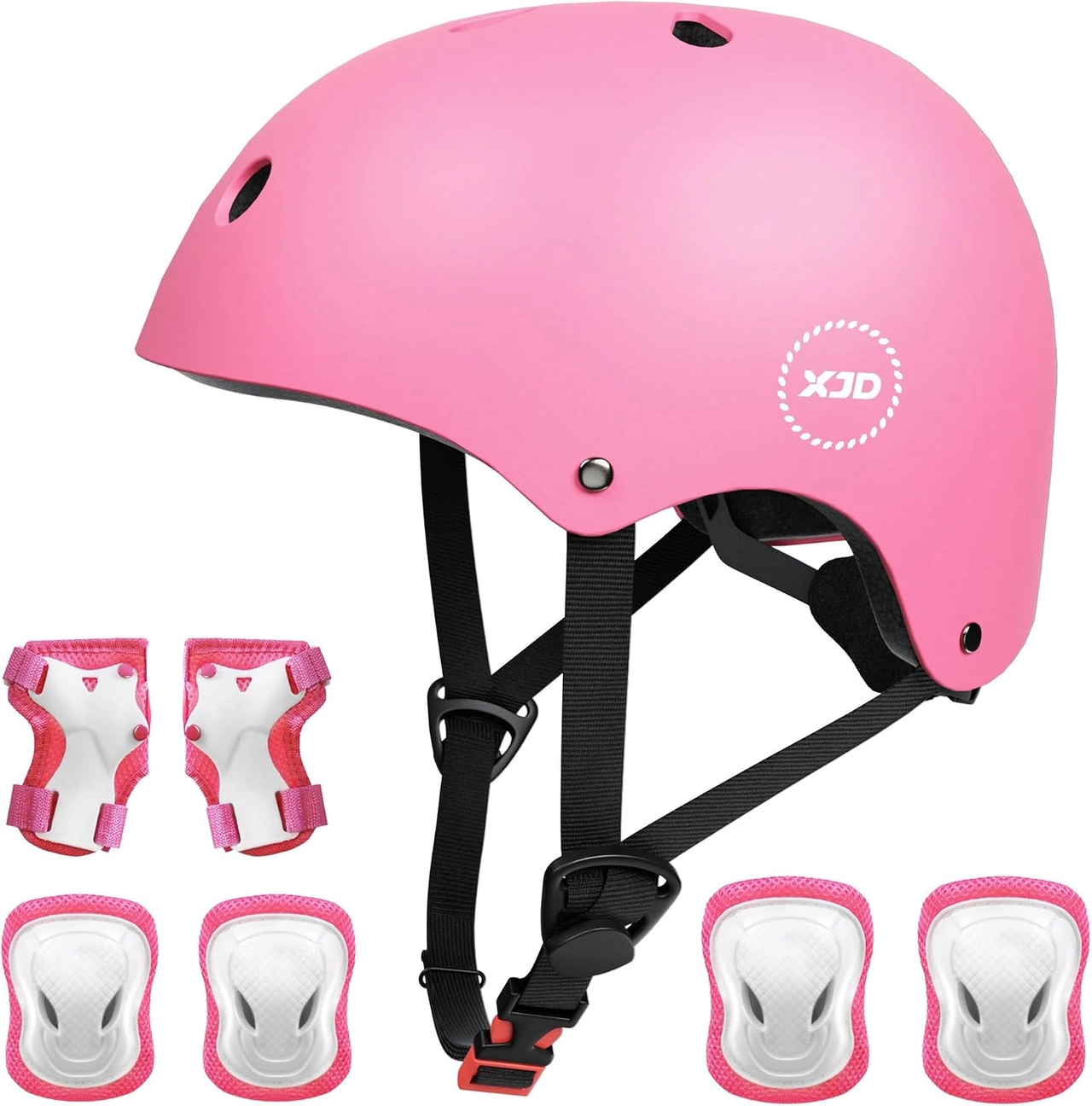 XJD Kids Helmet & Protective Gear Set for Girls, Pink
Available in S and M, but supplied facts provide no circumference ranges. Confirm the exact sizing information before considering it, then verify a level, stable and comfortable fit.
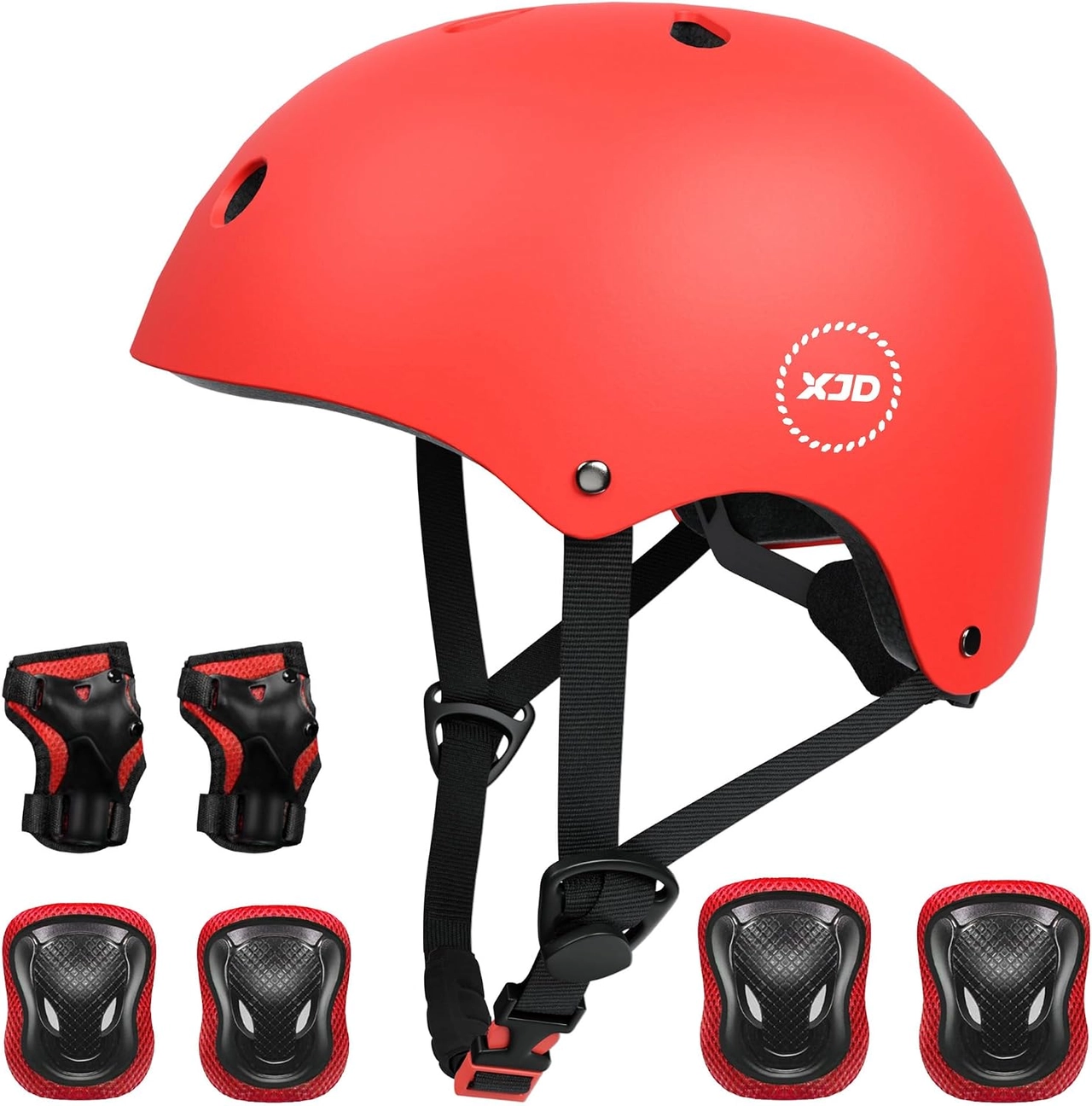 Red XJD Helmet & Protective Gear Set for Kids, Medium
The supplied M options cover 52–56 cm and L options cover 55–58 cm in five colors. The catalog title’s “Kids” label does not establish toddler fit.
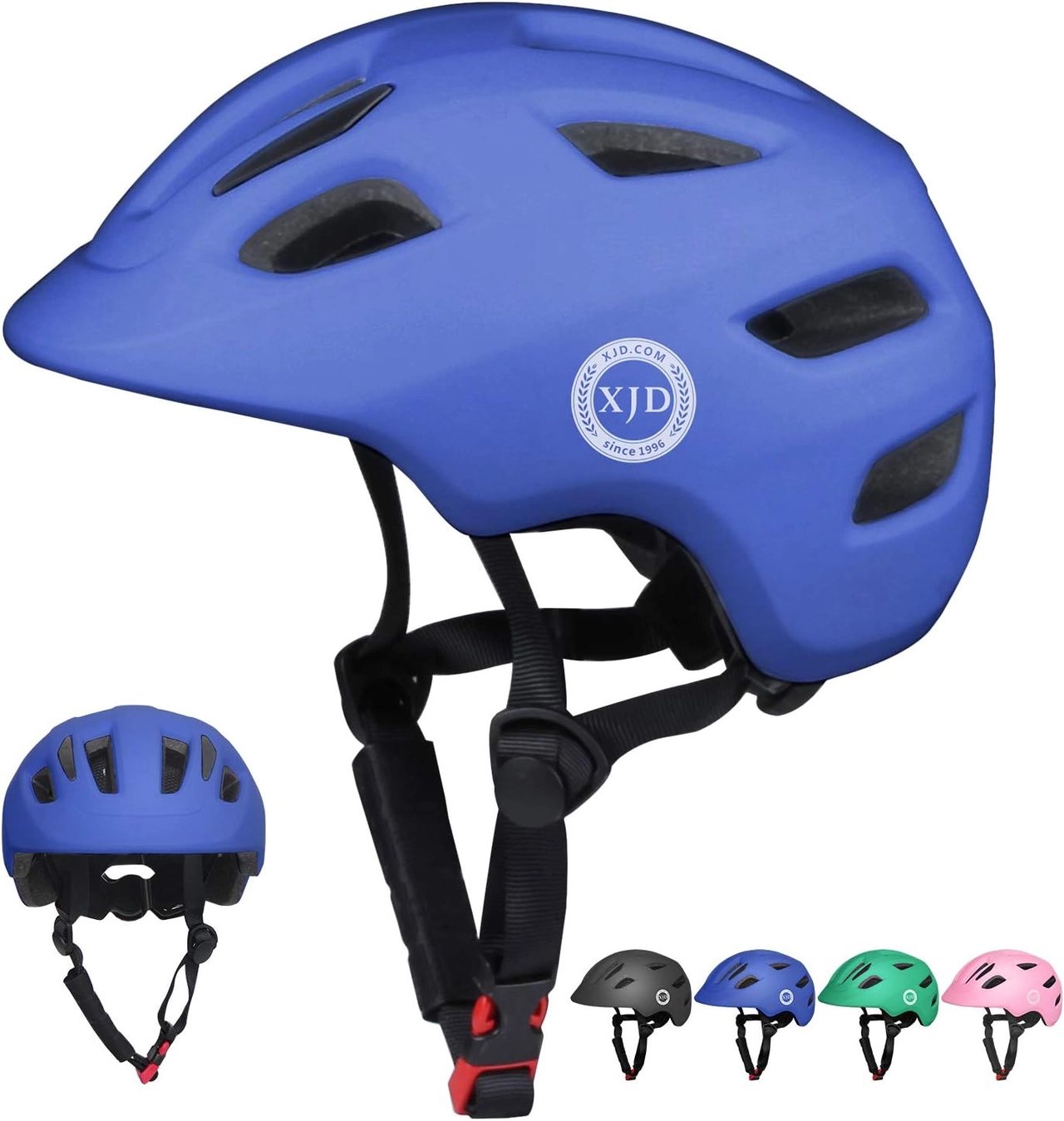 Blue XJD Kids' Bike Helmet, Adjustable Fit – Sizes XS & S
Its supplied XS range is 46–51 cm and S range is 52–56 cm, making direct comparison with a measured head circumference possible before an individual try-on.
Blue XJD Kids' Bike Helmet, Adjustable Fit – Sizes XS & S provides XS at 46–51 cm and S at 52–56 cm. Compare the repeated head measurement with those ranges, then verify the actual level, stable, comfortable fit on the child.
Red XJD Helmet & Protective Gear Set for Kids, Medium has supplied M options at 52–56 cm and L options at 55–58 cm in black, blue, orange, pink, and red. Its title’s “Kids” wording is a catalog label, not evidence that it fits a particular toddler.
XJD Kids Helmet & Protective Gear Set for Girls, Pink is offered in S and M, but no corresponding circumference ranges were supplied. Its “Kids” and “Girls” wording does not establish fit. Consult the exact product sizing information before choosing either label, and do not infer measurements from the other XJD listings.
Signs that the helmet is not right
- It sits noticeably tilted, rides high, or exposes the forehead when the child moves.
- It shifts independently of the head even after permitted adjustments.
- The straps twist, cannot hold the intended position, or cause pinching.
- The child reports pain, or the helmet creates concentrated pressure rather than an even, snug feel.
- The measured circumference falls outside the stated range, or no reliable range is available to confirm the size.
Do not improvise padding, alter the shell, or guess at replacement parts. Follow the exact helmet manual for adjustment, care, replacement, and compatibility details that are not provided here.
Make the final decision
Measure twice, shortlist only sizes supported by the product’s own sizing information, and have the toddler try the helmet on. Keep it only if it sits level, stays stable through normal head movement, allows clear vision, and feels snug without painful pressure. If adjustment cannot produce that result, choose another size or helmet rather than accepting a loose or tilted fit.
Bikes for your next adventure
-

Kids Bike Helmet by XJD for Boys & Girls – Black, Blue, Green, Pink, Purple
The XJD Kids Bike Helmet covers a wide 2-to-8-year age range thanks to two head-…$59.99
-
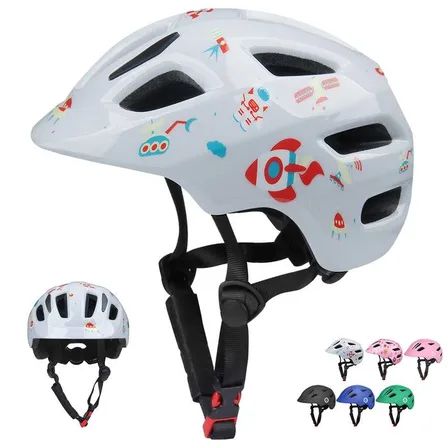
White Astronaut Bike Helmet for Kids by XJD – Toddler to Youth Sizes
4 reviews
The XJD White Astronaut kids' bike helmet is made for toddlers through younger e…$59.99
-
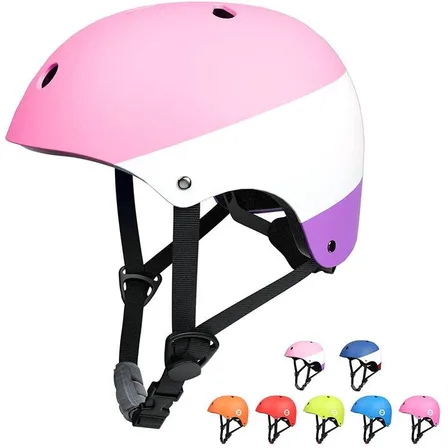
XJD Kids Bike Helmet for Boys & Girls, B White / Pink White
The XJD Kids Bike Helmet covers a wide age range — suggested for ages 2 through …$59.99