

How should a toddler helmet fit
A toddler helmet should sit level, stay stable, and match the child’s measured head circumference. Measure first, then adjust it on the child and check movement, vision, straps, and comfort before every ride.
Measure the head before choosing a size
Use a flexible measuring tape around the widest part of the child’s head, passing above the eyebrows and around the fullest area at the back. Keep the tape level and comfortably snug rather than pulling it tight. Record the result in centimeters because the supplied helmet ranges are listed that way.
Measure the actual child instead of choosing from an age word, clothing size, or another child’s helmet. “Toddler,” “kids,” and “youth” in product titles are catalog labels, not proof of fit. If the measurement falls outside a listed range, choose another size rather than assuming adjustment will make it suitable.
Check the helmet’s position
Place the helmet level from front to back. It should cover the forehead without tipping backward, but it should not sit so low that it obstructs the child’s view. The U.S. Consumer Product Safety Commission advises that a bicycle helmet must fit properly, sit level, and have its straps used according to the manufacturer’s instructions.
Adjust the helmet’s fit system, if present, while it is level. The shell should feel evenly secure around the head, with no obvious pressure point. A child should not have to tolerate pinching or pain to make a size work. Likewise, a helmet that still shifts substantially after correct adjustment is too loose or may be the wrong shape.
Compare centimeter ranges, not size letters
The supplied XBikes options help because they provide comparison ranges covering 46–51 cm and 52–56 cm. Their letter names differ, so the measured circumference—not “XS,” “S,” or “M”—is the reliable comparison.
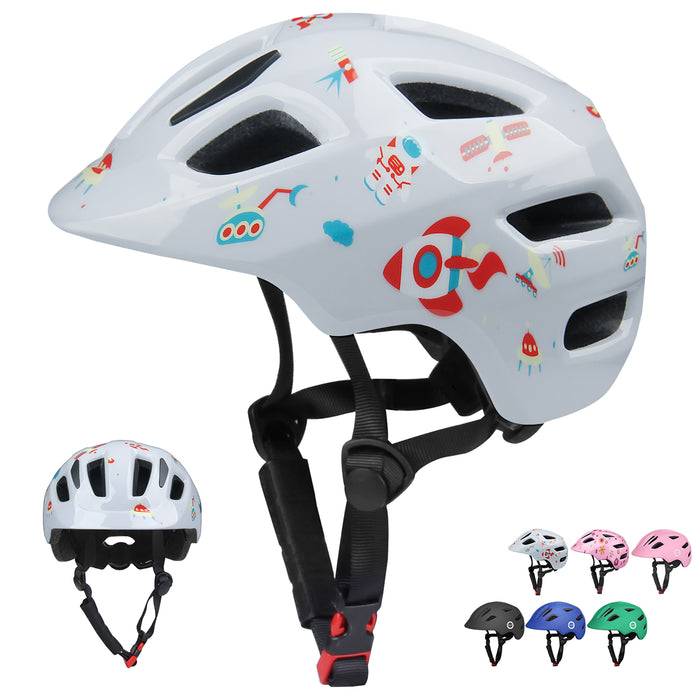 White Astronaut Bike Helmet for Kids by XJD – Toddler to Youth Sizes
Offers two supplied circumference choices: S at 46–51 cm and M at 52–56 cm. The Toddler to Youth wording is a catalog label, so select by measurement and confirm the fit in person.
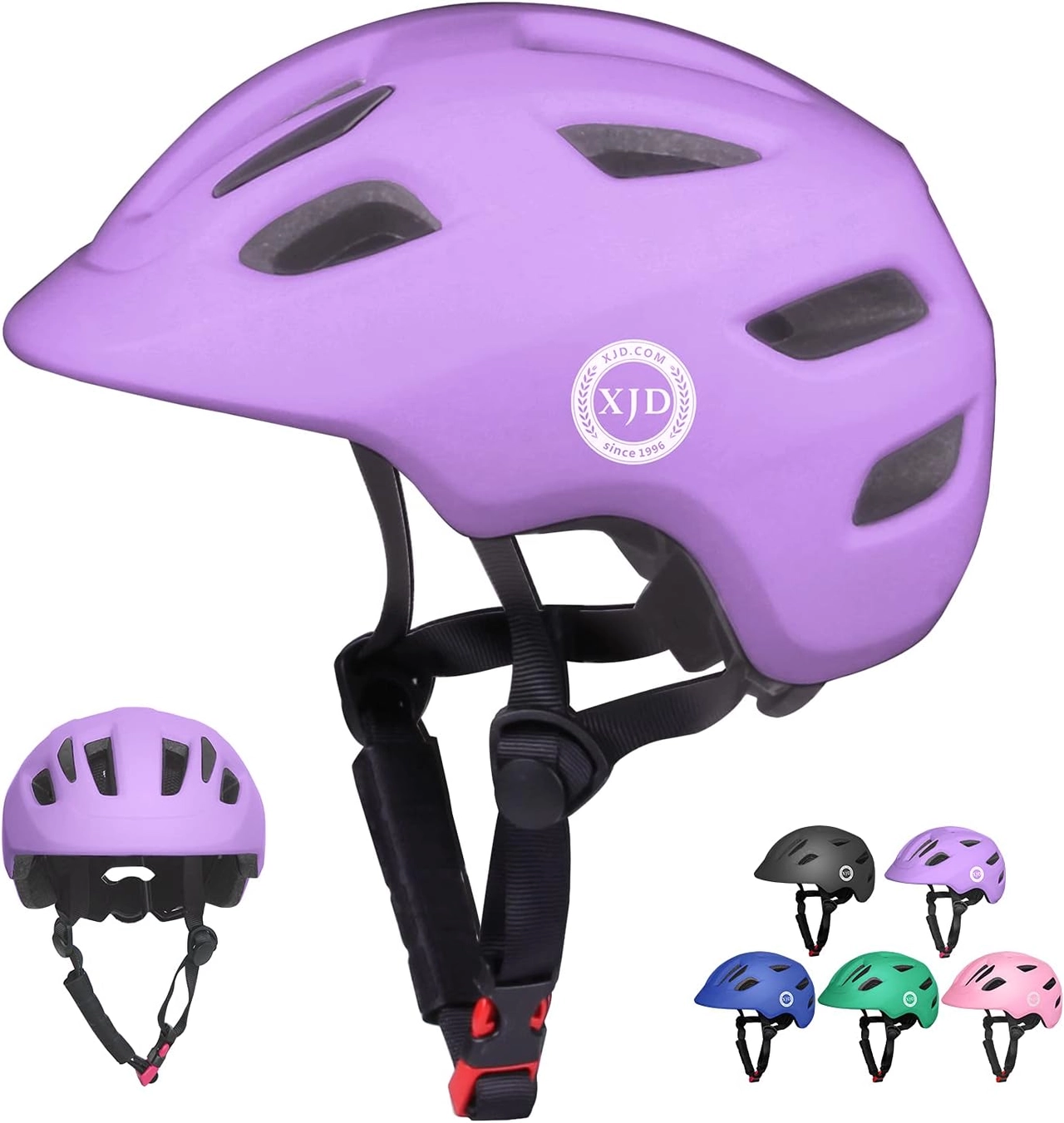 Light Purple XJD Toddler Bike Helmet, Adjustable, Size XS (46–51 cm)
Relevant for a measured circumference of 46–51 cm, as stated in the exact product title. Its available SKU label is Default; the toddler wording alone does not establish suitability.
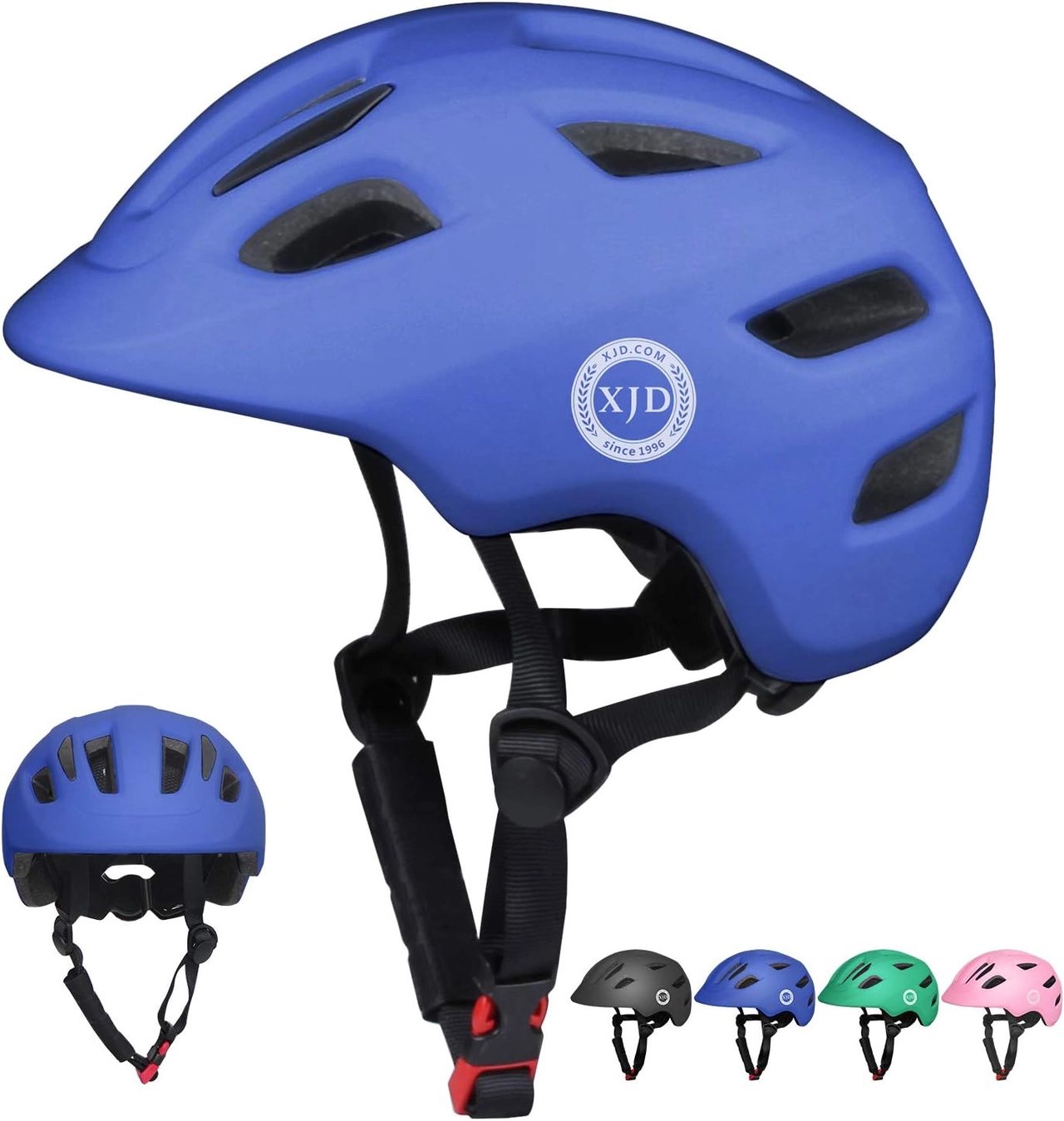 Blue XJD Kids' Bike Helmet, Adjustable Fit – Sizes XS & S
Provides two supplied comparison ranges: XS at 46–51 cm and S at 52–56 cm. Match the child’s measurement to the range, then confirm position, stability, comfort, and strap adjustment.
| Catalog option | Supplied size information |
|---|---|
| White Astronaut Bike Helmet for Kids by XJD – Toddler to Youth Sizes | S: 46–51 cm; M: 52–56 cm |
| Light Purple XJD Toddler Bike Helmet, Adjustable, Size XS (46–51 cm) | The exact title identifies XS as 46–51 cm; the available SKU label is Default |
| Blue XJD Kids' Bike Helmet, Adjustable Fit – Sizes XS & S | XS: 46–51 cm; S: 52–56 cm |
For example, a 46–51 cm measurement can be compared with the first product’s S range, the second product’s stated XS range, and the third product’s XS range. A 52–56 cm measurement can be compared with the first product’s M range or the third product’s S range. Do not treat a boundary or range match as the final decision: the helmet still needs an individual try-on.
Set and inspect the straps
Follow the exact helmet manual when routing, tightening, or repositioning straps. With the buckle secured as instructed, the straps should lie flat rather than twisted, and the helmet should remain level during ordinary head movement. Check that loose hair, hats, or bulky accessories are not changing the fit used for the assessment.
Ask the child to look up, down, and side to side. Watch whether the helmet slides, tips, blocks vision, or causes discomfort. Recheck the position after adjusting the straps because tightening one area can pull the helmet away from level. If the supplied instructions cannot produce a stable, comfortable fit, do not use that helmet for the child.
Know when these products are relevant
These three products are relevant only when the child’s measured circumference falls within their supplied range and an in-person fit check succeeds. The Light Purple XJD title says “Adjustable,” and the Blue XJD title says “Adjustable Fit,” but adjustment does not extend a published size range. No fit-system detail is supplied for the White Astronaut model, so follow its exact manual rather than assuming how it adjusts.
If the child measures below 46 cm or above 56 cm, none of these catalog ranges provides a stated match. If the measurement is within range but the helmet rocks, pinches, will not remain level, interferes with sight, or cannot be strapped according to its manual, it is also not a suitable choice.
Make the final toddler fit decision
Helmet size is separate from bicycle wheel size. A child’s bike should also be tried in person, with measured height, inseam, reach, brake control, and current confidence taking priority over age alone; an oversized bike should not be bought merely for growth. That bike check cannot confirm helmet fit.
Before the next ride, measure the child’s head, shortlist only matching centimeter ranges, and try each candidate level on the head. Choose only a helmet that stays stable, preserves clear vision, feels comfortable, and can be secured exactly as its manual directs. If no candidate passes every check, stop and select a different size or shape.
Bikes for your next adventure
-

Kids Bike Helmet by XJD for Boys & Girls – Black, Blue, Green, Pink, Purple
The XJD Kids Bike Helmet covers a wide 2-to-8-year age range thanks to two head-…$59.99
-
White Astronaut Bike Helmet for Kids by XJD – Toddler to Youth Sizes
4 reviews
The XJD White Astronaut kids' bike helmet is made for toddlers through younger e…$59.99
-
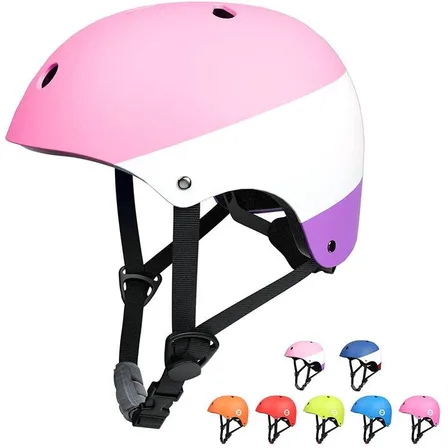
XJD Kids Bike Helmet for Boys & Girls, B White / Pink White
The XJD Kids Bike Helmet covers a wide age range — suggested for ages 2 through …$59.99