

How should a helmet fit a toddler
A toddler’s helmet should match their measured head circumference, sit level and low on the forehead, stay stable, and fasten snugly without pinching.
Measure before choosing a size
Use a flexible measuring tape around the widest part of the child’s head. Place it just above the eyebrows, pass it above the ears, and wrap it around the fullest point at the back. Keep the tape level and comfortably close to the skin. Record the result in centimetres because the supplied helmet sizes use centimetre ranges.
Measure at least twice. If the readings differ, repeat the process rather than averaging them. Hair can change the result, so measure with the hairstyle the child will normally wear while riding. Do not include a thick hat beneath the helmet unless the helmet manufacturer specifically permits it.
Compare the measurement with the exact SKU range, not the age wording in a product name. A toddler label is a catalog description, not proof that a helmet will fit a particular child.
What a correct toddler helmet fit looks like
Place the helmet directly on the child’s head and use its adjustment system according to the manufacturer’s instructions. The shell should sit level rather than tipping backward or forward. It should cover the forehead while remaining clear of the eyebrows and vision.
- Stable: With the fastener secured, normal head movement should not make the helmet slide noticeably out of position.
- Even: It should feel consistently snug around the head, without a sharp pressure point or a visibly loose area.
- Level: The front should not expose an excessive amount of forehead, and the back should not push the front toward the child’s eyes.
- Secure straps: Arrange and fasten every strap exactly as the helmet manual directs. Straps should lie flat rather than twist.
- Comfortable: The child should be able to open their mouth, turn their head and look around without pain or pinching.
The U.S. Consumer Product Safety Commission’s core fit guidance is that a bicycle helmet must fit properly, sit level and use its straps according to the manufacturer’s instructions. A circumference match is therefore only the first screen; the on-head check decides whether the helmet is suitable.
Compare the supplied XBikes size ranges
These catalog options help answer the fit question because their listed SKU ranges let you compare an actual head measurement with specific selectable sizes. The overlapping ranges also show why the size letter alone is insufficient.
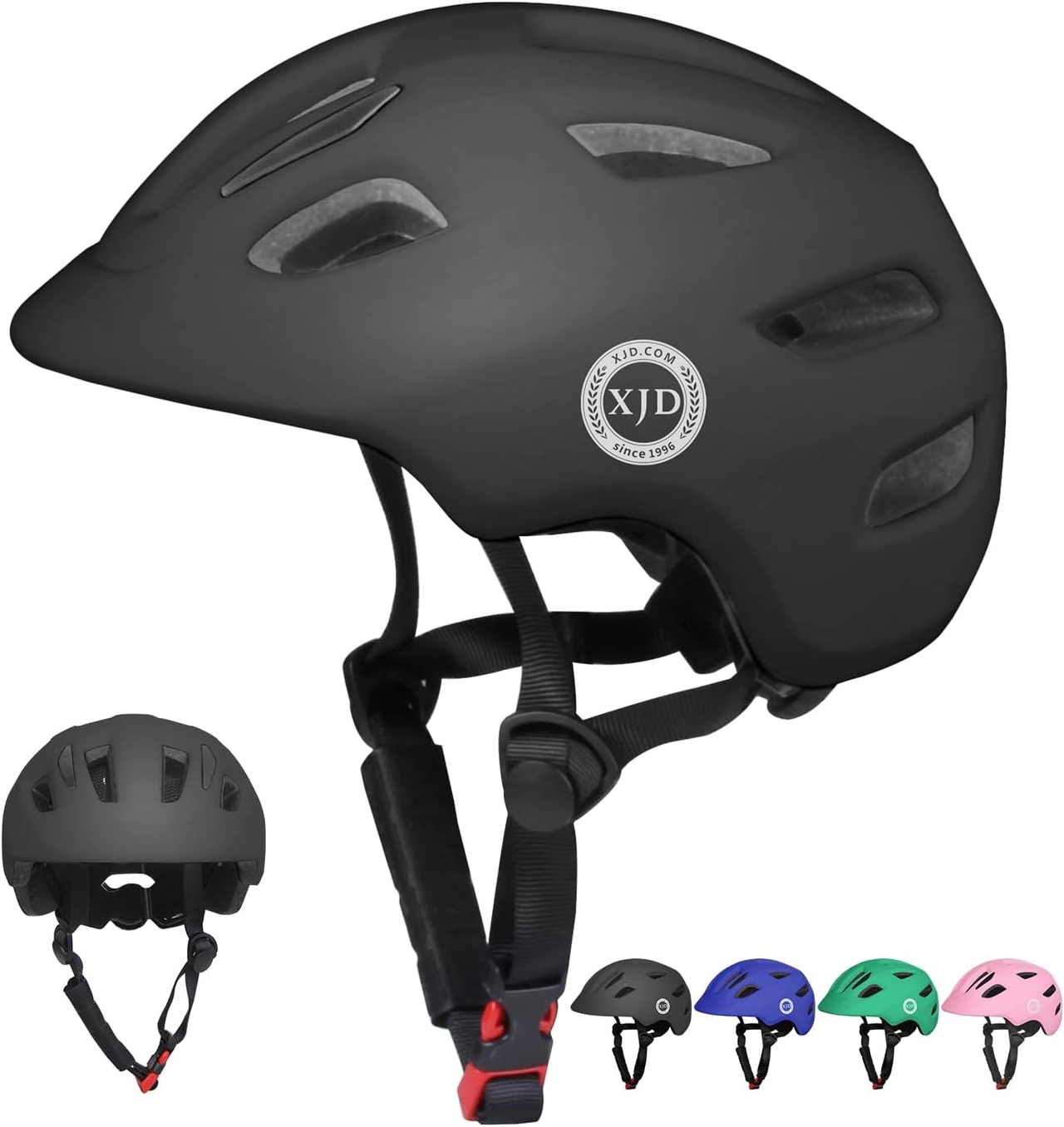 Black XJD Toddler Bike Helmet, Adjustable – Kids' Protective Helmet
Relevant when the child’s measured head circumference matches one of the listed XS or S ranges; verify the complete centimetre label because the same size letter appears with different ranges.
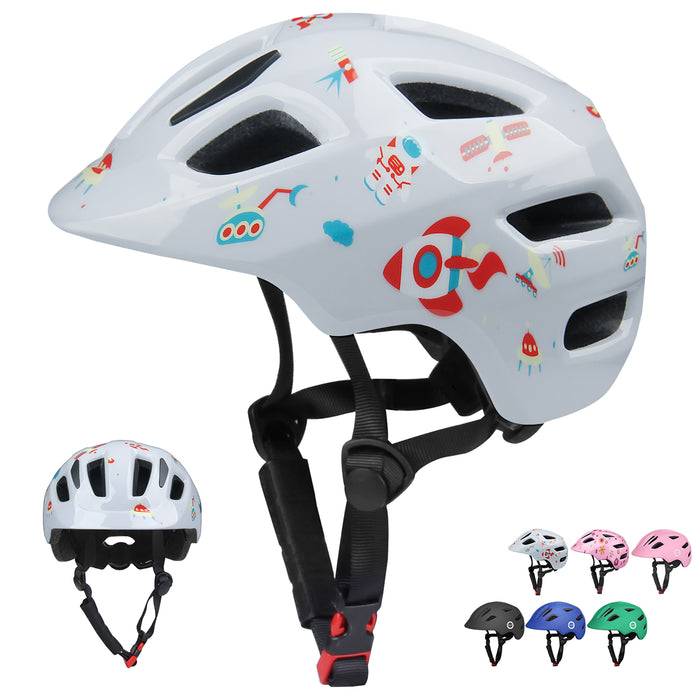 White Astronaut Bike Helmet for Kids by XJD – Toddler to Youth Sizes
Provides listed S 46–51 cm and M 52–56 cm comparison ranges. The toddler wording in its title is not fit evidence; confirm the measured range and on-head stability.
The Black XJD Toddler Bike Helmet, Adjustable – Kids' Protective Helmet has listed options of XS (46–51 cm), XS (48–50 cm), S (51–54 cm), and S (52–56 cm). Because two options can share the same letter while covering different measurements, verify the full centimetre label before selecting.
The White Astronaut Bike Helmet for Kids by XJD – Toddler to Youth Sizes has S:18.11"-20.08" / 46-51 cm and M:20.47"-22.05" / 52-56 cm. Use the centimetre value that corresponds to the measured head and then confirm the physical fit.
If a measurement falls within more than one listed range, that does not make the options interchangeable. Try the relevant options if possible and keep only one that can be adjusted to sit level, remain stable and feel evenly snug. If the measurement falls between ranges or outside all listed ranges, neither catalog option is established as appropriate from the supplied facts.
Run a fit check with your toddler
- Confirm that the selected SKU’s full measurement range includes the child’s current head circumference.
- Place the helmet level on the bare head, following the product manual for orientation, pads, adjustment controls and straps.
- Secure the straps as directed and check that they lie flat.
- Ask the child to look up, down and side to side. Watch for shifting, blocked vision, pinching or complaints of pressure.
- Gently check stability without forcing or twisting the child’s head. If the helmet will not remain properly positioned, try a different listed range or another helmet shape.
- Repeat the check immediately before riding. Growth, hair changes and adjustments can alter the fit.
Do not solve looseness with an unapproved hat, improvised padding or altered straps. Do not choose a helmet that is currently oversized merely to leave growing room. Follow the exact product manual whenever the correct use of padding or an adjustment component is uncertain.
When these products are relevant
Either supplied helmet is a relevant comparison when the toddler’s measured circumference falls inside one of its exact listed SKU ranges and the helmet then passes the complete on-head fit check. Neither is proven suitable solely because “Toddler” or “Kids” appears in its title.
A helmet is not the right choice if it cannot sit level, shifts after correct adjustment, creates painful pressure, interferes with vision, or cannot be fastened according to its manual. Stop rather than improvising a fix. Measure the child now, compare the full centimetre range, and choose only a helmet that remains level, stable, snug and comfortable on that child.
Bikes for your next adventure
-

Kids Bike Helmet by XJD for Boys & Girls – Black, Blue, Green, Pink, Purple
The XJD Kids Bike Helmet covers a wide 2-to-8-year age range thanks to two head-…$59.99
-
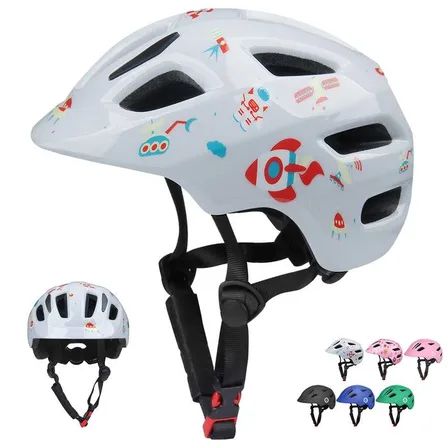
White Astronaut Bike Helmet for Kids by XJD – Toddler to Youth Sizes
4 reviews
The XJD White Astronaut kids' bike helmet is made for toddlers through younger e…$59.99
-
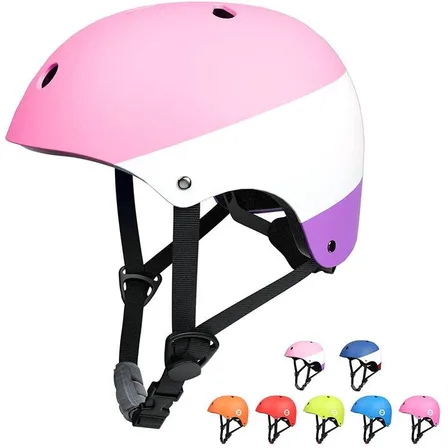
XJD Kids Bike Helmet for Boys & Girls, B White / Pink White
The XJD Kids Bike Helmet covers a wide age range — suggested for ages 2 through …$59.99