

How to size a toddler bike helmet
Measure your toddler’s head circumference just above the eyebrows and ears, then choose a helmet size range that contains that measurement. Try it on and confirm that it sits level, stays snug, and can be strapped correctly.
Measure the head, not the child’s age
Use a flexible measuring tape. Wrap it around the widest part of the head: roughly one finger-width above the eyebrows, just above the ears, and around the fullest point at the back. Keep the tape level and comfortably close to the skin without pulling it tight.
Record the result in centimeters, then repeat the measurement. If the two results differ, measure once more and use the largest reliable reading. Measure over the child’s hair as it will normally be worn inside the helmet, but not over a hat or bulky hairstyle.
Age is not an accurate helmet size. Toddlers of the same age can have different head circumferences, and age wording in a product title is only a catalog label—not proof that the helmet fits your child.
Compare the measurement with the size range
Look for a listed helmet range that includes the measured circumference. A measurement on a boundary deserves particular care during the try-on: adjustment systems and head shapes vary, so the printed range is only the first filter.
The supplied XBikes option, Blue XJD Kids' Bike Helmet, Adjustable Fit – Sizes XS & S, offers XS (46–51 cm) and S (52–56 cm). These two labeled ranges help you compare a measured head circumference with the available catalog sizes; they do not replace trying the helmet on. If the measurement falls outside both ranges, this product is not a relevant fit option.
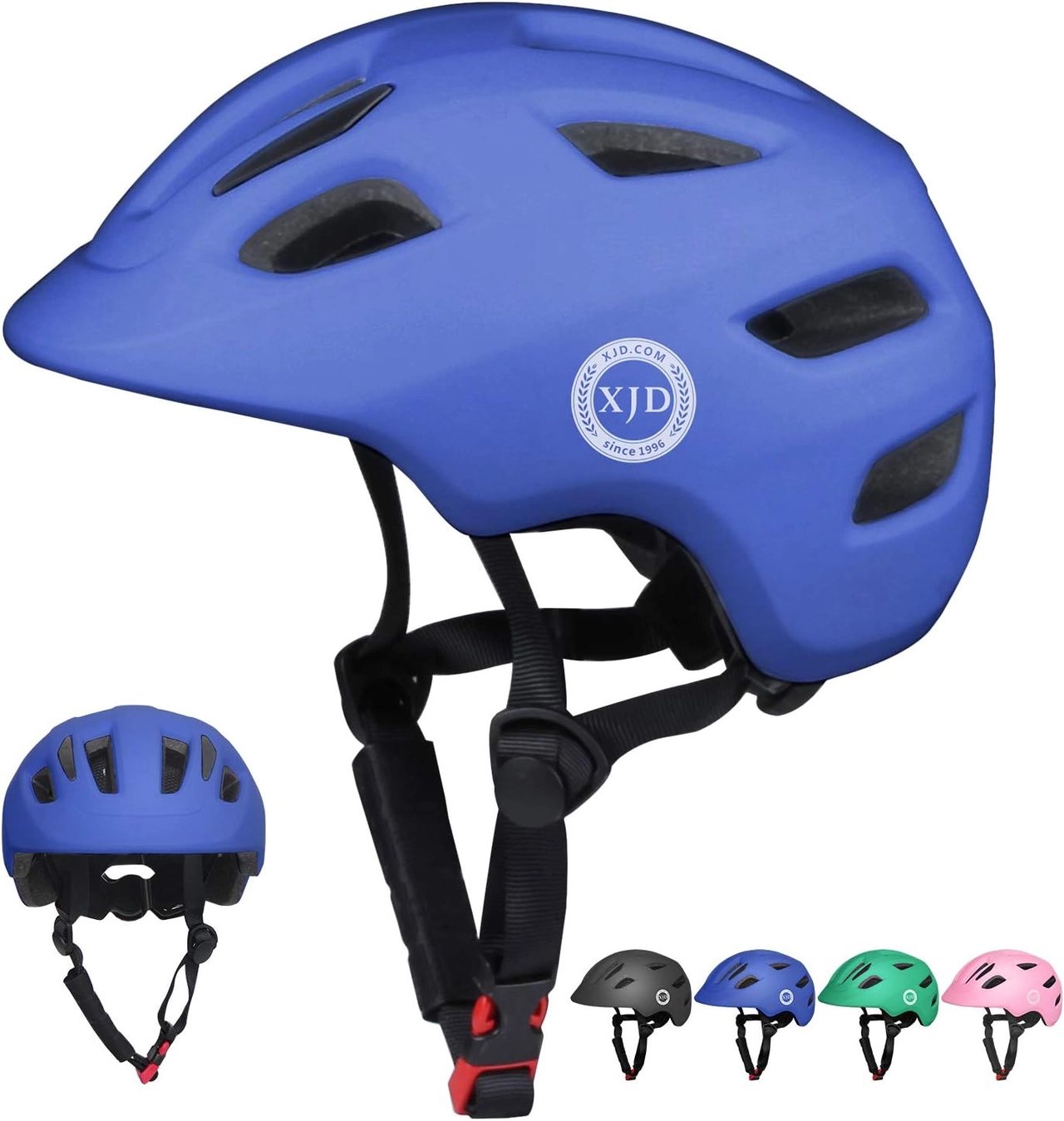
Do not automatically size up for growth. An oversized helmet may move out of position, while a helmet that is too small may sit high or fail to settle fully onto the head. Choose according to the child’s current measurement and actual fit.
Check how the helmet sits
Place the helmet directly on the head and follow its manufacturer’s fitting instructions. It should sit level from front to back rather than tipping upward and exposing the forehead or rolling down toward the eyes.
Use the helmet’s adjustment features only as directed in the exact product manual. The shell should feel evenly snug rather than creating a sharp pressure point. If the helmet cannot sit level, feels painfully tight, or still shifts substantially after correct adjustment, try a different size or shape.
Set and inspect the straps
Fasten and arrange every strap according to the manufacturer’s instructions. Confirm that the system holds the helmet in its level position and that no strap is twisted. The helmet should not slide freely when the child gently turns or nods their head.
Have the child open their mouth, look up, and turn side to side while you observe the fit. Recheck that the helmet remains level and comfortably secure. A circumference that matches the label is not enough if the straps cannot be adjusted correctly or the helmet moves out of place.
Never invent an adjustment method or alter the helmet to force a fit. If the manual is missing, unclear, or the straps and adjustment system cannot be set confidently, consult the manufacturer’s exact instructions or a qualified bicycle mechanic.
Use this quick fit decision
- Measure: Take the level circumference above the eyebrows and ears in centimeters, and confirm it with a repeat measurement.
- Compare: Select only a listed range that includes the current measurement.
- Try: Put the helmet on level and use its adjustments and straps exactly as instructed.
- Observe: Check for excessive movement, forehead exposure, painful pressure, or straps that cannot hold the position.
- Decide: Keep considering that size only if all fit checks pass; otherwise try another size or helmet shape.
Recheck before future rides
A toddler’s head grows, and straps can move between uses. Before each ride, confirm that the helmet still sits level and that its straps are fastened and adjusted as the manufacturer directs. Measure again when the fit changes, after a growth spurt, or when the adjustment range no longer produces a secure and comfortable result.
For the supplied product, an accurate 46–51 cm measurement makes XS a size to try, while 52–56 cm makes S a size to try. A range match is an invitation to perform the full fit check—not a guarantee. Measure now, compare the centimeter result, and accept a helmet only when it stays level and properly strapped on your toddler’s head.
Bikes for your next adventure
-

Kids Bike Helmet by XJD for Boys & Girls – Black, Blue, Green, Pink, Purple
The XJD Kids Bike Helmet covers a wide 2-to-8-year age range thanks to two head-…$59.99
-
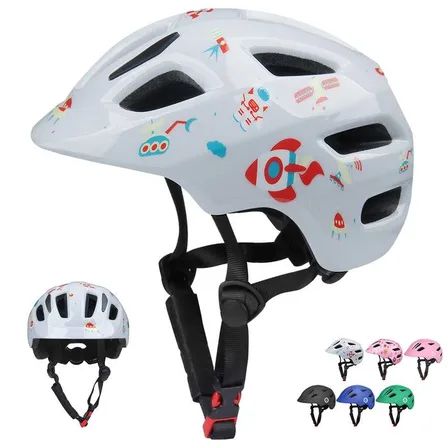
White Astronaut Bike Helmet for Kids by XJD – Toddler to Youth Sizes
4 reviews
The XJD White Astronaut kids' bike helmet is made for toddlers through younger e…$59.99
-
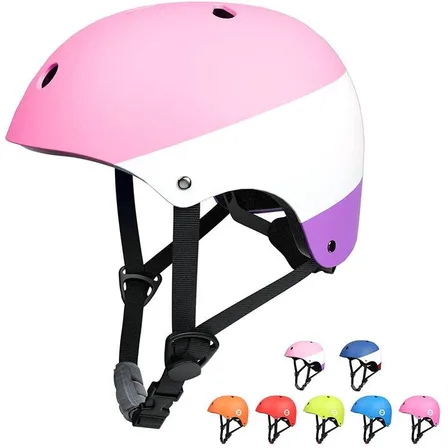
XJD Kids Bike Helmet for Boys & Girls, B White / Pink White
The XJD Kids Bike Helmet covers a wide age range — suggested for ages 2 through …$59.99