

What age can a baby wear a bike helmet
A baby can wear a bike helmet only when the helmet fits properly and the child is developmentally ready for the planned ride—not at a universal age.
Age alone cannot answer the fit question
A birthday does not show whether a helmet will fit or whether a baby is ready to travel on a bicycle. Before riding, confirm that the child can maintain a stable head position while wearing the helmet and can sit in the intended child seat or trailer exactly as its manufacturer requires. Ask the child’s pediatrician if you are uncertain about head and neck control, posture, or developmental readiness.
Do not use a helmet as evidence that a baby is ready to ride. The bicycle child seat or trailer may impose its own minimum age, size, posture, and helmet-clearance requirements. Follow that product’s exact manual. If the child cannot meet every requirement, wait.
Measure the baby’s head before comparing helmets
Use a flexible tape to measure the widest circumference of the head. Place it level around the forehead, just above the eyebrows and ears, and around the fullest point at the back. Record the measurement in centimetres and repeat it to catch a loose, angled, or twisted reading.
Compare that number with the helmet’s stated size range. A measurement inside the range is only a starting point: head shape and the adjustment system still affect fit. Never choose a larger helmet solely to leave growing room.
Perform a complete helmet fit check
Have the child wear the helmet during the check. The U.S. Consumer Product Safety Commission advises that a bicycle helmet must fit properly, sit level, and use its straps according to the manufacturer’s instructions.
- Position: The helmet should sit level rather than tipping toward the back of the head.
- Adjustment: Use only the supplied fitting system and follow the exact helmet manual.
- Straps: Arrange and fasten them as the manufacturer directs. They must hold the helmet in its intended position.
- Movement: Check that normal gentle movement does not let the helmet shift out of position.
- Comfort: Reject a fit that causes obvious pressure, leaves the helmet loose, or interferes with the child seat or trailer.
If the helmet cannot be made level, stable, and comfortable within the manual’s instructions, it is not the right fit even when the circumference falls within the printed range.
How the supplied XBikes helmets compare
The three catalog options are relevant because they provide concrete XS and S circumference ranges to compare with the child’s measured head. They do not establish readiness by age, and wording such as “toddler” or “kids” in a product title is a catalog label rather than fit evidence.
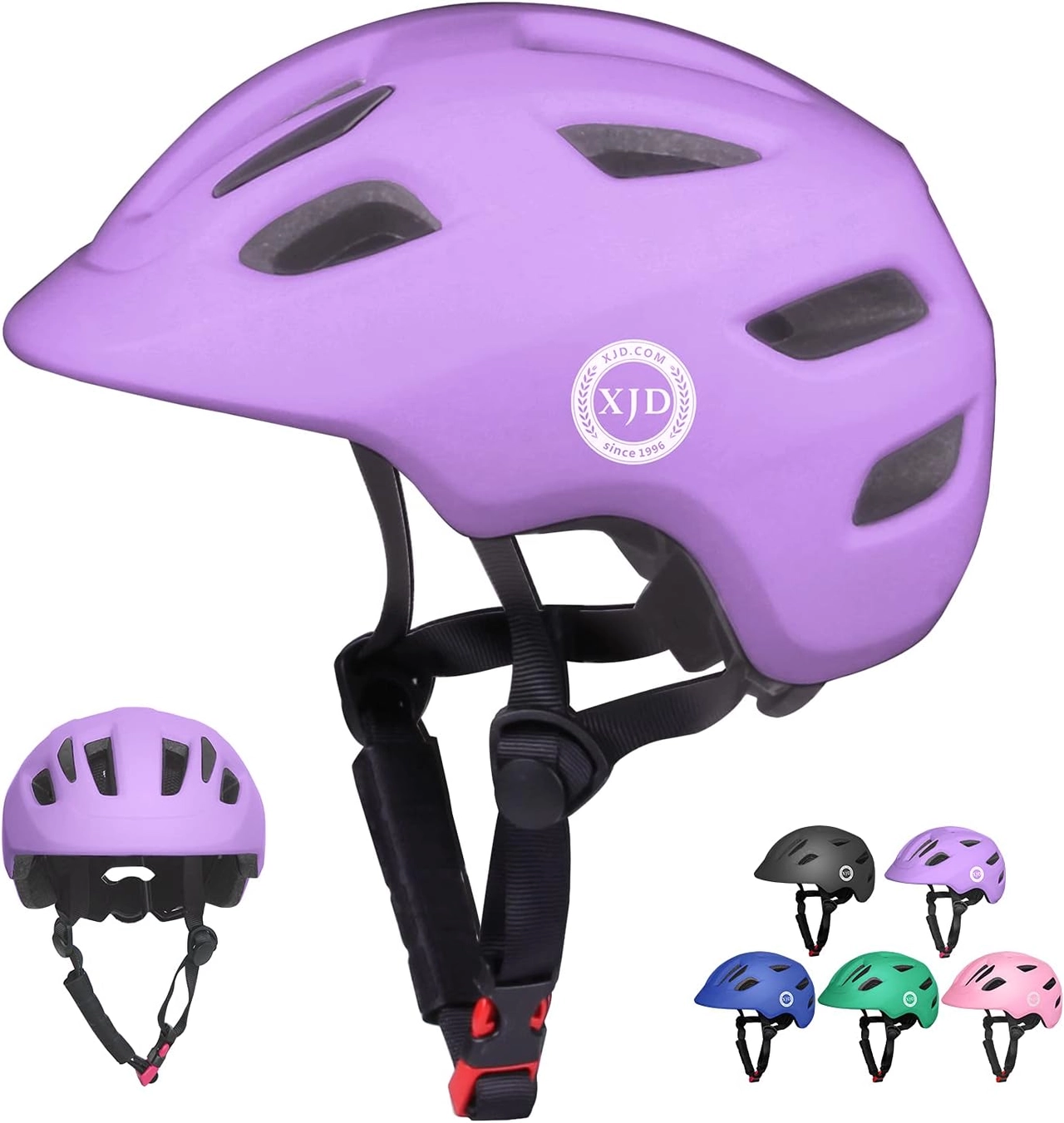 Light Purple XJD Toddler Bike Helmet, Adjustable, Size XS (46–51 cm)
An adjustable XS helmet with a stated 46–51 cm range. “Toddler” is a catalog label, so compare the range with a measured head and complete an individual fit check.
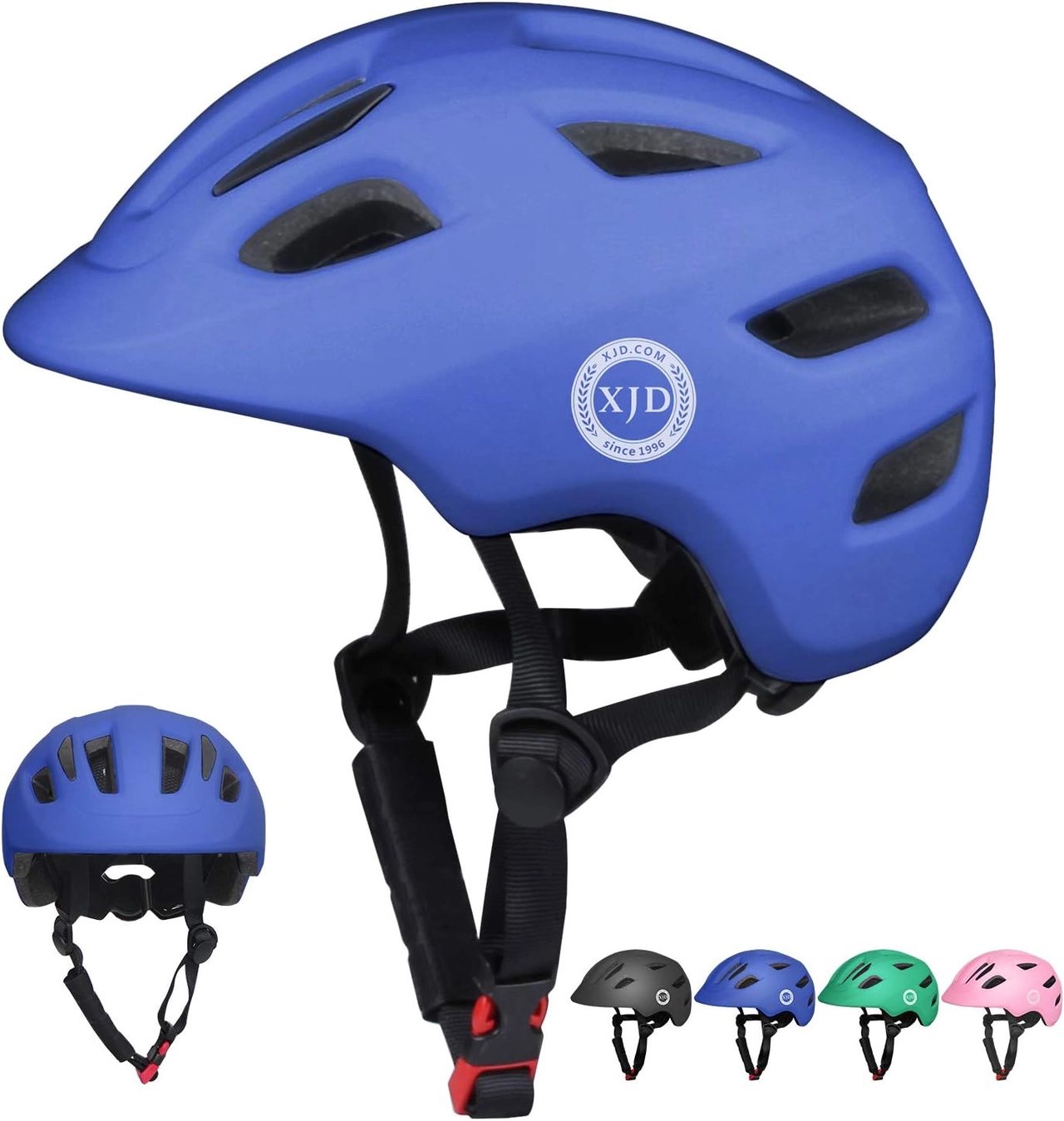 Blue XJD Kids' Bike Helmet, Adjustable Fit – Sizes XS & S
Provides adjustable XS (46–51 cm) and S (52–56 cm) choices. The two ranges support measurement-based comparison, but the “Kids'” wording does not establish a suitable age or developmental readiness.
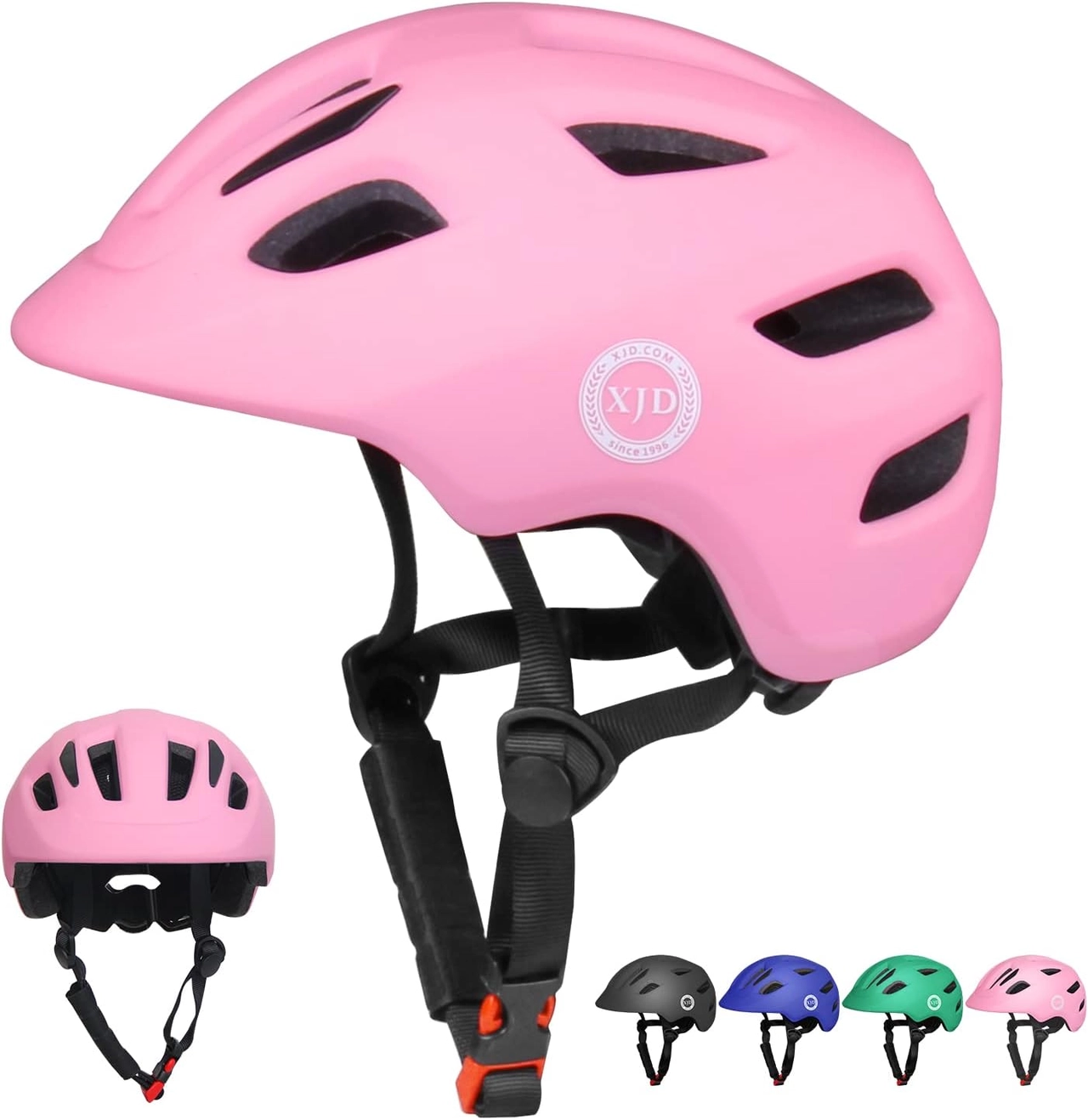 Pink Adjustable Kids Helmet by XJD – Toddler Bike Helmet, XS & S
Offers XS (46–51 cm) and S (52–56 cm) SKU labels. Treat “Toddler” and “Kids” as catalog wording, then select by measured circumference and verify the helmet’s position and straps.
Light Purple XJD Toddler Bike Helmet, Adjustable, Size XS (46–51 cm) is an adjustable XS option covering 46–51 cm. Its only available SKU label is Default, so use the 46–51 cm range stated in the exact product title for the initial comparison.
Blue XJD Kids' Bike Helmet, Adjustable Fit – Sizes XS & S offers XS (46–51 cm) and S (52–56 cm) SKU labels. Pink Adjustable Kids Helmet by XJD – Toddler Bike Helmet, XS & S lists the same two size choices: XS (46–51 cm) and S (52–56 cm).
These ranges do not overlap: a measurement below 46 cm or above 56 cm is outside every supplied option. A measurement between the listed ranges also requires careful comparison with the exact manufacturer sizing instructions; do not assume either adjacent size is equivalent. Availability, certification, materials, and other construction details are not established by the supplied facts.
Keep bicycle sizing separate from helmet readiness
Helmet size does not determine bicycle size. The smallest XBikes bicycle starting point is 12 Inch for ages 3–4 and rider height 34–40 in (86–102 cm). This is a starting point, not proof of fit and not a recommendation that a baby ride that bicycle.
When the child is eventually ready to ride independently, prioritize measured height, inseam, reach, brake control, and current confidence over age. The American Academy of Pediatrics advises having the child try the bicycle, avoiding an oversized bike bought for growth, and checking stand-over clearance, control, and brake reach.
What to do next
- Measure the head circumference twice in centimetres.
- Confirm developmental readiness with the pediatrician when there is any doubt.
- Check every age, posture, size, and helmet-clearance rule in the child seat or trailer manual.
- Compare the measurement with 46–51 cm XS or 52–56 cm S, then conduct the full level-position and strap fit check.
If readiness, carrier requirements, circumference, and on-head fit do not all agree, do not ride yet; wait or choose a correctly sized helmet and compatible carrying setup.
Bikes for your next adventure
-

Black XJD Toddler Bike Helmet, Adjustable – Kids' Protective Helmet
The XJD Toddler Bike Helmet in black is an adjustable protective helmet for kids…$20.39
-

Kids Bike Helmet by XJD for Girls – Pink
The XJD Kids Bike Helmet in Pink is a lightweight multi-sport helmet for girls r…$59.99
$99 -
Girls' Training Wheel Bike by XJD, 12–20 Inch Wheels – Blue
This XJD girls' training wheel bike in Blue covers one of the widest fit ranges …$139
$159