

What is the best toddler bike helmet
The best toddler bike helmet is one that matches the child’s measured head circumference, sits level, stays secure, and can be adjusted correctly every ride.
Measure before comparing helmets
Use a flexible tape to measure around the widest part of the child’s head. Keep it level, passing just above the eyebrows and ears. Record the measurement in centimetres, then compare it with the exact size range printed for the helmet.
A toddler label, an age description, or the promise of room to grow is not fit evidence. Head shapes and sizes vary, even among children of the same age. If the measurement falls outside a listed range, choose a different size. If it sits between ranges, try the relevant sizes rather than guessing.
What a correct fit looks like
According to U.S. Consumer Product Safety Commission guidance, a bicycle helmet must fit properly, sit level, and have its straps used according to the manufacturer’s instructions. Put the helmet on level rather than tipped back, leaving the forehead protected. Adjust its internal fit system and straps exactly as its manual directs.
- Level position: The helmet should not expose the forehead by rocking or sliding backward.
- Close, comfortable fit: It should feel secure around the whole head without painful pressure points.
- Stable adjustment: After adjustment, ordinary head movement should not make it shift substantially.
- Usable straps: The straps and buckle must lie correctly and remain comfortable when secured.
If the shell shape causes gaps, pressure, or persistent movement even in the correct circumference range, that model is not the best choice for that child. Do not add an unapproved hat, padding, or accessory to compensate; consult the helmet instructions.
How the XBikes option helps the comparison
The supplied XBikes catalog includes one adjustable helmet with four available size labels. This makes it a relevant option to compare against the child’s measured circumference, while the catalog title alone cannot establish fit.
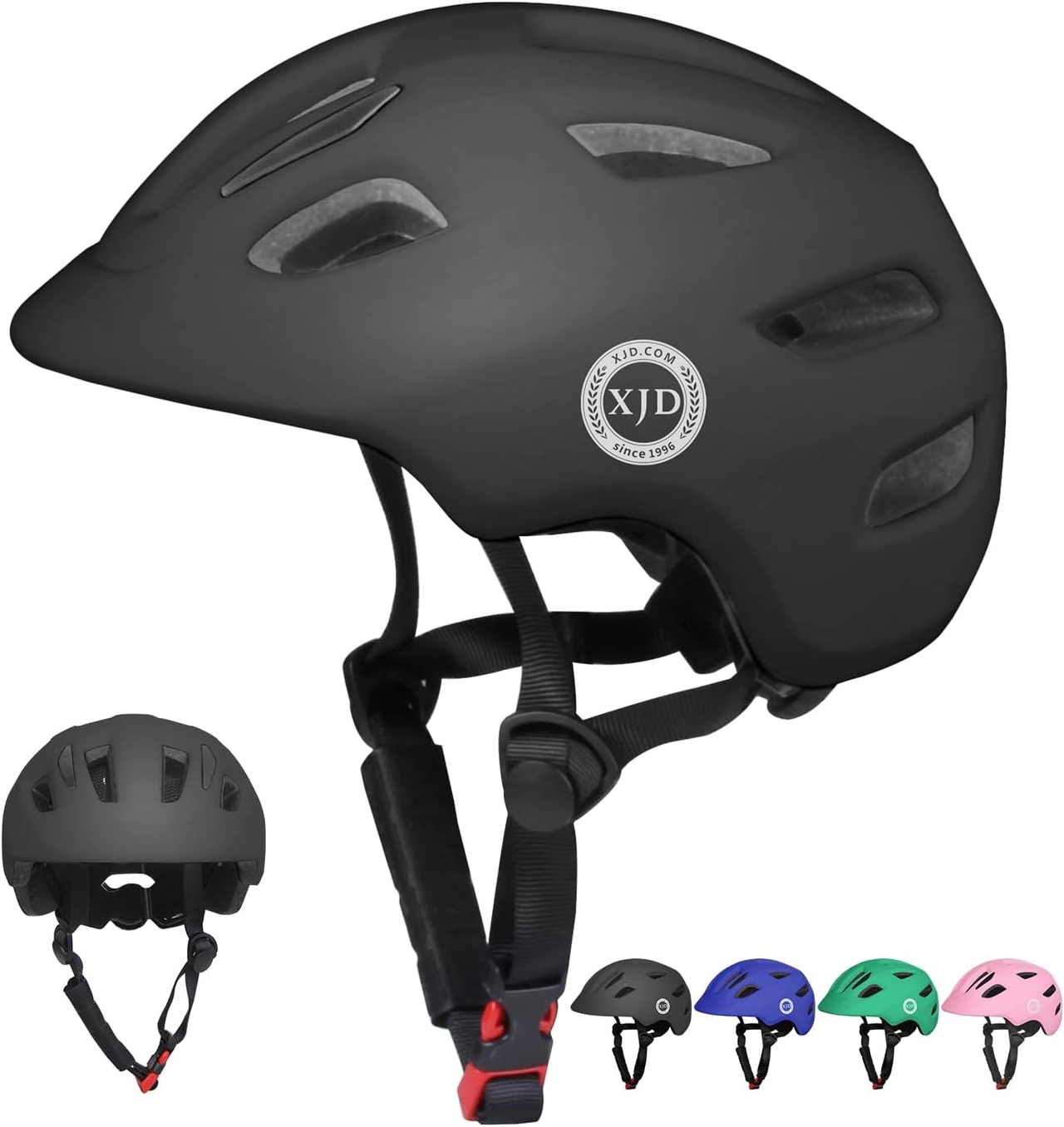
Black XJD Toddler Bike Helmet, Adjustable – Kids' Protective Helmet is listed with XS (46–51 cm), XS (48–50 cm), S (51–54 cm), and S (52–56 cm) SKU labels. Select by the exact SKU range, not merely by choosing “XS” or “S,” because those letter labels cover different measurements.
This product is relevant only when the child’s measurement falls within the particular listed range and an in-person fit check confirms a stable, comfortable fit. The supplied facts do not establish its certification, materials, weight, or suitability for every toddler, so check the exact product labeling and manual before use.
Compare candidates without being distracted by extras
Start with circumference range and actual fit. Then compare how easily the adult can reproduce the fit, whether the child tolerates it, and whether the straps can be positioned as the manufacturer specifies. A helmet that is difficult to secure consistently is a poor practical choice, even if its catalog size appears correct.
Do not buy an oversized helmet for future growth. Extra room can allow unwanted movement, and a fit system is not a substitute for choosing the correct base size. Recheck the fit whenever the helmet is worn, particularly after adjustments, a haircut, or a noticeable growth change.
Helmet fit and bicycle fit are separate decisions
A correctly fitted helmet does not make an unsuitable bicycle appropriate. If selecting a bike at the same time, XBikes lists 12-inch bikes as a starting point for ages 3–4 and rider heights of 34–40 in (86–102 cm), while 14-inch bikes start at ages 3–6 and 37–45 in (94–114 cm).
Those figures are starting points, not substitutes for trying the bicycle. Prioritize measured height, inseam, reach, brake control, and current confidence over age alone. The American Academy of Pediatrics advises having the child try the bicycle, checking stand-over and control, confirming brake reach, and avoiding an oversized bike bought merely for growth.
When to replace or seek expert help
Inspect the helmet before use and follow its exact manual for care, adjustment, replacement, and accessory compatibility. If it has taken an impact, shows damage, has missing parts, or cannot hold its adjustment, stop using it and follow the manufacturer’s instructions. When the correct procedure or condition is uncertain, ask the manufacturer or a qualified bicycle mechanic.
For the best toddler bike helmet, measure the child now, shortlist only matching centimetre ranges, try each candidate level on the head, and choose the one that remains secure and comfortable when adjusted exactly as directed.
Bikes for your next adventure
-

Flower Pink XJD Girls Bike with Doll Seat & Basket
The XJD Flower Pink girls' bike is made for riders 71–122 cm tall (roughly ages …$69.99
-

Kids Bike Helmet by XJD for Girls – Pink
The XJD Kids Bike Helmet in Pink is a lightweight multi-sport helmet for girls r…$59.99
$99 -

Light Purple XJD Toddler Bike Helmet, Adjustable, Size XS (46–51 cm)
This Light Purple XJD toddler bike helmet is made for the smallest riders — the …$20.39