

What size helmet does a 2 year old need
A 2-year-old needs a helmet that matches their measured head circumference—not a size chosen by age. Measure around the widest part of the head, compare the result with the helmet’s exact centimeter range, and then confirm a level, secure fit.
Measure your child’s head first
Use a flexible tape measure. Wrap it around the widest part of the head: just above the eyebrows, above the ears, and around the fullest point at the back. Keep the tape level and comfortably snug rather than pulling it tight.
Record the measurement in centimeters. Measure two or three times to catch positioning errors, and use the largest consistent result. If you only have a non-stretch string, mark where its ends meet and measure that length against a ruler.
Age cannot tell you whether your child needs XS, S, or another label. Size names vary, while the stated circumference range gives you a concrete comparison. Hair, hats, and growth assumptions should not replace a bare-head measurement.
Compare the number with the size range
Choose a listed range that includes the measured circumference. A 47 cm head, for example, falls within both 44–48 cm and 46–51 cm ranges in the supplied catalog options. That overlap does not prove both will fit equally well: shell shape, adjustment range, and the child’s head shape still require an actual try-on.
If the measurement sits at a range boundary, try the helmet before deciding. Do not move up merely to leave extra room for growth. An oversized helmet can shift or sit incorrectly, so the current fit matters more than how long the size might last.
How the supplied helmet relates
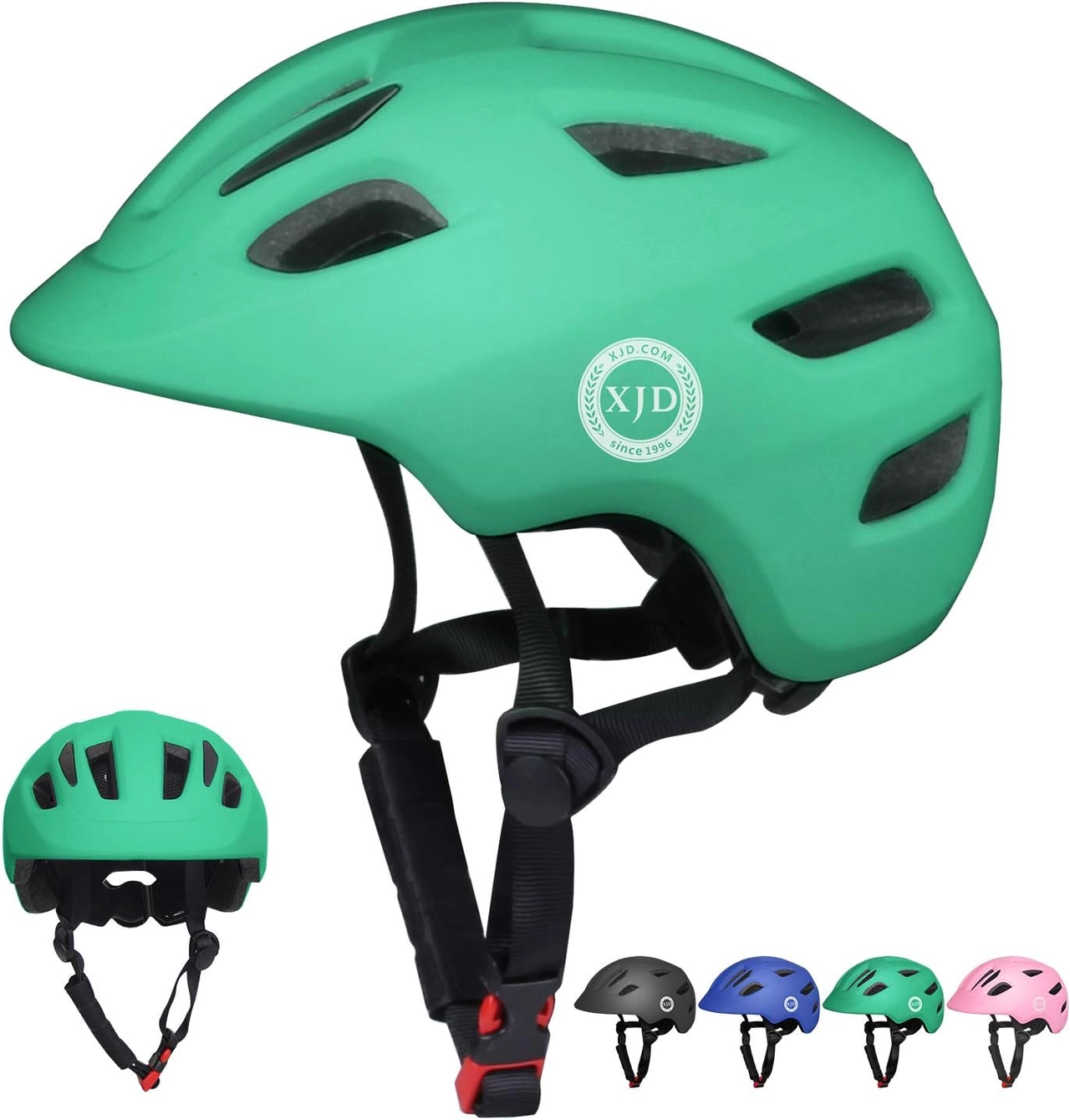
The Green XJD Toddler Bike Helmet with Adjustable Fit, XS (46–51 cm) is relevant because the catalog provides head-circumference options spanning 44–48 cm, 46–51 cm, and 52–56 cm across its available SKU labels. “Toddler” and “XS” are catalog wording, not proof that it fits every 2-year-old.
There is an important catalog detail to check when selecting a variant: although the exact product title says XS (46–51 cm), the supplied SKU labels identify XS as 44–48 cm, S as 46–51 cm, and M as 52–56 cm. Use the circumference shown on the exact SKU you are considering, and verify it against the physical product information and manufacturer’s instructions rather than relying on the title alone.
These particular catalog options help answer the question by showing why the child’s centimeter measurement is more useful than an age or letter-size label. They are relevant only when the measured head falls within the chosen SKU’s stated range.
Check the helmet on the child
A matching number is only the starting point. Put the helmet on the child and check it while they are calm and upright. Following U.S. Consumer Product Safety Commission guidance, the helmet should fit properly, sit level, and have its straps used according to the manufacturer’s instructions.
- Position: The helmet should sit level rather than tipping back and exposing the forehead or dropping forward over the eyes.
- Stability: After adjustment, it should remain in position instead of sliding around the head.
- Comfort: Look for obvious pressure, pinching, or distress; a child should not have to tolerate a painful fit.
- Straps: Route and adjust them exactly as the helmet manufacturer directs. Do not invent a strap configuration from appearance alone.
If the helmet cannot sit level and remain stable without discomfort, reject that size or model even when the circumference is technically inside its stated range.
When this product is not relevant
The supplied helmet is not an appropriate choice when the child’s measurement is outside the range printed for the exact SKU, when a stable level fit cannot be achieved, or when the product information does not match what arrives. The catalog facts supplied here do not establish certification, materials, weight, warranty, or suitability for activities other than cycling, so check the product labeling and manual for those questions.
Do not add thick hats or improvised padding to make an oversized helmet fit unless the manufacturer’s instructions explicitly permit it. For replacement parts, maintenance, compatibility, or any adjustment not covered by the manual, consult the exact product manual or a qualified bicycle mechanic.
The decision for your 2-year-old
Measure the child’s bare head today, write down the circumference in centimeters, and compare it with the exact SKU label. Consider the supplied XJD helmet only if that number is included, then require a level, stable, comfortable fit with correctly used straps. If either the measurement or the try-on fails, choose a different size or helmet rather than sizing by age.
Bikes for your next adventure
-

Light Purple XJD Toddler Bike Helmet, Adjustable, Size XS (46–51 cm)
This Light Purple XJD toddler bike helmet is made for the smallest riders — the …$20.39
-

Kids Bike Helmet by XJD for Girls – Pink
The XJD Kids Bike Helmet in Pink is a lightweight multi-sport helmet for girls r…$59.99
$99 -

Black XJD Toddler Bike Helmet, Adjustable – Kids' Protective Helmet
The XJD Toddler Bike Helmet in black is an adjustable protective helmet for kids…$20.39