

What size helmet for a 1 year old
For a 1-year-old, choose a helmet by measured head circumference—not age. Measure the head, check the maker’s size chart, then confirm the fit on the child.
Measure your child’s head first
Use a flexible measuring tape. Wrap it around the widest part of the head, passing just above the eyebrows and ears and around the fullest point at the back. Keep the tape level and comfortably snug rather than tight. Record the circumference and repeat the measurement to catch a misplaced or tilted tape.
If you do not have a flexible tape, wrap a non-stretch string around the same path, mark where it overlaps, and measure that length with a ruler. Do not estimate from clothing size, height or another child’s helmet.
Compare the number with the helmet’s chart
There is no reliable universal “1-year-old helmet size.” Compare the measured circumference with the exact size chart for the helmet being considered. A label such as S or M is not enough on its own because the supplied catalog information does not provide the head-circumference range behind those labels.
- If the measurement falls inside one listed range, try that size on the child.
- If it sits between two ranges, follow the manufacturer’s sizing instructions and try both sizes when possible.
- If it falls outside every offered range, choose a different helmet with a matching circumference range.
- Do not buy an oversized helmet for growth; a loose helmet cannot be corrected simply by tightening the straps.
Check the helmet on the child
A chart narrows the choice, but the child must still wear the helmet for a fit check. Place it level on the head, not tipped back with the forehead exposed and not pushed down over the eyes. Use the fitting system and straps exactly as the manufacturer directs.
With the straps secured, check that the helmet stays level and does not slide freely from side to side or front to back. It should feel snug without creating obvious pressure points. The straps should lie flat rather than twisted, and the buckle and strap layout must follow the product manual.
If the shell’s shape causes rocking, gaps or concentrated pressure even when the circumference range looks correct, that model is not a good fit. Do not add unapproved padding or alter the helmet to make it work.
How the supplied XBikes option relates
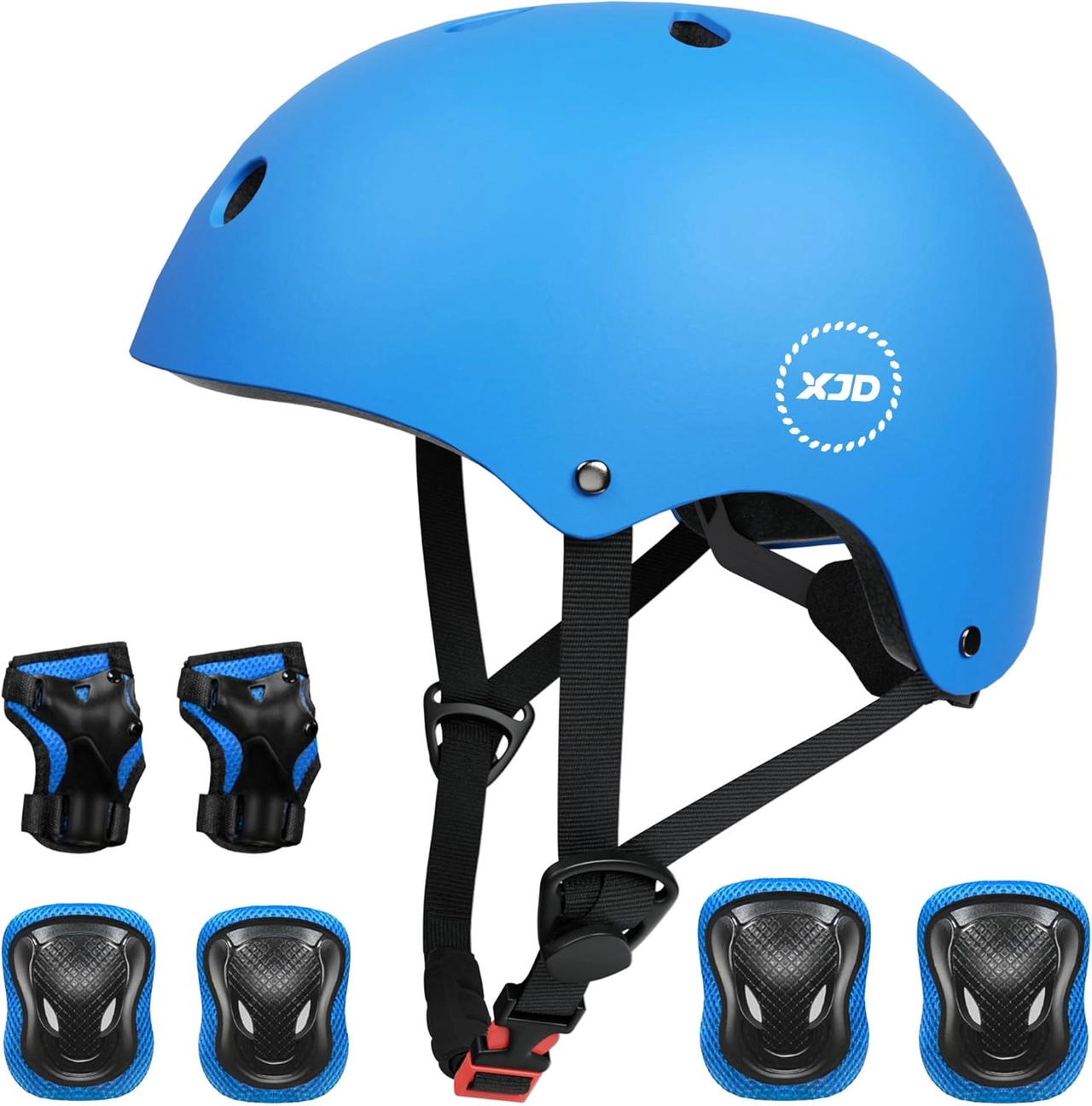
The supplied catalog includes the Blue XJD Helmet & Protective Gear Set for Kids, Sizes S/M, with S and M SKU labels. Those choices make it a useful comparison option after measuring, but the available facts do not include either size’s circumference range. “Kids” in the title is a catalog label, not proof that it fits a 1-year-old.
This particular catalog option helps answer the question by showing the available S/M choice you may encounter, while also illustrating why the letter alone cannot determine fit. Consult the exact product size chart or manual before selecting S or M, then perform the on-head checks.
When this product is not relevant
Do not select the Blue XJD Helmet & Protective Gear Set for Kids, Sizes S/M if neither documented size range contains your child’s measurement, if the helmet cannot sit level, or if it remains loose or uncomfortable after adjustment according to its instructions. The included protective gear does not make an incorrectly sized helmet suitable.
The supplied facts do not establish a certification, material, weight, age range or technical compatibility, so none should be inferred from the name or size labels. Check the exact manual and product documentation for requirements not stated here. Replace or stop using any helmet when the manufacturer’s instructions call for it, including after relevant damage or impact.
Your next decision
- Measure the child’s head twice in the correct position.
- Find the documented circumference range for each helmet size.
- Reject any size that does not contain the measurement.
- Try the matching size on the child and confirm that it sits level, snug and stable.
- Adjust and use every strap according to the manufacturer’s instructions.
For your 1-year-old, the right answer is therefore a measured circumference range plus a successful on-head fit—not S, M or an age label by itself. If you cannot verify both the chart match and stable fit, do not use that helmet; choose another model with documented sizing you can confirm.
Bikes for your next adventure
-

Light Purple XJD Toddler Bike Helmet, Adjustable, Size XS (46–51 cm)
This Light Purple XJD toddler bike helmet is made for the smallest riders — the …$20.39
-

Black XJD Toddler Bike Helmet, Adjustable – Kids' Protective Helmet
The XJD Toddler Bike Helmet in black is an adjustable protective helmet for kids…$20.39
-

Kids Bike Helmet by XJD for Girls – Pink
The XJD Kids Bike Helmet in Pink is a lightweight multi-sport helmet for girls r…$59.99
$99