

What size helmet for toddler
Measure your toddler’s head circumference, then choose a helmet whose stated range contains that measurement. Do not choose by age or allow extra room for growth.
How to measure your toddler’s head
Use a flexible tape measure around the widest part of the head. Run it just above the eyebrows, above the ears and around the fullest point at the back. Keep the tape level and comfortably snug rather than tight.
Record the result in centimetres and repeat the measurement twice. If the readings differ, measure again before comparing the result with a helmet’s size range. Hair should be arranged as it normally will be while riding; bulky hats should not be placed under the helmet unless the helmet manufacturer specifically permits them.
Which helmet size should you choose?
Compare the measured circumference directly with the available size label. The supplied XBikes options use two relevant ranges: XS or S-labelled options covering 46–51 cm, and S or M-labelled options covering 52–56 cm. The letter is not consistent between products, so the centimetre range is the useful comparison.
| Measured circumference | Catalog ranges to compare | What to do |
|---|---|---|
| Below 46 cm | None supplied | Do not select one of these products solely because it is described as a toddler helmet. Find a helmet with a manufacturer-stated range that includes the measurement. |
| 46–51 cm | 46–51 cm options | Try the corresponding helmet and complete the fit checks below. |
| Between 51 and 52 cm | None supplied | Neither supplied range clearly contains the measurement. Do not round the result into a range. |
| 52–56 cm | 52–56 cm options | Try the corresponding helmet and complete the fit checks below. |
| Above 56 cm | None supplied | Look for a stated range that includes the measurement. |
Being within a printed range makes a helmet a candidate, not a confirmed fit. Head shape, adjustment range and strap positioning still need to work for the individual child.
How the supplied helmets compare
The Pink Adjustable Kids Helmet by XJD – Toddler Bike Helmet, XS & S offers XS (46–51 cm) and S (52–56 cm). The White Astronaut Bike Helmet for Kids by XJD – Toddler to Youth Sizes lists S as 46–51 cm and M as 52–56 cm, also displaying the ranges as 18.11–20.08 inches and 20.47–22.05 inches. Despite their different letter names, compare the centimetre measurements.
The Light Purple XJD Toddler Bike Helmet, Adjustable, Size XS (46–51 cm) identifies a 46–51 cm XS size in its exact catalog title, while its supplied SKU label is only “Default.” Confirm the selected product and stated range on the product page before ordering.
These particular catalog options help answer the sizing question because their supplied labels provide circumference ranges for direct comparison with your measurement. Words such as “toddler,” “kids” or “youth” in a product title are catalog labels, not proof that the helmet fits a particular child.
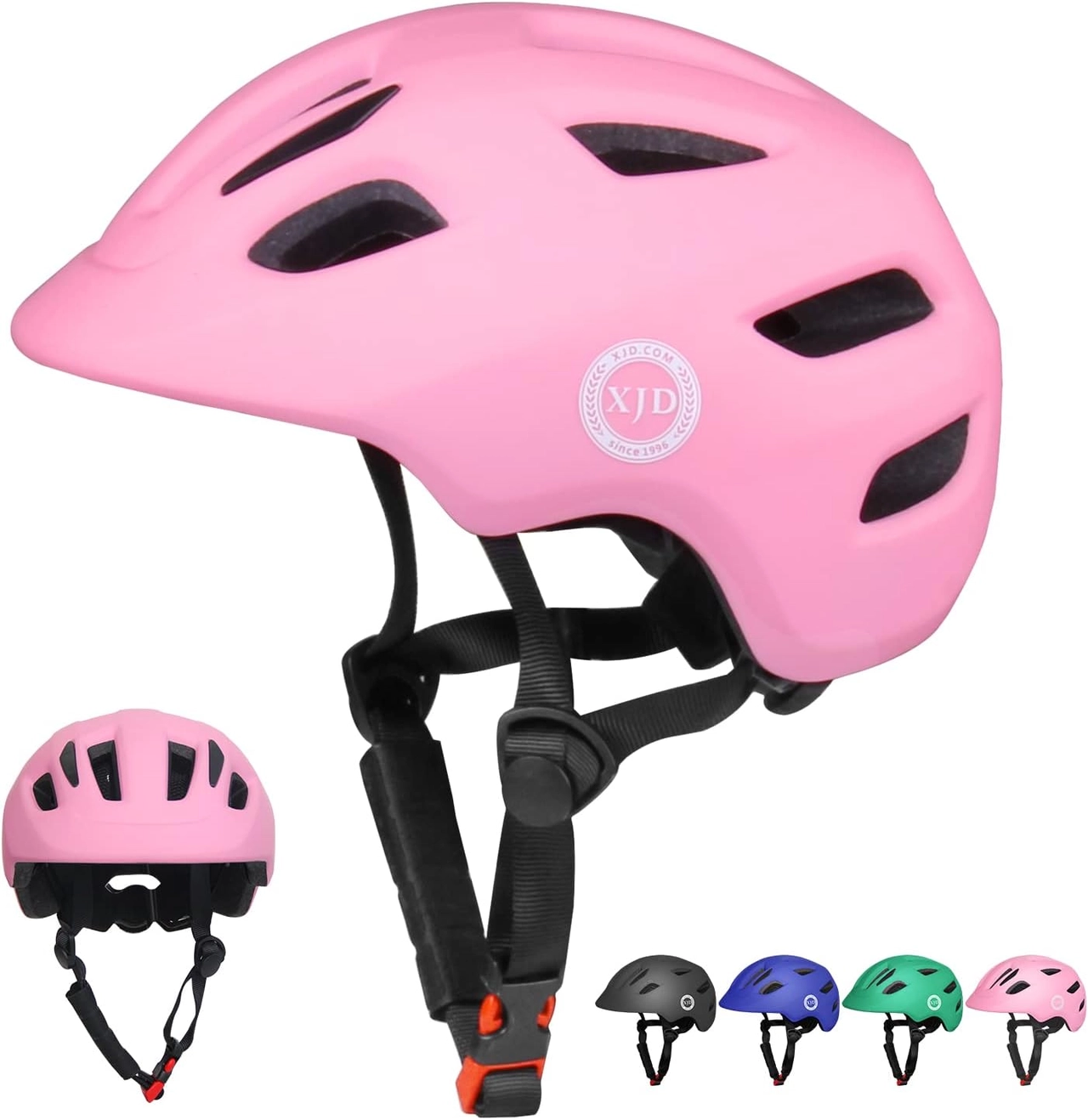 Pink Adjustable Kids Helmet by XJD – Toddler Bike Helmet, XS & S
Offers two supplied sizing choices: XS for 46–51 cm and S for 52–56 cm. Choose by measured head circumference, then verify the helmet’s position and adjustment on the child.
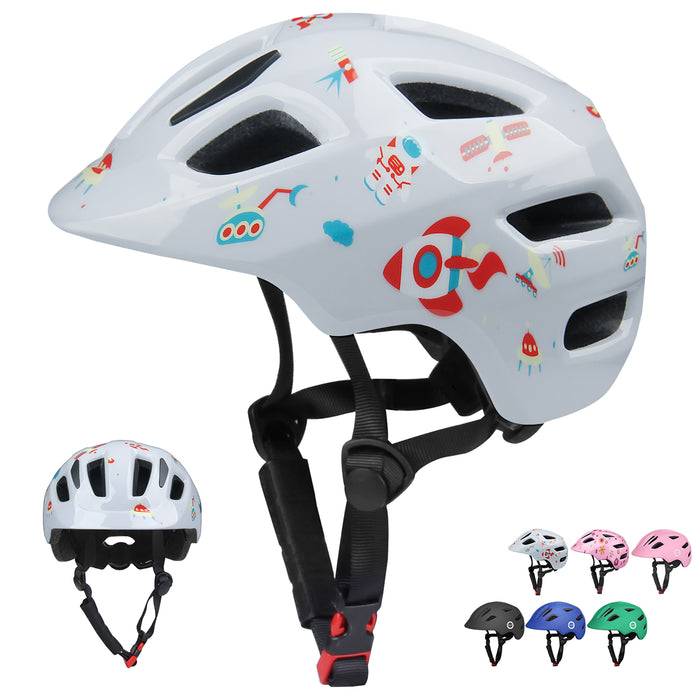 White Astronaut Bike Helmet for Kids by XJD – Toddler to Youth Sizes
Its supplied S range is 46–51 cm and M range is 52–56 cm, with inch equivalents also listed. The toddler-to-youth wording is a catalog label, not individual fit evidence.
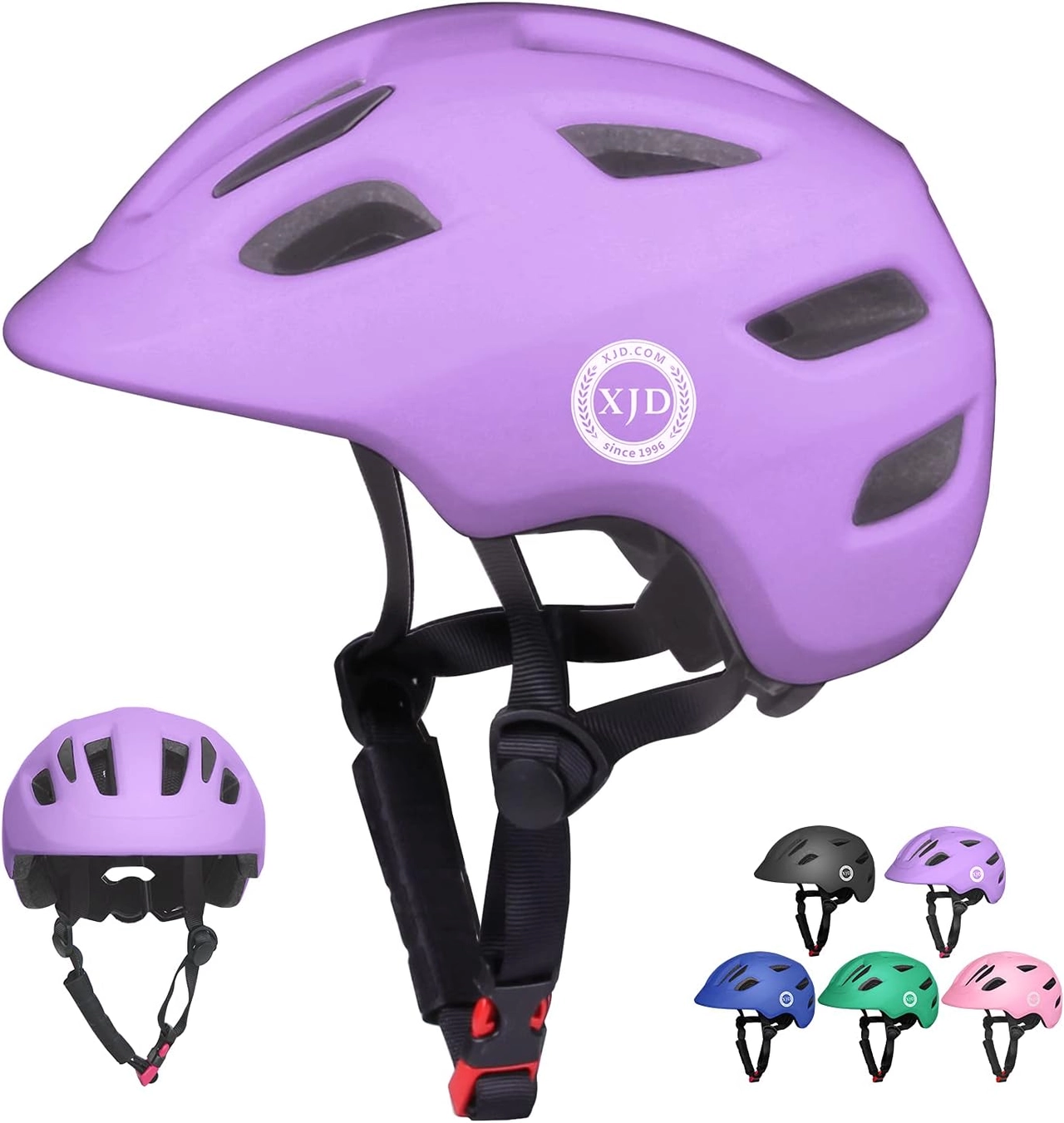 Light Purple XJD Toddler Bike Helmet, Adjustable, Size XS (46–51 cm)
The exact catalog title identifies an adjustable XS helmet for 46–51 cm, although the supplied SKU label says Default. Confirm the selected product and range before ordering, then perform an individual fit check.
Check the fit on your child
Have your toddler try the helmet. The U.S. Consumer Product Safety Commission advises that a bicycle helmet must fit properly, sit level and have its straps used according to the manufacturer’s instructions. Follow the exact helmet manual when making adjustments.
- Position: Place the helmet level on the head rather than tipped back or pushed down.
- Stability: Adjust it according to the manual so it remains properly positioned during normal head movement.
- Straps: Route and fasten every strap exactly as the manufacturer directs. Check that the arrangement does not shift the helmet away from its level position.
- Comfort: Ask about pressure or pinching and look for obvious discomfort. A child should not need to “grow into” an oversized helmet.
If you cannot obtain a level, stable and comfortable fit within the manufacturer’s instructions, that helmet is not the right choice even when the head measurement falls inside its stated range. Use a qualified bicycle mechanic or another qualified helmet-fitting resource if the instructions do not resolve the fit.
Does bicycle size determine helmet size?
No. Bicycle wheel size, rider height and helmet circumference answer different questions. The XBikes bicycle chart uses height and individual control checks as starting points—for example, a 12-inch bicycle starts at ages 3–4 and 34–40 inches (86–102 cm), while a 14-inch bicycle starts at ages 3–6 and 37–45 inches (94–114 cm). Those figures must not be used to select a helmet.
For the bicycle itself, prioritize measured height, inseam, reach, brake control and current confidence over age. HealthyChildren guidance also supports having the child try the bicycle, checking stand-over and control, and avoiding an oversized bike bought merely for growth. None of that replaces measuring the head for a helmet.
Your next decision
Measure now and use the centimetre result: compare 46–51 cm or 52–56 cm only when the measurement actually falls within that range, then keep the helmet only if it sits level and adjusts correctly under its manual. If the measurement falls outside or between those ranges, choose a different stated size rather than guessing.
Bikes for your next adventure
-

Black XJD Toddler Bike Helmet, Adjustable – Kids' Protective Helmet
The XJD Toddler Bike Helmet in black is an adjustable protective helmet for kids…$20.39
-

Blue XJD Kids Bike Helmet for Boys & Girls
The Blue XJD Kids Bike Helmet is a lightweight, adjustable multi-sport helmet fo…$59.99
$99 -

Light Purple XJD Toddler Bike Helmet, Adjustable, Size XS (46–51 cm)
This Light Purple XJD toddler bike helmet is made for the smallest riders — the …$20.39