

How big bike for 3 year old
For most 3-year-olds, start with a 12-inch bike; consider a 14-inch bike only if the child is at least 37 in (94 cm) tall and passes a hands-on fit check.
Measure before choosing 12 or 14 inches
Age is only a starting point. Measure your child’s height without shoes, standing straight against a wall. Then measure inseam from the floor to the crotch while the child stands with feet slightly apart. Record both measurements rather than relying on clothing size or an estimate.
XBikes lists a 12-inch bike as a starting point for ages 3–4 and heights of 34–40 in (86–102 cm). A 14-inch bike starts at ages 3–6 and heights of 37–45 in (94–114 cm). The ranges overlap, so a 3-year-old who is 37–40 in tall may need to try both sizes.
| Wheel size | XBikes age starting point | Rider height | What it means at age 3 |
|---|---|---|---|
| 12 Inch | 3–4 | 34–40 in / 86–102 cm | The usual first size to check |
| 14 Inch | 3–6 | 37–45 in / 94–114 cm | Compare only when height and control support it |
| 16 Inch | 4–7 | 40–48 in / 102–122 cm | Normally outside the age starting point; do not size up for growth |
Use inseam, reach and control to confirm the fit
A height range narrows the choice but cannot confirm it. Have the child try the exact bicycle. With the child straddling the frame, check that there is comfortable clearance and no pressure from the top tube. The child should be able to get on and off without being lifted or twisting awkwardly.
Seat height and frame shape vary, so compare the measured inseam with the adjustment and stand-over guidance in the exact product manual. Do not assume that every bike with the same wheel size fits identically.
Next, watch the child sit in a normal riding position. They should reach the handlebars without stretching, locking their elbows or leaning far forward. If the bike has hand-operated brake controls, the child must be able to reach and operate them reliably. Also confirm that the child can steer, start and stop while remaining in control.
When both sizes seem possible
If your 3-year-old falls in the overlap between 12 and 14 inches, compare both bikes side by side. Choose the one the child can currently mount, balance, steer and stop with greater confidence. A larger wheel label is not an advantage when it reduces control.
Do not buy an oversized bicycle merely to leave room for growth. A bike that is difficult to straddle, reach or stop is not an appropriate current fit, even if the child may grow into it later. Recheck fit as the child grows and adjust only according to the product manual.
How the supplied XBikes options compare
The three catalog options are relevant because each is a training-wheel bike offered in both 12-inch and 14-inch labels, the two sizes most likely to require comparison for a 3-year-old under the XBikes starting points.
 Light Pink XJD Girls' Bicycle with Basket & Training Wheels
Offers 12 Inch and 14 Inch options relevant to many 3-year-olds, plus 16 Inch and 20 Inch labels. Choose only after checking measured height, inseam, reach, brake control and confidence.
 Blue XJD Girls Bike with Training Wheels – 12/14/16 Inch
Available in 12 Inch, 14 Inch and 16 Inch. Its two smaller labels provide useful comparison points for a 3-year-old who falls within the supplied height ranges.
 XJD Boys 12/14/16" Training Wheel Bike – Blue
This training-wheel bike comes in 12 Inch, 14 Inch and 16 Inch labels. For a 3-year-old, compare the 12- and 14-inch options through an individual fit check.
Light Pink XJD Girls' Bicycle with Basket & Training Wheels is available in 12 Inch, 14 Inch, 16 Inch and 20 Inch. For this question, begin by comparing its 12- and 14-inch options; its 16- and 20-inch labels do not make those sizes suitable for a 3-year-old.
Blue XJD Girls Bike with Training Wheels – 12/14/16 Inch is available in 12 Inch, 14 Inch and 16 Inch. Its 12- and 14-inch choices align with the two starting ranges relevant to many riders aged three, subject to the individual fit check.
XJD Boys 12/14/16" Training Wheel Bike – Blue also offers 12 Inch, 14 Inch and 16 Inch labels. As with the other options, the wheel label is only a comparison point; measured height, inseam, reach, brake control and confidence decide whether it fits.
The supplied facts do not establish dimensions beyond wheel-size labels, assembly details, brake configuration, compatibility, load limits or maintenance procedures. Consult the exact product manual for those details, or ask a qualified bicycle mechanic when the instructions or final fit are unclear.
Complete a short check before riding
- Measure height and inseam accurately.
- Shortlist 12 Inch at 34–40 in, adding 14 Inch at 37–45 in.
- Have the child straddle, mount and sit on each candidate.
- Confirm comfortable reach, steering and dependable brake control.
- Reject any size chosen mainly for future growth.
Use a bicycle helmet that fits properly, sits level and has its straps adjusted according to the helmet manufacturer’s instructions. Follow the bicycle’s exact manual for assembly, adjustment and maintenance.
For a 3-year-old, measure first and try a 12-inch bike first; compare a 14-inch bike only within its height range, then choose the size the child can control confidently today.
Bikes for your next adventure
-

26-Inch XJD Beach Cruiser Bike for Girls – Purple, V-Brake
This XJD 26-inch purple beach cruiser is sized for big kids and teens — suggeste…$218.49
$229.99 -
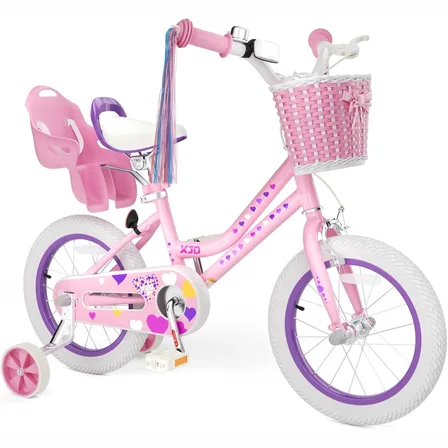
Light Pink XJD Girls' Bicycle with Basket & Training Wheels
The Light Pink XJD Girls' Bicycle with Basket & Training Wheels is a retro-style…$109.99
$129.99 -
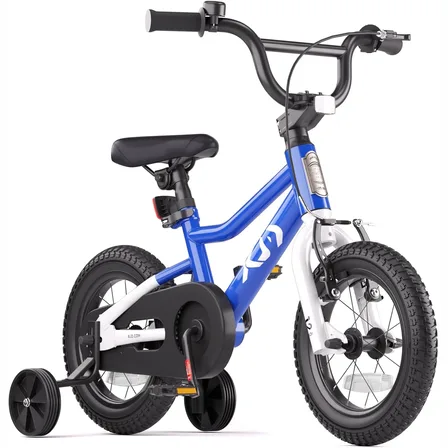
XJD Boys & Girls BMX Bike with Training Wheels, 12/14/16" – Blue
The XJD Boys & Girls BMX Bike in Blue is a first pedal bike for kids roughly age…$99.99
$119.99