

What bike should i buy for a 3 year old
For most 3-year-olds, start by trying a 12-inch bike; consider a 14-inch bike only if the child’s measured height and fit support it.
Measure before choosing a wheel size
Measure your child’s height without shoes, then measure inseam from the floor to the crotch while the child stands naturally. Age is only a starting point: two 3-year-olds may need different bikes because their height, proportions, reach and confidence differ.
| Wheel size | XBikes starting point | Relevance at age 3 |
|---|---|---|
| 12 Inch | Ages 3–4; 34–40 in / 86–102 cm | The usual first size to try |
| 14 Inch | Ages 3–6; 37–45 in / 94–114 cm | Worth comparing for a taller child who can control it |
| 16 Inch | Ages 4–7; 40–48 in / 102–122 cm | Generally outside the age starting point; choose only after a convincing individual fit check |
Do not select the largest wheel that falls within a broad age range. The American Academy of Pediatrics advises having the child try the bicycle and avoiding an oversized bike bought for future growth.
Check fit with the child on the bike
First check stand-over clearance: the child should be able to straddle the bicycle securely rather than being forced onto tiptoes by an overly tall frame. Next, seat the child and look at the entire riding position.
- Reach: The child should hold the handlebar without stretching, locking the elbows or leaning excessively.
- Brake control: If the bicycle has hand-operated brake controls, the child must be able to reach and operate them reliably. Verify the controls actually supplied with the exact bike rather than assuming a brake type.
- Balance and steering: The child should be able to start, steer, stop and get off without the bicycle’s size overwhelming them.
- Confidence: Hesitation caused by excessive height, reach or weight is a reason to compare a smaller option, even when an age chart suggests otherwise.
A bike is not a good fit merely because the child can sit on its saddle. If the child cannot control it comfortably during a supervised trial, keep looking.
Compare the relevant XBikes options
The three supplied catalog options help answer this question because each is offered in 12 Inch, 14 Inch and 16 Inch labels, allowing a parent to compare the most relevant starting sizes without assuming that one size fits every 3-year-old.
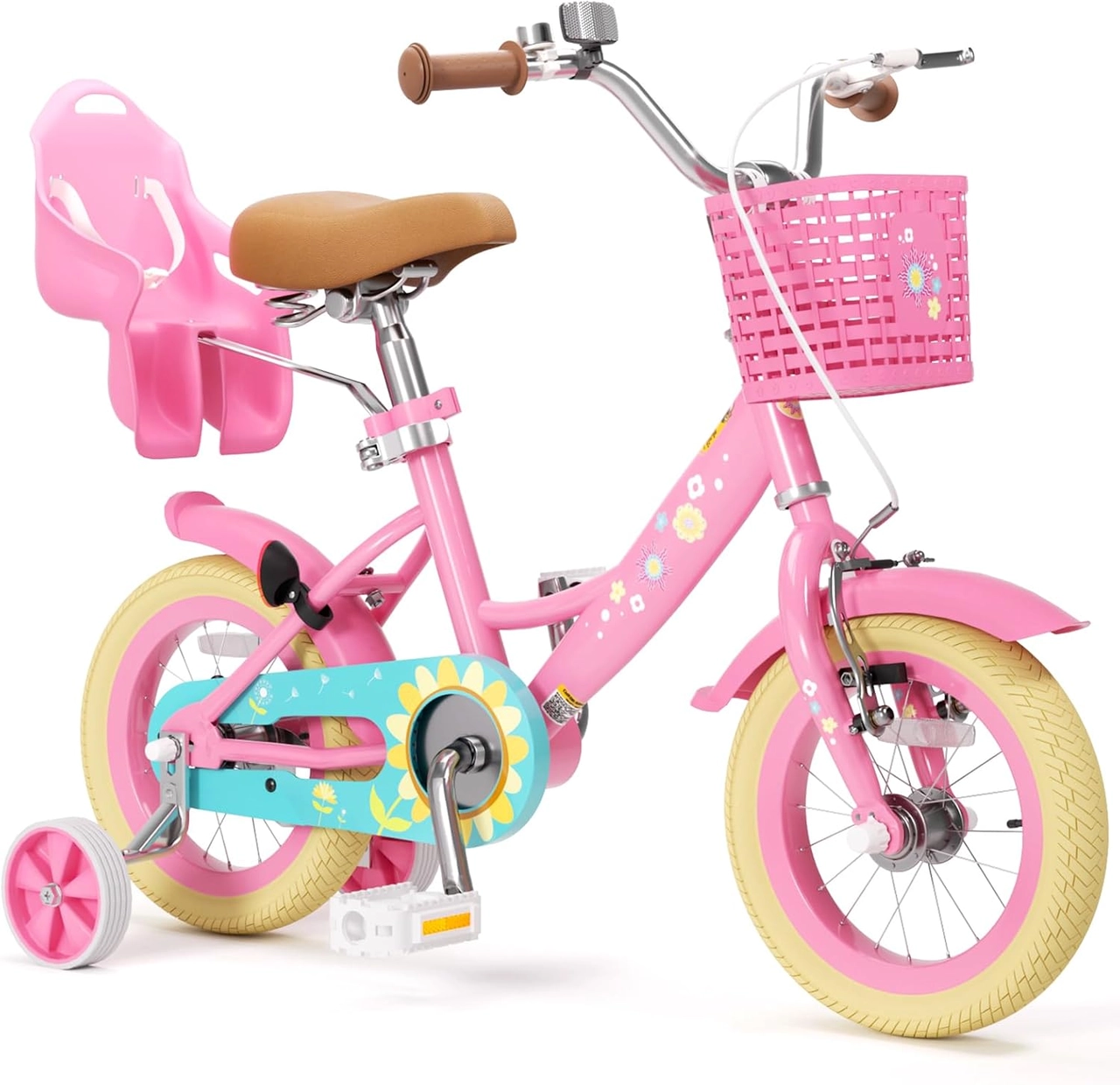 Flower Pink XJD Girls Bike with Doll Seat & Basket
A Training Wheel Bike offered in 12 Inch, 14 Inch and 16 Inch labels. For a 3-year-old, compare its 12 Inch and, when height supports it, 14 Inch options through an individual fit check.
 Purple XJD Girls' Bike with Doll Seat & Basket
This Training Wheel Bike has 12 Inch, 14 Inch and 16 Inch labels. Its purple styling and doll seat and basket wording distinguish the title, while measured height, reach and control should determine suitability.
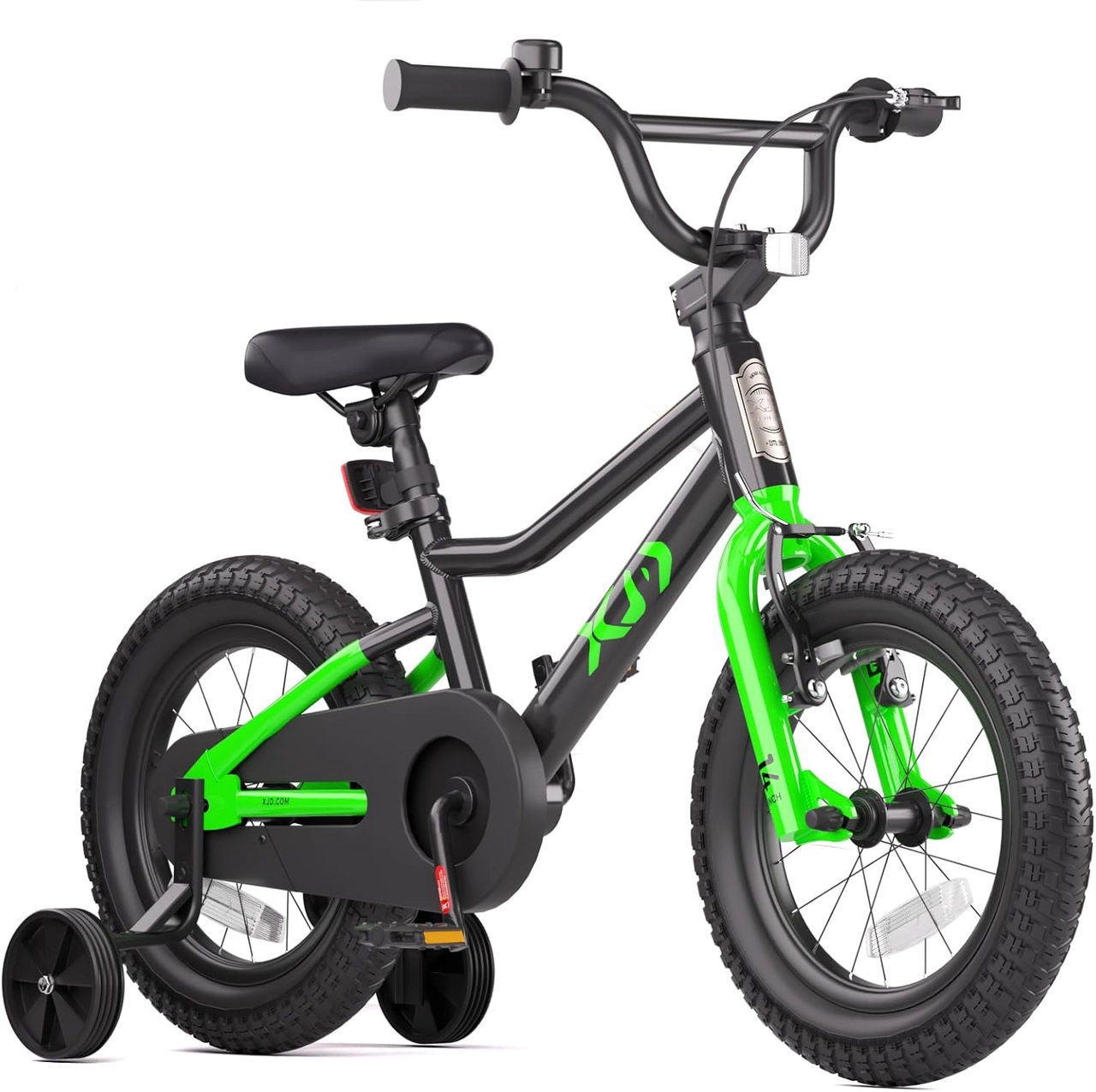 Black XJD Kids' BMX Bicycle with Training Wheels
Cataloged as a Kids' BMX Bike with training wheels and offered in 12 Inch, 14 Inch and 16 Inch labels. Its category does not replace checking the 3-year-old’s height, stand-over, reach and control.
The Flower Pink XJD Girls Bike with Doll Seat & Basket and Purple XJD Girls' Bike with Doll Seat & Basket are both cataloged as Training Wheel Bikes. Their supplied distinctions are their exact color-themed titles; both have 12 Inch, 14 Inch and 16 Inch options.
The Black XJD Kids' BMX Bicycle with Training Wheels is cataloged as a Kids' BMX Bike and is also available in 12 Inch, 14 Inch and 16 Inch options. Its BMX catalog category does not change the fit process: compare the child’s measurements, reach, control and confidence.
For a child measuring 34–40 inches / 86–102 cm, begin with the 12 Inch option. If the child measures 37–45 inches / 94–114 cm, compare 12 Inch and 14 Inch fits rather than choosing by age alone. A 16 Inch label should not be treated as the default for a 3-year-old, because the XBikes starting point is ages 4–7 and 40–48 inches / 102–122 cm.
Do not confuse training wheels with correct sizing
Training wheels describe the supplied products’ catalog type or title, not proof that a bicycle fits. They do not make an oversized frame easier to straddle, shorten an excessive reach or guarantee that a child can operate the controls.
Choose between these products only after settling the size question. Then the child or parent can compare the catalog presentation: two Training Wheel Bikes with doll seat and basket wording, or the Kids' BMX Bike with training wheels. Do not infer unlisted materials, brake systems, weights, load limits or other equipment from those names.
Prepare for the first ride
Use a properly fitting bicycle helmet on every ride. Following U.S. Consumer Product Safety Commission guidance, position it level and adjust its straps according to the helmet manufacturer’s instructions. Begin in a flat area away from traffic and obstacles, with close adult supervision.
Confirm assembly and adjustment requirements in the exact product manual. For maintenance, compatibility, torque settings or any setup detail not stated there, use a qualified bicycle mechanic rather than guessing.
Make the decision
Measure height and inseam today, try a 12 Inch bike first, and compare a 14 Inch bike only when the child falls within its height starting point and demonstrates comfortable stand-over, reach, braking and control. Reject any option the child is expected to “grow into”; the right bike for a 3-year-old is the one they can control now.
Bikes for your next adventure
-
XJD Girls BMX Bike 12/14/16 Inch with Training Wheels – Pink Blue
The XJD Girls BMX Bike in Pink/Blue is built as a first pedal bike for kids roug…$99.99
$119.99 -

Blue XJD Kids Bike Helmet for Boys & Girls
The Blue XJD Kids Bike Helmet is a lightweight, adjustable multi-sport helmet fo…$59.99
$99 -

Kids Bike Helmet by XJD for Boys & Girls – Black, Blue, Green, Pink, Purple
The XJD Kids Bike Helmet covers a wide 2-to-8-year age range thanks to two head-…$59.99