

What kind of bike to get a 3 year old
For most 3-year-olds, start with a 12-inch bike and confirm the fit in person. Consider 14 inches only if the child’s measurements and control support it.
Start with 12 inches, then verify
XBikes lists a 12-inch wheel as the starting point for ages 3–4 and rider heights of 34–40 inches (86–102 cm). That makes it the most relevant first comparison for a 3-year-old, but age alone cannot determine fit.
A 14-inch bike is listed for ages 3–6 and heights of 37–45 inches (94–114 cm). The ranges overlap, so a taller 3-year-old might compare both 12- and 14-inch models. Do not choose 14 inches merely to leave growing room: the child still needs comfortable stand-over clearance, reach, steering control and access to the brakes.
| Wheel size | XBikes starting point | Relevance at age 3 |
|---|---|---|
| 12 Inch | Ages 3–4; 34–40 in / 86–102 cm | Usual first size to try |
| 14 Inch | Ages 3–6; 37–45 in / 94–114 cm | Compare when height and control fit |
| 16 Inch | Ages 4–7; 40–48 in / 102–122 cm | Normally a later starting point; assess individually |
Measure the child before comparing bikes
Measure the child’s standing height without shoes. Then measure inseam from the floor to the crotch while the child stands naturally. Record both measurements rather than relying on clothing size or age.
Height helps narrow the wheel-size range, while inseam helps you assess how the frame relates to the child’s legs. Bicycle geometry can vary even when two bikes share a wheel label, so these measurements select candidates rather than guaranteeing a fit.
Check the actual riding position
Have the child try the bicycle. The American Academy of Pediatrics advises against buying an oversized bike for future growth and recommends checking stand-over, control and brake reach.
- Stand-over: With the child standing over the frame, confirm that the position is comfortable and does not trap or force the child onto tiptoes.
- Seat position: Confirm that mounting, stopping and putting feet down match the child’s present confidence.
- Reach: The child should be able to hold the handlebar without stretching, twisting or losing a relaxed posture.
- Steering: Ask the child to turn the handlebar both ways and demonstrate that they can guide the bike without fighting it.
- Brake control: If the bicycle has hand-operated brake controls, verify that the child can reach and operate them. Follow the exact product manual for operation and adjustment.
If the child cannot comfortably stand over, reach, steer, stop and control a candidate, move to a more suitable fit. A wheel-size chart should never override what the child demonstrates.
Decide between learning approaches
A child who is still developing balance may benefit from starting with a balance-focused learning approach. A pedal bike with training wheels offers lateral support while the child learns pedaling and steering. The useful choice depends on current coordination, confidence and the way the child will practice—not on age wording alone.
Whatever approach you choose, avoid making the bike harder to control simply to extend its useful life. A correctly fitting smaller candidate is more appropriate than an oversized option the child cannot confidently manage.
How the supplied catalog option helps
The Girls 12/14/16 Inch Kids Bike by XJD with Training Wheels – Peach is a training-wheel bike offered with 12-inch, 14-inch and 16-inch SKU labels. Those three choices let you compare the most relevant starting sizes against the child’s measurements and present control. The title’s word “Kids” is a catalog label, not independent fit evidence.
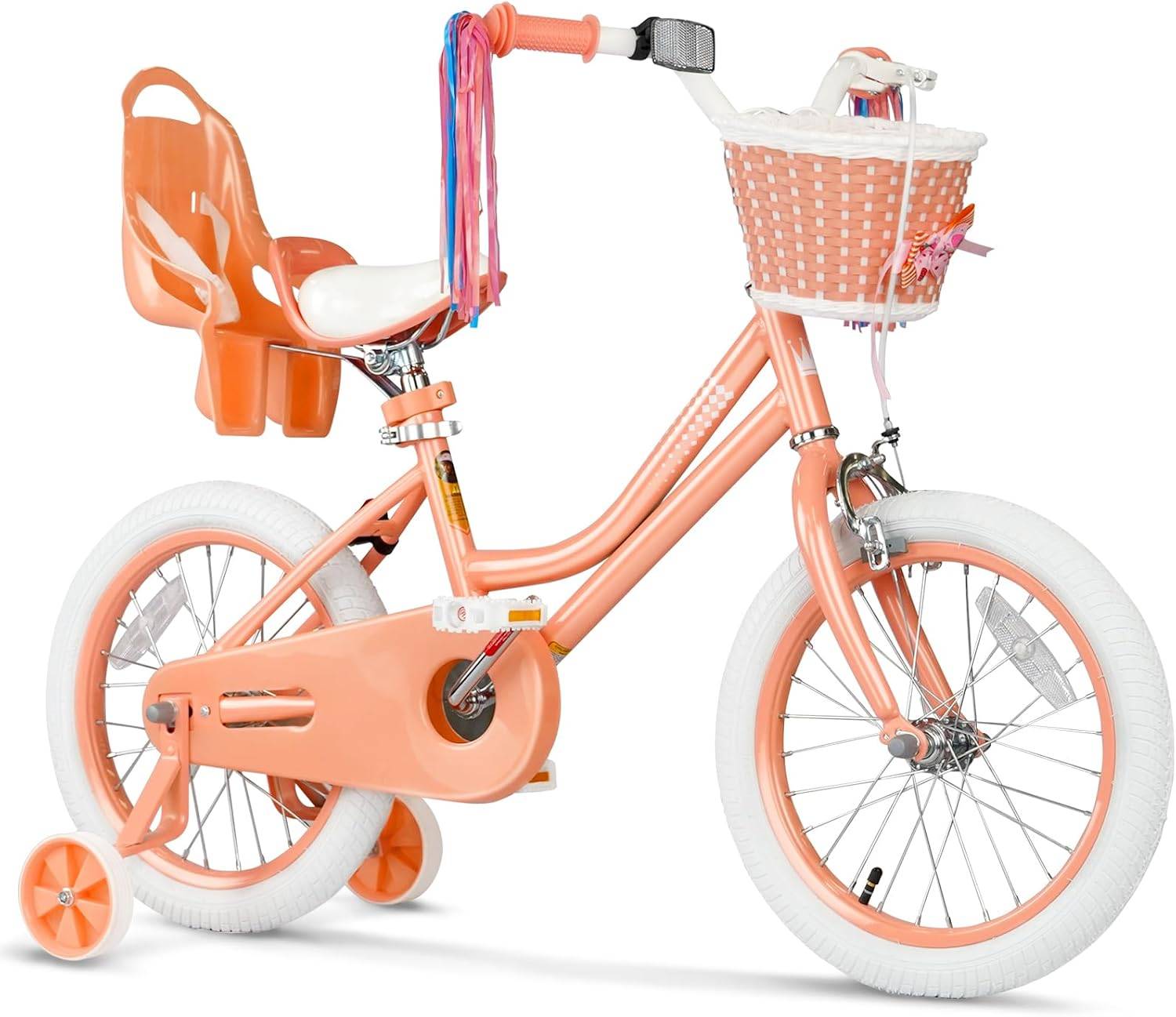
For many 3-year-olds, its 12-inch option is the first one to assess. Its 14-inch option may be relevant within the supplied 37–45 inch (94–114 cm) height range, provided the individual fit check succeeds. The 16-inch option uses a starting range of ages 4–7 and 40–48 inches (102–122 cm), so it should not be selected for a 3-year-old merely for growth; measurements and demonstrated control must justify even considering it.
No supplied facts establish the bike’s brake type, materials, weight, load limit, assembly procedure or compatibility. Check the exact product manual for those details, and use a qualified bicycle mechanic when setup or adjustment is uncertain.
Before the first ride
Use a bicycle helmet that fits properly, sits level and has straps positioned according to the helmet manufacturer’s instructions, following U.S. Consumer Product Safety Commission guidance. Recheck the child’s ability to start, steer, brake and put their feet down in a controlled practice area with close adult supervision.
Your next step is simple: measure height and inseam, try a 12-inch bike first, compare 14 inches only when the measurements overlap, and buy only the size the 3-year-old can control now.
Bikes for your next adventure
-

Flower Pink XJD Girls Bike with Doll Seat & Basket
The XJD Flower Pink girls' bike is made for riders 71–122 cm tall (roughly ages …$69.99
-
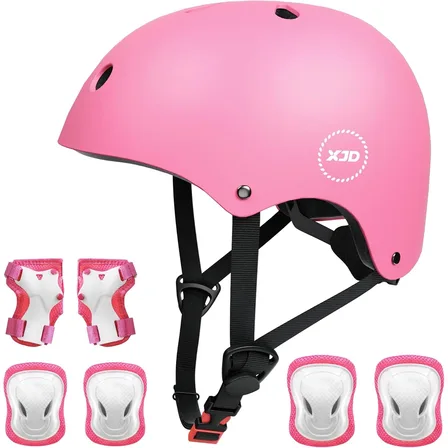
XJD Kids Helmet & Protective Gear Set for Girls, Pink
The XJD Kids Helmet & Protective Gear Set in Pink is a complete safety kit for g…$24.64
-

Kids Bike Helmet by XJD for Boys & Girls – Black, Blue, Green, Pink, Purple
The XJD Kids Bike Helmet covers a wide 2-to-8-year age range thanks to two head-…$59.99