

What size bike does a 3 year old ride
Most 3-year-olds should try a 12-inch bike first. XBikes places 12-inch bikes at 34–40 in (86–102 cm), but your child’s measurements and control decide the fit.
Is a 12-inch or 14-inch bike right?
Age supplies a starting point, not a final answer. For a 3-year-old, the relevant XBikes ranges overlap:
| Wheel size | Starting age range | Rider height |
|---|---|---|
| 12 Inch | Ages 3–4 | 34–40 in / 86–102 cm |
| 14 Inch | Ages 3–6 | 37–45 in / 94–114 cm |
Begin with 12 inches when the child measures 34–40 inches tall. Compare both 12- and 14-inch bikes when the child is 37–40 inches tall, because that height falls within both ranges. A child above 40 inches may fit the 14-inch starting range, but the larger wheels are appropriate only if stand-over, reach, braking and handling also work for that individual rider.
Do not move up to a 16-inch bike merely because it will last longer. XBikes places that size at ages 4–7 and heights of 40–48 in (102–122 cm), so it is generally outside the age starting point for this question and still requires a complete fit check.
Measure your child before comparing bikes
Take measurements while your child is wearing the shoes they will normally use for riding. Record them rather than relying on clothing size or a recent estimate.
- Overall height: Have the child stand straight against a wall without rising onto their toes. Measure from the floor to the top of the head.
- Inseam: With feet naturally spaced, measure from the floor to the crotch. This helps you assess whether the child can stand over the actual bicycle comfortably.
- Reach: This cannot be confirmed from wheel size alone. On the assembled bike, check whether the child can hold the handlebars without stretching, locking the arms or losing a comfortable riding position.
Wheel diameter does not determine every frame dimension. That is why a height chart narrows the choices but cannot replace trying the specific bike.
Perform the fit check on the actual bike
Have the child try the bicycle under close adult supervision. The American Academy of Pediatrics advises against buying an oversized bicycle for a child to grow into. Confirm these points before deciding:
- The child can stand over the bike comfortably and maintain balance.
- The handlebars are within easy reach, with enough freedom to steer rather than merely touch them.
- The child can reach and operate the bike’s braking controls without struggling or changing to an unstable hand position.
- The child can start, stop, steer and get off in a controlled way appropriate to their current confidence.
If your child freezes, stretches, cannot control the brakes or looks overwhelmed, treat the bike as too demanding even when their height appears in its chart range. Compare a smaller option or seek help from a qualified bicycle mechanic.
How the supplied XBikes option helps
The Flower Pink XJD Girls Bike with Doll Seat & Basket is cataloged as a Training Wheel Bike and is offered with 12 Inch, 14 Inch and 16 Inch size labels. That makes its 12- and 14-inch versions relevant comparison points for many 3-year-olds; the size label alone does not establish fit. These particular catalog options let you compare the two overlapping starting ranges on one listed model.
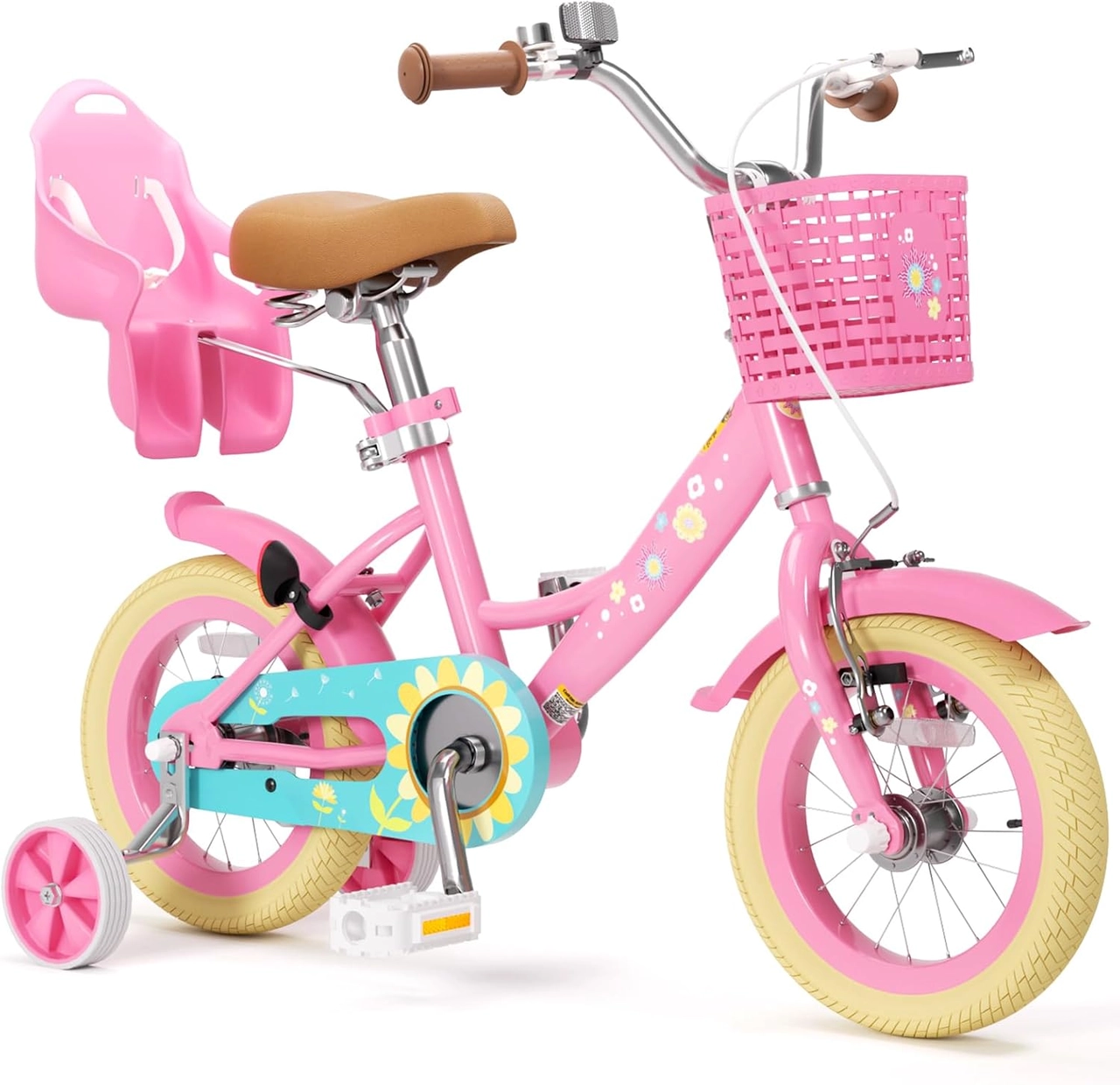
Use the 12-inch version as the first comparison for a child measuring 34–40 inches. If the child is at least 37 inches tall, the 14-inch version can also be tried and compared directly. Do not assume those sizes fit identically, and do not select the 16-inch version solely for future growth. No supplied fact establishes its suitability for a particular child beyond the XBikes size starting points and an individual fit check.
Training wheels do not correct poor sizing
Training wheels can change how a bicycle balances, but their presence does not make an oversized frame, long reach or inaccessible brake controls appropriate. The rider must still fit the bicycle and be able to control it confidently.
For assembly, adjustment, compatibility, maintenance, load limits and torque requirements, follow the manual for the exact product and size. If anything is unclear or the bicycle cannot be adjusted to the child without compromising control, use a qualified bicycle mechanic.
Make the final size decision
First measure height and inseam. Start with a 12-inch bike at 34–40 inches tall; compare a 14-inch bike as well at 37–40 inches. Then choose only after the child passes the actual-bike checks for stand-over, reach, braking and controlled starts and stops.
Before riding, add a properly fitting bicycle helmet. Following U.S. Consumer Product Safety Commission guidance, position it level and secure its straps according to the helmet manufacturer’s instructions. For your 3-year-old, the right bike is the smallest suitable choice they can comfortably control today—not a larger size purchased for future growth.
Bikes for your next adventure
-

Light Purple XJD Toddler Bike Helmet, Adjustable, Size XS (46–51 cm)
This Light Purple XJD toddler bike helmet is made for the smallest riders — the …$20.39
-

XJD Boys 12/14/16" Training Wheel Bike – Blue
The XJD Boys Bike in Blue is a training wheel bike for riders 71–122 cm tall—rou…$169
$199 -
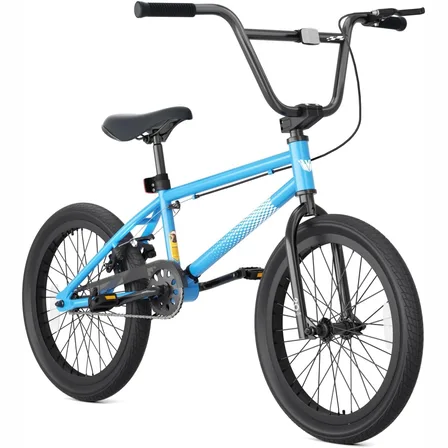
Blue XJD Freestyle BMX Bike, 20-Inch – No Pegs
The XJD 20-Inch Blue Freestyle BMX is an entry-level BMX bike for boys and girls…$189.99